November 12, 2014

An affordance is something that provides the opportunity to perform an action. It is often described as a relationship between an object (or environment) and an organism. For example, a knob affords twisting, and perhaps pushing, while a cord affords pulling. As a relation, an affordance exhibits the possibility of some action, and is not a property of either an organism or its environment alone.
Different definitions of the term have developed. The original definition described all actions that are physically possible, but was later limited to only those an actor is aware of. The term has further evolved for use in the context of human–computer interaction (HCI) to indicate the easy discoverability of possible actions. The concept has application in several fields: perceptual, cognitive, and environmental psychology, industrial design, instructional design, science, technology and society (STS), and artificial intelligence.
read more »
Posted in Language, Science, Technology |
Leave a Comment »
October 25, 2014

LOVEINT is the practice of intelligence service employees making use of their extensive monitoring capabilities to spy on their love interest or spouse. The term was coined in resemblance to intelligence terminology such as SIGINT (signals intelligence) or HUMINT (human intelligence). The term originated at the NSA, where at least one incident is reported every year. They are the lion’s share of unauthorized accesses reported by the NSA. Most incidents are self-reported, for example during a polygraph test.
The NSA sanctions include administrative action, up to termination of employment. In five of the cases, the NSA employee resigned, preempting any administrative action. In two other cases, they retired. The worst administrative sanction handed out was a ‘a reduction in pay for two months, a reduction in grade, and access to classified information being revoked.’ One case was forwarded to the Department of Justice, which however declined to prosecute.
Posted in Love, Politics, Technology |
1 Comment »
October 20, 2014


In engineering, fiction, and thought experiments, unobtainium [uhn-uhb-tey-nee-uhm] is any fictional, extremely rare, costly, or impossible material, or (less commonly) device needed to fulfill a given design for a given application. The properties of any particular unobtainium depend on the intended use. For example, a pulley made of unobtainium might be massless and frictionless; however, if used in a nuclear rocket, unobtainium would be light, strong at high temperatures, and resistant to radiation damage. The concept of unobtainium is often applied flippantly or humorously.
Since the late 1950s, aerospace engineers have used the term when referring to unusual or costly materials, or when theoretically considering a material perfect for their needs in all respects, except that it does not exist. By the 1990s, the term was in wide use, even in formal engineering papers such as ‘Towards unobtainium [new composite materials for space applications].’ The word may well have been coined in the aerospace industry to refer to materials capable of withstanding the extreme temperatures expected in reentry. Aerospace engineers are frequently tempted to design aircraft which require parts with strength or resilience beyond that of currently available materials.
read more »
Posted in Art, Humor, Technology |
Leave a Comment »
September 11, 2014


Simulator sickness is a condition where a person exhibits symptoms similar to motion sickness (e.g. headache, drowsiness, nausea, dizziness, vomiting, sweating) caused by playing computer/simulation/video games. Researchers the University of Minnesota had students play the first person shooter ‘Halo’ for less than an hour, and found that up to 50 percent felt sick afterwards. The phenomenon was well known in popular culture before it was known as simulation sickness. In the 1983 comedy film ‘Joysticks,’ the manager of a local video arcade says, ‘The reason why I never play any of these games, well, they make me physically ill. I mean, every time I look in one of the screens, they make me dizzy.’
In 1995, the US Army Research Institute for the Behavioral and Social Sciences published the results of a study of 742 pilot exposures from 11 military flight simulators. Half of the pilots reported post-effects of some kind. Symptoms dissipated in under an hour for one third, after four hours for six percent, after six hours for four percent, and one percent reported cases of spontaneously occurring flashbacks.
read more »
Posted in Health, Technology, War |
Leave a Comment »
September 8, 2014

Charles Proteus Steinmetz (1865 – 1923) was a mathematician and electrical engineer known as the Wizard of Schenectady. He fostered the development of alternating current that made possible the expansion of the electric power industry in the US, formulating mathematical theories for engineers.
He made ground-breaking discoveries in the understanding of hysteresis (the lag time when magnetizing a ferromagnetic material) that enabled engineers to design better electromagnetic apparatus equipment, especially electric motors for use in industry.
read more »
Posted in Science, Technology |
Leave a Comment »
August 26, 2014

The Congress is a 2013 French-Israeli live-action/animation science fiction drama film written and directed by Ari Folman. The film premiered at the Cannes Film Festival. Independent film distributor Drafthouse Films announced, along with Films We Like In Toronto, their co-acquisition of the North American rights to the film and a US theatrical and VOD/digital release planned for 2014.
Robin Wright plays an aging actress with a reputation for being fickle and unreliable, so much so that nobody is willing to offer her roles anymore. She agrees to sell the film rights to her digital image to Miramount Studios (a portmanteau of Miramax and Paramount) in exchange for a hefty sum and the promise to never act again. After her body is digitally scanned, the studio will be able to make films starring her using only computer-generated characters.
read more »
Posted in Art, Technology |
Leave a Comment »
August 7, 2014


The right to be forgotten is a nascent legal concept arising from the need to ‘determine the development of [one’s] life in an autonomous way, without being perpetually or periodically stigmatized as a consequence of a specific action performed in the past.’ France law began recognizing this new right in 2010. Critics claim the laws are vague, unenforceable, and potentially a threat to open access to information, which is an existing legal right in many countries. There are also concerns about its interaction with the right to privacy and whether it would decrease the quality of the Internet through censorship and a rewriting of history.
Many nations have very strong domestic freedom of speech laws, which would be challenging to reconcile with the right to be forgotten. Some academics see that only a limited form of the right to be forgotten would be reconcilable with US constitutional law; the right of an individual to delete data that he or she has personally submitted. In this limited form, individuals could not have material removed that has been uploaded by others, as demanding the removal of information could constitute censorship and a reduction in the freedom of expression.
read more »
Posted in Politics, Technology, World |
1 Comment »
August 5, 2014
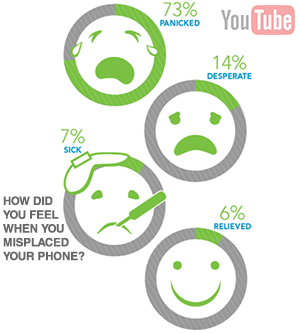
Nomophobia (‘no-mobile-phone phobia’) is the fear of being out of mobile phone contact. The term was coined during a 2010 study by the UK Post Office who commissioned YouGov, a UK-based research organization to look at anxieties suffered by mobile phone users. The study found that nearly 53% of mobile phone users in Britain tend to be anxious when they ‘lose their mobile phone, run out of battery or credit, or have no network coverage.’ The study found that about 58% of men and 47% of women suffer from the phobia, and an additional 9% feel stressed when their mobile phones are off.
The study indicated that stress levels induced by the average case of nomophobia are similar in severity to ‘wedding day jitters’ and trips to the dentists. Ten percent of those questioned said they needed to be contactable at all times because of work. It is, however, arguable that the word ‘phobia’ is misused and that in the majority of cases it is only a normal anxiety. More than one in two nomophobes never switch off their mobile phones. The study prompted two editorial columns authored by those who minimize their mobile phone use or choose not to own one at all, treating the condition with levity or outright disbelief.
Posted in Health, Humor, Technology |
Leave a Comment »
July 30, 2014

The Monobloc [mon-uh-blok] chair is a lightweight stackable polypropylene chair, often described as the world’s most common plastic chair. Based on original designs by the Italian designer Vico Magistretti in 1967, variants of the one-piece plastic chair went into production with Allibert Group and Grossfillex Group in the 1970s. Since then, millions have been manufactured globally. Many design variants of the basic idea exist.
The Monobloc chair is so named because it is injection molded from thermoplastic polypropylene, the granules being heated to about 220 degrees Celsius, and the melt injected into a mold. The gate of the mold is usually located in the seat to ensure smooth flow to all parts of the tool. The chairs cost approximately $3 to produce, making them affordable across the world. Social theorist Ethan Zuckerman describes them as having achieved a global ubiquity: ‘The Monobloc is one of the few objects I can think of that is free of any specific context. Seeing a white plastic chair in a photograph offers you no clues about where or when you are.’
Posted in Money, Technology, World |
Leave a Comment »
July 24, 2014
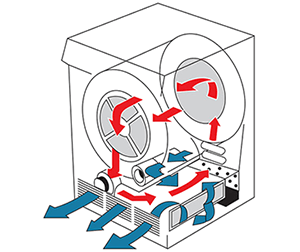

A combo washer dryer (also known more simply as a washer-dryer in the UK) is a combination in a single cabinet of a washing machine and a clothes dryer. It should not be confused with a ‘stackable’ combination of a separate washing machine and a separate clothes dryer.
While combo washer dryers are not as effective and efficient as full-sized, fully functional, separate washer and dryer machines, they are useful in smaller urban properties as they only need half the amount of space and most don’t require an external air vent (water vapor is condensed from moist air and flushed out the drain hose). Additionally, combination washer dryers allow clothes to be washed and dried ‘in one go,’ saving time and effort from the user. Many units are also designed to be portable so they can be attached to a sink instead of requiring a separate water line.
read more »
Posted in Technology |
Leave a Comment »
July 21, 2014


The nothing to hide argument broadly states that police surveillance is only adverse to those doing something wrong. By this line of reasoning, government data mining and surveillance programs do not threaten privacy unless they uncover illegal activities, and if they do, the guilty person does not have the right to keep them private. The motto ‘If you’ve got nothing to hide, you’ve got nothing to fear’ was used to advertise closed-circuit television programs in the UK.
Geoffrey Stone, a legal scholar, said that the use of the argument is ‘all-too-common.’ Cryptographer Bruce Schneier described it as the ‘most common retort against privacy advocates.’ He cites French statesman Cardinal Richelieu’s statement ‘If one would give me six lines written by the hand of the most honest man, I would find something in them to have him hanged,’ to describe how a state government can find aspects in a person’s life in order to prosecute, defame, or blackmail that individual. Schneier also argued ‘Too many wrongly characterize the debate as ‘security versus privacy.’ The real choice is liberty versus control.’
read more »
Posted in Politics, Technology |
1 Comment »
July 17, 2014
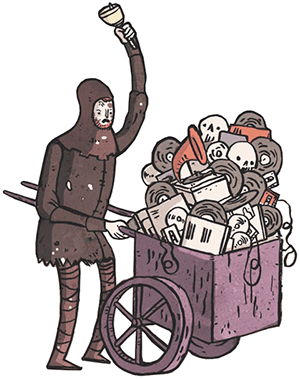
The Album Era was a period in English-language popular music from the mid 1960s to the mid 2000s in which the album was the dominant form of recorded music expression and consumption. It was primarily driven by three successive music recording formats, the 331⁄3 rpm phonograph record (1931), the audiocassette (1964), and the compact disc (1982).
In 1999, peer-to-peer file sharing application Napster was released, popularizing digital copies of music. The ease of downloading individual songs facilitated by it and later networks is often credited with ushering in the end of the Album Era in popular music.
read more »
Posted in Art, Money, Technology |
2 Comments »



