June 3, 2013
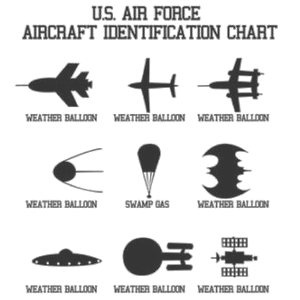
Area 51 is a military base, and a remote detachment of Edwards Air Force Base. It is in the southern portion of Nevada, 83 miles north-northwest of downtown Las Vegas. At its center, on the southern shore of Groom Lake, is a large military airfield. The base’s primary purpose is to support development and testing of experimental aircraft and weapons systems. Though the name ‘Area 51’ is used in official CIA documentation, other names used for the facility include ‘Dreamland,’ ‘Paradise Ranch,’ ‘Home Base,’ ‘Watertown Strip,’ ‘Groom Lake,’ and most recently ‘Homey Airport.’
The area is part of the Nellis Military Operations Area, and the restricted airspace around the field is referred to as R- 4808N, known by the military pilots in the area as ‘The Box’ or ‘the Container.’ The intense secrecy surrounding the base, the very existence of which the US government did not even acknowledge until 2003, has made it the frequent subject of conspiracy theories and a central component to unidentified flying object (UFO) folklore.
Posted in Humor, Technology, War |
Leave a Comment »
May 23, 2013


Morphological freedom refers to a proposed civil right of a person to either maintain or modify his or her own body, on his or her own terms, through informed, consensual recourse to, or refusal of, available therapeutic or enabling medical technology.
The term may have been coined by strategic philosopher Max More in his 1993 article, ‘Technological Self-Transformation: Expanding Personal Extropy,’ where he defined it as ‘the ability to alter bodily form at will through technologies such as surgery, genetic engineering, nanotechnology, uploading.’ The term was later used by science debater Anders Sandberg as ‘an extension of one’s right to one’s body, not just self-ownership but also the right to modify oneself according to one’s desires.’
read more »
Posted in Health, Politics, Technology |
Leave a Comment »
May 21, 2013

In the classic 1956 science fiction film, ‘Forbidden Planet,’ the extinct race of advanced beings of the planet Altair IV are known as the ‘Krell.’
The Krell had reached a stage of technological and scientific development so advanced that they were able to construct a machine with virtually unlimited power, a machine that turned their thoughts into reality.
read more »
Posted in Art, Technology |
Leave a Comment »
May 21, 2013
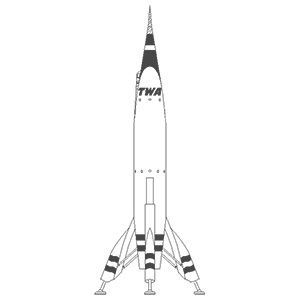
From 1955 through 1962, the TWA Moonliner was part of the first futuristic exhibit located in Disneyland’s ‘Tomorrowland.’ It was also an early example of modern product placement advertising by TWA’s Howard Hughes teaming up with Walt Disney.
At 76 feet (23 m) tall, it was the tallest structure in the theme park, 8 feet (2.4 m) taller than the Sleeping Beauty Castle. Adjoining the rocket was the ‘Flight to the Moon’ attraction, which later became ‘Mission To Mars’ in 1975.
read more »
Posted in Money, Technology |
Leave a Comment »
May 20, 2013
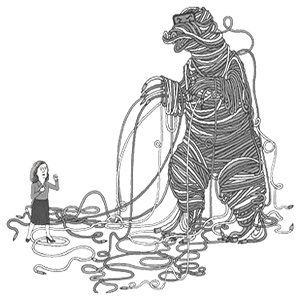
‘Captive Audience: the Telecom Industry and Monopoly Power in the New Gilded Age’ is an American non-fiction book by legal expert Susan P. Crawford. It describes high-speed internet access in the United States as essential (like electricity) but currently too slow and too expensive. To ensure national competitiveness ‘most Americans should have access to reasonably priced 1-Gb symmetric fiber-to-the-home networks.’
Crawford explains why the United States should revise national policy to increase competition in a market currently dominated by Comcast, Verizon Wireless, AT&T, and Time Warner Cable. Meanwhile towns and cities should consider setting up local networks after the example of pioneers such as Lafayette, Louisiana’s LUSFiber and Chattanooga, Tennessee’s EPB.
Posted in Language, Money, Technology |
2 Comments »
May 10, 2013
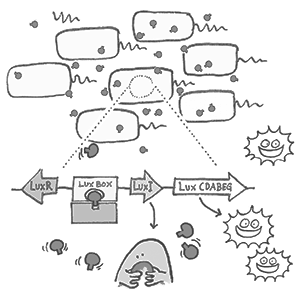
Quorum [kwawr-uhm] sensing is a chemical messaging system employed by bacteria to determine the presence of other bacteria. It is part of a system of stimulus and response correlated to population density (e.g. some bioluminescent bacteria will not produce light unless in sufficient concentration).
Many species of bacteria use quorum sensing to coordinate gene expression according to the density of their local population. In similar fashion, some social insects use a form of quorum sensing to determine where to nest. In addition to its function in biological systems, quorum sensing has several useful applications for computing and robotics.
read more »
Posted in Health, Science, Technology |
Leave a Comment »
May 8, 2013

Borg is a collective proper noun for a fictional alien race that appears as recurring antagonists in various incarnations of the ‘Star Trek’ franchise. The Borg are a collection of species that have been turned into cybernetic organisms functioning as drones of the Collective, or the hive. A pseudo-race, dwelling in the Star Trek universe, the Borg force other species into their collective and connect them to ‘the hive mind’; the act is called assimilation and entails violence, abductions, and injections of cybernetic implants. The Borg’s ultimate goal is ‘achieving perfection.’
Aside from being the main threat in ‘Star Trek: First Contact,’ the Borg play major roles in ‘The Next Generation’ and ‘Voyager’ television series, primarily as an invasion threat to the United Federation of Planets, but also of some use to the Voyager. The Borg have become a symbol in popular culture for any juggernaut against which ‘resistance is futile.’
read more »
Posted in Art, Technology |
Leave a Comment »
May 6, 2013

An espresso machine is used to produce a traditional Italian espresso, a concentrated coffee drink served in small portions (shots). The first machine for making espresso was built and patented by Angelo Moriondo, who demonstrated a working example at the Turin General Exposition of 1884. He patented his invention that year as a: ‘New steam machinery for the economic and instantaneous confection of coffee beverage.’
In 1901, Luigi Bezzera of Milan patented improvements to the machine; four years later, the patent was bought by Desiderio Pavoni who founded the ‘La Pavoni’ company and began to produce the machine commercially (one a day) in a small Milanese workshop.
read more »
Posted in Food, Technology |
Leave a Comment »
April 22, 2013

Simplicity is the state or quality of being simple; it usually relates to the burden which a thing puts on someone trying to explain or understand it.
However, Herbert A. Simon (American political scientist, economist, sociologist, and psychologist) suggested, something is simple or complex depending on the way we choose to describe it. In some uses, simplicity can be used to imply beauty, purity, or clarity.
read more »
Posted in Language, Philosophy, Technology |
Leave a Comment »
April 22, 2013

A chain is a series of connected links which are typically made of metal. A chain may consist of two or more links.
According to the ‘Complete Guide to Chain,’ the metal link chain was invented in 225 BCE. The prevalent modern symbolism is oppression, due to the use for a mechanical restriction of the liberty of a human or animal. However, chains can also symbolize interconnectivity or interdependence.
read more »
Posted in Technology |
Leave a Comment »
April 21, 2013
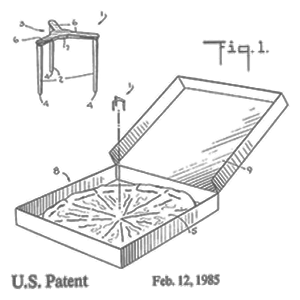
A pizza saver is a device used to prevent the top of a food container, such as a pizza box or cake box, from collapsing in at the center and touching the food inside. A pizza saver is made of plastic and has three (sometimes four) legs. They are often white, and the common practice is to place one pizza saver in the center of the pizza before the box lid is closed for delivery.
The pizza saver is not re-used and is thrown away or recycled by the patron, although some people have found secondary uses for them such as egg holders when turned upside down.
read more »
Posted in Food, Money, Technology |
Leave a Comment »
April 9, 2013

Earth sheltering is the architectural practice of using earth against building walls for external thermal mass, to reduce heat loss, and to easily maintain a steady indoor air temperature. Earth sheltering is popular in modern times among advocates of passive solar and sustainable architecture, but has been around for nearly as long as humans have been constructing their own shelter.
The expression ‘earth-sheltering’ is a generic term, with the general meaning: building design in which soil plays an integral part. More specifically, a building can be described as earth-sheltered if its external envelope is in contact with a thermally significant volume of soil or substrate (where ‘thermally significant’ means making a functional contribution to the thermal effectiveness of the building in question).
read more »
Posted in Technology, World |
Leave a Comment »




