January 23, 2013

Neat and scruffy are labels for two different types of artificial intelligence research. ‘Neats’ consider that solutions should be elegant, clear and provably correct. ‘Scruffies’ believe that intelligence is too complicated (or computationally intractable) to be solved with the sorts of homogeneous system such neat requirements usually mandate. Much success in AI came from combining neat and scruffy approaches. For example, there are many cognitive models matching human psychological data built in cognitive architectures Soar and ACT-R.
Both of these systems have formal representations and execution systems, but the rules put into the systems to create the models are generated ad hoc. The distinction was originally made by AI theorist Roger Schank in the mid-1970s to characterize the difference between his work on natural language processing (which represented commonsense knowledge in the form of large amorphous semantic networks) from the work of John McCarthy, Allen Newell, Herbert A. Simon, Robert Kowalski and others whose work was based on logic and formal extensions of logic.
read more »
Posted in Philosophy, Technology |
2 Comments »
January 23, 2013
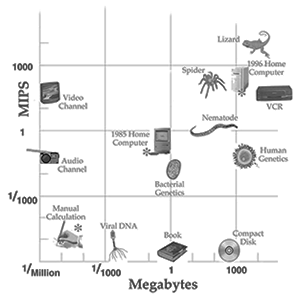
Moravec’s paradox is the discovery by artificial intelligence and robotics researchers that, contrary to traditional assumptions, high-level reasoning requires very little computation, but low-level sensorimotor skills require enormous computational resources.
The principle was articulated by Hans Moravec, Rodney Brooks, Marvin Minsky and others in the 1980s. As Moravec writes, ‘it is comparatively easy to make computers exhibit adult level performance on intelligence tests or playing checkers, and difficult or impossible to give them the skills of a one-year-old when it comes to perception and mobility.’
read more »
Posted in Technology |
Leave a Comment »
January 23, 2013

The AI effect occurs when onlookers discount the behavior of an artificial intelligence program by arguing that it is not real intelligence. Technology journalist Pamela McCorduck writes: ‘It’s part of the history of the field of artificial intelligence that every time somebody figured out how to make a computer do something—play good checkers, solve simple but relatively informal problems—there was chorus of critics to say, ‘that’s not thinking.”
AI researcher Rodney Brooks complains: ‘Every time we figure out a piece of it, it stops being magical; we say, Oh, that’s just a computation.’ As soon as AI successfully solves a problem, the problem is no longer a part of AI. McCorduck calls it an ‘odd paradox,’ that ‘practical AI successes, computational programs that actually achieved intelligent behavior, were soon assimilated into whatever application domain they were found to be useful in, and became silent partners alongside other problem-solving approaches, which left AI researchers to deal only with the ‘failures,’ the tough nuts that couldn’t yet be cracked.’
read more »
Posted in Technology |
Leave a Comment »
January 21, 2013

JSTOR (short for Journal Storage) is a digital library founded in 1995. Originally containing digitized back issues of academic journals, it now also includes books and primary sources, and current issues of journals. It provides full-text searches of more than a thousand journals. More than 7,000 institutions in more than 150 countries have access to JSTOR. Most access is by subscription, but some old public domain content is freely available to anyone, and in 2012 JSTOR launched a program providing limited no-cost access to old articles for individual scholars and researchers who register.
JSTOR’s founder was William G. Bowen the president of Princeton University from 1972 to 1988. JSTOR was originally conceived as a solution to one of the problems faced by libraries, especially research and university libraries, due to the increasing number of academic journals in existence. Most libraries found it prohibitively expensive in terms of cost and space to maintain a comprehensive collection of journals. By digitizing many journal titles, JSTOR allowed libraries to outsource the storage of these journals with the confidence that they would remain available for the long term. Online access and full-text search ability improved access dramatically.
read more »
Posted in Education, Language, Technology |
Leave a Comment »
January 10, 2013

Extropianism [eks-tro-pee-ahn-iz-uhm], also referred to as the philosophy of Extropy, is an evolving framework of values and standards for continuously improving the human condition. Extropians believe that advances in science and technology will some day let people live indefinitely.
An extropian may wish to contribute to this goal, e.g. by doing research and development or volunteering to test new technology. Extropianism describes a pragmatic consilience of transhumanist thought guided by a proactionary approach to human evolution and progress.
read more »
Posted in Health, Politics, Technology |
Leave a Comment »
January 10, 2013
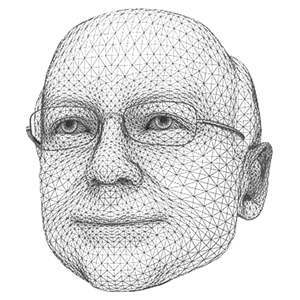
The user illusion is the illusion created for the user by a human-computer interface, for example the visual metaphor of a desktop used in many graphical user interfaces. The phrase originated at Xerox PARC. Some philosophers of mind have argued that consciousness is a form of user illusion. This notion is explored by Danish popular science author Tor Nørretranders in his 1991 book ‘Mærk verden,’ issued in a 1998 English edition as ‘The User Illusion: Cutting Consciousness Down to Size.’
He introduced the notion of exformation (explicitly discarded information) in this book. According to this picture, our experience of the world is not immediate, as all sensation requires processing time. It follows that our conscious experience is less a perfect reflection of what is occurring, and more a simulation produced unconsciously by the brain. Therefore, there may be phenomena that exist beyond our peripheries, beyond what consciousness could create to isolate or reduce them.
Posted in Philosophy, Technology |
Leave a Comment »
January 10, 2013

The Google effect is the tendency to forget information that can be easily found using internet search engines such as Google, instead of remembering it.
The phenomenon was described and named by researchers Betsy Sparrow, Jenny Liu, and Daniel M. Wegner in 2011. Having easy access to the Internet, their study showed, makes people less likely to remember certain details they believe will be accessible online. People can still remember things they cannot find online, and how to find what they need on the Internet. Sparrow said this made the Internet a type of transactive memory. One result of this phenomenon is dependence on the Internet; if an online connection is lost, the researchers said, it is similar to losing a friend.
read more »
Posted in Health, Science, Technology |
Leave a Comment »
January 10, 2013

‘Don’t be evil‘ was the formal corporate motto (or slogan) of Google. It was first suggested either by Google employee Paul Buchheit at a meeting about corporate values that took place in early 2000, or by Google Engineer Amit Patel in 1999. Buchheit, the creator of Gmail, said he ‘wanted something that, once you put it in there, would be hard to take out,’ adding that the slogan was ‘also a bit of a jab at a lot of the other companies, especially our competitors, who at the time, in our opinion, were kind of exploiting the users to some extent.’
While the official corporate philosophy of Google does not contain the words ‘Don’t be evil,’ they were included in the prospectus of Google’s 2004 IPO (a letter from Google’s founders, later called the ”Don’t Be Evil’ manifesto’): ‘Don’t be evil. We believe strongly that in the long term, we will be better served — as shareholders and in all other ways — by a company that does good things for the world even if we forgo some short term gains.’
read more »
Posted in Money, Politics, Technology |
Leave a Comment »
January 9, 2013
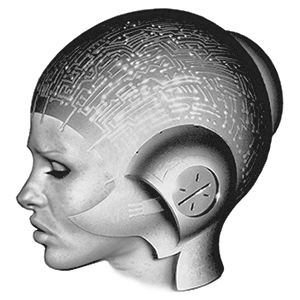
‘Burning Chrome‘ is a short story, written by William Gibson and first published in ‘Omni’ in 1982. Gibson first read the story at a science fiction convention in Denver in the autumn of 1981, to an audience of four people, among them Bruce Sterling (who Gibson later said ‘completely got it’). It was collected with the rest of Gibson’s early short fiction in a 1986 volume of the same name.
‘Burning Chrome’ tells the story of two hackers who breaking into computer systems for profit. The two main characters are Bobby Quine who specializes in software and Automatic Jack whose field is hardware. A third character in the story is Rikki, a girl with whom Bobby becomes infatuated and for whom he wants to become wealthy. Automatic Jack acquires a piece of Russian hacking software that is very sophisticated and hard to trace. The rest of the story unfolds with Bobby deciding to break into the system of a notorious and vicious criminal called Chrome, who handles money transfers for organized crime, and Automatic Jack reluctantly agreeing to help.
read more »
Posted in Art, Language, Technology |
Leave a Comment »
January 9, 2013

‘Neuromancer‘ is a 1984 novel by William Gibson, a seminal work in the cyberpunk genre and winner of the science-fiction ‘triple crown’ — the Nebula Award, the Philip K. Dick Award, and the Hugo Award. It was Gibson’s first novel and the beginning of the ‘Sprawl’ trilogy (which takes place in a near-future world dominated by corporations and ubiquitous technology, after a limited World War III).
The novel tells the story of a washed-up computer hacker hired by a mysterious employer to work on a dangerous hack. ‘Neuromancer’ is considered the archetypal cyberpunk work. Gibson himself coined the term ‘cyberspace’ in his novelette ‘Burning Chrome,’ published in 1982 by ‘Omni’ magazine.
read more »
Posted in Art, Language, Technology |
Leave a Comment »
January 9, 2013
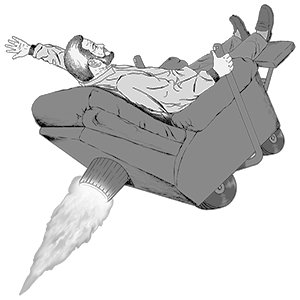
In 2009, Dennis LeRoy Anderson of Minnesota received widespread media attention for being arrested in a DWI case involving a motorized recliner. Riding a recliner which he had fitted with a motor, Anderson crashed into a car after leaving a local bar, where he had drunk a number of beers. The driver was convicted and the chair was confiscated by the police. The police auctioned the recliner away on Do-Bid.com for $3,700. 62-year-old Dennis LeRoy Anderson fitted his recliner with a lawnmower engine, wheels and steering wheel, which allowed the chair to reach up to 20 miles per hour. He had also installed a stereo, cup holders, headlights and a power antenna.
According to Minnesota law, a ‘motor vehicle’ is taken to mean ‘every vehicle that is self-propelled and every vehicle that is propelled by electric power obtained from overhead trolley wires. This means that a driver of any motorized vehicle, even a recliner, is liable under DWI legislation. Anderson’s blood alcohol content was three times over the legal limit for the state. In addition to this, vehicles can also be confiscated if the driver has a blood alcohol level over 0.2, or has a prior DWI conviction from the last 10 years. Anderson, in addition to having a blood alcohol level well over that limit, also had a prior conviction.
Posted in Humor, Politics, Technology |
Leave a Comment »
January 8, 2013

Anamanaguchi is a chiptune indie rock or ‘chip-punk’ band from New York City that ‘makes loud, fast music with a NES from 1985.’ The band has four members: lead songwriter Peter Berkman, bassist James DeVito, guitarist Ary Warnaar and drummer Luke Silas. Like other chiptune artists, Anamanaguchi creates music using synthesizers. However, unlike most chiptune bands, they use video game hardware from the mid-to-late 1980s: namely an NES and a Game Boy.
Berkman has stated that their music isn’t just based around video game music and that much of it is inspired by ‘[s]imple pop stuff, like Weezer and the Beach Boys.’ The band composed music for the videogame adaptation of the ‘Scott Pilgrim’ graphic novels, ‘Scott Pilgrim vs. the World: The Game.’ In 2010 it was announced that Anamanaguchi would appear in the popular music video game ‘Rock Band’ with the track ‘Airbrushed.’ The band’s song ‘Jetpack Blues, Sunset Hues’ is the current theme to Chris Hardwick’s ‘The Nerdist Podcast.’
Posted in Art, Games, Technology |
1 Comment »



