October 2, 2012


Whole brain emulation or mind uploading (sometimes called mind transfer) is the hypothetical process of transferring or copying a conscious mind from a brain to a non-biological substrate by scanning and mapping a biological brain in detail and copying its state into a computer system or another computational device.
The computer would have to run a simulation model so faithful to the original that it would behave in essentially the same way as the original brain, or for all practical purposes, indistinguishably. The simulated mind is assumed to be part of a virtual reality simulated world, supported by an anatomic 3D body simulation model. Alternatively, the simulated mind could be assumed to reside in a computer inside (or connected to) a humanoid robot or a biological body, replacing its brain.
read more »
Posted in Health, Philosophy, Technology |
6 Comments »
October 2, 2012

A posthuman is a concept originating notably in the fields of science fiction, futurology, contemporary art, and philosophy.
These multiple and interactive origins have contributed to profound confusion over the similarities and differences between the posthuman of ‘posthumanism’ (a line of philosophical reasoning) and the posthuman of ‘transhumanism’ (an intermediary form between the human and the hypothetical posthuman).
read more »
Posted in Health, Philosophy, Technology |
1 Comment »
October 2, 2012

Obsolescence [ob-suh-les-uhns] is the state of being which occurs when an object, service or practice is no longer wanted even though it may still be in good working order. Obsolescence frequently occurs because a replacement has become available that has advantages which outweigh the inconveniences related to purchasing the replacement. Obsolete refers to something that is already disused or discarded, or antiquated. Typically, obsolescence is preceded by a gradual decline in popularity.
Driven by rapid technological changes, new components are developed and launched on the market with increasing speed. The result is a dramatic change in production methods of all components and their market availability. A growing industry sector is facing issues where life cycles of products no longer fit together with life cycles of required components.
read more »
Posted in Money, Technology |
1 Comment »
October 1, 2012

A technology evangelist is a person who attempts to build a critical mass of support for a given technology in order to establish it as a technical standard in a market that is subject to network effects (when such effects are present, the value of a product or service is dependent on the number of others using it).
Professional technology evangelists are often employed by firms which seek to establish their proprietary technologies as de facto standards or to participate in setting non-proprietary open standards. Non-professional technology evangelists may act out of altruism or self-interest (e.g., to gain the benefits of early adoption or the network effect).
read more »
Posted in Language, Money, Technology |
2 Comments »
October 1, 2012

The Cult of Mac is a book by technology writer Leander Kahney about fanaticism for the Apple product line. Professor of marketing Russell Belk argues that, like a religion, the Cult of Mac is a belief system that helps its followers understand technology and the world.
The attitude of Apple sympathizers and fans is viewed by many as being ‘cult-like.’ According to neurological research cited by the BBC on their ‘Secrets of the Superbrands’ documentary, the response from the brain of an Apple enthusiast when viewing the brand-related symbols and imagery is similar to the one of a religious devotee when exposed to religious symbols and images. Apple founder Steve Jobs is compared to a god figure and savior, and his life story is said to resemble Joseph Campbell’s heroic adventure myths. Jobs was often viewed as a saintly figure to Mac users.
read more »
Posted in Money, Philosophy, Technology |
1 Comment »
October 1, 2012
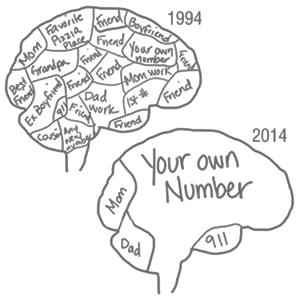
‘Is Google Making Us Stupid? What the Internet is doing to our brains’ is a magazine article by technology writer Nicholas G. Carr highly critical of the Internet’s effect on cognition. It was published in ‘The Atlantic’ magazine as a six-page cover story in 2008.
Carr’s main argument is that the Internet might have detrimental effects on cognition that diminish the capacity for concentration and contemplation. Despite the title, the article is not specifically targeted at Google, but more at the cognitive impact of the Internet and World Wide Web.
read more »
Posted in Education, Health, Technology |
Leave a Comment »
October 1, 2012

‘The Extended Mind‘ is a book in the field of philosophy of mind edited by MIT philosopher Richard Menary. It contains several papers by different philosophers. The ‘extended mind thesis’ (EMT) refers to an emerging concept that addresses the question as to the division point between the mind and the environment by promoting the view of active externalism.
The EMT proposes that some objects in the external environment are utilized by the mind in such a way that the objects can be seen as extensions of the mind itself. Specifically, the mind is seen to encompass every level of the cognitive process, which will often include the use of environmental aids.
read more »
Posted in Health, Philosophy, Technology |
Leave a Comment »
September 30, 2012

Like skydiving, space diving refers to the act of jumping from a plane, balloon, or spacecraft in outer space and falling to Earth’s atmosphere before parachuting to a landing. Depending on one’s definition of ‘space,’ the only historical case of a human intentionally space diving from the stratosphere is Joseph Kittinger, who jumped from a helium balloon at the height of 100,000 feet (approximately 30 kilometers).
Higher jumps from mesosphere or thermosphere have yet to be successfully performed, though Orbital Outfitters is working to create a suit that will enable safe space diving. Space diving from beyond the stratosphere has been imagined in various fictional contexts.
read more »
Posted in Games, Technology |
Leave a Comment »
September 27, 2012

Most heated clothing is designed for cold-weather sports and activities, such as motorcycle riding, downhill skiing, winter biking, and snowmobiling, trekking and for outdoor workers such as construction workers and carpenters. Normal insulation works by trapping body heat, so if it gets wet from sweat or rain, or if a person stops exercising, the insulation may not keep them warm.
With heated garments, a person can keep warm even if they are resting and not producing heat, or if their coat is damp from sweat. The most widely-available types of heated clothing are products for the extremities- the hands and feet. These body parts are the most likely to suffer frostbite or frostnip in severe cold. As such, many manufacturers make heated gloves, mittens, socks, and boot liners, and they can be purchased at workers’ supply stores (serving construction workers) and motor sports stores. Heated torso coverings (vests or jackets) or leggings are available from specialty retailers that cater to motorcyclists and downhill skiers.
read more »
Posted in Games, Money, Technology |
Leave a Comment »
September 27, 2012

Home automation (also called domotics) is the residential extension of ‘building automation’ (electronic which monitor and control the mechanical, electronics, and lighting systems in a building). ‘Building Automation Systems’ (BAS) keep the building climate within a specified range, provides lighting based on an occupancy schedule, and monitors system performance and device failures and provides email and/or text notifications to building staff.
Home automation may include centralized control of lighting, HVAC (heating, ventilation and air conditioning), appliances, and other systems, to provide improved convenience, comfort, energy efficiency, and security. Home automation for the elderly and disabled can provide increased quality of life for persons who might otherwise require caregivers or institutional care.
read more »
Posted in Money, Technology |
Leave a Comment »
September 27, 2012
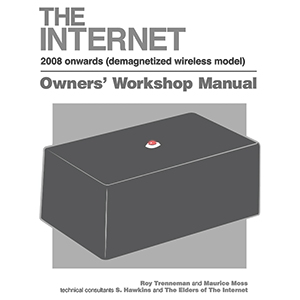
An Internet kill switch is the cybercrime and countermeasures concept of activating a single shut off mechanism for all Internet traffic. The theory behind a kill switch is creation of a single point of control for one authority or another to control in order to ‘shut down the internet to protect it’ from unspecified assailants. The prospect of cyberwarfare over the 2000s has prompted the drafting of legislation by US officials, but worldwide the implications of actually of ‘killing’ the Internet has prompted criticism of the idea in the United States.
During the 2010–2011 Middle East and North Africa protests in Tunisia, Egypt, and Libya access to the Internet was denied in an effort to limit peer networking to facilitate organization. The Communications Act of 1934 established the United States’ Federal regulation of electronic communications. In this act, created by the Franklin D. Roosevelt Administration enabled the president powers of control over the media under certain circumstances such as during wartime or a national emergency.
read more »
Posted in Politics, Technology, War |
Leave a Comment »
September 27, 2012

Cyberwarfare refers to politically motivated hacking to conduct sabotage and espionage. It is a form of information warfare sometimes seen as analogous to conventional warfare although this analogy is controversial for both its accuracy and its political motivation. U.S. government security expert Richard A. Clarke, in his book ‘Cyber War’ (2010), defines ‘cyberwarfare’ as ‘actions by a nation-state to penetrate another nation’s computers or networks for the purposes of causing damage or disruption.’
‘The Economist’ describes cyberspace as ‘the fifth domain of warfare,’ and William J. Lynn, U.S. Deputy Secretary of Defense, states that ‘as a doctrinal matter, the Pentagon has formally recognized cyberspace as a new domain in warfare . . . [which] has become just as critical to military operations as land, sea, air, and space.’
read more »
Posted in Technology, War, World |
1 Comment »



