September 24, 2012

Frugal innovation is the process of reducing the complexity and cost of a good and its production. Usually this refers to removing nonessential features from a durable good, such as a car or phone, in order to sell it in developing countries. Designing products for such countries may also call for an increase in durability, and unconventional distributions channels. Sold to so-called ‘overlooked consumers,’ firms hope volume will offset razor-thin profit margins.
Rising incomes in developing countries may also drive frugal innovation. Many terms are used to refer to the concept. ‘Frugal engineering’ was coined by Carlos Ghosn, the joint chief of Renault and Nissan, who stated, ‘frugal engineering is achieving more with fewer resources.’ Frugal innovation isn’t solely the domain of large multinational corporations. While General Electric may win plaudits for its $800 EKG machines, cheap cell phones made by local, no-name companies and no-frills wire frame eyeglasses are equally good examples of frugal innovation.
read more »
Posted in Money, Technology, World |
Leave a Comment »
September 17, 2012
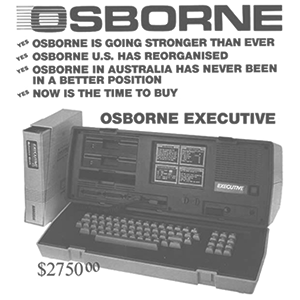
The Osborne effect is a term referring to the unintended consequence of the announcement of a future product ahead of its availability and its impact upon the sales of the current product.
Pre-announcement is done for several reasons: to reassure current customers that there is improvement or lower cost coming, to increase the interest of the media and investors in the company’s future prospects, and to intimidate or confuse competitors. When done correctly, the sales or cash flow impact to the company is minimal, as the revenue drop for the current product is replaced by orders or completed sales of the new product as it becomes available.
read more »
Posted in Money, Technology |
Leave a Comment »
September 15, 2012

Yahoo! Answers (formerly known as ‘Yahoo! Q & A’) is a community-driven question-and-answer (Q&A) site or a knowledge market launched by Yahoo! in 2005 that allows users to both submit questions to be answered and answer questions asked by other users.
The site gives members the chance to earn points as a way to encourage participation and is based on a service developed by Naver (a popular search portal in South Korea).
read more »
Posted in Humor, Technology, World |
Leave a Comment »
September 15, 2012


A knowledge market is a mechanism for distributing knowledge resources. There are two views on knowledge and how knowledge markets can function. One view uses a legal construct of intellectual property to make knowledge a typical scarce resource, so the traditional commodity market mechanism can be applied directly to distribute it.
An alternative model is based on treating knowledge as a public good and hence encouraging free sharing of knowledge. This is often referred to as attention economy. Currently there is no consensus among researchers on relative merits of these two approaches.
read more »
Posted in Money, Politics, Technology |
Leave a Comment »
September 13, 2012

In computing a 10-foot user interface is a software GUI (graphical user interface) designed for display on a large television (or similar sized screen) with interaction using a regular television-style remote control. ’10-foot’ refers to the fact that the GUI’s elements—i.e. menus, buttons, text fonts, and so on—are theoretically ergonomically large enough to read easily at a distance of 10 feet (3 m) from the display. To avoid distractions and to be more clear, 10 foot UIs also tend to be very simple and usually only have the minimum core buttons.
Typical examples of popular 10-foot user interfaces are HTPC (Home theater PC) media center software applications such as Google TV, MediaPortal, XBMC, Windows Media Center, and Front Row / Apple TV interfaces, but most other Smart TV and set-top boxes devices and software with interactive television interfaces also belong in this category. In 2010, Hillcrest Labs released the Kylo browser, which is a web browser optimized for television use, which features a 10-foot user interface. Hillcrest also invented the first motion-controlled remote for television.
read more »
Posted in Money, Technology |
Leave a Comment »
September 13, 2012


Ron Fricke is an American film director and cinematographer, considered to be a master of time-lapse photography and large format cinematography. He was the director of photography for ‘Koyaanisqatsi’ (a film consisting primarily of slow motion and time-lapse footage) in 1982 and directed the purely cinematic non-verbal non-narrative feature ‘Baraka’ (1992). He designed and used his own 65 mm camera equipment for ‘Baraka’ and his later projects.
He also directed the IMAX films ‘Chronos’ (1985) and ‘Sacred Site’ (1986). His most recent work was as cinematographer for parts of the film ‘Star Wars Episode III: Revenge of the Sith’ (he was hired to shoot the eruption of Mt. Etna in Sicily for use in scenes of the volcanic planet Mustafar). The sequel to ‘Baraka,’ ‘Samsara,’ premiered at the Toronto International Film Festival in 2011. Fricke writes about his work: ‘I feel that my work has evolved through ‘Koyaanisqatsi,’ ‘Chronos’ and ‘Baraka.’ Both technically and philosophically I am ready to delve even deeper into my favorite theme: humanity’s relationship to the eternal.’
Posted in Art, Philosophy, Technology |
Leave a Comment »
September 13, 2012

70mm film is a wide high-resolution film gauge, with higher resolution than standard 35mm motion picture film format. As used in camera, the film is 65 mm wide. The additional 5mm are for magnetic strips holding four of the six tracks of sound.
Although more recent 70 mm prints use digital sound encoding, the vast majority of 70 mm prints predate this technology. Each frame is five perforations tall, with an aspect ratio of 2.20:1. The vast majority of film theaters are unable to handle 70mm film, and so original 70mm films are shown with 35mm prints at these venues.
read more »
Posted in Art, Money, Technology |
1 Comment »
September 13, 2012

In cinematography, full frame refers to the use of the full film gate (the rectangular opening in the front of a motion picture camera where the film is exposed to light) at maximum width and height for 35mm film cameras. It is sometimes also referred to as ‘silent aperture’ or ‘full gate.’
It is the original gate size pioneered by William Dickson and Thomas Edison in 1892 and first used in the short film ‘Blacksmithing Scene.’ Full frame is generally used by all 4-perf (four perforations per frame) films, whether silent, standard 35 (Academy ratio width), or Super 35.
read more »
Posted in Language, Technology |
Leave a Comment »
September 13, 2012
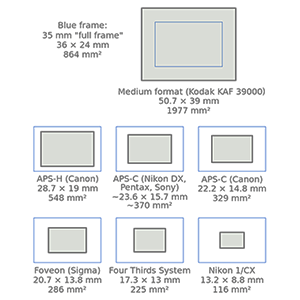
A full-frame digital SLR is a digital single-lens reflex camera fitted with an image sensor that is the same size as a 35 mm (36×24 mm) film frame. This is in contrast to cameras with smaller sensors, typically of a size equivalent to APS-C-size film (20.7×13.8 mm to 28.7×19.1 mm), much smaller than a full 35 mm frame.
Currently, the majority of digital cameras, both compact and SLR models, use a smaller-than-35 mm frame, as it is easier and cheaper to manufacture imaging sensors at a smaller size. Historically, the earliest digital SLR models, such as the Nikon NASA F4 or Kodak DCS 100, also used a smaller sensor.
read more »
Posted in Money, Technology |
1 Comment »
September 12, 2012

America is a 2012 studio album by American electronic musician Dan Deacon. The album cover is a photo of Lake Placid. America was recorded using both electronic sounds and live recordings.
An anechoic (echo-free) chamber was built in Baltimore to record the orchestral track ‘Rail.’ Deacon felt that electronic beats were limited by a lack of flaws; he said that he wanted the ‘slight imperfection in timing’ human musicians have.
read more »
Posted in Art, Politics, Technology |
Leave a Comment »
September 11, 2012

Ad filtering or ad blocking is removing or altering advertising content in a webpage. Advertising can exist in a variety of forms including pictures, animations, embedded audio and video, text, or pop-up windows. Very often it employs autoplay of audio and video.
It is a known problem with most web browsers that restoring sessions often plays multiple embedded ads at once. All browsers offer some solution to the problem, either by targeting technologies (Flash/Shockwave, Window Media files, etc.) that are used to deliver ads, targeting URLs that are the source of ads, or targeting behavior characteristic of ads (such as the use of HTML5 autoplay of both audio and video).
read more »
Posted in Money, Politics, Technology |
Leave a Comment »
September 11, 2012

Commercial skipping is an advanced feature in some digital video recorders that makes it possible to automatically skip commercials in recorded programs. This feature has created controversy, with major television networks and movie studios claiming it violates copyright and should be banned. For many years, video recorders manufactured for the Japanese market have been able to skip advertisements automatically, which is done by detecting when foreign language audio overdub tracks provided for many programs go silent, as advertisements were broadcast with a single language only.
The first DVR which had a built-in Commercial skipping feature was ReplayTV with its ‘4000 Series’ and ‘5000 Series’ units. In 2002 five owners of the ReplayTV DVR sued the main television networks and movie studios, asking the federal judge to uphold consumers’ rights to record TV shows and skip commercials claiming that features like commercial skipping help parents protect their kids from excessive consumerism. ReplayTV ended up filing for bankruptcy in 2003 after fighting a copyright infringement suit over the ReplayTV’s ability to skip commercials.
read more »
Posted in Money, Politics, Technology |
1 Comment »



