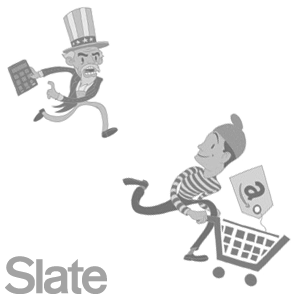
Amazon.com has been criticized for collecting sales taxes from customers in only the five states it has a major presence in. Several states have passed or are considering ‘Amazon tax‘ laws designed to compel Amazon to collect local sales and use taxes from customers. The U.S. has no federal sales tax. In most countries where Amazon operates, a sales tax or value added (consumption) tax is uniform throughout the country, and Amazon is obliged to collect it from all customers.
Proponents argue that Amazon has a comparative advantage over brick-and-mortar retailers, and the online company is under increasing legal and political pressure from state governments, traditional retailers and other groups because of its refusal to collect sales tax in 40 of the 45 states with a statewide sales tax. Those 40 states include at least 12 where Amazon has a clear physical presence via distribution centers and wholly owned subsidiaries.
read more »
Amazon Tax
LifeLock

LifeLock Inc., founded in 2005, is an American identity theft protection company based in Arizona. The company charges $10 a month for the LifeLock identity theft protection system intended to detect fraudulent applications for some forms of credit and non-credit related services.
LifeLock’s CEO Todd Davis was the victim of identity theft 13 times during 2007 and 2008, after he publicly posted his Social Security number on billboards and in TV commercials as part of a campaign to promote the company’s identity theft protection services.
read more »
Uber

Uber (formerly UberCab) is a venture-funded startup company based in San Francisco that makes a mobile application that connects passengers with drivers of luxury vehicles (e.g. Lincoln, Cadillac, BMW) for hire.
The company arranges pickups in the San Francisco Bay Area, New York City, Los Angeles, Seattle, Chicago, Boston, Washington, D.C., Vancouver, Toronto, Paris, and Philadelphia. Cars are reserved by sending a text message or by using a mobile app. Using the apps, customers can track their reserved car’s location.
read more »
Online Disinhibition Effect

The core concept of the Online Disinhibition Effect refers to a loosening (or complete abandonment) of social restrictions and inhibitions that would otherwise be present in normal face-to-face interaction during interactions with others on the Internet. Because of the loss of inhibition, some users may exhibit benign tendencies; people may become more affectionate, more willing to open up to others, less guarded about their emotions and may speak to others about what they are feeling in an attempt to achieve emotional catharsis.
According to psychologist John Suler, this particular occurrence is called benign disinhibition. With respect to bad behavior, users on the Internet can frequently do or say as they wish without fear of any kind of meaningful reprisal. In most Internet forums, the worst kind of punishment one can receive for bad behavior is usually being banned from a particular site. In practice, however, this serves little use; the person involved can usually circumvent the ban by simply registering another username and continuing the same behavior as before. Suler calls this toxic disinhibition.
read more »
Poka-yoke
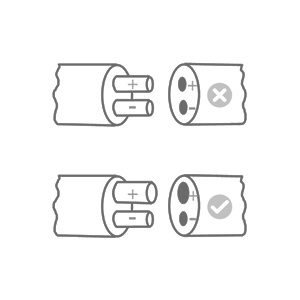
Poka-yoke is a Japanese term that means ‘fail-safing’ or ‘mistake-proofing.’ A poka-yoke is any mechanism in a lean manufacturing process that helps an equipment operator avoid (‘yokeru’) mistakes (‘poka’).
Its purpose is to eliminate product defects by preventing, correcting, or drawing attention to human errors as they occur. The concept was formalized, and the term adopted, by Shigeo Shingo as part of the Toyota Production System. It was originally described as ‘baka-yoke,’ but as this means ‘fool-proofing’ (or ‘idiot-proofing’) the name was changed to the milder poka-yoke. More broadly, the term can refer to any behavior-shaping constraint designed into a process to prevent incorrect operation by the user.
read more »
International Linear Collider
The International Linear Collider (ILC) is a proposed linear particle accelerator to succeed the Large Hadron Collider (LHC), the world’s largest and highest-energy particle accelerator. The ILC is planned to have a collision energy of 500 GeV initially, with the possibility for a later upgrade to 1,000 GeV (1 TeV).
The host country for the accelerator has not yet been chosen and proposed locations are Japan, Europe (CERN), and the USA (Fermilab). Japan is considered the most likely candidate, as the Japanese government is willing to contribute half of the costs, according to a representative for the European Commission on Future Accelerators.
read more »
Corkscrew

A corkscrew is a kitchen tool for drawing corks from wine bottles. Generally, a corkscrew consists of a pointed metallic helix (often called the ‘worm’) attached to a handle.
The user grips the handle and screws the metal point into the cork, until the helix is firmly embedded, then a vertical pull on the corkscrew extracts the cork from the bottle. Corkscrews are necessary because corks themselves, being small and smooth, are difficult to grip and remove, particularly when inserted fully into an inflexible glass bottle. The handle of the corkscrew, often a horizontal bar of wood attached to the screw, allows for a commanding grip to ease removal of the cork. Corkscrew handles may incorporate levers that further increase the amount of force that can be applied outwards upon the cork.
read more »
Ask Me Anything

Ask Me Anything refers to when a user of an internet forum invites questions from other users.
Usually it is designated by the abbreviation AMA.
Side by Side
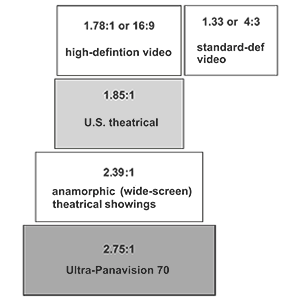
Side by Side is an American documentary film released in 2012 directed by Chris Kenneally and produced by Justin Szlasa and Keanu Reeves who also stars in the film. The film explores the art, science and impact of digital cinema through interviews with leading directors, cinematographers, film students, producers, technologists, editors, and exhibitors.
The movie examines all aspects of feature filmmaking: capture, editing, visual effects, color correction, distribution, and archiving. Reeves explores the development of cinema and the impact of digital filmmaking via in-depth interviews with Hollywood masters, such as James Cameron, David Fincher, David Lynch, Christopher Nolan, Martin Scorsese, George Lucas, Steven Soderbergh, Danny Boyle, and others.
Ron Geesin
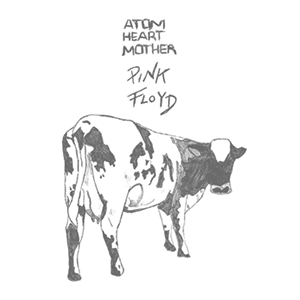
Ron Geesin (b. 1943) is a British musician and composer, noted for his quirky creations and novel applications of sound. He is probably best known as the orchestrator and organizer of Pink Floyd’s ‘Atom Heart Mother’ in 1970, after the band found themselves hopelessly deadlocked over how to complete it.
Geesin first collaborated with the band’s Roger Waters (the two shared a love of golf) on 1970’s unconventional film soundtrack ‘Music from ‘The Body,” sampling sounds made by the human body. Ron Geesin played piano with The Original Downtown Syncopators, a Dixieland band emulating the Original Dixieland Band during the 1960s. The band was based in Sussex, UK.
read more »
Electro House

Electro house is a subgenre of house music influenced by 1980s music. The term has been used to describe the music of many of the world’s top DJs, such as David Guetta, deadmau5, Skrillex, and Tiësto. Electro house, sometimes resembling tech house (a hybrid of techno with house), typically retains elements of house music and can incorporate electro-influenced synths and samples.
It often has a ‘dirty’ bass sound created from saw waves with compression and distortion. The exact origins of the genre are uncertain; it has sometimes been seen as a fusion of electro and house; or a term using ‘electro’ as an adjective (meaning ‘futuristic’ or ‘hard’). French house, by artists such as Justice and especially Daft Punk, has also been considered a strong influence.
read more »
Molecular Mixology
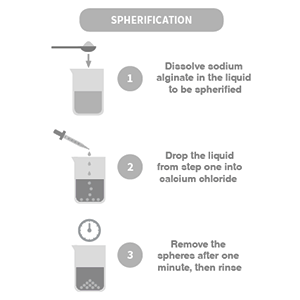
Molecular Mixology is the term applied to the process of creating cocktails using the scientific equipment and techniques of molecular gastronomy. These methods enable the creation of greater intensities and varieties of flavor, flavor combinations, and different ways of presenting drinks, for example using gels, powders, foams, atomized sprays, etc., as well as affecting the aesthetic qualities of the cocktail.
‘The Art of Drink’ website suggests that the earliest example of what we now call molecular mixology is the long-established bartending practice of layering ingredients in cocktails. This experimentation with the density and viscosity of fluids uses the principles of scientific investigation that are fundamental to molecular mixology.
read more »



