August 24, 2012

Evgeny Morozov (b. 1984) is a Belarusian writer and researcher who studies political and social implications of technology. In 2009 he was chosen as a TED fellow where he spoke about how the Web influences civic engagement and regime stability in authoritarian, closed societies or in countries ‘in transition.’
Morozov expresses skepticism about the popular view that the Internet is helping to democratize authoritarian regimes, arguing that it could also be a powerful tool for engaging in mass surveillance, political repression, and spreading nationalist and extremist propaganda. He has also criticized what he calls ‘The Internet Freedom Agenda’ of the US government, finding it naive and even counterproductive to the very goal of promoting democracy through the Web.
read more »
Posted in Politics, Technology, World |
Leave a Comment »
August 23, 2012

Waze is a free GPS application featuring turn-by-turn navigation, developed by the Israeli start-up Waze Mobile for mobile phones. Waze differs from traditional GPS navigation software as it is a community-driven application and learns from users’ driving times to provide routing and real-time traffic updates.
Additionally, people can report accidents, traffic jams, speed traps, police and can update roads, landmarks, house numbers, etc. Waze also helps users find the cheapest, closest gas station around them or along their route. Waze is available for download and use anywhere in the world, but some countries have a full basemap, whereas other countries still require users to record the roads and edit the maps.
Posted in Games, Technology, World |
Leave a Comment »
August 23, 2012

Pocket dialing (also known as butt dialing) refers to the accidental placement of a phone call while a person’s mobile phone or cordless phone is in the owner’s pocket or handbag. If the caller remains unaware, the recipient will sometimes overhear whatever is happening in the caller’s vicinity. Typically, the call is caused by objects in a person’s pocket or bag poking buttons on the phone. Because of typical sequences of button presses, the accidentally dialed number is often one that has been recently called from that phone, or one near the beginning or end of the phone’s contact list; a consequence of this is that people whose names begin with letters near the beginning or the end of the alphabet sometimes receive more accidental calls.
The keypad lock feature found on most mobile phones is intended to help prevent accidental dialing. However, it is still possible to forget to activate this lock (if the phone does not automatically activate it after a timeout), or to deactivate it accidentally. Many phones allow the emergency number to be called even when the keylock is active. In addition to the inconvenience and embarrassment that may result from an erroneously dialed number, the phenomenon can have other consequences including using up a phone user’s airtime minutes. Apps to prevent pocket dialing exist for smartphones. Several are available for Android based phones such as Call Confirm.
Posted in Humor, Language, Technology |
1 Comment »
August 22, 2012

The Sinclair C5 is a battery electric vehicle invented by British entrepreneur Sir Clive Sinclair in the United Kingdom in 1985. The vehicle is a battery-assisted tricycle steered by a handlebar beneath the driver’s knees. Powered operation is possible making it unnecessary for the driver to pedal.
Its top speed of 15 miles per hour (24 km/h), is the fastest allowed in the UK without a driving licence. It is powered by a 200w or 250W motor. It sold for £399 plus £29 for delivery. It became an object of media and popular ridicule during 1980s Britain and was a commercial disaster, selling only around 17,000 units, although according to Sinclair, it was ‘the best selling electric vehicle’ until 2011 when the Nissan Leaf had sold over 20,000 units.
read more »
Posted in Money, Technology, World |
Leave a Comment »
August 13, 2012
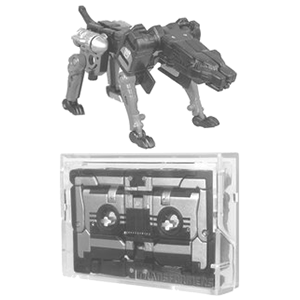
Cassette culture refers to the practices surrounding amateur production and distribution of recorded music that emerged in the late 1970s via home-made audio cassettes. It is characterized by the adoption of home-recording by independent artists, and involvement in ad-hoc self-distribution and promotion networks – primarily conducted through mail (though there were a few retail outlets, such as Rough Trade and Falling A in the UK) and fanzines.
The culture was in part an offshoot of the mail art movement of the 1970s and 1980s, and participants engaged in tape trading in addition to traditional sales. The culture is related to the DIY ethic of punk, and encouraged musical eclecticism and diversity.
read more »
Posted in Art, Money, Technology |
Leave a Comment »
August 9, 2012
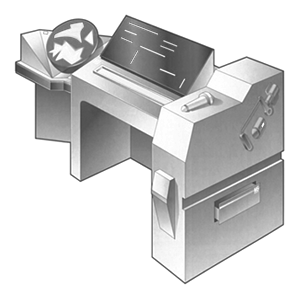
‘The Ultimate Computer‘ is a season two episode of ‘Star Trek,’ first broadcast in 1968, written by D.C. Fontana, based on a story by Laurence N. Wolf and directed by John Meredyth Lucas. In the episode, a skeleton Enterprise crew are assigned to test a revolutionary computer system, the M-5, that is given total control of the ship. Designed by the brilliant Dr. Richard Daystrom (who’d also invented the currently used computer systems), the M-5 handles all ship functions without human assistance. While Captain Kirk and Chief Medical Officer Dr. McCoy are unhappy about the test, Science Officer Spock is impressed with M-5.
At first M-5 works well, performing ship functions more quickly and efficiently than a living crew. Later, M-5 exhibits quirks such as turning off power and life support to unoccupied parts of the ship. It draws increased power for unknown reasons. Daystrom maintains M-5 is working properly. In a drill, M-5 defends the Enterprise against mock attacks from starships Excalibur and Lexington. The Enterprise is declared the victor, prompting Commodore Wesley to call Kirk ‘Captain Dunsel.’ Spock explains the term is used by midshipmen at Starfleet Academy to describe a part serving no useful purpose. Kirk is visibly shaken by this.
read more »
Posted in Art, Technology |
Leave a Comment »
August 6, 2012

Robochrist Industries is a robotic performance art troupe most notably recognized for its performances in and around Los Angeles during the years 1997 – 2005. The performances feature large radio-controlled robots moving among and eventually destroying props and set-pieces intended to convey specific theatrical narratives. The troupe is a direct offshoot of Survival Research Laboratories (SRL), a pioneer in machine performance art.
Ristow worked on several SRL performances, contributing not only props but also, particularly in the years 1996 and 1997, robots that he had constructed. During this period Ristow also participated in several collaborative performances with another San Francisco based performance group, The Seemen, including the often cited ‘Hellco’ performance at the 1996 Burning Man festival.
read more »
Posted in Art, Technology |
1 Comment »
August 6, 2012

Survival Research Laboratories (SRL) is a machine performance art group credited for pioneering the genre of large-scale machine performance. After about 30 years in San Francisco, SRL spent most of 2008 moving 40 miles north to Petaluma. Since its inception in 1978 SRL has operated as an organization of creative technicians and technical creatives dedicated to redirecting the techniques, tools, and tenets of industry, science, and the military away from their typical manifestations in practicality, product or warfare.
Since 1979, SRL has staged over 45 mechanized presentations in the United States and Europe. Each performance consists of a unique set of ritualized interactions between machines, robots, and special-effects devices, employed in developing themes of socio-political satire. Humans are present only as audience or operators.
read more »
Posted in Art, Humor, Technology |
Leave a Comment »
August 6, 2012

The Curiosity rover is a nuclear-powered exploration vehicle that is part of NASA’s Mars Science Laboratory (MSL) mission. The MSL spacecraft was launched in late 2011 and successfully landed on Aeolis Palus in Gale Crater in the summer of 2012. The approximately 2 billion-year-old impact crater is hypothesized to have gradually been filled in, first by water-deposited, and then by wind-deposited sediments, possibly until it was completely covered, before wind erosion scoured out the sediments, leaving an isolated 5.5 km (3.4 mile) high mountain, Aeolis Mons, at the center of the 154 km (96 mi) wide crater.
Thus, it is believed that the rover may have the opportunity to study two billion years of Martian history in the sediments exposed in the mountain. Additionally, its landing site should be on or near an alluvial fan, which is hypothesized to be the result of a flow of ground water, either before the deposition of the eroded sediments or else in relatively recent geologic history.
read more »
Posted in Science, Technology, World |
Leave a Comment »
August 6, 2012

‘Who Controls the Internet? Illusions of a Borderless World’ is a 2006 book by law professors Jack Goldsmith and Tim Wu that offers an assessment of the struggle to control the Internet. Starting with a discussion of the early vision of a borderless global community, the authors present some of the most prominent individuals, ideas, and movements that have played key roles in developing the Internet.
The book asserts the important role of government in maintaining Internet law and order while debunking the claims of techno-utopianism that have been espoused by theorists such as Thomas Friedman. In the 1990s the Internet was greeted as the ‘New New Thing’: It would erase national borders, give rise to communal societies that invented their own rules, undermine the power of governments. Goldsmith and Wu explain why these early assumptions were mostly wrong. The Internet turns out to illustrate the enduring importance of Old Old Things, such as law and national power and business logic.
read more »
Posted in Language, Politics, Technology |
Leave a Comment »
August 3, 2012

Dennō Coil (literally ‘Electric Brain Coil’) is a Japanese anime television series depicting a near future where semi-immersive augmented reality (AR) technology has just begun to enter the mainstream. The series takes place in the fictional city of Daikoku, a hotbed of AR development with an emerging city-wide virtual infrastructure.
It follows a group of children as they use AR glasses to unravel the mysteries of the half real, half Internet city, using a variety of illegal software tools, techniques, and virtual pets to manipulate the digital landscape. The show was in development for over a decade, and was the directorial debut of Japanese animator Mitsuo Iso. It premiered on NHK Educational TV in 2007.
read more »
Posted in Art, Technology, World |
Leave a Comment »
August 3, 2012

The Internet of Things refers to uniquely identifiable objects (things) and their virtual representations in an Internet-like structure. The term ‘Internet of Things’ was first used by British technology pioneer Kevin Ashton in 1999.
The concept first became popular through his Auto-ID Center at MIT, which created a global standard system for RFID (radio-frequency identification) and other sensors. RFID is often seen as a prerequisite for the Internet of Things. If all objects and people in daily life were equipped with radio tags, they could be identified and inventoried by computers. However, unique identification of things may be achieved through other means such as barcodes, QR codes, and advanced computer object recognition.
read more »
Posted in Money, Technology |
1 Comment »



