July 27, 2012

Crypto-anarchism refers to the use of cryptographic software to evade prosecution and harassment while sending and receiving information over computer networks, thereby protecting privacy and political freedom. In a sense, the encrypted anonymous networks (the ‘cipherspace’) can be regarded as an independent lawless territory or as an autonomous zone. However, participants may in theory voluntarily create new laws using smart contracts (computer protocols that facilitate, verify, or enforce the negotiation or performance of a contract, or that obviate the need for a contractual clause) or, if the user is pseudonymous, depend on online reputation.
The ‘crypto’ in crypto-anarchism should not be confused with the use of the prefix ‘crypto-‘ to indicate an ideology or system with an intentionally concealed or obfuscated ‘true nature.’ For example, some would use the term ‘crypto-fascist’ to describe an individual or organization that holds fascist views and subscribes to fascist doctrine but conceals their agenda so long as these doctrines remain socially unacceptable. However, Timothy C. May’s ‘Cyphernomicon’ (one of the philosophy’s founding documents, posted in 1994) indicates that the term ‘crypto-anarchist’ was partially intended as a pun on this usage, even though he did not intend to conceal his beliefs or agenda.
read more »
Posted in Philosophy, Politics, Technology |
Leave a Comment »
July 26, 2012

The Hidden Wiki is a website that uses hidden services available through the Tor network. The use of Tor to provide anonymity allows the site to advertise links to a range of other sites, including ones offering illegal drugs and child pornography. The site provides a range of links in a wiki format to other hidden services and sites on the clearnet (sites that can be accessed in a standard browser).
These include links to child pornography sites, sites selling drugs and other contraband such as the Silk Road. Scot Terban, an independent security researcher, commented: ‘It’s kind of like any black market operation except this one was in cyberspace and pretty much completely anonymous. Because it was anonymous, people felt free to trade openly in illegal things, mess around by putting up ads for services like hired assassins, and in the end, became a haven for pedophiles and their content.’
read more »
Posted in Money, Politics, Technology |
Leave a Comment »
July 26, 2012
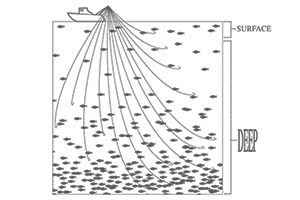

Silk Road is an online marketplace that its operators run as a Tor hidden service (anonymous and encrypted). Visitors must use Tor software to access the marketplace. The majority of products that sellers list on Silk Road qualify as contraband in most jurisdictions. ‘NPR’ has referred to the site as the ‘Amazon.com of illegal drugs.’ Buyers and sellers conduct all transactions with bitcoins (an encrypted digital currency).
Although the bitcoin’s exchange rate may fluctuate greatly in short periods of time, most of the prices on Silk Road are bound to United States dollar to prevent too drastic inflation or deflation. Buyers can register on Silk Road for free, but sellers must purchase new accounts through auctions to mitigate the possibility of malicious individuals distributing tainted goods.
read more »
Posted in Drugs, Money, Technology |
Leave a Comment »
July 26, 2012
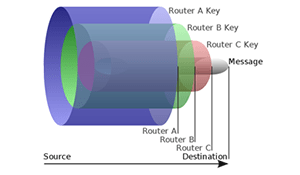

The Onion Router or Tor is a server that keeps users anonymous on the Internet. Tor client software directs internet traffic through a worldwide volunteer network of servers (making several ‘hops’) to conceal a user’s location or usage from anyone conducting network surveillance or traffic analysis.
Using Tor makes it more difficult to trace Internet activity, including visits to Web sites, online posts, and instant messages, IRC, and bittorrent and is intended to protect users’ personal freedom, privacy, and ability to conduct confidential business by keeping their internet activities from being monitored. The Tor client is free software and use of the Tor network is free of charge.
read more »
Posted in Politics, Technology, World |
Leave a Comment »
July 25, 2012


Ambient awareness is a term used by social scientists to describe a new form of peripheral social awareness. This awareness is propagated from relatively constant contact with one’s friends and colleagues via social networking platforms on the Internet. Marketing professor Andreas Kaplan defines ambient awareness as ‘awareness created through regular and constant reception, and/or exchange of information fragments through social media.’
The term essentially defines the sort of omnipresent knowledge one experiences by being a regular user of media outlets that allow a constant connection with one’s social circle. According to Clive Thompson of ‘The New York Times,’ ambient awareness is ‘very much like being physically near someone and picking up on mood through the little things; body language, sighs, stray comments…’ Therefore, in effect two friends who regularly follow one another’s digital information can already be aware of each other’s lives without actually being physically present to have a conversation.
read more »
Posted in Language, Money, Technology |
Leave a Comment »
July 24, 2012

Projection mapping is a technology used to turn irregularly shaped objects into a display surface for projection. After the object is chosen or created, a virtual replica of the entire physical setup is created. A virtual model of the projection surface is created, and placed within a virtual environment. Coordinates need to be defined for where the object is placed in relation to the projector. Finally, the xyz orientation, position, and lens specification of the projector are adding to the virtual scene.
Video mapping first gained notoriety through guerilla advertising campaigns and video jockeys for electronic musicians. These advertising campaigns commonly used mapping techniques to project interactive scenes onto the sides of buildings. Common techniques for these performances included both 3-D mapping techniques and 3D projection to create the illusion of depth.
Posted in Technology |
Leave a Comment »
July 24, 2012

A prepared piano is a piano that has had its sound altered by placing objects (preparations) between or on the strings or on the hammers or dampers. The idea of altering an instrument’s timbre through the use of external objects has been applied to instruments other than the piano, including the guitar and harp. Richard Bunger wrote a book ‘The Well Prepared Piano’ in which he explains how John Cage prepared his pianos and even which pianos are suitable, because of the deviation of string lengths within different brands.
Bunger also clarifies why the preparations were done in such ways; in other words, which adaptation creates which sounds (harmonics obtained, timbrel effects, etc.). The timbre of the instrument changes dramatically when preparations are introduced. Much of the technique is related to the harmonic positions of the strings. For instance a preparation on 1/2 of the string length causes a different sound than on 1/3. The preparations don’t cause a random sound, as is often assumed.
read more »
Posted in Art, Technology |
Leave a Comment »
July 23, 2012

Idiopathic environmental intolerance attributed to electromagnetic fields (IEI-EMF) is a set of claims of adverse medical symptoms purportedly caused by exposure to electromagnetic fields. Other terms for IEI-EMF include electromagnetic hypersensitivity (EHS), electrohypersensitivity, electro-sensitivity, and electrical sensitivity (ES).
Although the thermal effects of electromagnetic fields on the body are established, self-described sufferers of electromagnetic hypersensitivity report responding to non-ionizing electromagnetic fields (or electromagnetic radiation) at intensities well below the limits permitted by international radiation safety standards. The majority of provocation trials to date have found that self-described sufferers of electromagnetic hypersensitivity are unable to distinguish between exposure to real and fake electromagnetic fields, and it is not recognized as a medical condition by the medical or scientific communities.
read more »
Posted in Health, Technology |
Leave a Comment »
July 23, 2012


Rhythm game refers to a genre of music-themed action video games. Games in the genre typically focus on dance or the simulated performance of musical instruments, and require players to press buttons in a sequence dictated on the screen. Doing so causes the game’s protagonist or avatar to dance or to play their instrument correctly, which increases the player’s score.
Many rhythm games include multiplayer modes in which players compete for the highest score or cooperate as a simulated musical ensemble. While conventional control pads may be used as input devices, rhythm games often feature novel game controllers that emulate musical instruments. Certain dance-based games require the player to physically dance on a mat, with pressure-sensitive pads acting as the input device.
read more »
Posted in Games, Money, Technology |
Leave a Comment »
July 23, 2012

PaRappa the Rapper is a rhythm video game (e.g. ‘Dance Dance Revolution’ and ‘Guitar Hero’) for the Sony PlayStation created by Masaya Matsuura (the former leader of the Japanese ‘Hyper Pop Unit’ PSY S) and his NanaOn-Sha company.
While the gameplay is not challenging for experienced gamers, the game is remembered for its unique graphic design, its quirky soundtrack and its bizarre plot. Despite being made in Japan, all of the game’s songs and dialogue are spoken in English in all versions. The game is named after its protagonist, Parappa, a 2D rapping dog with the motto, ‘I gotta believe!’ His name comes from the Japanese term for ‘paper thin.’
read more »
Posted in Games, Humor, Technology |
Leave a Comment »
July 23, 2012

Gitaroo Man is a 2001 rhythm video game developed by iNiS and published by Koei for PlayStation 2. The game features visual design by pop artist 326 (Mitsuru Nakamura) and an original soundtrack by Japanese band COIL. The player character is U-1, a young boy who finds out he is the last legendary hero of Planet Gitaroo, and the possessor of the Last Gitaroo, a legendary guitar.
Despite a number of positive reviews, the North American and European versions of ‘Gitaroo Man’ were produced in very low quantities by Koei and, as a result, have become somewhat rare; it is regarded as a cult video game. Around 2005 in North America, copies began popping up in GameStop game stores. This was due to a reprint by GameQuestDirect, similar to their previous reprints of PlayStation RPGs ‘Persona 2’ and ‘Rhapsody: A Musical Adventure,’ both of which were previously very rare.
Posted in Art, Games, Technology |
Leave a Comment »
July 19, 2012

In economics, the Jevons [jev-uhnz] paradox is the proposition that technological progress that increases the efficiency with which a resource is used tends to increase (rather than decrease) the rate of consumption of that resource. In 1865, the English economist William Stanley Jevons observed that technological improvements that increased the efficiency of coal use led to increased consumption of coal in a wide range of industries. He argued that, contrary to intuition, technological improvements could not be relied upon to reduce fuel consumption.
The issue has been re-examined by modern economists studying consumption rebound effects from improved energy efficiency. In addition to reducing the amount needed for a given use, improved efficiency lowers the relative cost of using a resource, which tends to increase the quantity of the resource demanded, potentially counteracting any savings from increased efficiency. Additionally, increased efficiency accelerates economic growth, further increasing the demand for resources. The Jevons paradox occurs when the effect from increased demand predominates, causing resource use to increase.
read more »
Posted in Money, Politics, Technology |
Leave a Comment »




