July 18, 2012


Cradle-to-cradle design (C2C) is a biomimetic approach to the design of systems. It models human industry on nature’s processes in which materials are viewed as nutrients circulating in healthy, safe metabolisms. It suggests that industry must protect and enrich ecosystems and nature’s biological metabolism while also maintaining safe, productive technical metabolism for the high-quality use and circulation of organic and synthetic materials.
Put simply, it is a holistic economic, industrial and social framework that seeks to create systems that are not just efficient but essentially waste free. The model in its broadest sense is not limited to industrial design and manufacturing; it can be applied to many different aspects of human civilization such as urban environments, buildings, economics, and social systems.
read more »
Posted in Money, Technology |
Leave a Comment »
July 17, 2012
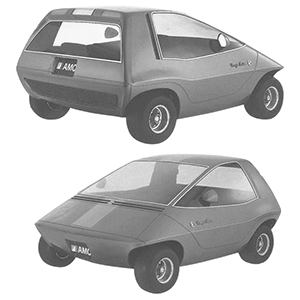
The Amitron was an electric concept car built in 1967 by American Motors Corporation (AMC) and Gulton Industries of Metuchen, New Jersey. It was a snub-snouted three-passenger urban area vehicle or city car with an overall length of only 85 inches.
Roy D. Chapin, Jr., Chairman and CEO of AMC, stated that the Amitron ‘could eliminate many problems that up to this point have made electric-type cars impractical.’
read more »
Posted in Money, Technology |
Leave a Comment »
July 17, 2012
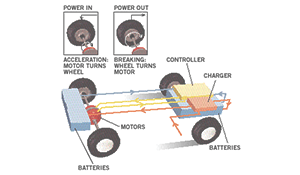

A regenerative brake is an energy recovery mechanism which slows a vehicle or object down by converting its kinetic energy into another form, which can be either used immediately or stored until needed. This contrasts with conventional braking systems, where the excess kinetic energy is converted to heat by friction in the brake linings and therefore wasted. The most common form of regenerative brake involves using an electric motor as an electric generator.
In electric railways the generated electricity is fed back into the supply system, whereas in battery electric and hybrid electric vehicles, the energy is stored in a battery or bank of capacitors for later use. Energy may also be stored mechanically via pneumatics, hydraulics, or the kinetic energy of a rotating flywheel.
read more »
Posted in Games, Technology |
Leave a Comment »
July 17, 2012
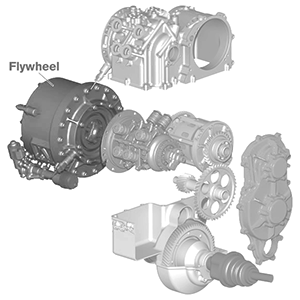
A flywheel is a heavy disk or wheel that is attached to a rotating shaft. Flywheels are used for storage of kinetic energy. The momentum of the flywheel causes it to not change its rotational speed easily. Because of this, flywheels help to keep the shaft rotating at the same speed. This helps when the torque applied to the shaft changes often.
Torque refers to turning or twisting force. If a force is used to begin to spin an object, or to stop an object from spinning, torque is required. Uneven torque can change the speed of rotation. Because the flywheel resists changes in speed, it decreases the effects of uneven torque. Engines which use pistons to provide power usually have uneven torque and use flywheels to fix this problem.
read more »
Posted in Technology |
Leave a Comment »
July 17, 2012


Abandonware are discontinued products for which no product support is available, or whose copyright ownership may be unclear for various reasons. Abandonware may be computer software or physical devices which are usually computerized in some fashion, such as personal computer games, productivity applications, utility software, or mobile phones.
Definitions of ‘abandoned’ vary; generally it refers to a product that is no longer available for legal purchase, over the age where the product creator feels an obligation to continue to support it, or where operating systems or hardware platforms have evolved to such a degree that the creator feels continued support cannot be financially justified. Software companies and manufacturers may change their names, go bankrupt, enter into mergers, or cease to exist for a variety of reasons. When this happens, product rights are usually transferred to another company that may elect not to sell or support products acquired.
read more »
Posted in Money, Politics, Technology |
Leave a Comment »
July 17, 2012
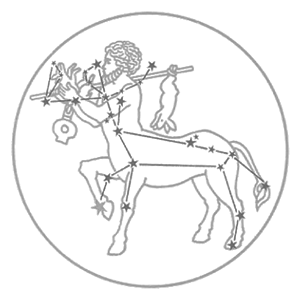
Sid Meier’s Alpha Centauri (SMAC) is a science fiction 4X (explore, expand, exploit, exterminate), turn-based strategy video game sequel to the ‘Civilization’ series. Sid Meier, designer of ‘Civilization,’ and Brian Reynolds, designer of ‘Civilization II,’ developed ‘Alpha Centauri’ after they left MicroProse to join the newly created developer Firaxis Games. Electronic Arts released both SMAC and its expansion, ‘Sid Meier’s Alien Crossfire’ (SMAX), in 1999. In the following year, both titles were ported to Mac and Linux.
Set in the 22nd century, the game begins as seven competing ideological factions land on the planet Chiron (‘Planet’) in the Alpha Centauri star system. As the game progresses, Planet’s growing sentience becomes a formidable obstacle to the human colonists. Alpha Centauri features improvements on Civ II’s game engine, including simultaneous multiplay, social engineering, climate, customizable units, alien native life, additional diplomatic and spy options, additional ways to win, and greater mod-ability. ‘Alien Crossfire’ introduces five new human and two non-human factions as well as additional technologies, facilities, secret projects, native life, unit abilities, and a victory condition.
read more »
Posted in Games, Philosophy, Technology |
Leave a Comment »
July 17, 2012

4X games are a genre of strategy video game in which players control an empire and ‘explore (reveal surrounding territories), expand (create new settlements), exploit (gather resources), and exterminate’ (eliminate rivals). The four elements often overlap with each other and vary in length depending on the game design.
For example, the ‘Space Empires’ series and ‘Galactic Civilizations II’ have lengthy expansion phases, because players must make large investments in research to explore and expand into every area. The term was first coined by video game critic Alan Emrich in his 1993 preview of ‘Master of Orion’ for ‘Computer Gaming World,’ in which he rated the game ‘XXXX’ as a pun on the rating for pornography.
read more »
Posted in Games, Money, Technology |
Leave a Comment »
July 16, 2012


A world’s fair (or world expo) is a large public exhibition. These exhibitions vary in character and are held in varying parts of the world. The main attractions at world’s fairs are the national pavilions, created by participating countries.
At ‘Expo 2000 Hanover,’ where countries created their own architecture, the average pavilion investment was about €13 million. Given these costs, governments are sometimes hesitant to participate, because benefits are often assumed not to outweigh the costs.
read more »
Posted in Politics, Technology, World |
Leave a Comment »
July 16, 2012
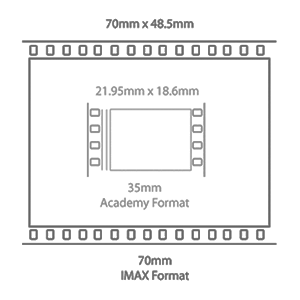
IMAX is a motion picture film format and a set of proprietary cinema projection standards created by a Canadian company of the same name. IMAX increases the resolution of the image by using a much larger film frame. To achieve this, 65 mm film stock passes horizontally through the cameras. Traditional cameras pass film vertically. In order to match standard film speed of 24 frames per second, three times the length of film moves through the camera.
There are 583 IMAX theaters in 48 countries (China is the second largest market after the US with roughly 25 theaters). The desire to increase the visual impact of film has a long history. In 1929, Fox introduced Fox Grandeur, the first 70 mm film format, but it ultimately lost out to 35mm film, which remains the industry standard. In the 1950s CinemaScope and VistaVision widened the image from 35 mm film, following multi-projector systems such as Cinerama. While impressive, Cinerama was difficult to install, and the seams between adjacent projected images were difficult to hide.
read more »
Posted in Art, Money, Technology |
Leave a Comment »
July 13, 2012
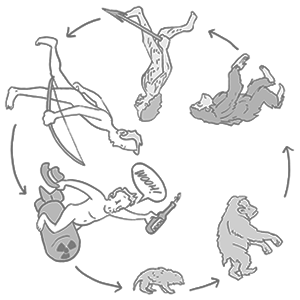
Fermi’s paradox asks why, given the age and size of the universe, we have not detected any other alien civilizations. Unless the Earth is very atypical, extraterrestrial life should be common. In an informal discussion in 1950, Italian American physicist Enrico Fermi questioned why, if a multitude of advanced extraterrestrial civilizations exists in the Milky Way galaxy, evidence such as spacecraft or probes is not seen.
Another common name for the phenomenon is silentium universi (‘the silence of the universe’). There have been attempts to resolve the paradox by locating evidence of extraterrestrial civilizations (e.g. SETI), along with proposals that such life could exist without human knowledge. Counterarguments suggest that intelligent extraterrestrial life does not exist or occurs so rarely or briefly that humans will never make contact with it.
read more »
Posted in Philosophy, Science, Technology |
3 Comments »
July 12, 2012
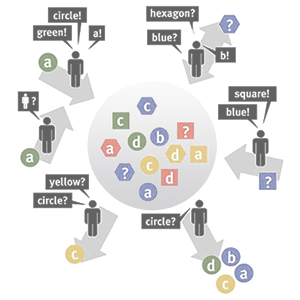
A folksonomy [fohk-son-uh-mee] is a system of classification derived from the practice and method of collaboratively creating and managing tags to annotate and categorize content; this practice is also known as collaborative tagging, social classification, social indexing, and social tagging. Folksonomy, a term coined by Thomas Vander Wal, is a portmanteau of folk and taxonomy.
Folksonomies became popular on the Web around 2004 as part of social software applications such as social bookmarking and photograph annotation. Tagging, which is one of the defining characteristics of Web 2.0 services, allows users to collectively classify and find information. Some websites include tag clouds as a way to visualize tags in a folksonomy. A good example of a social website that utilizes folksonomy is ’43 Things.’ However, tag clouds visualize only the vocabulary but not the structure of folksonomies, as do tag graphs.
read more »
Posted in Language, Technology |
1 Comment »
July 12, 2012

The Dubai Fountain is a record-setting choreographed fountain system set on the 30-acre manmade Burj Khalifa Lake, at the center of the Downtown Dubai development in Dubai, United Arab Emirates.
It was designed by WET Design, the California-based company responsible for the fountains at the Bellagio Hotel Lake in Las Vegas. Illuminated by 6,600 lights and 25 colored projectors, it is 275 m (902 ft) long and shoots water 240 feet into the air accompanied by a range of classical to contemporary Arabic and world music. It was built at a cost $218 million US. The fountain was officially inaugurated in 2009 along with the official opening ceremony of the Dubai Mall.
Posted in Money, Technology, World |
Leave a Comment »



