June 26, 2012

Brine, Corp. is a US sporting goods manufacturer (lacrosse, soccer, volleyball, and field hockey equipment). It markets its products under its own brand as well as ‘In The Crease’ for goals and goal accessories. The company was founded by W.H. Brine in 1922 as the W.H. Brine Company. It was privately owned by the Brine family and named Brine, Inc. before it was acquired by New Balance in 2006.
It started as a small sports equipment and uniform company. They sold to private schools and regional camps, quickly growing to a major manufacturer of lacrosse and soccer equipment.
read more »
Posted in Games, Money, Technology |
1 Comment »
June 21, 2012

Simulacrum [sim-yuh-ley-kruhm] (Latin: ‘likeness, similarity’) was first recorded in the English language in the late 16th century, to describe a representation, such as a statue or a painting, especially of a god. By the late 19th century, it had gathered a secondary association of inferiority: an image without the substance or qualities of the original.
Philosopher Fredric Jameson offers photorealism as an example of artistic simulacrum, where a painting is sometimes created by copying a photograph that is itself a copy of the real. Other art forms that play with simulacra include Trompe l’oeil, Pop Art, Italian neorealism, and the French New Wave.
read more »
Posted in Art, Philosophy, Technology |
1 Comment »
June 21, 2012

The digital dark age is a possible future situation where it will be difficult or impossible to read historical digital documents and multimedia, because they have been stored in an obsolete and obscure digital format.
The name derives from the term ‘Dark Ages’ in the sense that there would be a relative lack of written record. An early mention of the term was at a conference of the International Federation of Library Associations and Institutions (IFLA) in 1997. The term was also mentioned in 1998 at the ‘Time and Bits’ conference, which was co-sponsored by the Long Now Foundation and the Getty Conservation Institute.
read more »
Posted in Language, Technology |
Leave a Comment »
June 21, 2012

The term Network Society describes several different phenomena related to the social, political, economic, and cultural changes caused by the spread of networked, digital information and communications technologies. A number of academics are credited with coining the term since the 1990s and several competing definitions exist.
The intellectual origins of the idea can be traced back to the work of early social theorists such as Georg Simmel who analyzed the effect of modernization and industrial capitalism on complex patterns of affiliation, organization, production, and experience.
read more »
Posted in Politics, Technology, World |
2 Comments »
June 21, 2012

Information pollution is the contamination of information supply with irrelevant, redundant, unsolicited and low-value information. The spread of useless and undesirable information can have a detrimental effect on human activities. It is considered one of the adverse effects of the information revolution. Pollution is a large problem and is growing rapidly in e-mail, instant messaging (IM), and RSS feeds.
The term acquired particular relevance in 2003 when Jakob Nielsen, a leading web usability expert, published a number of articles discussing the topic. However, as early as 1971 researchers were expressing doubts about the negative effects of having to recover ‘valuable nodules from a slurry of garbage in which it is a randomly dispersed minor component.’
read more »
Posted in Money, Politics, Technology |
1 Comment »
June 20, 2012
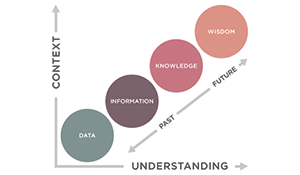

The term information revolution describes current economic, social, and technological trends beyond the Industrial Revolution. Many competing terms have been proposed that focus on different aspects of this societal development.
The British polymath crystallographer J. D. Bernal introduced the term ‘scientific and technical revolution’ in his book ‘The Social Function of Science’ (1939) in order to describe the new role that science and technology are coming to play within society. He asserted that science is becoming a ‘productive force,’ using the Marxist Theory of Productive Forces (a widely-used concept in communism placing primary emphasis on technical advances and strong productive forces in a nominally socialist economy before real communism, or even real socialism, can have a hope of being achieved).
read more »
Posted in Money, Politics, Technology |
Leave a Comment »
June 20, 2012

Technological unemployment is unemployment primarily caused by technological change. Since the early 1800’s, the observation of economists has been that technology has had a positive influence on employment: as technological change increased productivity, prices for commodities fell, resulting in increased demand, thereby increasing demand for labor. Machines freed workers from simple manual work but created new better paying jobs requiring more specialized skills.
However, some technologists claim that modern capabilities of pattern recognition, machine learning, and global networking are steadily eliminating the skilled work of large swaths of the middle income workforce. The warning is that technology is no longer creating jobs at the rate that it is making others obsolete. The notion of technological unemployment leading to structural unemployment (and being macroeconomically injurious) is often dismissed as the ‘Luddite fallacy.’
read more »
Posted in Money, Politics, Technology |
2 Comments »
June 19, 2012

The Malthusian trap [mal-thoo-zee-uhn], named after political economist Thomas Robert Malthus, suggests that for most of human history, income was largely stagnant because technological advances and discoveries only resulted in more people, rather than improvements in the standard of living.
It is only with the onset of the Industrial Revolution in about 1800 that the income per person dramatically increased, and they broke out of the Trap; it has been shown, however, that the escape from the Malthusian trap can also generate serious political upheavals.
read more »
Posted in Money, Technology, World |
Leave a Comment »
June 17, 2012

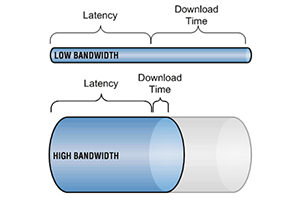
IBZL (Infinite Bandwidth Zero Latency) is a thought experiment that asks: what will happen when bandwidth (the maximum speed of a connection) is so great, and latency (delays) so small, that it no longer matters? What will be the applications and services that would most benefit from an IBZL connection to the Internet?
The IBZL program was started in the UK by the Open University (a distance learning and research university) and Manchester Digital (a digital media trade organization). ‘Infinite bandwidth’ and ‘zero latency’ are not meant literally; they are a shorthand for networks where bandwidth and latency cease to be limiting factors.
read more »
Posted in Games, Technology |
Leave a Comment »
June 15, 2012
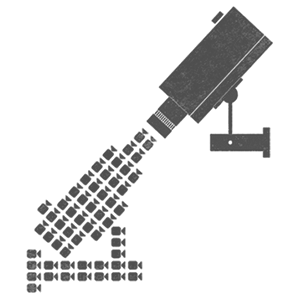
Equiveillance is a state of equilibrium, or a desire to attain a state of equilibrium, between surveillance (third-person recording) and sousveillance (first-person recording). This balance allows the individual to construct their own case from evidence they gather themselves, rather than merely having access to surveillance data that could possibly incriminate them. It is sometimes confused with transparency (accessibility and understandability of information). Sousveillance, in addition to transparency, can be used to preserve the contextual integrity of surveillance data.
For example, a lifelong capture of personal experience could provide ‘best evidence’ over external surveillance data, to prevent the surveillance-only data from being taken out of context. Equiveillance also represents a situation where all parties of a society or economy are empowered to be able to use the tools of accountability to make beneficial decisions. Humanity has always sought to establish authority relationships: the increasing trend to record information from our environment, and of ourselves creates the need to delineate the relationships between privacy, surveillance, and sousveillance.
read more »
Posted in Politics, Technology |
Leave a Comment »
June 15, 2012

Technological utopianism is the belief that advances in science and technology will eventually bring about a utopia, or at least help to fulfill one or another utopian ideal. A techno-utopia is therefore a hypothetical ideal society, in which laws, government, and social conditions are solely operating for the benefit and well-being of all its citizens, set in the near- or far-future, when advanced science and technology will allow these ideal living standards to exist; for example, post scarcity, transformations in human nature, the abolition of suffering, and even the end of death.
In the late 20th and early 21st centuries, several ideologies and movements, such as the cyberdelic counterculture, the Californian Ideology, transhumanism, and singularitarianism, have emerged promoting a form of techno-utopia as a reachable goal. Cultural critic Imre Szeman argues technological utopianism is an irrational social narrative because there is no evidence to support it. He concludes that what it shows is the extent to which modern societies place a lot of faith in narratives of progress and technology overcoming things, despite all evidence to the contrary.
read more »
Posted in Philosophy, Politics, Technology |
Leave a Comment »
June 11, 2012

The slit-scan photography technique is a photographic and cinematographic process where a moveable slide, into which a slit has been cut, is inserted between the camera and the subject to be photographed. Originally used in static photography to achieve blurriness or deformity, the slit-scan technique was perfected for the creation of spectacular animations. It enables the cinematographer to create a psychedelic flow of colors.
Though this type of effect is now often created through computer animation, slit-scan is a mechanical technique. It was adapted for film by Douglas Trumbull during the production of Stanley Kubrick’s ‘2001: A Space Odyssey’ and used extensively in the ‘stargate’ sequence. It requires an imposing machine, capable of moving the camera and its support.
read more »
Posted in Art, Technology |
Leave a Comment »



