February 12, 2012
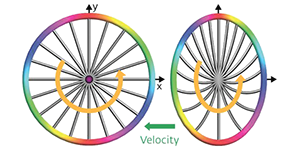
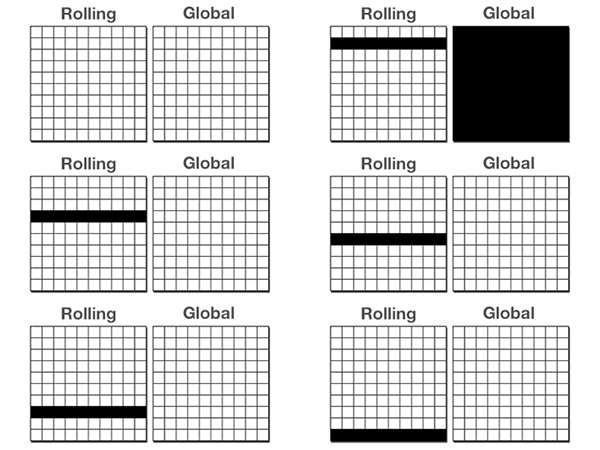
Rolling shutter (also known as line scan) is a method of image acquisition in which each frame is recorded not from a snapshot of a single point in time, but rather by scanning across the frame either vertically or horizontally. In other words, not all parts of the image are recorded at exactly the same time, even though the whole frame is displayed at the same time during playback.
This is in contrast with global shutter in which the entire frame is exposed for the same time window. This produces predictable distortions of fast-moving objects or when the sensor captures rapid flashes of light.
read more »
Posted in Technology |
Leave a Comment »
February 10, 2012

‘Stevenote‘ is a colloquial term for the keynote speeches given by former Apple CEO Steve Jobs at events such as the Worldwide Developers Conference and previously the Macworld and Apple Expos. Jobs’ vibrant speaking style and manner of exciting the crowd was legendary. Because most Apple product releases were first revealed to the public in these keynotes, ‘Stevenotes’ often caused substantial swings in Apple’s stock price.
In late 1996, Apple purchased NeXT, and Steve Jobs returned to Apple after a 12-year hiatus following his forced resignation from the company in 1985. In mid-1997, he gave a keynote address in which he presented a detailed report on the company’s status. The keynote featured an appearance by Microsoft CEO Bill Gates by satellite. Jobs announced a partnership with Microsoft comprising several key agreements that, according to Jobs, would benefit Apple and allow it to recover from its prolonged decline during the early and mid 1990s.
read more »
Posted in Money, Technology |
Leave a Comment »
February 10, 2012

Reality distortion field (RDF) is a term coined by Bud Tribble (who still works at Apple) at Apple Computer in 1981, to describe company co-founder Steve Jobs’ charisma and its effects on the developers working on the Mac project. Tribble claimed that the term came from ‘Star Trek.’ Later the term has also been used to refer to perceptions of his keynote speeches (or ‘Stevenotes’) by observers and devoted users of Apple computers and products.
The RDF was said by Andy Hertzfeld (member of the original Apple team) to be Steve Jobs’ ability to convince himself and others to believe almost anything with a mix of charm, charisma, bravado, hyperbole, marketing, appeasement, and persistence. RDF was said to distort an audience’s sense of proportion and scales of difficulties and made them believe that the task at hand was possible. While RDF has been criticized as anti-reality, those close to Jobs have also illustrated numerous instances in which creating the sense that the seemingly impossible was possible led to the impossible being accomplished. Similarly, the optimism which Jobs sowed in those around him contributed to the loyalty of his colleagues and fans.
Posted in Humor, Money, Technology |
1 Comment »
February 10, 2012
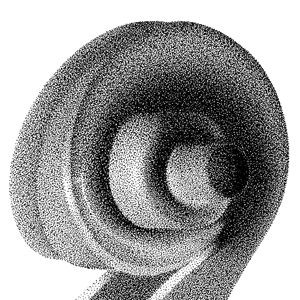
Stippling [stip-uhl-ing] is the creation of a pattern simulating varying degrees of solidity or shading by using small dots. Such a pattern may occur in nature and these effects are frequently emulated by artists. In a drawing or painting, the dots are made of pigment of a single color, applied with a pen or brush; the denser the dots, the darker the apparent shade—or lighter, if the pigment is lighter than the surface. This is similar to—but distinct from—pointillism, which uses dots of different colors to simulate blended colors.
In printmaking, dots may be carved out of a surface to which ink will be applied, to produce either a greater or lesser density of ink depending on the printing technique. Stippling may also be used in engraving or sculpting an object even when there is no ink or paint involved, either to change the texture of the object, or to produce the appearance of light or dark shading depending on the reflective properties of the surface; for instance, stipple engraving on glass produces areas that appear brighter than the surrounding glass.
read more »
Posted in Art, Technology |
1 Comment »
February 9, 2012
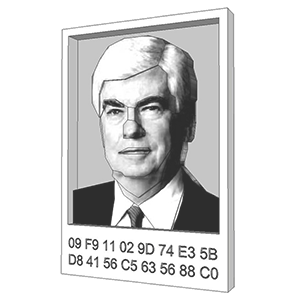
An illegal number is a number that represents information which is illegal to possess, utter or propagate. Any information that can be represented in binary format is representable as a number, and therefore if the information itself is illegal in some way, the pure number itself may be illegal. An illegal number may represent some type of classified information or trade secret, legal to possess only by certain authorized persons. An AACS encryption key that came to prominence in 2007 is an example of a number claimed to be a secret, and whose publication or inappropriate possession is claimed to be illegal in the United States. It allegedly assists in the decryption of any Blu-ray Disc.
As a protest of the DeCSS case, many people created ‘steganographic’ (hidden) versions of the illegal information. Dave Touretzky of Carnegie Mellon University created a ‘Gallery of DeCSS descramblers.’ In the AACS encryption key controversy, a ‘free speech flag’ was created. The illegal number was so short that a simple flag could be created by using the numbers as red-green-blue colors. The argument is that if short numbers can be made illegal, then anything based on those numbers also becomes illegal, like simple patterns of colors, etc.
Posted in Money, Politics, Technology |
1 Comment »
February 9, 2012

‘Home Taping Is Killing Music‘ was the slogan of a 1980s anti-copyright infringement campaign by the British Phonographic Industry (BPI), a British music industry trade group. With the rise in cassette recorder popularity, the BPI feared that people being able to record music from the radio onto cassettes would cause a decline in record sales. The logo, consisting of a Jolly Roger formed from the silhouette of a Compact Cassette, also included the words ‘And It’s Illegal.’ Similar rhetoric has continued; in 1982 Jack Valenti famously compared the VCR and its anticipated effect on the movie industry to the Boston Strangler, and in 2005 Mitch Bainwol of the RIAA claimed that CD burning is hurting music sales.
The slogan was often parodied, one example being the addendum ‘and it’s about time too!,’ used by Dutch anarcho-punk band The Ex. Another example was the early 1980s counter-slogan ‘Home Taping is Skill in Music,’ referring to early mixtapes, a precursor to sampling and remixes. In 1981 the Dead Kennedys printed ‘Home taping is killing record industry profits! We left this side blank so you can help’ on one side of their EP ‘In God We Trust, Inc.’ An early ‘proponent’ of home taping was Malcolm McLaren who was at the time managing the British band Bow Wow Wow. In 1980 the band released their single ‘C30, C60, C90 Go’ on a cassette that featured a blank other side that the buyer could record their own music on. The band’s record label, EMI, dropped the group shortly afterwards because the single allegedly promoted home taping.
Posted in Money, Politics, Technology |
Leave a Comment »
February 9, 2012

Don’t Copy That Floppy was an anti-copyright infringement campaign run by the Software Publishers Association (SPA) beginning in 1992.
The video for the campaign, starring M. E. Hart as ‘MC Double Def DP,’ was filmed at Cardozo High School in Washington, D.C. The commercial’s mention of the game ‘Tetris’ is ironic given the original version was copied and smuggled out of the Soviet Union then commercialized without any legal rights or payment to its creators (or to the Soviet Union, which had the copyrights of what its scientist produced).
Posted in Money, Politics, Technology |
Leave a Comment »
February 9, 2012

A squircle [skwer-kul] is a mathematical shape with properties between those of a square and those of a circle. It is a special case of superellipse. The word ‘squircle’ is a portmanteau of the words ‘square’ and ‘circle.’ A shape similar to a squircle, called a rounded square, may be generated by arranging four quarters of a circle and connecting their loose ends with straight lines. Although constructing a rounded square may be conceptually and physically simpler, the squircle has the simpler equation and can be generalized much more easily. One consequence of this is that the squircle and other superellipses can be scaled up or down quite easily. This is useful where, for example, one wishes to create nested squircles.
Squircles are useful in optics. If light is passed through a two-dimensional square aperture, the central spot in the diffraction pattern can be closely modeled by a squircle (also called a supercircle). If a rectangular aperture is used, the spot can be approximated by a superellipse. Squircles have also been used to construct dinner plates. A squircular plate has a larger area (and can thus hold more food) than a circular one with the same radius, but still occupies the same amount of space in a rectangular or square cupboard. The same is true of a square plate, but there are various problems (such as wiping up sauce) associated with the corners of square plates.
Posted in Science, Technology |
1 Comment »
February 8, 2012
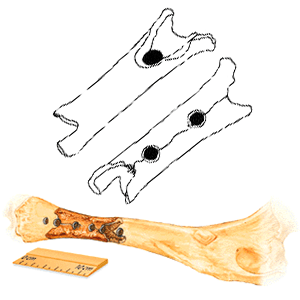
Prehistoric music (previously called primitive music) is a term in the history of music for all music produced in preliterate cultures (prehistory), beginning somewhere in very late geological history. Prehistoric music is followed by ancient music in different parts of the world, but still exists in isolated areas.
Prehistoric music thus technically includes all of the world’s music that has existed before the advent of any currently-extant historical sources concerning that music, for example, traditional Native American music of preliterate tribes and Australian Aboriginal music. However, it is more common to refer to the ‘prehistoric’ music which still survives as folk, indigenous or traditional music. Prehistoric music is studied alongside other periods within Music Archaeology.
read more »
Posted in Art, Science, Technology |
Leave a Comment »
February 8, 2012
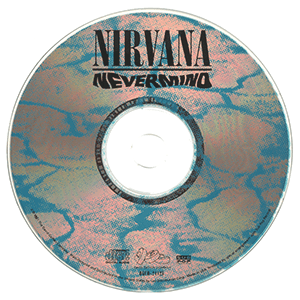
The pregap on a Red Book audio CD is the portion of the audio track that precedes ‘index 01’ for a given track in the table of contents (TOC). The pregap (‘index 00’) is typically two seconds long and usually, but not always, contains silence. Popular uses for having the pregap contain audio are live CDs, track interludes, and hidden songs in the pregap of the first track. On certain CDs, such as ‘Think Tank’ by Blur, the pregap contains a hidden track. The track is truly hidden in the sense that most conventional standalone players and software CD players will not see it. Such hidden tracks can be played by playing the first song and ‘rewinding’ (more accurately, seeking in reverse) until the actual start of the whole CD audio track. Not all CD drives can properly extract such hidden tracks. Some drives will report errors when reading these tracks, and some will seem to extract them properly, but the extracted file will contain only silence.
The pregap was used to hide computer data, tricking computers into detecting a data track whereas conventional CD players would continue to see the CD as an audio CD. This method was quickly made obsolete in late 1996 when an update to Windows 95 made the pregap track inaccessible. It is unclear whether or not this change in Microsoft Windows’ behavior was intentional: for instance, it may have been intended to steer developers away from the pregap method and encourage what became the Blue Book specification ‘CD Extra’ format.
Posted in Art, Money, Technology |
Leave a Comment »
February 6, 2012
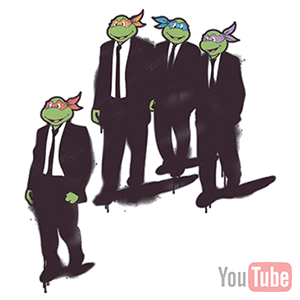
A video mashup is the combination of multiple sources of video—which usually have no relation with each other—into a derivative work, often lampooning its component sources or another text.
Many mashup videos are humorous movie trailer parodies, a later genre of mashups gaining much popularity. To the extent that mashups are ‘transformative’ of original content, they may find protection from copyright claims under the ‘fair use’ doctrine of copyright law.
Posted in Art, Humor, Technology |
Leave a Comment »
February 6, 2012
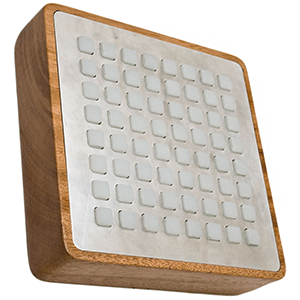
Monome is a family of interface devices for computers made by a Pennsylvania company of the same name. Despite being produced irregularly in small quantities since its introduction in 2006, the Monome button-grid controller has had a significant impact on electronic music. Together with the physically similar Yamaha Tenori-On, which was released a year later in 2007, the monome inspired interest in minimalist, grid-based music controllers. That interest spawned hobbyist projects like the Arduinome and commercial products like the Akai APC40 and the Novation Launchpad. The Monome has a minimalist design. It is simply a box with no letters or labels. There are random buttons that are back-lit. The box that holds the monome is entirely made up of timber, usually walnut. Notable users include deadmau5, Flying Lotus, Daedelus, and Nine Inch Nails contributor Alessandro Cortini.
Monome devices do not produce any sound on their own; they must be connected to a computer. A core design principle of the Monome is that it is not intended for any one specific application — the function of each button and the decision as to which lights are lit are completely up to the software communicating with the device over the Open Sound Control protocol. Several models have been produced, with typical sizes ranging from 64 to 256 buttons — plus a very limited run of 512-button devices. Monome applications span a wide variety of capabilities. Several applications provide sample sequencing capabilities. One such application is MLR, an application that allows for live sequencing and re-cutting of samples. There are also many applications that allow for synthesis either via their own internal synthesizers or by sending MIDI/OSC messages to external synthesizers.
Posted in Art, Money, Technology |
Leave a Comment »