January 24, 2012

A bait car, also called a decoy car, is a vehicle used by law enforcement agencies to capture car thieves. The vehicles are modified, with features including GPS tracking and audio/video surveillance technology, and can be remotely monitored and controlled. A ‘kill switch’ may be installed in the vehicle allowing police to remotely disable the engine and lock all doors from the inside, preventing escape.
The bait car, often filled with valuable items to draw attention to it, is parked in a high auto-theft area. In some cases, the vehicle may be simply left unlocked with the keys in the ignition. When the car is stolen, officers are immediately alerted, and can monitor the vehicle and send commands to control it such as disabling the engine, locking the doors or honking the horn. Live audio/video streaming devices may be installed allowing law enforcement personnel to determine how many suspects are in the car, what they are planning and if they are armed.
Posted in Money, Politics, Technology |
Leave a Comment »
January 24, 2012


Everyday carry (EDC) refers to a small collection of tools, equipment and supplies that are carried on a daily basis. The term EDC also refers to the philosophy or spirit of ‘preparedness’ that goes along with the selection and carrying of these items. Implicit in the term is the sense that an EDC is an individual’s personal selection of equipment, arrived at after deliberation, rather than a standardized kit.
EDC items normally fit in a pocket, or small pack, or be attached to clothing. Emphasis is placed on the usefulness, accessibility and reliability of these items. As an example, the core elements of a typical EDC might include a folding pocket knife, a flashlight and a multi-tool. These items are often collected into a pack or organizer.
read more »
Posted in Money, Technology |
2 Comments »
January 20, 2012

The analog hole is a fundamental and inevitable vulnerability in copy protection schemes. Once digital information is converted to a human-perceptible (analog) form, it is a relatively simple matter to digitally recapture that analog reproduction in an unrestricted form, thereby fundamentally circumventing any and all restrictions placed on copyrighted work.
Media publishers who use digital rights management (DRM), to restrict how a work can be used, perceive the necessity to make it visible and/or audible as a ‘hole’ in the control that DRM otherwise affords them.
read more »
Posted in Money, Politics, Technology |
Leave a Comment »
January 19, 2012
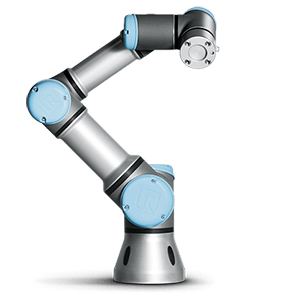
Lights out manufacturing is a methodology (or philosophy), rather than a specific process. Factories that run lights out are fully automated and require no human presence on-site. Thus, these factories can be run with the lights off. Many factories are capable of lights-out production, but very few run exclusively lights-out. Typically, workers are necessary to set up parts to be manufactured, and to remove the completed parts. As the technology necessary for lights-out production becomes increasingly available, many factories are beginning to utilize lights-out production between shifts (or as a separate shift) to meet increasing demand or to save money.
An automatic factory is a place where raw materials enter and finished products leave with little or no human intervention. One of the earliest descriptions of the automatic factory in fiction was the 1955 short story ‘Autofac.’ FANUC, the Japanese robotics company, has been operating a ‘lights out’ factory for robots since 2001. ‘Robots are building other robots at a rate of about 50 per 24-hour shift and can run unsupervised for as long as 30 days at a time. ‘Not only is it lights-out,’ says Fanuc vice president Gary Zywiol, ‘we turn off the air conditioning and heat too.’
Posted in Money, Technology |
Leave a Comment »
January 19, 2012
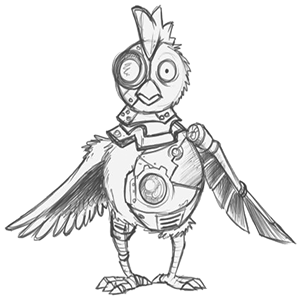
Astrochicken is the name given to a thought experiment expounded by theoretical physicist Freeman Dyson. In his book ‘Disturbing the Universe’ (1979), Dyson contemplated how humanity could build a small, self-replicating automaton that could explore space more efficiently than a manned craft could. He attributed the idea to John von Neumann, based on a lecture von Neumann gave in 1948 entitled ‘The General and Logical Theory of Automata.’ Dyson expanded on von Neumann’s automata theories and added a biological component to them.
Astrochicken, Dyson explained, would be a one-kilogram spacecraft unlike any before it. It would be a creation of the intersection of biology, artificial intelligence and modern microelectronics—a blend of organic and electronic components. Astrochicken would be launched by a conventional spacecraft, like an egg being laid into space.
read more »
Posted in Humor, Language, Technology |
Leave a Comment »
January 19, 2012


A self-replicating machine is an artificial construct that is theoretically capable of autonomously manufacturing a copy of itself using raw materials taken from its environment, thus exhibiting self-replication in a way analogous to that found in nature. The concept of self-replicating machines has been advanced by Homer Jacobsen, Edward F. Moore, Freeman Dyson, John von Neumann, and in more recent times by K. Eric Drexler in his book on nanotechnology, ‘Engines of Creation,’ and by Robert Freitas and Ralph Merkle in their review ‘Kinematic Self-Replicating Machines,’ which provided the first comprehensive analysis of the entire replicator design space.
The future development of such technology has featured as an integral part of several plans involving the mining of moons and asteroid belts for ore and other materials, the creation of lunar factories and even the construction of solar power satellites in space. The possibly misnamed von Neumann probe (a self-replicating spacecraft) is one theoretical example of such a machine. Von Neumann also worked on what he called the universal constructor, a self-replicating machine that would operate in a cellular automata environment (a computer simulation of life).
read more »
Posted in Technology |
Leave a Comment »
January 19, 2012

Artificial life (alife) is a field of study and an associated art form which examine systems related to life, its processes, and its evolution through simulations using computer models, robotics, and biochemistry. The discipline was named by Christopher Langton, an American computer scientist, in 1986.
There are three main kinds of alife, named for their approaches: soft, from software; hard, from hardware; and wet, from biochemistry. Artificial life imitates traditional biology by trying to recreate biological phenomena, such as sexual reproduction and response to stimuli. The term ‘artificial life’ is often used to specifically refer to soft alife.
read more »
Posted in Games, Science, Technology |
Leave a Comment »
January 19, 2012
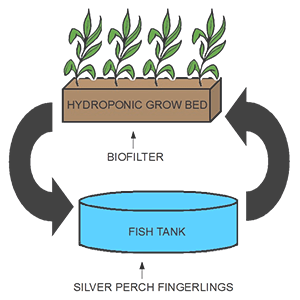
Aquaponics [ak-wuh-pon-iks] is a sustainable food production system that combines a traditional aquaculture (raising aquatic animals such as fish, crayfish or prawns in tanks) with hydroponics (cultivating plants in water) in a symbiotic environment. In the aquaculture, effluents accumulate in the water, increasing toxicity for the fish. This water is led to a hydroponic system where the by-products from the aquaculture are filtered out by the plants as vital nutrients, after which the cleansed water is recirculated back to the animals.
Aquaponic systems vary in size from small indoor or outdoor units to large commercial units, using the same technology. The systems usually contain fresh water, but salt water systems are plausible depending on the type of aquatic animal and which plants.
read more »
Posted in Food, Money, Technology |
Leave a Comment »
January 17, 2012


FreedomBox is a community project to develop, design and promote personal servers running free software for distributed social networking, email and audio/video communications. The project was announced by Columbia Law professor Eben Moglen at an ISOC (Internet Society) meeting in 2010.
The project currently describes a FreedomBox as, ‘a personal server running a free software operating system, with free applications designed to create and preserve personal privacy.’ The project aims to develop a software stack that can run on plug computers (small computers the size of a wall wart) that can easily be located in individual residences or offices. By promoting a decentralized deployment of hardware, the project hopes that FreedomBoxes will ‘provide privacy in normal life, and safe communications for people seeking to preserve their freedom in oppressive regimes.’
Posted in Money, Politics, Technology |
Leave a Comment »
January 17, 2012
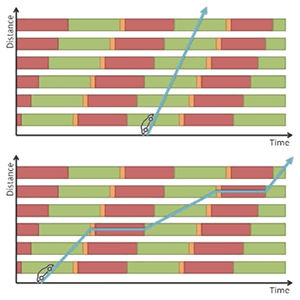
A green wave is an intentionally induced phenomenon in which a series of traffic lights (usually three or more) are coordinated to allow continuous traffic flow over several intersections in one main direction. Any vehicle travelling along with the green wave (at an approximate speed decided upon by the traffic engineers) will see a progressive cascade of green lights, and not have to stop at intersections. This allows higher traffic loads, and reduces noise and energy use (because less acceleration and braking is needed).
In practical use, only a group of cars (known as a ‘platoon,’ the size of which is defined by the signal times) can use the green wave before the time band is interrupted to give way to other traffic flows. The coordination of the signals is sometimes done dynamically, according to sensor data of currently existing traffic flows – otherwise it is done statically, by the use of timers.
read more »
Posted in Technology |
1 Comment »
January 16, 2012

Wakamaru is a Japanese domestic robot made by Mitsubishi Heavy Industries, primarily intended to provide companionship to elderly and disabled people. The robot is yellow, 1m tall, and weighs 30 kilograms. It has two arms and its flat, circular base has a diameter of 45 cm. The first hundred went on sale in 2005, for USD $14,000. Wakamaru runs a Linux operating system on multiple microprocessors.
It can connect to the Internet, and has limited speech (in both male and female voices) and speech recognition abilities. Functions include reminding the user to take medicine on time, and calling for help if it suspects something is wrong. Wakamaru was the childhood name of Minamoto no Yoshitsune, a 12th century Japanese general.
Posted in Health, Technology, World |
1 Comment »
January 16, 2012

Paro is a therapeutic robot baby harp seal, intended to be very cute and to have a calming effect on and elicit emotional responses in patients of hospitals and nursing homes, similar to Animal-Assisted Therapy. It was designed by Takanori Shibata of the Intelligent System Research Institute of Japan’s AIST beginning in 1993. It was first exhibited to the public in late 2001 and handmade versions have been sold commercially since 2004.
Paro is based on harp seals Shibata saw in Canada, where he also recorded their cries that Paro uses. The robot has tactile sensors and responds to petting by moving its tail and opening and closing its eyes. It also responds to sounds and can learn a name. It can show emotions such as surprise, happiness and anger. It produces sounds similar to a real baby seal and (unlike a real baby seal) is active during the day and goes to sleep at night.
Posted in Health, Technology, World |
Leave a Comment »



