January 16, 2012

Dustbot is a robot that collects garbage from homes. It can be summoned by phone call or SMS, and uses GPS to automatically make its way to the customer, collect the rubbish, and take it to a dustbin. In addition, the Dustbots carry environmental sensors to monitor the pollution levels over, for example, a pedestrian area.
Prototypes have been tested in Italy and Sweden and Ireland. The Dustbot project is funded by the European Commission. The Dustbot system, consisting of the DustCart and the DustClean robots, is designed to work in tight urban areas where large trucks find it difficult to operate, such as old European cities.
Posted in Technology, World |
1 Comment »
January 16, 2012
In cryptography, a brute-force attack, or exhaustive key search, is a strategy that can, in theory, be used against any encrypted data. Such an attack might be utilized when it is not possible to take advantage of other weaknesses in an encryption system that would make the task easier. It involves systematically checking all possible keys until the correct key is found. In the worst case, this would involve traversing the entire search space.
The key length used in the encryption determines the practical feasibility of performing a brute-force attack, with longer keys exponentially more difficult to crack than shorter ones. Brute-force attacks can be made less effective by obfuscating the data to be encoded, something that makes it harder for an attacker to recognize when he/she has cracked the code. One of the measures of the strength of an encryption system is how long it would theoretically take an attacker to mount a successful brute-force attack against it.
Posted in Politics, Technology |
1 Comment »
January 16, 2012

Gorilla Glass, manufactured by Corning, is an alkali-aluminosilicate sheet glass engineered specifically to be thin, light and damage-resistant. Its primary application is portable electronic devices with screens, such as phones and tablets. Corning experimented with chemically strengthened glass in 1960, as part of an initiative called ‘Project Muscle.’ Gorilla Glass was used in about 20 percent of the world’s approximately 200 million mobile handsets in 2010. Corning says that Gorilla Glass is RF compatible and has outstanding optical clarity, making it suitable for HD and 3-D television displays. Early in 2012, Corning announced a new version of Gorilla Glass that is 20 percent thinner, but continues to have the same scratch resistance and endurance as the original. The thinner glass will allow for greater touch sensitivity for the user.
The glass is placed in a hot bath of molten potassium salt at a temperature of approximately 400 °C (~750 °F). Smaller sodium ions leave the glass, and larger potassium ions from the salt bath replace them. These larger ions take up more room and are pressed together when the glass cools, producing a layer of compressive stress on the surface of the glass. Gorilla Glass’s special composition enables the potassium ions to diffuse far into the surface, creating high compressive stress deep into the glass. This layer of compression creates a surface that is more resistant to damage from everyday use. Like all glass, Gorilla glass can be recycled.
Posted in Money, Technology |
1 Comment »
January 15, 2012
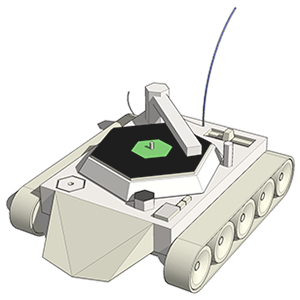
Sonic and ultrasonic weapons (USW) are weapons of various types that use sound to injure, incapacitate, or kill an opponent. Some sonic weapons are currently in limited use or in research and development by military and police forces. Others exist only in the realm of science fiction.
Some of these weapons have been described as sonic bullets, sonic grenades, sonic mines, or sonic cannons. Some make a focused beam of sound or ultrasound; some make an area field of sound. Although many real sonic and ultrasonic weapons are described as ‘non-lethal,’ they can still kill under certain conditions.
read more »
Posted in Technology, War |
1 Comment »
January 15, 2012

Kode9 (born Steve Goodman) is a London-based electronic music artist, DJ, and owner of the Hyperdub record label. MC, The Spaceape, is a frequent collaborator. Initially inspired by what he calls the ‘hardcore continuum,’ he also draws on dub reggae, and was one of the founding members of the early dubstep scene (which he views as a continuation of developments originally stemming from UK Hardcore).
He has released two full-length albums: ‘Memories of the Future’ and ‘Black Sun’ (both featuring the Spaceape). Kode9 has a Ph.D. in philosophy from the University of Warwick. In 2009, MIT Press published his book, ‘Sonic Warfare: Sound, Affect, and the Ecology of Fear,’ exploring the uses of acoustic force and how sound can be deployed to set moods of dread and fear, how sound can be used as torture, as a weapon and as a threat.’
Posted in Art, Language, Technology |
Leave a Comment »
January 14, 2012
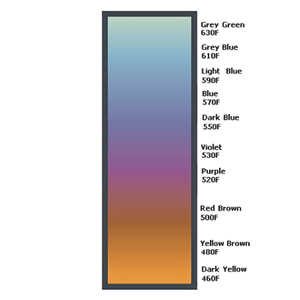
Bluing is a passivation process (‘passive’ in relation to being less affected by environmental factors such as air or water) in which steel is partially protected against rust, and is named after the blue-black appearance of the resulting protective finish. It is the result of an oxidizing chemical reaction with iron on the surface selectively forming magnetite (Fe3O4), the black oxide of iron. By comparison, rust is the red oxide of iron (Fe2O3). Bluing is most commonly used by gunsmiths to improve the cosmetic appearance of, and provide a measure of corrosion resistance to, their firearms.
Bluing also helps to maintain the metal finish by resisting tangential scratching, and also helps to reduce glare to the eyes of the shooter when looking down the barrel of the gun. All blued parts still need to be properly oiled to prevent rust. Bluing, being a chemical conversion coating, is not as robust against wear and corrosion resistance as plated coatings, and is typically no thicker than 2.5 micrometers (0.0001 inches). For this reason, it is considered not to add any appreciable thickness to precisely-machined gun parts. It is also used for providing coloring for steel parts of fine clocks and other fine metalwork, such as by machinists, who protected and beautified tools made for their own use.
Posted in Science, Technology |
Leave a Comment »
January 12, 2012
The echo chamber effect refers to any situation in which information, ideas or beliefs are amplified or reinforced by transmission inside an ‘enclosed’ space. Observers of journalism describe an echo chamber effect in media discourse. One purveyor of information will make a claim, which many like-minded people then repeat, overhear, and repeat again (often in an exaggerated or otherwise distorted form) until most people assume that some extreme variation of the story is true.
A media conglomerate that owns multiple media outlets can produce the same story among ‘different’ outlets, creating an illusion that a media consumer is getting information from different sources.
read more »
Posted in Language, Money, Technology |
Leave a Comment »
January 12, 2012
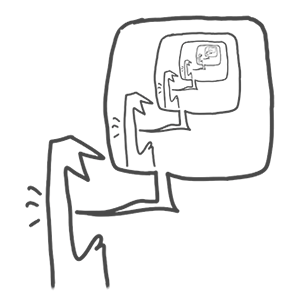
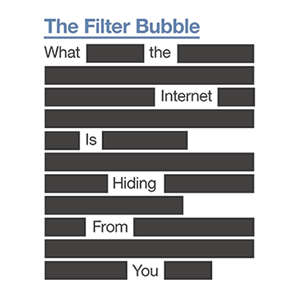
A filter bubble is a concept developed by Internet activist Eli Pariser in his book by the same name to describe a phenomenon in which websites use algorithms to selectively guess what information a user would like to see based on information about the user like location, past click behavior and search history. As a result websites tend to show only information which agrees with the user’s past viewpoint. Prime examples are Google’s personalized search results and Facebook’s personalized news stream. According to Pariser, users get less exposure to conflicting viewpoints and are isolated intellectually in their own informational bubble.
Pariser related an example in which one user searched Google for ‘BP’ and got investment news about British Petroleum while another searcher got information about the Deepwater Horizon oil spill and that the two search results pages were ‘strikingly different.’ The bubble effect may have negative implications for civic discourse, according to Pariser, but there are contrasting views suggesting the effect is minimal.
read more »
Posted in Language, Money, Technology |
1 Comment »
January 11, 2012
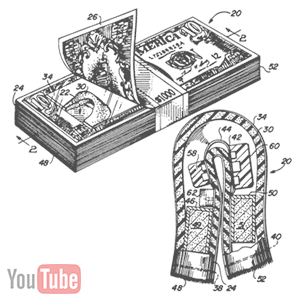
A dye pack is a radio-controlled incendiary device used by some banks to preemptively foil a bank robbery by causing stolen cash to be permanently marked with red dye shortly after a robbery. In most cases, a dye pack is placed in a hollowed-out space within a stack of banknotes, usually $10 or $20 bills. This stack of bills looks and feels similar to a real one, with new technology allowing for the manufacturing of flexible dye packs which are difficult to detect by handling the stack.
When the marked stack of bills is not used, it is stored next to a magnetic plate near a bank cashier, in standby or safe mode, ready to be handed over to a potential robber by a bank employee. When it is removed from the magnetic plate, the pack is armed, and once it leaves the building and passes through the door frame, a radio transmitter located at the door will trigger a timer (typically 10 seconds), after which the dye pack will explode and release an aerosol (sometimes tear gas, but usually of Disperse Red 9, a dye used in smoke grenades) intended to permanently stain and destroy the stolen money and mark the robber’s body with a bright red color. The chemical reaction causing the explosion of the pack and the release of the dye creates high temperatures of about 400 degrees Fahrenheit which further discourages a criminal from touching the pack or removing it from the bag or getaway vehicle.
Posted in Money, Politics, Technology |
Leave a Comment »
January 10, 2012

Snowflake children is a term used by organizations that promote the adoption of embryos left over from in vitro fertilization to describe children that result, where the children’s parents were not the original cell donors. These embryos are transferred to infertile couples via embryo adoption, although the legal process of taking ownership of an embryo differs from that of traditional adoption. The term was coined by the first agency to provide the transfer service, Nightlight Christian Adoptions. Proponents also use the term for the frozen embryos themselves.
The term ‘Snowflake babies’ was first used to describe babies born in this manner, but the first snowflake children are no longer babies. The first snowflake baby, Hannah, was born in 1998 to Marlene and John Strege. Former president George W. Bush has made public appearances together with snowflake children while speaking about his support for adult stem cell research and his opposition to embryonic stem cell research.
Posted in Politics, Sex, Technology |
Leave a Comment »
January 5, 2012


Emergent gameplay refers to complex situations in video games, board games, or role-playing games that emerge from the interaction of relatively simple game mechanics. More recently game designers have attempted to encourage emergent play by providing tools to players such as placing web browsers within the game engine, providing programming languages, and fixing exchange rates.
These cases constitute intentional emergence, where creative uses of the game are intended by the designers. Since the 1970s and 1980s board games and table top role playing games such as ‘Dungeons & Dragons’ have featured intentional emergence as a primary game function by supplying players with relatively simple rules or frameworks for play that intentionally encourage them to explore creative strategies or interactions and exploit them toward victory or goal achievement.
read more »
Posted in Games, Money, Technology |
Leave a Comment »
January 4, 2012
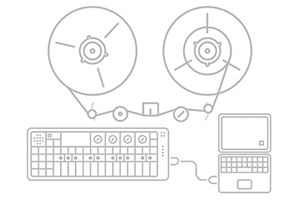

The OP-1 is a synthesizer, sampler, and sequencer designed and manufactured by the Stockholm-based company Teenage Engineering. The OP-1 is Teenage Engineering’s first product; it was released in 2011. The OP-1 is well known for its unconventional design, OLED display, and eight synthesizer engines. It has received some criticism for its physical limitations; however, according to Teenage Engineering cofounder Jesper Kouthoofd, these limitations were programmed into the synthesizer in order to stimulate the design process and the creativity of the user.
The design of the OP-1 was influenced by the VL-Tone, a synthesizer and pocket calculator manufactured by Casio in 1980 that is known for its toy-like novelty sounds and cheap build quality, as well as its inorganic design. In an interview with Damian Kulash of OK Go, Kouthoofd explained that he worked in a music store when he was young, and he was inspired by Japanese synthesizers of the 1980s. He has also stated that ‘limitations are OP-1’s biggest feature.’ The synthesizer’s designers attempted to use the limitation of physical hardware to encourage the unit to stimulate creativity, which might become unfocused in a limitless environment, such as a digital audio workstation.
Posted in Art, Money, Technology |
Leave a Comment »



