September 7, 2011

Hilti develops, manufactures, and markets products for the construction and building maintenance industries, primarily to the professional end-user. It concentrates primarily on hammer drills, firestops, and installation systems, but manufactures and markets an array of tools (including cordless electric drills, heavy angle drills, laser levels, power saws, and fasteners). Hilti is based in Liechtenstein, and is the principality’s largest employer. The company employs more than 20,000 people worldwide with over 2,500 employees in the United States. Hilti’s North American headquarters has been located in Tulsa, Oklahoma, since 1979.
The Hilti Group invests over US$160 million annually in researching and developing safer and more efficient building technologies. A recent example of this R&D in power tool technology is Hilti’s TPS (Theft Protection System), which relies on RF technology to prevent unauthorized users from activating power tools, thus discouraging theft. Similarly, Hilti’s ATC (Active Torque Control) technology monitors tool-body movement to prevent equipment from twisting out of the operator’s grip and causing injury. Other developments include improved design of chemical and mechanical anchors for better durability during seismic events, thus helping to save lives during natural disasters.
Posted in Money, Technology |
1 Comment »
September 7, 2011
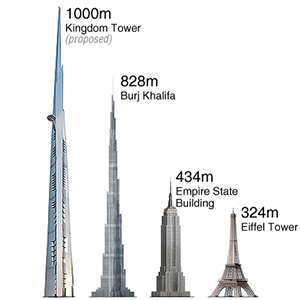
Kingdom Tower is a supertall skyscraper approved for construction in Jeddah, Saudi Arabia at a preliminary cost of US$1.23 billion. It will be the centerpiece and first phase of a US$20 billion proposed development known as Kingdom City that will be located along the Red Sea on the north side of Jeddah. If completed as planned, the tower will reach unprecedented heights, becoming the tallest building in the world, as well as the first structure to reach the one-kilometer mark. The design, created by American architect Adrian Smith, incorporates many unique structural and aesthetic features.
The creator and leader of the project is Saudi Arabian Prince Al-Waleed bin Talal, the wealthiest Arab in the Middle East, and nephew of King Abdullah. Talal is the chairman of Kingdom Holding Company (KHC), the largest company in Saudi Arabia, which owns the project, and a partner in Jeddah Economic Company (JEC), which was formed in 2009 for the development of Kingdom Tower and City. Reception of the proposal has been highly polarized, receiving high praise from some as a culturally significant icon that will symbolize the nation’s wealth and power, while others question its socioeconomic motives, and forecast that it will actually have negative financial consequences.
Posted in Money, Technology, World |
1 Comment »
September 7, 2011

Mountainboarding is a well established, if little-known extreme sport, derived from snowboarding. A mountainboard is made up of components including a deck, bindings to secure the rider to the deck, four wheels with pneumatic tires, and two steering mechanisms known as trucks.
Mountainboarders ride specifically designed boardercross tracks, slopestyle parks, grass hills, woodlands, gravel tracks, streets, skateparks, ski resorts, BMX courses and mountain bike trails. It is this ability to ride such a variety of terrain that separates mountainboarding from other board sports.
read more »
Posted in Games, Technology |
Leave a Comment »
September 6, 2011
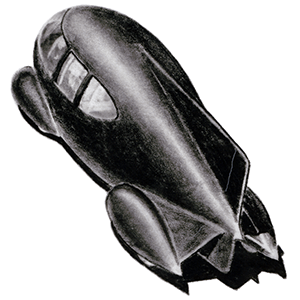
Norman Bel Geddes [bel-ged-eez] (1893 – 1958) was an American theatrical and industrial designer who focused on aerodynamics. His book ‘Horizons’ (1932) had a significant impact: ‘By popularizing streamlining when only a few engineers were considering its functional use, he made possible the design style of the thirties.’
He designed the General Motors Pavilion, known as Futurama, for the 1939 New York World’s Fair. For that famous and enormously influential installation, Bel Geddes exploited his earlier work in the same vein: he had designed a “Metropolis City of 1960′ in 1936.
read more »
Posted in Art, Technology |
Leave a Comment »
September 6, 2011


Sunscreen (also known as sunblock) is a lotion, spray or other topical product that helps protect the skin from the sun’s ultraviolet (UV) radiation, and which reduces sunburn and other skin damage, with the goal of lowering the risk of skin cancer. However in the United States, the term suntan lotion usually means the opposite of sunscreen, and instead refers to lotion designed to moisturize and maximize UV exposure and tanning rather than block it. These are commonly called indoor tanning lotions when designed for use with tanning beds or just suntan lotion if designed for outdoor use and may or may not have SPF protection in them.
The most effective sunscreens protect against both UVB, which can cause sunburn, and UVA, which damages the skin with more long-term effects, such as premature skin aging. Most sunscreens work by containing either an organic chemical compound that absorbs ultraviolet light (such as oxybenzone) or an opaque material that reflects light (such as titanium dioxide, zinc oxide), or a combination of both. Typically, absorptive materials are referred to as chemical blocks, whereas opaque materials are mineral or physical blocks. The sun protection factor (SPF) of a sunscreen is a laboratory measure of the effectiveness of sunscreen — the higher the SPF, the more protection a sunscreen offers against UVB.
read more »
Posted in Health, Politics, Technology |
Leave a Comment »
August 26, 2011

The Venus Project is an organization that advocates American futurist Jacque Fresco’s visions of the future with the aim of improving society by moving towards a global sustainable social design that they call a ‘resource-based economy.’ Such a system incorporates sustainable cities and values, energy efficiency, collective farms, natural resource management and advanced automation, focusing on the benefits they claim it will bring to humanity.
The name of the organization originates from Venus, Florida, where its research center is located, near Lake Okeechobee. Within the center are ten buildings, designed by Fresco, which showcase the architecture of the project.
read more »
Posted in Money, Politics, Technology |
Leave a Comment »
August 26, 2011

Cyanotype [sahy-an-uh-tahyp] is a photographic printing process that gives a cyan-blue print. The process was popular in engineering circles well into the 20th century. The simple and low-cost process enabled them to produce large-scale copies of their work, referred to as blueprints. Two chemicals are used in the process: Ammonium iron(III) citrate and Potassium ferricyanide.
The English scientist and astronomer Sir John Herschel discovered this procedure in 1842. Though the process was developed by Herschel, he considered it as mainly a means of reproducing notes and diagrams, as in blueprints. It was Anna Atkins who brought this to photography. She created a limited series of cyanotype books that documented ferns and other plant life from her extensive seaweed collection. Atkins placed specimens directly onto coated paper, allowing the action of light to create a silhouette effect. By using this photogram process, Anna Atkins is regarded as the first female photographer.
read more »
Posted in Art, Technology |
1 Comment »
August 25, 2011

Snow Crash is Neal Stephenson’s third novel, published in 1992. Like many of Stephenson’s other novels it covers a large range of topics including: history, linguistics, anthropology, archaeology, religion, computer science, politics, cryptography, memetics, and philosophy. Stephenson explained the title of the novel in his 1999 essay ‘In the Beginning… was the Command Line’ as his term for a particular software failure mode on the early Apple Macintosh computer, ‘When the computer crashed and wrote gibberish into the bitmap, the result was something that looked vaguely like static on a broken television set — a ‘snow crash.”
The book presents the Sumerian language as the firmware programming language for the brainstem, which is supposedly functioning as the BIOS for the human brain. According to characters in the book, the semetic goddess Asherah is the personification of a ‘linguistic virus,’ similar to a computer virus. The Sumerian god Enki created a counter-program which he called a ‘nam-shub’ that caused all of humanity to speak different languages as a protection against Asherah (a re-interpretation of the ancient Near Eastern story of the Tower of Babel).
read more »
Posted in Art, Money, Technology |
Leave a Comment »
August 22, 2011

Georges Méliès [mey-lyes] (1861 – 1938) was a French filmmaker famous for leading many technical and narrative developments in the earliest cinema. He was very innovative in the use of special effects. He accidentally discovered the ‘stop trick,’ or substitution, in 1896, and was one of the first filmmakers to use multiple exposures, time-lapse photography, dissolves, and hand-painted color in his films. Because of his ability to seemingly manipulate and transform reality through cinematography, Méliès is sometimes referred to as the First ‘Cinemagician,’ and before making films, he was a stage magician at the Theatre Robert-Houdin.
His most famous film is ‘A Trip to the Moon’ (‘Le voyage dans la Lune’) made in 1902, which includes the celebrated scene in which a spaceship hits the eye of the man in the moon.
read more »
Posted in Art, Money, Technology |
Leave a Comment »
August 22, 2011

Compositing [kuhm-poz-it-ing] is the combining of visual elements from separate sources into single images, often to create the illusion that all those elements are parts of the same scene. Live-action shooting for compositing is variously called ‘blue screen,’ ‘green screen,’ ‘chroma key,’ and other names. Today, most, though not all, compositing is achieved through digital image manipulation. Pre-digital compositing techniques, however, go back as far as the trick films of Georges Méliès in the late 19th century; and some are still in use.
All compositing involves the replacement of selected parts of an image with other material, usually, but not always, from another image. In the digital method of compositing, software commands designate a narrowly defined color as the part of an image to be replaced. Then every pixel within the designated color range is replaced by the software with a pixel from another image, aligned to appear as part of the original. For example, a TV weather person is recorded in front of a plain blue or green screen, while compositing software replaces only the designated blue or green color with weather maps.
read more »
Posted in Art, Technology |
Leave a Comment »
August 22, 2011

Cinemagraphs are still photographs in which a minor and repeated movement action occurs. They are produced by taking a series of photographs or a video recording, and, using image editing software, compositing the photographs or the video frames into an animated GIF file in such a manner that motion in part of the subject between exposures (for example, a person’s dangling leg) is perceived as a repeating or continued motion.
The term was coined by U.S. photographers Kevin Burg and Jamie Beck, who used the technique to animate their fashion and news photographs beginning in early 2011.
Posted in Art, Technology |
Leave a Comment »
August 17, 2011
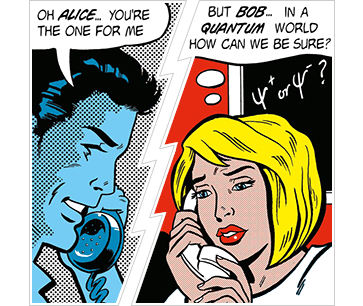
The names Alice and Bob are commonly used placeholder names for archetypal characters in fields such as cryptography and physics. The names are used for convenience; for example, ‘Alice sends a message to Bob encrypted with his public key’ is easier to follow than ‘Party A sends a message to Party B encrypted by Party B’s public key.’ Following the alphabet, the specific names have evolved into common parlance within these fields—helping technical topics to be explained in a more understandable fashion.
In cryptography and computer security, there are a number of widely used names for the participants in discussions and presentations about various protocols. The names are conventional, somewhat self-suggestive, sometimes humorous, and effectively act as metasyntactic variables. In typical implementations of these protocols, it is understood that the actions attributed to characters such as Alice or Bob need not always be carried out by human parties directly, but also by a trusted automated agent (such as a computer program) on their behalf. Despite the advantage of Alice and Bob’s distinct genders in reducing ambiguity, there has been little tendency to introduce inanimate parties so they could be referred by neuter pronouns.
read more »
Posted in Language, Science, Technology |
1 Comment »






 The Daily Omnivore