May 25, 2011
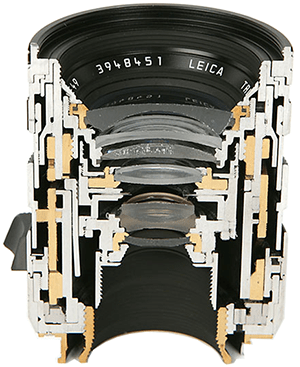
Leica is a German optics company. The first Leica prototypes were built by Oskar Barnack in Wetzlar in 1913. Intended as a compact camera for landscape photography, particularly during mountain trips, the Leica was the first practical 35 mm camera, using standard cinema 35 mm film. Leica is particularly associated with street photography, especially in the mid-to-late 20th century, being used by such noted photographers as Henri Cartier-Bresson.
Leica cameras, lenses, accessories and sales literature are collectibles. Early or rare cameras and accessories can reach very high prices on the market. Notably, Leica cameras sporting military markings carry very high premiums; this started a market for refurbished Soviet copies with fake markings.
Posted in Money, Technology |
1 Comment »
May 25, 2011

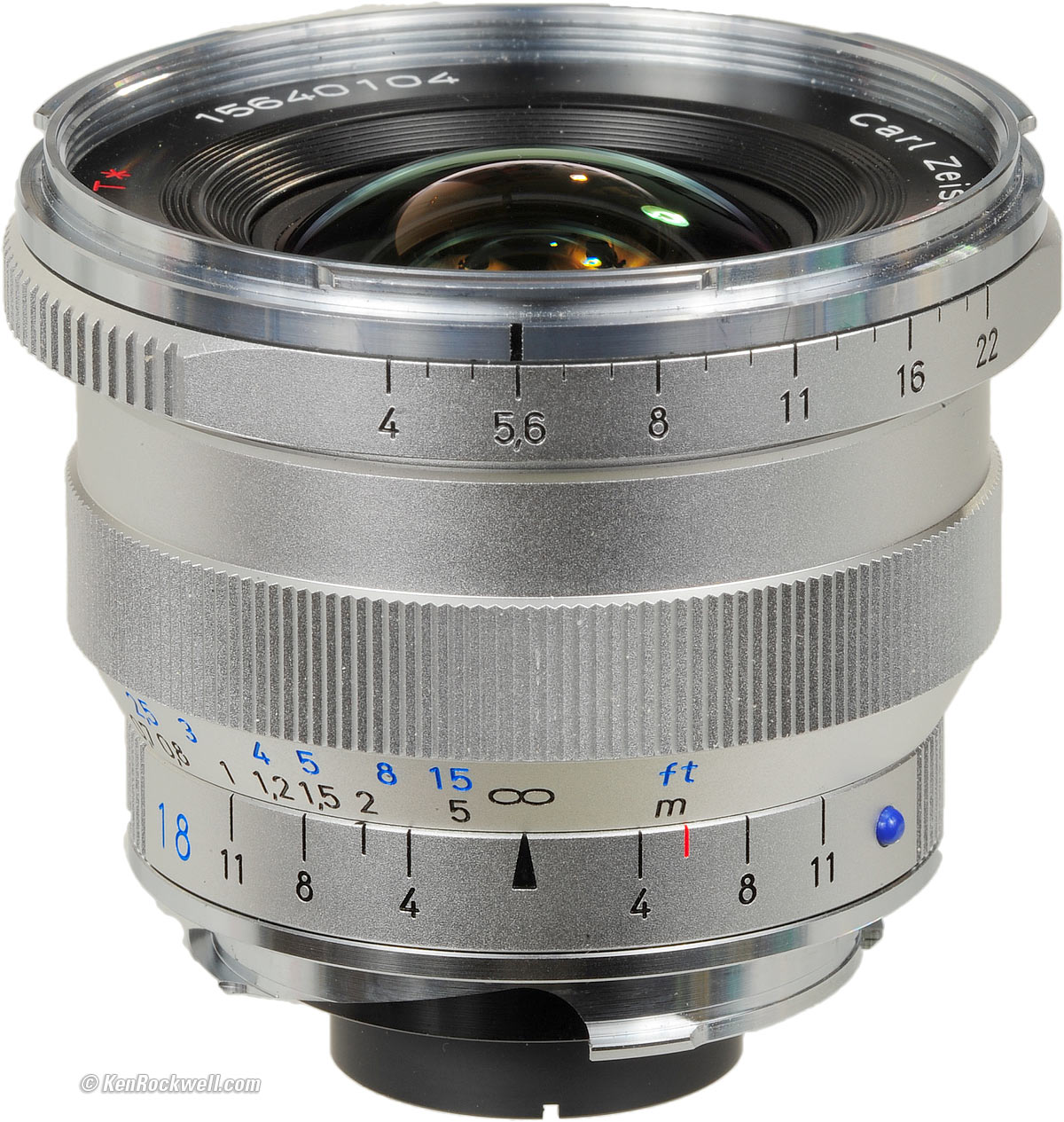
Carl Zeiss is a German manufacturer of optical systems, founded in 1846. There are currently two parts of the company, Carl Zeiss AG located in Oberkochen with important subsidiaries in Aalen, Göttingen and Munich, and Carl Zeiss GmbH located in Jena.
The organization is named after a founder, the German optician Carl Zeiss (1816–1888), and is one of the oldest existing optics manufacturers in the world. The history of the company begins in the city of Jena before World War I, then the world’s largest location of camera production. Zeiss Ikon represented a significant part of the production along with dozens of other brands and factories, and also had major works at Dresden.
read more »
Posted in Money, Technology |
Leave a Comment »
May 24, 2011

A progress trap is the condition human societies experience when, in pursuing progress through human ingenuity, they inadvertently introduce problems they do not have the resources or political will to solve, for fear of short-term losses in status, stability or quality of life. This prevents further progress and sometimes leads to collapse.
The central problem one of scale and political will. The error is often to extrapolate from what appears to work well on a small scale to a larger scale, which depletes natural resources and causes environmental degradation. Large-scale implementation also tends to be subject to diminishing returns. As overpopulation, erosion, greenhouse gas emissions or other consequences become apparent, society is destabilized.
read more »
Posted in Money, Politics, Technology |
Leave a Comment »
May 21, 2011

Marc Newson (b. 1963) born in Australia, and now based in London, is an industrial designer who works in aircraft design and product design. He incorporates a design style known as biomorphism to his various designs. This style uses smooth flowing lines, translucency, transparency and tends to have an absence of sharp edges.
He is currently adjunct professor in design at Sydney College of the Arts and is the creative director for Qantas. He co-founded and owns the Ikepod watch company. One of his three Lockheed Lounge chairs sold for $968,000 at Sotheby’s in 2006. Every year he races one of his four vintage sports cars – an Aston Martin, a Lamborghini, a Ferrari and a Cisitalia, in the Italian Mille Miglia.
Posted in Art, Money, Technology |
Leave a Comment »
May 20, 2011

Ultra Music Festival is an annual outdoor electronic music festival that occurs in March in the city of Miami usually during the annual Winter Music Conference.
It is held in Downtown Miami in Bicentennial Park. It was a 1-day festival from 1999-2006, a 2-day festival from 2007-2010, and was a 3-day festival in 2011. Ultra celebrated its 10th anniversary in 2008 with performances by Tiesto, Underworld, Justice, Deadmau5, Moby, The Crystal Method, and David Guetta.
Posted in Art, Technology |
1 Comment »
May 18, 2011

Bitcoin is a digital currency created in 2009 by Satoshi Nakamoto. It is also the name of the open source software he designed that uses it, and the peer-to-peer network that it forms. Unlike most currencies, bitcoin does not rely on a central issuer, like a bank or government.Bitcoin uses a distributed database across a peer-to-peer computer network to record transactions, and uses cryptography to provide basic security functions, such as ensuring that bitcoins can only be spent once, and only by the person who owns them.
Bitcoin’s design allows for anonymous ownership and transfers of value. Bitcoins can be saved on a personal computer in the form of a wallet file or kept with a third party wallet service, and in either case Bitcoins can be sent over the Internet to anyone with a Bitcoin address. Bitcoin’s peer-to-peer topology and lack of central administration make it impossible for any government or other authority to change the value of bitcoins or induce inflation by producing more of them.
read more »
Posted in Money, Politics, Technology |
1 Comment »
May 18, 2011

In weaving cloth, the warp is the set of lengthwise yarns that are held in tension on a frame or loom. The yarn that is inserted over-and-under the warp threads is called the weft, woof, or filler. Each individual warp thread in a fabric is called a warp end or end. Warp means ‘that which is thrown across in Old English.’ Because the warp is held under extreme tension during the entire process of weaving, warp yarn must be strong.
Traditional fibers for warping are wool, linen and silk. With the improvements in spinning technology during the Industrial Revolution, it became possible to make cotton yarn of sufficient strength to be used as the warp in mechanized weaving. Later, artificial or man-made fibers such as nylon or rayon were employed.
Posted in Language, Technology |
Leave a Comment »
May 17, 2011
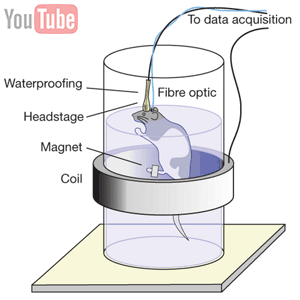
Optogenetics is a neuromodulation technique employed in neuroscience where light pulses are used to activate and deactivate neurons which have been genetically sensitized to photons. It employs a combination of techniques from optics and genetics to control and monitor the activities of individual neurons in living tissue—even within freely-moving animals—and to precisely measure the effects of those manipulations in real-time. The key reagents used in optogenetics are light-sensitive proteins.
The earliest approaches were developed and applied in the lab of Gero Miesenböck, now Waynflete Professor of Physiology at the University of Oxford, and Richard Kramer and Ehud Isacoff at the University of California, Berkeley; these methods conferred light sensitivity but were never reported to be useful by other laboratories due to the multiple components these approaches required. A distinct single-component approach involving microbial opsin genes introduced in 2005 turned out to be widely applied. Optogenetics is known for the high spatial and temporal resolution that it provides in altering the activity of specific types of neurons to control a subject’s behavior.
Posted in Health, Science, Technology |
Leave a Comment »
May 11, 2011


A sleeper (called a Q-car in the UK) is a car that has high performance and an unassuming exterior. Sleeper cars are termed such because their exterior looks little or no different from a standard or economy-class car. In some cases the car appears worse due to seeming neglect on the owner’s part, typically referred to as ‘all go and no show.’ While appearing to be a standard or neglected car, internally they are modified to perform at higher performance levels. The American nomenclature comes from the term sleeper agent, while the British term derives from the Q-ships used by the Royal Navy.
American actor Paul Newman famously drove a 1963 VW Beetle convertible with a 300-horsepower engine, racing suspension and five-speed gearbox. The back seats were removed to make room for the 351-cubic-inch Ford engine.
read more »
Posted in Games, Language, Technology |
Leave a Comment »
May 11, 2011
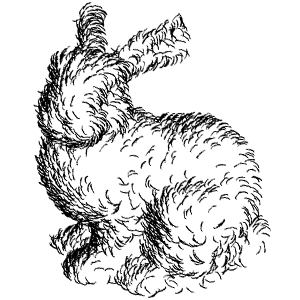
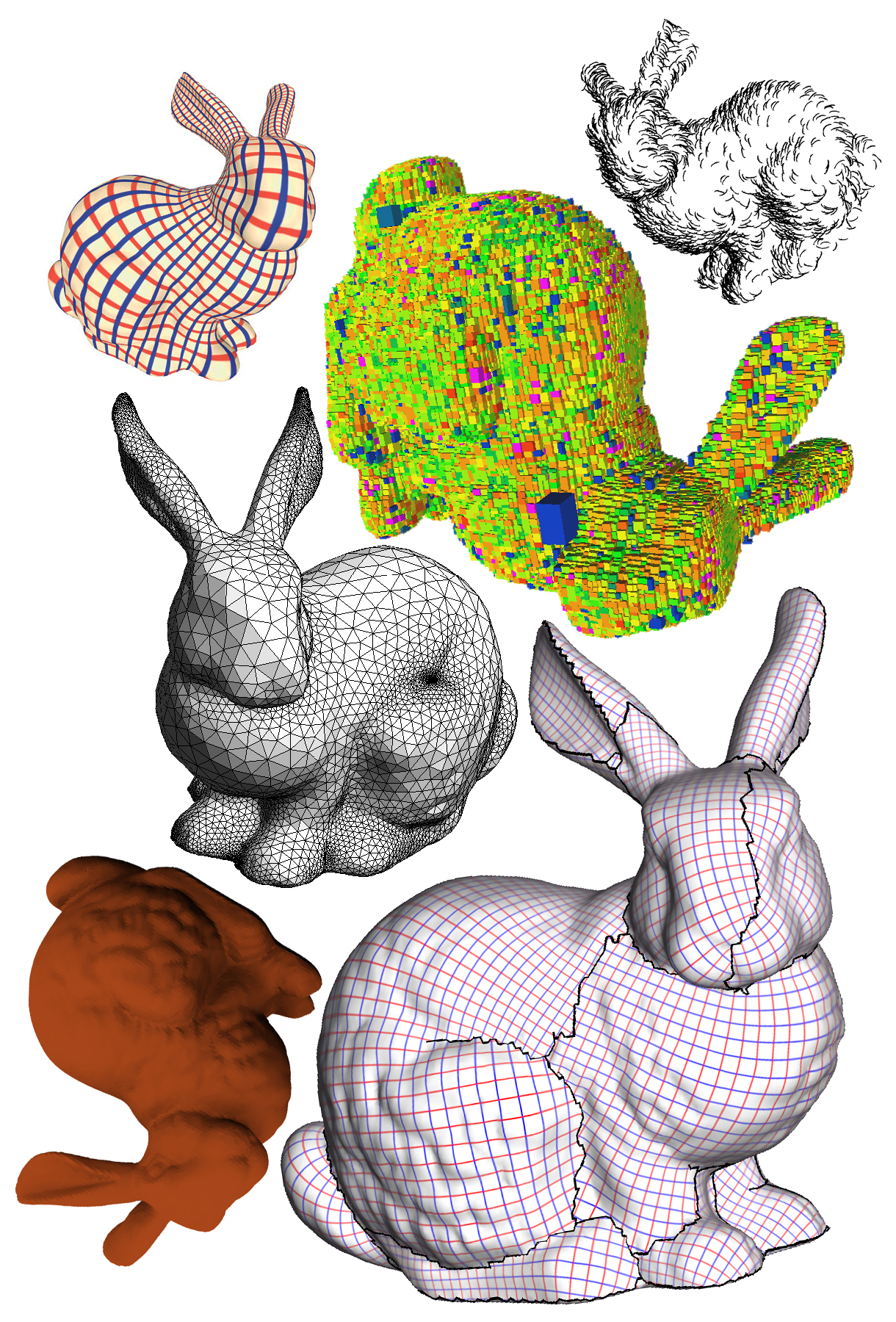
The Stanford Bunny is a computer graphics test model developed in 1994 at Stanford University. The Bunny consists of data describing 69,451 triangles determined by 3D scanning a ceramic figurine of a rabbit.
The data can be used to test various graphics algorithms; including polygonal simplification, compression, and surface smoothing. By today’s standards in terms of geometric complexity and triangle count, it is considered a simple model.
Posted in Art, Technology |
Leave a Comment »
May 11, 2011

The Stanford 3D Scanning Repository is a collection of freely usable 3d models scanned from real objects. The models tend to have very high polygon counts (the largest has almost 30 million). According to the repository, ‘In recent years, the number of range scanners and surface reconstruction algorithms has been growing rapidly. Many researchers, however, do not have access to scanning facilities or dense polygonal models. The purpose of this repository is to make some range data and detailed reconstructions available to the public.
The models in this archive are commonly used in the graphics, visualization, and vision communities. Things people have done with these models include simplification, multi-resolution representation, curved surface fitting, compression, texture mapping, modeling, deformation, animation, physically-based simulation, texture synthesis, and rendering. The Stanford Bunny is particularly widely used.
Posted in Art, Technology |
Leave a Comment »
May 11, 2011


The Rosetta Project is a global collaboration of language specialists and native speakers working to develop a contemporary version of the historic Rosetta Stone to last from 2000 to 12,000 CE; it is run by the Long Now Foundation. Its goal is a meaningful survey and near permanent archive of 1,500 languages. Some of these languages have fewer than one thousand speakers left in the world. Others are considered to be dying out because government centralization and globalization are increasing the prevalence of English and other major languages. The intention is to create a unique platform for comparative linguistic research and education, as well as a functional linguistic tool that might help in the recovery or revitalisation of lost languages in the future.
The Project is creating this broad language archive through an open contribution, open review process similar to the strategy that created the original Oxford English Dictionary. The resulting archive will be publicly available in three different media: a micro-etched nickel alloy disc three inches (7.62 cm) across with 2,000 year life expectancy; a single volume monumental reference book; and a growing online archive.
Posted in Language, Technology |
Leave a Comment »