March 28, 2011
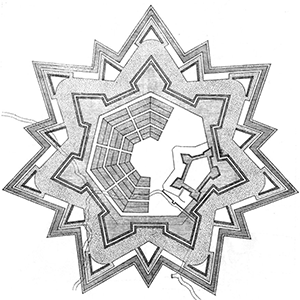
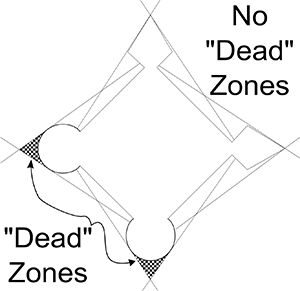
A star fort, or ‘trace italienne,’ is a fortification in the style that evolved during the age of gunpowder, when cannon came to dominate the battlefield, and was first seen in the mid-15th century in Italy. Passive ring-shaped (enceinte) fortifications of the Medieval era proved vulnerable to damage or destruction by cannon fire, when it could be directed from outside against a perpendicular masonry wall.
In addition, an attacking force that could get close to the wall was able to conduct undermining operations in relative safety, as the defenders could not shoot at them from nearby walls. In contrast, the star fortress was a very flat structure composed of many triangular bastions, specifically designed to cover each other, and a ditch. Further structures, such as ravelins, hornworks or crownworks, and detached forts could be added to create a complex symmetrical structure.
Posted in Technology, War |
Leave a Comment »
March 28, 2011

Sébastien Le Prestre, Seigneur de Vauban (1633 – 1707), commonly referred to as Vauban [voh-bahn], was a Marshal of France and the foremost military engineer of his age, famed for his skill in both designing fortifications and breaking through them. He also advised Louis XIV on how to consolidate France’s borders, to make them more defensible. Vauban made a radical suggestion of giving up some land that was indefensible to allow for a stronger, less porous border with France’s neighbors.
Vauban was born in Burgundy, to a family of minor nobility, but at the age of ten he was left an orphan, and his youth was spent amongst the peasantry of his native place. A fortunate event brought him under the care of a member of the Carmelites (a Catholic religious order), who undertook his education, and the grounding in mathematics, science and geometry.
Posted in Technology, War, World |
Leave a Comment »
March 28, 2011
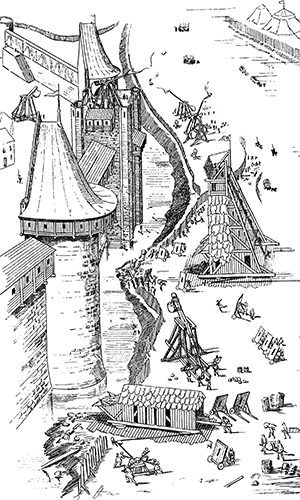
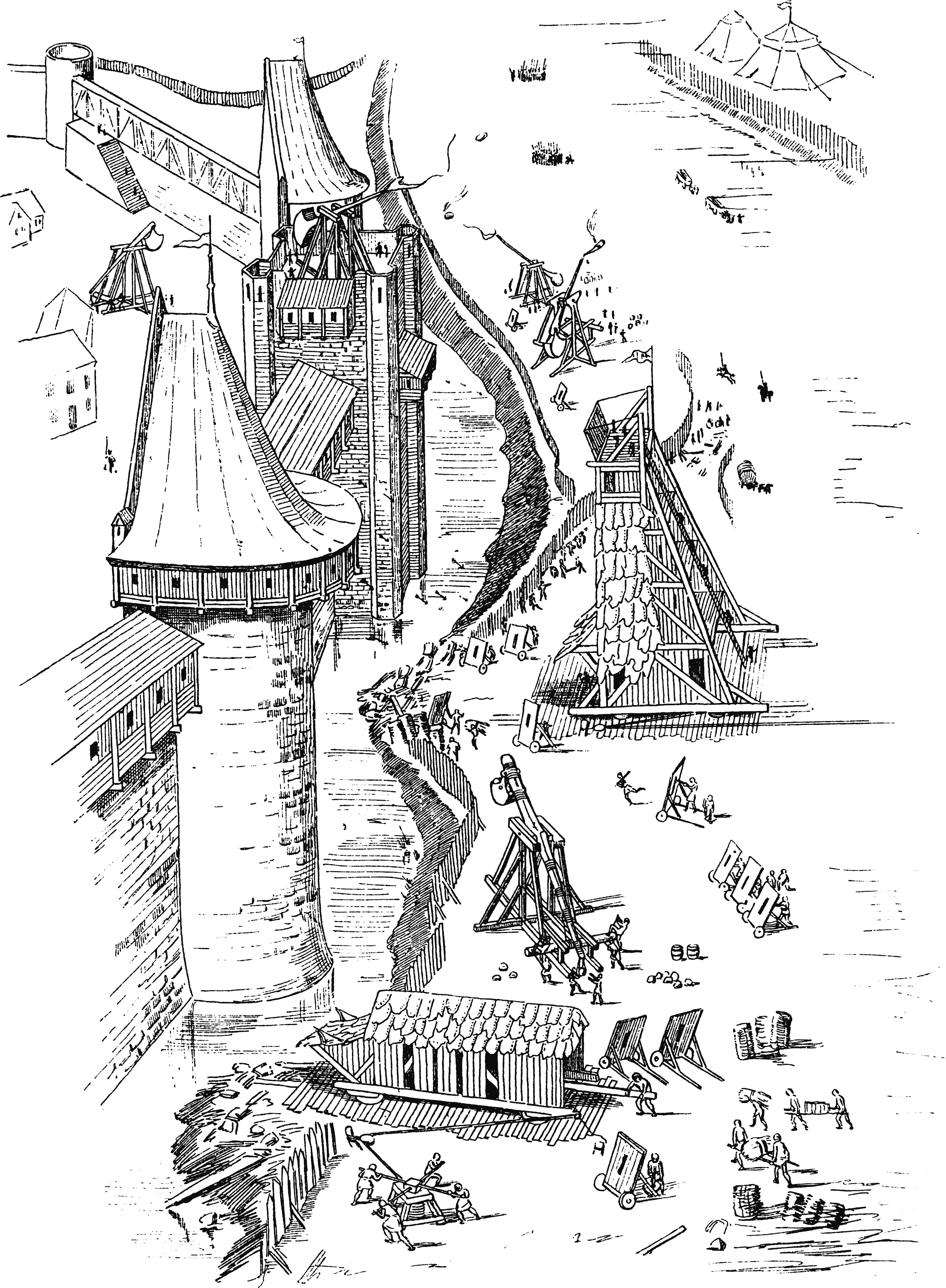
A siege engine is a device that is designed to break or circumvent city walls and other fortifications in siege warfare. Some are operated close to the fortifications, while others attack from a distance. From antiquity, siege engines were constructed largely of wood and tended to use mechanical advantage to fling stones and similar missiles. With the development of gunpowder and improved metallurgical techniques, siege engines became artillery. Collectively, siege engines or artillery combined with the necessary troops and transport vehicles to conduct a siege are referred to as a ‘siege-train.’
The earliest engine was the battering ram, developed by the Assyrians, followed by the catapult in ancient Greece. The Spartans used battering rams in the Siege of Plataea in 429 BCE, but it seems that the Greeks limited their use of siege engines to assault ladders, though Peloponnesian forces used something resembling flamethrowers. The Carthaginians used siege towers and battering rams against the Greek colonies of Sicily.
read more »
Posted in Technology, War |
Leave a Comment »
March 28, 2011
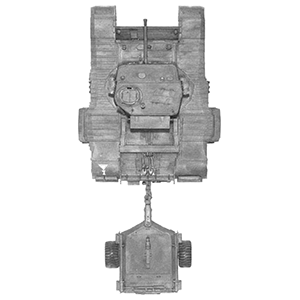
The Churchill Crocodile was a British flame-throwing tank of late Second World War. It was introduced as one of the specialized armored vehicles developed under Major-General Percy Hobart and known as one of ‘Hobart’s Funnies.’ It was produced from October 1943, in time for the Normandy invasion.
400 imperial gallons of fuel and the compressed nitrogen propellant, enough for eighty one-second bursts, were stored in a 6½ ton detachable armored trailer towed by the Crocodile. The trailer, connected to the tank by a three way armored coupling, could be jettisoned from within the tank if necessary. The thrower had a range of up to 120 yards.
read more »
Posted in Technology, War |
Leave a Comment »
March 28, 2011
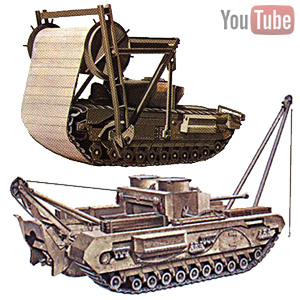
Hobart’s Funnies were a number of unusually modified tanks operated during World War II by the United Kingdom’s 79th Armored Division or by specialists from the Royal Engineers. They were designed in light of problems that more standard tanks experienced during the Allied attack on the German-occupied port of Dieppe on the northern coast of France in 1942.
These tanks played a major part on the Commonwealth beaches during the landings at Normandy. They may be considered the forerunners of the modern Combat engineering vehicle. They were named after their commander, British Military engineer Percy Hobart.
read more »
Posted in Technology, War |
Leave a Comment »
March 26, 2011

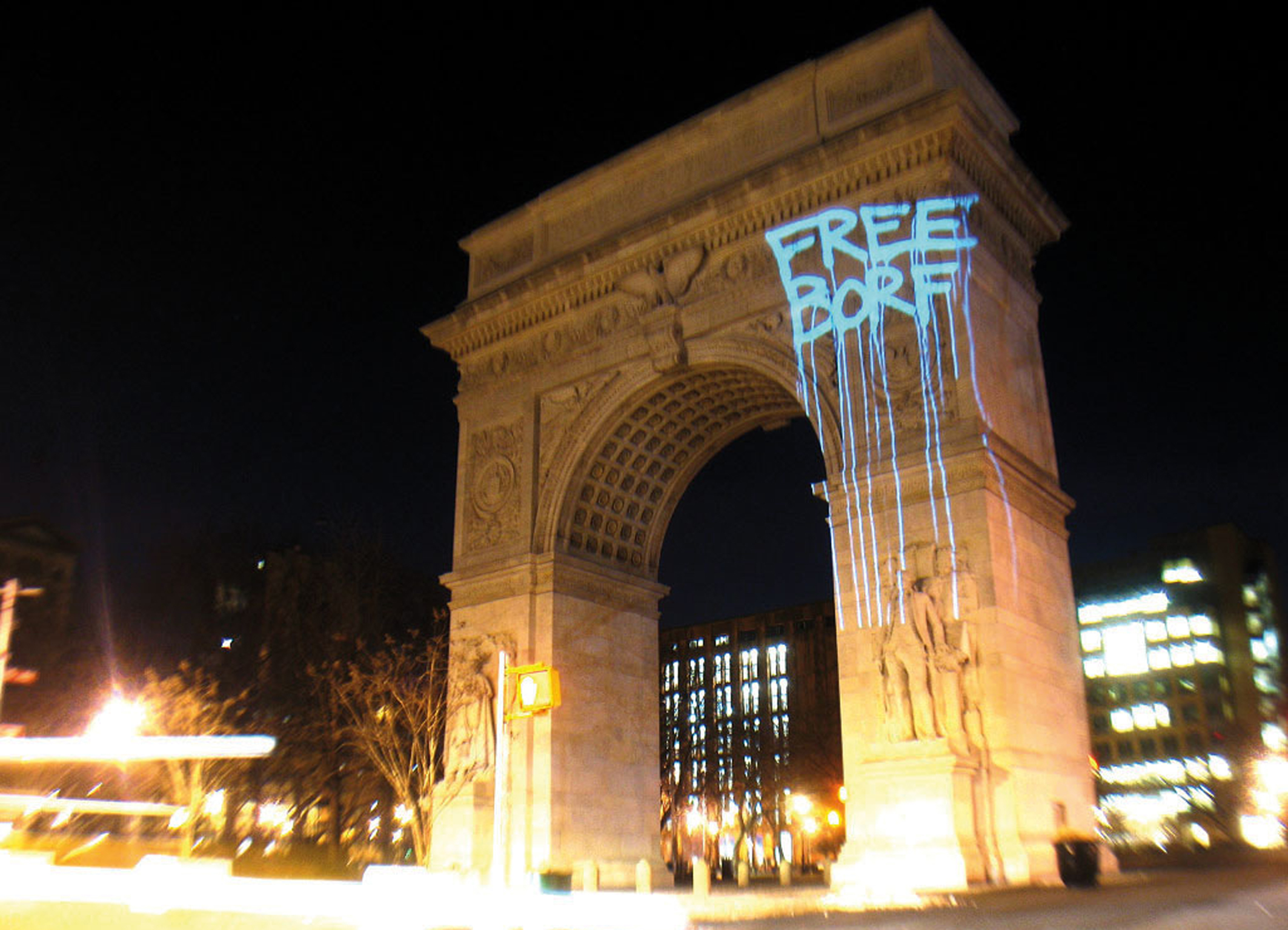
Graffiti Research Lab is a NYC art group dedicated to outfitting graffiti writers, artists and protesters with open source technologies for urban communication. The members of the group experiment in a lab and in the field to develop and test a range of experimental technologies.
The GRL is particularly well-known for inventing ‘LED Throwies.’ Each extension of Graffiti Research Lab is called a cell. Localized cells are found in Vienna, Amsterdam, and Mexico, copying and extending the work of the NY based organization. The cells cooperate and communicate, but are not one formal organization.
Posted in Art, Politics, Technology |
Leave a Comment »
March 24, 2011
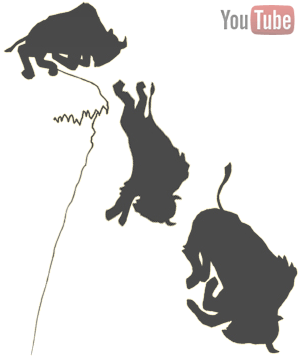
A buffalo jump is a cliff formation which North American Indians historically used in mass killings of plains bison. Hunters herded the bison and drove them over the cliff, breaking their legs and rendering them immobile. Tribe members waiting below closed in with spears and bows to finish the kills. The Blackfeet Indians called the buffalo jumps ‘pishkun,’ which loosely translates as ‘deep blood kettle.’
This type of hunting was a communal event which occurred as early as 12,000 years ago and lasted until at least 1500 CE, around the time of the introduction of horses. Buffalo jump sites are often identified by rock cairns, which were markers designating ‘drive lanes,’ by which bison would be funneled over the cliff. These drive lanes would often stretch for several miles.
Posted in Death, Food, Technology |
Leave a Comment »
March 24, 2011
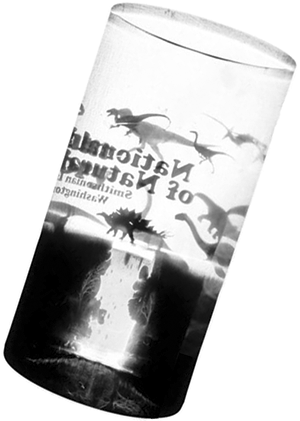
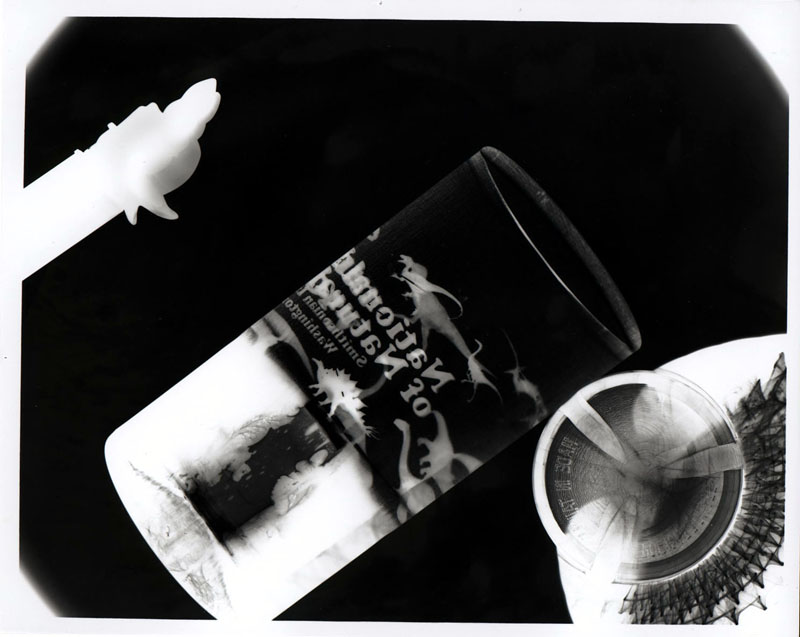
A photogram is a photographic image made without a camera by placing objects directly onto the surface of a photo-sensitive material such as photographic paper and then exposing it to light. The result is a negative shadow image varying in tone, depending on the transparency of the objects used. Areas of the paper that have received no light appear white; those exposed through transparent or semi-transparent objects appear grey.
Artistic cameraless photography, as the technique producing photograms is usually known, is perhaps most prominently associated with Man Ray and his exploration of ‘rayographs.’ Others who have experimented with the technique include László Moholy-Nagy, Christian Schad (who called them ‘Schadographs’), Imogen Cunningham and even Pablo Picasso.
Posted in Art, Technology |
Leave a Comment »
March 23, 2011

Tetra Pak is a multinational food processing and packaging company of Swedish origin. It was founded in 1951 in Lund, Sweden, by Ruben Rausing and Erik Åkerlund. Erik Wallenberg invented the original tetrahedral package in 1952, today known as ‘Tetra Classic.’ Ruben Rausing’s sons Hans and Gad Rausing ran Tetra Pak from 1954 until 1985, taking the company from a seven-person concern to one of Sweden’s largest corporations. At his death in 1983, Ruben Rausing was Sweden’s richest person.
Tetra Pak’s innovation is in the area of aseptic processing liquid food packaging which, when combined with ultra-high-temperature processing, allows liquid food to be packaged and stored under room temperature conditions for up to a year. In 1963 the company introduced ‘Tetra Brik,’ a rectangular cuboid carton. Later, it launched other formats such as ‘Tetra Wedge’ (wedge-shaped), ‘Tetra Prisma’ (round octagonal), and ‘Tetra Fino’ (pouch-shaped). Recent innovations have seen the introduction of laminated paper boxes for vegetables as an alternative to canned goods (‘Tetra Recart’).
Posted in Food, Money, Technology |
Leave a Comment »
March 23, 2011


Conveyor belt sushi (kaiten-zushi) is the popular English translation for Japanese fast-food sushi sometimes called a ‘sushi-g0-round.’ In Australia, it is known as ‘sushi train’ In South Korea, conveyor belt sushi has become popular and is known as ‘revolving sushi.’
Plates with the sushi are placed on a rotating conveyor belt that winds through the restaurant and moves past every table and counter seat. Customers may place special orders, but most simply pick their selections from a steady stream of fresh sushi moving along the conveyor belt. The final bill is based on the number and type of plates of the consumed sushi.
read more »
Posted in Food, Money, Technology |
Leave a Comment »
March 23, 2011

Dragon Skin a bulletproof vest made by Pinnacle Armor of California. Its characteristic two-inch-wide circular discs overlap like scale armor, creating a flexible vest that allows a good range of motion and can allegedly absorb a high number of hits compared with other military body armor.
The discs are composed of silicon carbide ceramic matrices and laminates, much like the larger ceramic plates in other types of bullet resistant vests. This armor has been known to withstand grenade blasts, and up to 40 rounds of ammo.
Posted in Money, Technology, War |
Leave a Comment »
March 23, 2011
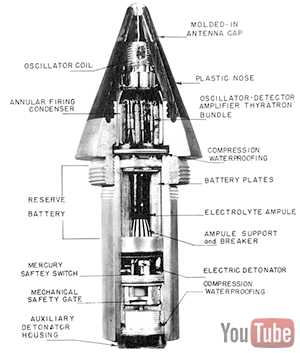
A proximity fuze is designed to detonate an explosive device automatically when the distance to target becomes smaller than a predetermined value or when the target passes through a given plane. A shell with a standard ‘contact fuze’ explodes upon impact, and a ‘time fuze’ after a specified number of seconds. A ‘proximity fuze,’ however uses a radio detection system, and explodes when within a certain distance from a target.
One of the first practical proximity fuzes was codenamed the ‘VT fuze,’ an acronym of ‘Variable Time fuze,’ as deliberate camouflage for its operating principle. The VT fuze concept in the context of artillery shells originated in the UK with British researchers (particularly Sir Samuel Curran) and was developed under the direction of physicist Merle A. Tuve at The Johns Hopkins University Applied Physics Lab. It is considered one of the most important technological innovations of World War II.
Posted in Technology, War |
Leave a Comment »