March 9, 2013

An ideas bank is a website where people post, exchange, discuss, and polish new ideas. Some ideas banks are used for the purpose of developing new inventions or technologies. Many corporations have installed internal ideas banks to gather the input from their employees and improve their ideation process. Some ideas banks employ a voting system to estimate an idea’s value. In some cases, ideas banks can be more humor-oriented than their serious counterparts.
The underlying theory of an ideas bank is that if a large group of people collaborate on a project or the development of an idea that eventually said project or idea will reach perfection in the eyes of those who worked on it. Many ideas banks are provided as free of charge, or set around certain companies in general to work out new inventions. Although ideas are provided by a community of people, problems can arise when people take the ideas of the site and begin developing them. There is no possible way to prove that the idea on the ideas bank was original and not taken from something else.
Continue reading →
Posted in Money, Technology |
Leave a Comment »
March 9, 2013
‘Shaken, not stirred‘ is a catchphrase of Ian Fleming’s fictional British Secret Service agent James Bond, and his preference for how he wished his martini prepared. The phrase first appears in the novel ‘Diamonds Are Forever’ (1956), though Bond does not actually say the line until ‘Dr. No’ (1958) but says it ‘shaken and not stirred’ instead of ‘shaken, not stirred.’ It was first uttered in the films by Sean Connery in Goldfinger in 1964 (though the villain Dr. Julius No offers this drink and utters those words in the first film, Dr. No, in 1962).
It was used in numerous Bond films thereafter with the notable exceptions of ‘You Only Live Twice,’ in which the drink is offered stirred, not shaken (Bond, ever the gentleman, ignores his host’s gaffe, telling him the drink is perfect), and ‘Casino Royale,’ in which Bond, after losing millions of dollars in a game of poker, is asked if he wants his martini shaken or stirred, and snaps, ‘Do I look like I give a damn?’
Continue reading →
Posted in Food, Language |
Leave a Comment »
March 9, 2013

Neurowear is a gadget project organization in Japan founded on the concept of the ‘Augumented Human Body.’ The group’s first project, known as necomimi (‘cat ears’) is a headband with a brain wave sensor and motorized cat shaped ears programmed to turn up or down based on the wearer’s thoughts. It runs for 4 hours on 4 AAA batteries and has interchangeable Cat, Dog, and Devil Horn ears. ‘Brain Disco’ is a collaboration between neurowear and Qosmo that measures audience ‘attention.’ The DJ must hold the audience’s ‘attention’ or get ejected. The first Brain Disco experiment was held in July 2012 at Gallery KATA Ebisu.
neurowear demonstrated their new prototype Shippo (‘tail’) at the Tokyo Game Show in September 2012. Shippo was developed with Kiluck Inc. Kiluck failed to fund a similar tail ‘Tailly’ on Kickstarter but is trying again on Indiegogo. The tail wags like a dog based on the user’s mood communicated from the headset wirelessly via Bluetooth. neurowear also showed an iPhone app that uploads the user’s mood to social media complete with geotagging. neurowear presented ‘Neuro Turntable’ in late 2012.
Posted in Games, Humor, Technology |
Leave a Comment »
March 9, 2013
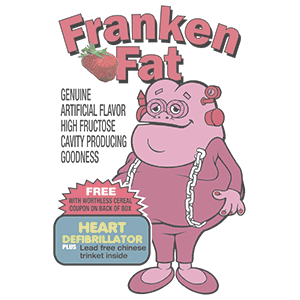
Childhood obesity is linked to Type 2 diabetes, heart disease, stroke, and high blood pressure, conditions uncommon in children and teenagers until recently. The term ‘overweight’ rather than obese is often used in children as it is less stigmatizing. The first problems to occur in obese children are usually emotional or psychological. Some of the other disorders would include liver disease, early puberty or menarche, eating disorders such as anorexia and bulimia, skin infections, and asthma and other respiratory problems.
Studies have shown that overweight children are more likely to grow up to be overweight adults. Obesity during adolescence has been found to increase mortality rates during adulthood. Obese children often suffer from teasing by their peers. Some are harassed or discriminated against by their own family. Stereotypes abound and may lead to low self-esteem and depression. Continue reading →
Posted in Food, Health |
Leave a Comment »
March 9, 2013
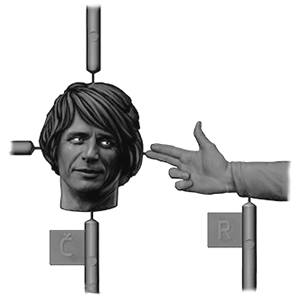
David Černý [chair-nee] (b. 1967) is a controversial Czech sculptor. He gained notoriety in 1991 by painting a Soviet tank pink, to serve as a war memorial in central Prague.
As the Monument to Soviet tank crews was still a national cultural monument at that time, his act of civil disobedience was considered ‘hooliganism’ and he was briefly arrested. Another of his conspicuous contributions to Prague is ‘Tower Babies,’ a series of cast figures of crawling infants attached to Žižkov Television Tower. For the 2012 Summer Olympics Černý created ‘London Booster’ – a double decker bus with mechanical arms for doing push-ups. Continue reading →
Posted in Art, Humor, Money |
Leave a Comment »
March 9, 2013
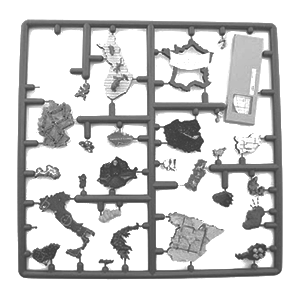
‘Entropa‘ is a 2009 sculpture by Czech artist David Černý. The project was commissioned by the Czech Republic to mark the occasion of its presidency of the Council of the European Union, and was originally designed as a collaboration for 27 artists and artist groups from all member countries of the European Union.
However, as a hoax, Černý and three of his assistants created a satirical and controversial piece that depicted pointed stereotypes of the EU member nations. Fake artist profiles were also created by Černý and his accomplices, complete with invented descriptions of their supposed contributions. The sculpture was originally on display in the Justus Lipsius building in Brussels.
Continue reading →
Posted in Art, Humor, World |
Leave a Comment »
March 9, 2013
‘Czech Dream‘ is a 2004 documentary film directed by Vít Klusák and Filip Remunda, which recorded a large-scale hoax perpetrated by the filmmakers on the Czech public, culminating in the ‘opening event’ of a fake hypermarket (a supermarket and a department store in one).
The film was their final project for film school. Remunda and Klusák invented the ‘Český sen’ (‘Czech Dream’) hypermarket and created a massive advertising campaign around it.
Continue reading →
Posted in Art, Money, World |
Leave a Comment »
March 8, 2013
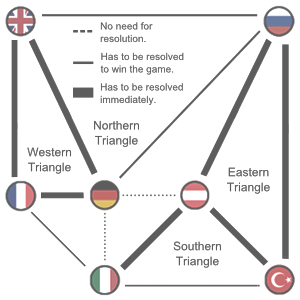
Diplomacy is a strategic board game created by American mail carrier Allan B. Calhamer in 1954 and released commercially in 1959. Its main distinctions from most board wargames are its negotiation phases (players spend much of their time forming and betraying alliances with other players and forming beneficial strategies) and the absence of dice or other game elements that produce random effects.
Set in Europe just before the beginning of World War I, Diplomacy is played by two to seven players, each controlling the armed forces of a major European Power (or, with few players, multiple powers). Each player aims to move his or her few starting units—and defeat those of others—to win possession of a majority of strategic cities and provinces marked as ‘supply centers’ on the map; these supply centers allow players who control them to produce more units. Continue reading →
Posted in Games, Politics, War |
Leave a Comment »
March 7, 2013
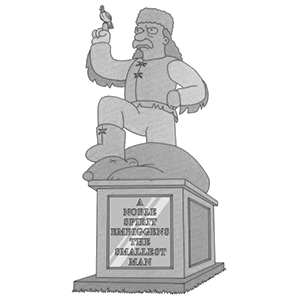
A neologism [nee-ol-uh-jiz-uhm] is a newly coined term, word, or phrase, that may be in the process of entering common use, but has not yet been accepted into mainstream language. Neologisms are often directly attributable to a specific person, publication, period, or event. The term is first attested in English in 1772, borrowed from French ‘néologisme.’ In psychiatry, the term is used to describe the use of words that have meaning only to the person who uses them, independent of their common meaning.
This tendency is considered normal in children, but in adults can be a symptom of psychopathy or a thought disorder (e.g. schizophrenia). People with autism also may create neologisms. Additionally, use of neologisms may be related to aphasia (sudden loss of language comprehension) acquired after brain damage resulting from a stroke or head injury. In theology, a ‘neologism’ is a relatively new doctrine (e.g. Transcendentalism). In this sense, a neologist is one who proposes either a new doctrine or a new interpretation of source material such as religious texts.
Continue reading →
Posted in Health, Language |
Leave a Comment »
March 7, 2013

The Style Invitational, or Invite, is a long-running humor contest that ran first in the Style section of the Sunday ‘Washington Post’ before moving to Saturday’s Style and later returning to the Sunday paper. Started in 1993, it has run weekly, except for a hiatus in late 1999. In that time, it has had two anonymous head judges who select winning entries: ‘The Czar’ abdicated in late 2003, leaving the contest in the hands of his former associate, ‘The Empress.’
The humor ranges from an intellectual vein to a less mature style, and frequently touches on sophisticated political or historical allusions. While the contest theme changes every week, some popular contests are periodically repeated. The S.I. has a loyal following of self-proclaimed ‘Losers,’ who refer to having a contest entry published as ‘getting ink.’ Continue reading →
Posted in Games, Humor, Language |
1 Comment »
March 7, 2013
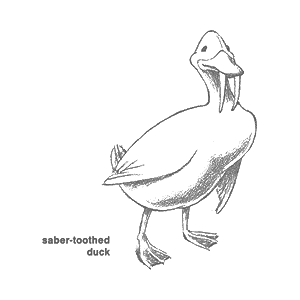
‘Science Made Stupid: How to Discomprehend the World Around Us’ is a book written and illustrated by Tom Weller in 1985. The winner of the 1986 Hugo Award for Best Non-Fiction Book, it is a parody of a junior high or high school-level science textbook. Though currently out-of-print, high-resolution scans are available online, as well as an abridged transcription, both of which have been endorsed by Weller.
Highlights of the book include a satirical account of the creationism vs. evolution debate and Weller’s drawings of fictional prehistoric animals (e.g., the duck-billed mastodon.) Weller released a companion volume, ‘Culture Made Stupid’ (also spelled ‘Cvltvre Made Stvpid’), which satirizes literature and the humanities.
Posted in Education, Humor, Science |
1 Comment »
March 7, 2013

WFMU is a listener-supported, independent community radio station headquartered in Jersey City, New Jersey, broadcasting at FM 91.1 (at 90.1 as WMFU, and at 91.9 as W219DQ), presenting a freeform radio format (in which the disc jockey is given total control over what music to play, regardless of music genre or commercial interests). It is the longest-running freeform radio station in the US, commencing broadcasting in 1958, licensed to Upsala College in East Orange.
Although originally a student-staffed and faculty-administered college radio operation, by the 1980s most of the station’s staff had no affiliation with the college, and management, though hired by the college, had little involvement with the academic community. Shortly before Upsala’s bankruptcy filing and closure in 1995, a group of station executives, personnel, and supporters formed Auricle Communications and bought the license from the college, making it a fully independent radio station. In 1998 the station’s studios and offices were relocated to a Jersey City facility purchased with listener donations. Continue reading →
Posted in Art, Money |
Leave a Comment »



