November 7, 2012
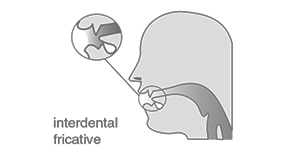
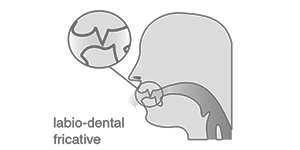
A fricative [frik-uh-tiv] is a consonant that is made when you squeeze air through a small hole or gap in your mouth. For example, the gaps in between your teeth can make fricative consonants. When the gaps in the teeth are used, these fricatives are called sibilants (e.g. ‘voiceless coronal sibilant,’ as in ‘sip’; ‘voiced coronal sibilant,’ as in ‘zip’). There are also non-sibilant fricatives (e.g. ‘voiceless labiodental fricative,’ as in ‘fine’; ‘voiced dental fricative,’ as in ‘that’).
A small number of languages including Navajo and Welsh have lateral fricatives (consonants, in which the airstream proceeds along the sides of the tongue, blocked by the tongue from going through the middle of the mouth). Many languages also have pseudo-fricatives (unvoiced vowels, e.g. ‘voiceless glottal transition,’ as in ‘hat’).
Continue reading →
Posted in Language, World |
Leave a Comment »
November 6, 2012

There are numerous fallacious ideas and beliefs about the origins (or etymologies) of common English words. The word ‘fuck’ did not originate in Christianized Anglo-Saxon England as an acronym of ‘Fornication Under Consent of King’; nor did it originate as an acronym of ‘For Unlawful Carnal Knowledge,’ either as a sign posted above adulterers in the stocks, or as a criminal charge against members of the British Armed Forces; nor did it originate during the 15th-century Battle of Agincourt as a corruption of ‘pluck yew’ (an idiom falsely attributed to the English for drawing a longbow).
Modern English was not spoken until the 16th century, and words such as ‘fornication’ and ‘consent’ did not exist in any form in English until the influence of Anglo-Norman in the late 12th century. The earliest recorded use of ‘fuck’ in English comes from c. 1475, in the poem ‘Flen flyys,’ where it is spelled ‘fuccant’ (conjugated as if a Latin verb meaning ‘they fuck’). It is of Proto-Germanic origin, and is related to Dutch ‘fokken’ and Norwegian ‘fukka.’
Continue reading →
Posted in Language, World |
Leave a Comment »
November 6, 2012
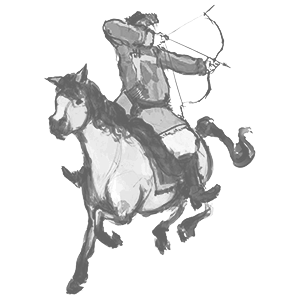
The Parthian [pahr-thee-uhn] shot was a military tactic made famous by the Parthians (an ancient Iranian empire). Their archers mounted on light horse, while retreating at a full gallop, would turn their bodies back to shoot at the pursuing enemy. The maneuver required superb equestrian skills, since the rider’s hands were occupied by his bow. As the stirrup had not been invented yet, the rider relied solely on pressure from his legs to guide his horse. The tactic was first employed by Eurasian nomads, including the Scythians, Huns, Turks, Magyars, and Mongols, before spreading to armies away from the Eurasian steppe, such as the Sassanid clibanariis and cataphract.
The Parthians famously used it to defeat the Roman general Crassus in the Battle of Carrhae. The phrase ‘parting shot’ has its origins from the Parthian shot. The first recorded usage was by John McCleod, surgeon on board the HMS Alceste contained in: ‘A narrative of a Voyage to the Yellow Sea’ (1818). The two phrases have rather similar phonetic soundings but are actually separately derived at different times. Although the Parthian archers of old have been famous for their shooting, the term ‘parthian shot’ was recorded for the first time in 1832 by Captain Mundy, ADC to Lord Combermere on a hunting trip in India.
Posted in Language, War, World |
1 Comment »
November 6, 2012

‘Poison pill’ is sometimes used more broadly to describe other types of takeover defenses that involve the target taking some action.
Although the broad category of takeover defenses (more commonly known as ‘shark repellents‘) includes the traditional shareholder rights plan poison pill. Other anti-takeover protections include: Limitations on the ability to call special meetings or take action by written consent; Supermajority vote requirements to approve mergers; and Supermajority vote requirements to remove directors. Continue reading →
Posted in Money, Politics |
Leave a Comment »
November 6, 2012

A wedge issue is a social issue, often of a divisive or controversial nature, which splits apart a population or political group. Wedge issues can be advertised or publicly aired in an attempt to weaken the unity of a population; with the goal of enticing polarized individuals to give support to an opponent. The use of wedge issues gives rise to wedge politics. Wedge issues are also known as ‘hot button’ or ‘third rail’ issues.
Political campaigns use wedge issues to exploit tension within a targeted population. A wedge issue may often be a point of internal dissent within an opposing party, which that party attempts to suppress or ignore discussing because it divides ‘the base.’ Typically, wedge issues have a cultural or populist theme, relating to matters such as crime, national security, sexuality (e.g. gay marriage), or race. A party may introduce a wedge issue to an opposing population, while aligning itself with the dissenting faction of the opposition.
Continue reading →
Posted in Politics, Sex, World |
1 Comment »
November 5, 2012
A shareholder rights plan, colloquially known as a ‘poison pill,’ is a type of defensive tactic used by a corporation’s board of directors against a takeover. There are a number of such tactics, referred to as ‘shark repellents’ generally. In the field of mergers and acquisitions, shareholder rights plans were devised in the early 1980s as a way for directors to prevent takeover bidders from negotiating a price for sale of shares directly with shareholders, and instead forcing the bidder to negotiate with the board.
Shareholder rights plans are unlawful without shareholder approval in many jurisdictions such as the United Kingdom, frowned upon in others such as throughout the European Union, and lawful if used ‘proportionately’ in others, including Delaware in the United States. They are controversial because they hinder an active market for corporate control. Further, giving directors the power to deter takeovers puts directors in a position to enrich themselves, as they may effectively ask to be compensated for the price of consenting to a takeover. Continue reading →
Posted in Games, Money, Politics |
Leave a Comment »
November 5, 2012

Hot or Not was a rating site that allowed users to rate the attractiveness of photos submitted voluntarily by others. The site offers a matchmaking engine called ‘Meet Me’ and an extended profile feature called ‘Hotlists.’ It is owned by Badoo Trading Limited (a dating-focused social discovery website, founded in 2006 by Russian entrepreneur Andrey Andreev), and was previously owned by Avid Life Media (who owns a dating web site named ‘Ashley Madison’ that is geared toward married individuals looking for an additional relationship).
‘Hot or Not’ was a significant influence on the people who went on to create the social media sites Facebook and YouTube. The site was founded in 2000 by James Hong and Jim Young, two friends and Silicon Valley-based engineers. Both graduated from the University of California, Berkeley in electrical engineering, with Young pursuing a Ph.D at the time. Continue reading →
Posted in Money, Sex, Technology |
Leave a Comment »
November 5, 2012
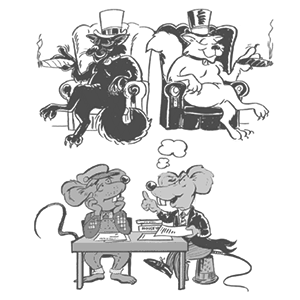
The Story of Mouseland was first told first by Canadian politician Clarence Gillis, and later and most famously by Tommy Douglas, leader of the Saskatchewan Co-operative Commonwealth Federation and, later, the New Democratic Party of Canada, both social democratic parties.
It was a political fable expressing the CCF’s view that the Canadian political system was flawed in offering voters a false dilemma: the choice of two parties, neither of which represented their interests. The mice voted in black cats, which represented the Progressive Conservative Party, and then they found out how hard life was. So they voted in the white cats, which symbolized the Liberal Party. Continue reading →
Posted in Humor, Politics, World |
Leave a Comment »
November 5, 2012
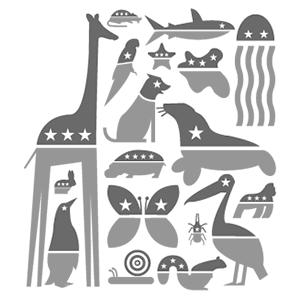
In political science, Duverger’s law is a principle which asserts that a plurality rule election system (voters vote for one candidate, and the candidate with the most votes wins) tends to favor a two-party system. This is one of two hypotheses proposed by French sociologist and politician Maurice Duverger, the second stating that ‘the double ballot majority system and proportional representation tend to multipartism.’
Duverger observed the effect and recorded it in several papers published in the 1950s and 1960s. In the course of further research, other political scientists began calling the effect a ‘law’ or principle. Continue reading →
Posted in Politics, World |
Leave a Comment »
November 5, 2012

The moralistic fallacy is in essence the reverse of the naturalistic fallacy (defining the term ‘good’ in terms of one or more natural properties). The moralistic fallacy is the formal fallacy of assuming that what is desirable is found or inherent in nature. It presumes that what ought to be—something deemed preferable—corresponds with what is or what naturally occurs. What should be moral is assumed a priori to also be naturally occurring.
Cognitive scientist Steven Pinker writes that ‘The naturalistic fallacy is the idea that what is found in nature is good. It was the basis for Social Darwinism, the belief that helping the poor and sick would get in the way of evolution, which depends on the survival of the fittest. Today, biologists denounce the Naturalistic Fallacy because they want to describe the natural world honestly, without people deriving morals about how we ought to behave — as in: If birds and beasts engage in adultery, infanticide, cannibalism, it must be OK.’
Continue reading →
Posted in Philosophy, Politics, Science |
1 Comment »
November 5, 2012

The phrase ‘naturalistic fallacy‘ refers to the claim that what is natural is inherently good or right, and that what is unnatural is bad or wrong (‘appeal to nature’). It is the converse of the ‘moralistic fallacy,’ the notion that what is good or right is natural and inherent. The naturalistic fallacy is related to (and even confused with) Hume’s ‘is–ought problem,’ which examines the difference between descriptive statements (about what is) and prescriptive or normative statements (about what ought to be).
Another usage of ‘naturalistic fallacy’ was described by British philosopher G. E. Moore in his 1903 book ‘Principia Ethica.’ Moore stated that a naturalistic fallacy is committed whenever a philosopher attempts to prove a claim about ethics by appealing to a definition of the term ‘good’ in terms of one or more natural properties (such as ‘pleasant,’ ‘more evolved,’ ‘desired,’ etc.).
Continue reading →
Posted in Language, Philosophy, Science |
Leave a Comment »
November 5, 2012

An appeal to nature is a logical fallacy used in arguments or rhetorical tactics in which a phenomenon is described as desirable merely because it is natural, or undesirable merely because it is unnatural, it is related but not identical to the naturalistic fallacy, as the latter considers defining ‘good’ in ethics in terms of any natural properties (even if not merely for being natural) as a fallacy.
The Fallacy of appeal to nature depends on a positive view about the nature, e.g. good, desirable..etc. as a foundation of the reasoning of the argument. To appeal to nature in an argument is to argue from a premise or premises claimed to be implied by the concept of nature.
Continue reading →
Posted in Money, Philosophy |
Leave a Comment »



