November 1, 2012

The strong programme or Strong Sociology is a variety of the sociology of scientific knowledge (SSK) particularly associated with David Bloor, Barry Barnes, Harry Collins, Donald A. MacKenzie, and John Henry. SSK is the study of science as a social activity, especially dealing with ‘the social conditions and effects of science, and with the social structures and processes of scientific activity.’
The strong programme’s influence on Science and Technology Studies (the study of how social, political, and cultural values affect scientific research and technological innovation, and how these, in turn, affect society, politics and culture) is credited as being unparalleled. The largely Edinburgh-based school of thought has illustrated how the existence of a scientific community, bound together by allegiance to a shared paradigm, is a pre-requisite for normal scientific activity. Continue reading →
Posted in Education, Science |
Leave a Comment »
November 1, 2012

Science for the People is a left-wing organization that emerged from the antiwar culture of the United States in the 1970s. A similar organization of the same name was founded in 2002.
The original group was composed of professors, students, and other concerned citizens who sought to end potential oppression brought on by pseudoscience, or by what it considered the misuse of science. ‘Science for the People’ generated much controversy in the 1970s for the radical tactics of some of its members. Continue reading →
Posted in Politics, Science |
Leave a Comment »
November 1, 2012
Science studies is an interdisciplinary research area that seeks to situate scientific expertise in a broad social, historical, and philosophical context. It is concerned with the history of scientific disciplines, the interrelationships between science and society, and the alleged covert purposes that underlie scientific claims. While it is critical of science, it holds out the possibility of broader public participation in science policy issues.
The word ‘science’ is used in the sense of natural, social and formal sciences – areas of research that tend toward positivism (‘all true knowledge is scientific’). The word ‘science’ thus explicitly excludes the humanities and cultural studies, which tend toward relativism (‘the truth of a statement is based on conditions’). Thus, while the topic of research in ‘science studies’ is the sciences, the main approaches to research come from the humanities (e.g. history) (hence the word ‘study’ in the title, rather than for example ‘theory’). Science studies scholars study (investigate) specific phenomena such as technological milieus, laboratory culture, science policy, and the role of the university.
Continue reading →
Posted in Education, Science, Technology |
Leave a Comment »
November 1, 2012
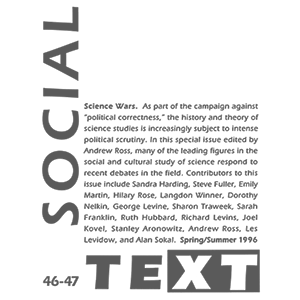
The science wars were a series of intellectual exchanges, between scientific realists and postmodernist critics, about the nature of scientific theory which took place principally in the United States in the 1990s. The postmodernists questioned scientific objectivity, and critiqued the scientific method and scientific knowledge in cultural studies, cultural anthropology, feminist studies, comparative literature, media studies, and science and technology studies. The scientific realists countered that objective scientific knowledge is real, and accused postmodernist critics of having little understanding of the science they were criticizing.
Until the mid-20th century, the philosophy of science had concentrated on the viability of scientific method and knowledge, proposing justifications for the truth of scientific theories and observations and attempting to discover on a philosophical level why science worked. Already Karl Popper had begun to attack this view. Popper denied outright that justification existed for such concepts as truth, probability or even belief in scientific theories, thereby laying fertile foundations for the growth of postmodernist attitudes.
Continue reading →
Posted in Education, Language, Science |
Leave a Comment »
November 1, 2012
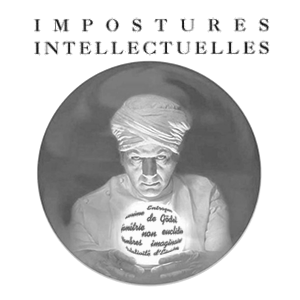
‘Fashionable Nonsense: Postmodern Intellectuals’ Abuse of Science’ (French: ‘Impostures Intellectuelles’) is a 1997 book by NYU physics professor Alan Sokal and Belgian theoretical physicist Jean Bricmont. Sokal is best known for the Sokal Affair, in which he submitted a deliberately absurd article to ‘Social Text,’ a critical theory journal, and was able to get it published. The English editions were revised for greater relevance to debates in the English-speaking world.
As part of the so-called ‘science wars’ (a series of intellectual exchanges, between scientific realists and postmodernist critics), the book criticizes postmodernism in academia for what it claims are misuses of scientific and mathematical concepts in postmodern writing. According to some reports, the response within the humanities was ‘polarized.’ Critics of Sokal and Bricmont charge that they lack understanding of the writing they were criticizing. Responses from the scientific community were more supportive.
Continue reading →
Posted in Language, Philosophy, Science |
Leave a Comment »
October 31, 2012

Thanos is a fictional character appearing in comic books and other media published by Marvel Comics. He is the villainous ruler of Titan, Saturn’s largest moon. The character first appeared in ‘Iron Man #55’ in 1973, and was created by writer-artist Jim Starlin.
The character’s name is a derivation of Thanatos, the personification of death and mortality in Greek mythology.
Continue reading →
Posted in Art, Death |
Leave a Comment »
October 31, 2012

Grand Admiral Thrawn is a fictional character and a major antagonist in the ‘Star Wars’ universe. He first appeared in ‘Heir to the Empire,’ part of Timothy Zahn’s Thrawn trilogy published between 1992 and 1994. In these books, set five years after ‘Return of the Jedi,’ Thrawn has assumed command of the remaining forces of the Empire and is planning to battle the New Republic.
Zahn describes Thrawn’s command style as considerably different from that of Darth Vader and other typical Imperial commanders; instead of punishing failure and dissent, Thrawn promotes creativity among his crew and accepts ideas from subordinates. He is a tactical genius who has made extensive study of military intelligence and art, and is willing to retreat instead of making a stand in a losing battle. His study of his enemies’ artwork gives him insight into their thought processes and cultures, allowing him to create highly effective tailor-made strategies.
Continue reading →
Posted in Art, War |
Leave a Comment »
October 30, 2012

Day of the Dead (‘Día de los Muertos’) is a Mexican holiday where people gather to pray for and remember friends and family members who have died. The celebration takes place on November 1, in connection with the Catholic holidays of All Saints’ Day and All Souls’ Day (November 2).
Traditions connected with the holiday include building private altars honoring the deceased using edible sugar skulls, marigolds, and the favorite foods and beverages of the departed and visiting graves with these as gifts. They also leave possessions of the deceased. Scholars trace the origins of the modern Mexican holiday to indigenous observances dating back hundreds of years and to an Aztec festival dedicated to the goddess Mictecacihuatl (Queen of the Underworld). Continue reading →
Posted in Death, Philosophy, World |
2 Comments »
October 29, 2012
The Ig Nobel Prizes are a satirical award given each year in early October for ten unusual or trivial achievements in scientific research. The stated aim of the prizes is to ‘first make people laugh, and then make them think.’
Organized by the scientific humor magazine ‘Annals of Improbable Research’ (AIR), they are presented by a group that includes Nobel Laureates at a ceremony at Harvard University’s Sanders Theater, and they are followed by a set of public lectures by the winners at MIT. The name is a play on the words ‘ignoble’ (‘characterized by baseness, lowness, or meanness’) and the Nobel Prize. The pronunciation used during the ceremony is [ig-noh-bel], not like the word ‘ignoble.’ Continue reading →
Posted in Education, Humor, Science |
Leave a Comment »
October 29, 2012

Obesity in pets is common in many countries. Rates of overweight and obesity in dogs in the United States ranges from 23% to 41% with about 5.1% obese. Rates of obesity in cats was slightly higher at 6.4%. The risk of obesity in dogs but not cats is related to whether or not their owners are obese. Obese dogs and cats have a higher incidence of arthritis and heart disease.
In fact, fatness to the point of health impairment is enough of a concern that Pfizer developed and got Food and Drug Administration-approval for a drug (Slentrol) to treat canine and feline obesity. Pet owners have been prosecuted for cruelty to animals due to their dangerously obese dogs. Two British brothers were cited in 2006 for cruelty and neglect of their chocolate labrador retriever, ‘who was allegedly made so obese by his owners that he ‘looked like a seal’ and could barely waddle a few steps.’ Continue reading →
Posted in Food, Health |
1 Comment »
October 29, 2012
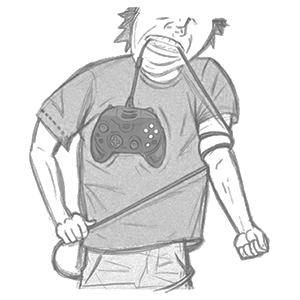
Video games addiction is use of computer and video games to make life bearable. Instances have been reported in which users play compulsively, isolating themselves from family and friends or from other forms of social contact, and focus almost entirely on in-game achievements rather than other life events, and exhibit lack of imagination and mood swings. There is no formal diagnosis of video game addiction in current medical or psychological literature.
Inclusion of it as a psychological disorder has been proposed and rejected for the next version of the Diagnostic and Statistical Manual of Mental Disorders (DSM). However, some scholars suggest the effects (or symptoms) of video game overuse may be similar to those of other proposed psychological addictions. Video game overuse may be like compulsive gambling, an impulse control disorder. Continue reading →
Posted in Games, Health |
2 Comments »
October 29, 2012
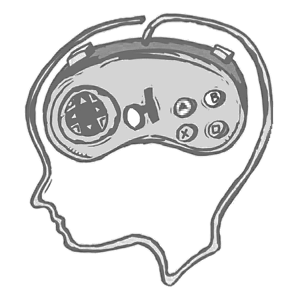
Game brain is a term coined by Japanese physiologist Akio Mori referring to the long term effects of video games on the human brain. Mori originally coined the term and presented the concept in his 2002 book ‘The Terror of Game Brain.’ Mori performed an experiment at Tokyo’s Nihon University designed to measure the effect of video games on human brain activity by examining beta waves (brainwaves associated with normal waking consciousness).
Mori claims his study revealed that people who spend long periods playing video games have reduced activity in the brain’s pre-frontal region, which governs emotion and creativity. Mori asserts that side effects can include loss of concentration, an inability to control temper, and problems socializing or associating with others. His theory has gained some recognition in popular culture, especially among parents who believe that video gaming can have detrimental effects on child development. Continue reading →
Posted in Games, Health, World |
Leave a Comment »



