Tarantism [tar-uhn-tiz-uhm] is an alleged, possibly deadly syndrome, popularly believed to result from the bite of a kind of a tarantula. It was originally described in the eleventh century and was supposedly common in southern Italy during the sixteenth and seventeenth centuries. There were strong suggestions that there is no organic cause for the heightened excitability and restlessness that gripped the victims. The stated belief of the time was that victims needed to engage in frenzied dancing to prevent death, and a particular kind of dance, called the tarantella, evolved from this therapy.
Arachnologist John Compton proposed that ancient Bacchanalian rites that had been suppressed by the Roman Senate in 186 BCE went underground, reappearing under the guise of emergency therapy for bite victims. The phenomenon of tarantism is consistent with mass psychogenic illness (the rapid spread of illness symptoms affecting members of a cohesive group, originating from a nervous system disturbance involving excitation, loss or alteration of function, whereby physical complaints that are exhibited unconsciously have no corresponding organic etiology). Although the popular belief persists that tarantism results from a spider bite, it remains scientifically unsubstantiated. The actual cause or causes of tarantism remain unknown.
Tarantism
Daggering
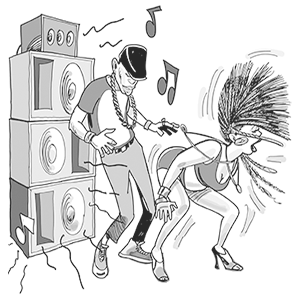
Daggering is a form of dance originating from the Caribbean. The dance incorporates sexual and other forms of frantic movement. The activity of ‘daggering’ has been present in Jamaica’s dancehalls for many years, but only recently has the name of daggering become acceptable. Some argue that it’s roughly the equivalent of the Caribbean’s ‘cabin stabbing,’ another style of music and dance.
‘Mojo’ magazine journalist and reggae historian David Katz attributes the recently gained popularity of daggering to a series of dancehall music videos and artists that promoted the style. Later on, controversial YouTube videos of people performing daggering would spread the trend worldwide. Daggering is performed on Dancehall-music, although some artists have specifically created ‘daggering’ music, such as Mr. Vegas, Aidonia, and Major Lazer. Continue reading
Lexical-gustatory Synesthesia
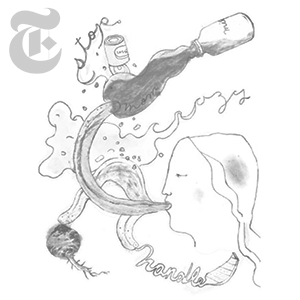
Lexical-gustatory [lek-si-kuhl guhs-tuh-tawr-ee sin-uhs-thee-zhuh] synesthesia [sin-uhs-thee-zhuh] is one of the rarer forms of synesthesia (a mixing of the senses), in which spoken or written words evoke vivid sensations of taste, sometimes including temperature and texture (e.g., for lexical-gustatory synesthete JIW, ‘jail’ tastes of cold, hard bacon).
This form of synesthesia was first documented in 1907 in both Italy and the United States, but has only recently become the topic of scientific investigation. Continue reading
Ideasthesia

Ideasthesia is a neurological or cognitive phenomenon in which activation of a particular concept triggers a sensory-like experience. Specifically it is when activations of concepts (inducers) evoke perception-like experiences (concurrents). The name comes from Greek, meaning sensing concepts or sensing ideas.
The main reason for introducing the notion of ideaesthesia was the empirical evidence indicating that the related term synesthesia (i.e. union of senses) suggests incorrect explanation of a set of phenomena traditionally covered by this heading. Continue reading
Grapheme–color Synesthesia

Grapheme-color [graf-eem] synesthesia [sin-uhs-thee-zhuh] is a form of synesthesia (mixing of sensations) in which an individual’s perception of numbers and letters is associated with the experience of colors. Like all forms of synesthesia, grapheme-color synesthesia is involuntary, consistent, and memorable. It is one of the most common forms of synesthesia, and because of the extensive knowledge of the visual system, one of the most studied. While it is extremely unlikely that any two synesthetes will report the same colors for all letters and numbers, studies of large numbers of synesthetes find that there are some commonalities across letters (e.g., ‘A’ is likely to be red).
Early studies argued that the condition was not due to associative learning, such as from playing with colored refrigerator magnets. However, one recent study has documented a case of synesthesia in which synesthetic associations could be traced back to colored refrigerator magnets. Despite the existence of this individual case, the majority of synesthetic associations do not seem to be driven by learning of this sort. Rather, it seems that more frequent letters are paired with more frequent colors, and some meaning-based rules, such as ‘b’ being blue, drive most synesthetic associations. Continue reading
Brain Waves

Neural oscillation is rhythmic or repetitive neural activity in the central nervous system. In individual neurons, oscillations can appear either as oscillations in membrane potential or as rhythmic patterns of action potentials, which then produce oscillatory activation of post-synaptic neurons. At the level of neural ensembles, synchronized activity of large numbers of neurons can give rise to macroscopic oscillations, which can be observed in the electroencephalogram (EEG).
Oscillatory activity in groups of neurons generally arise from feedback connections between the neurons that result in the synchronization of their firing patterns. The interaction between neurons can give rise to oscillations at a different frequency than the firing frequency of individual neurons. A well-known example of macroscopic neural oscillations is alpha activity, neural oscillations in the frequency range of 8–12 Hz arising from electrical activity of thalamic pacemaker. In lay terms, they are brain waves associated with feelings of relaxation. Continue reading
Sensory Deprivation

Sensory deprivation or perceptual isolation is the deliberate reduction or removal of stimuli from one or more of the senses. Simple devices such as blindfolds or hoods and earmuffs can cut off sight and hearing respectively, while more complex devices can also cut off the sense of smell, touch, taste, thermoception (heat-sense), and ‘gravity.’
Sensory deprivation has been used in various alternative medicines and in psychological experiments (e.g., see isolation tank). Short-term sessions of sensory deprivation are described as relaxing and conducive to meditation; however, extended or forced sensory deprivation can result in extreme anxiety, hallucinations, bizarre thoughts, and depression.
Isolation Tank
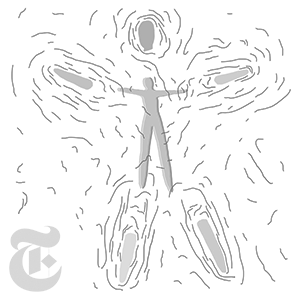
An isolation tank is a lightless, soundproof tank inside which subjects float in salt water at skin temperature. They were first used by John C. Lilly in 1954 to test the effects of sensory deprivation. Such tanks are now also used for meditation and relaxation and in alternative medicine.
The isolation tank was originally called the sensory deprivation tank. Other names for the isolation tank include flotation tank, John C. Lilly tank, REST tank, sensory attenuation tank, and think tank. Continue reading
International Linear Collider
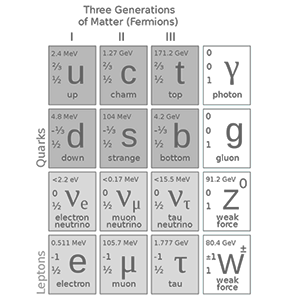
The International Linear Collider (ILC) is a proposed linear particle accelerator to succeed the Large Hadron Collider (LHC), the world’s largest and highest-energy particle accelerator. The ILC is planned to have a collision energy of 500 GeV initially, with the possibility for a later upgrade to 1,000 GeV (1 TeV).
The host country for the accelerator has not yet been chosen and proposed locations are Japan, Europe (CERN), and the USA (Fermilab). Japan is considered the most likely candidate, as the Japanese government is willing to contribute half of the costs, according to a representative for the European Commission on Future Accelerators. Continue reading
Corkscrew

A corkscrew is a kitchen tool for drawing corks from wine bottles. Generally, a corkscrew consists of a pointed metallic helix (often called the ‘worm’) attached to a handle.
The user grips the handle and screws the metal point into the cork, until the helix is firmly embedded, then a vertical pull on the corkscrew extracts the cork from the bottle. Corkscrews are necessary because corks themselves, being small and smooth, are difficult to grip and remove, particularly when inserted fully into an inflexible glass bottle. The handle of the corkscrew, often a horizontal bar of wood attached to the screw, allows for a commanding grip to ease removal of the cork. Corkscrew handles may incorporate levers that further increase the amount of force that can be applied outwards upon the cork.
Ask Me Anything

Ask Me Anything refers to when a user of an internet forum invites questions from other users.
Usually it is designated by the abbreviation AMA.
Kaikai Kiki
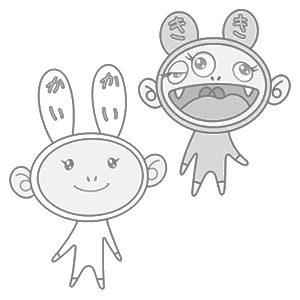
Kaikai Kiki Co. is an artists’ collective founded by the artist Takashi Murakami of Japan. It was originally founded to manage the many assistants employed to create Murakami’s work. It gradually evolved into a collaborative vehicle for other like-minded artists. Many of the artists were of a younger generation and have benefited greatly by the help in the production, distribution and sale of their own work, and also participating in international exhibitions with Murakami serving as artist or curator.
Kaikai and Kiki are characters that represent Murakami’s spiritual guardians. One is white with big ears and a smiling mouth (Kaikai), the other is pink with small ears, three eyes and some shark-like teeth (Kiki). The word kaikaikiki is used to describe the work of Kano Eitoku, a 16th century Japanese painter who is known as a genius of the Kano style. Murakami uses Japanese lettering to write the term on the ears of his characters, and their origins derive from descriptions of Kano’s work as kaikaikiki ‘bizarre, yet refined,’ ‘delicate yet bold.’