September 1, 2012
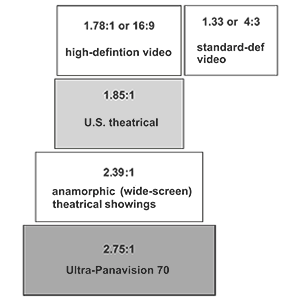
Side by Side is an American documentary film released in 2012 directed by Chris Kenneally and produced by Justin Szlasa and Keanu Reeves who also stars in the film. The film explores the art, science and impact of digital cinema through interviews with leading directors, cinematographers, film students, producers, technologists, editors, and exhibitors.
The movie examines all aspects of feature filmmaking: capture, editing, visual effects, color correction, distribution, and archiving. Reeves explores the development of cinema and the impact of digital filmmaking via in-depth interviews with Hollywood masters, such as James Cameron, David Fincher, David Lynch, Christopher Nolan, Martin Scorsese, George Lucas, Steven Soderbergh, Danny Boyle, and others.
Posted in Art, Technology |
Leave a Comment »
August 31, 2012
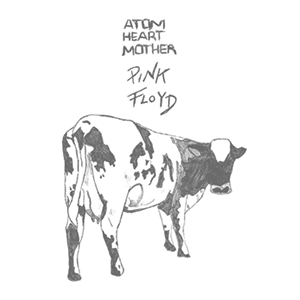
Ron Geesin (b. 1943) is a British musician and composer, noted for his quirky creations and novel applications of sound. He is probably best known as the orchestrator and organizer of Pink Floyd’s ‘Atom Heart Mother’ in 1970, after the band found themselves hopelessly deadlocked over how to complete it.
Geesin first collaborated with the band’s Roger Waters (the two shared a love of golf) on 1970’s unconventional film soundtrack ‘Music from ‘The Body,” sampling sounds made by the human body. Ron Geesin played piano with The Original Downtown Syncopators, a Dixieland band emulating the Original Dixieland Band during the 1960s. The band was based in Sussex, UK. Continue reading →
Posted in Art, Technology |
Leave a Comment »
August 31, 2012

The Body is a 1970 scientific documentary film directed and produced by Roy Battersby. In the film, external and internal cameras are used to showcase different parts of the human body. The film’s narrators, Frank Finlay and Vanessa Redgrave, provide insightful commentary that combines the knowledge of world renowned human biologists and anatomical experts.
Unlike similar films of this subject matter ‘The Body’ strives for an entertaining presentation of the human anatomy, and avoids monotone narration. The film’s soundtrack, ‘Music from the Body,’ was composed by Ron Geesin and Roger Waters, and includes songs that were literally made using the human body as a medium.
Posted in Art, Education, Science |
Leave a Comment »
August 31, 2012

Make It Right, or Make It Right Foundation New Orleans, is a foundation dedicated to rebuilding New Orleans in the aftermath of 2005’s Hurricane Katrina, which flooded the city. In late 2006, Brad Pitt founded Make It Right to rebuild 150 safe, energy-efficient and affordable homes for families from New Orleans Lower 9th Ward who lost everything to Hurricane Katrina.
By 2011, Make It Right completed 75 homes. The homes are inspired by Cradle to Cradle Design (models human industry on nature’s processes in which materials are viewed as nutrients circulating in healthy, safe metabolisms), with an emphasis on high-quality design, while preserving the spirit of the community’s culture.
Posted in Money, Politics |
Leave a Comment »
August 29, 2012
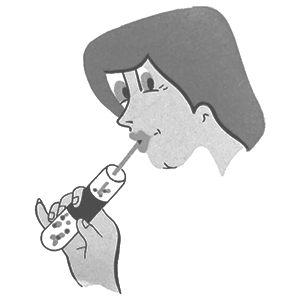
Hippy Sippy was a candy introduced in the late 1960s. It derived its name from its packaging: small multi-colored pellets contained in a toy package syringe. The intent was to mimick drug usage in the hippie culture, primarily through the toy syringe being a reminder of heroin, and secondarily through the multi-colored candy being a reminder of uppers and downers.
Included was a button with the phrase ‘Hippy Sippy says I’ll try anything!’ printed on it. Hippy Sippy was immediately controversial, and outraged many people. It was promptly removed from the market, but is still remembered due to its cultural shock value. The name was adopted by saxophonist Hank Mobley for his song ‘Hippy Sippy Blues.’
Posted in Drugs, Food, Politics |
1 Comment »
August 29, 2012

Candy cigarettes are a candy introduced in the early 20th century made out of chalky sugar, bubblegum, or chocolate, wrapped in paper as to resemble cigarettes. Their place on the market has long been controversial because many critics believe the candy desensitizes children, leading them to become smokers later in life. Because of this, the selling of candy cigarettes has been banned in several countries such as Finland, Norway, the Republic of Ireland, Turkey, and Saudi Arabia. In Canada, federal law prohibits candy cigarette branding that resembles real cigarettes.
The US state of North Dakota enacted a ban on candy cigarettes from 1953 until 1967. The Family Smoking and Prevention Control Act was misquoted as banning candy cigarettes in the US. However, the act bans any form of added flavoring in tobacco cigarettes other than menthol. It does not regulate the candy industry.
Posted in Drugs, Food, Politics |
Leave a Comment »
August 29, 2012

A bubble pipe is a toy shaped like a tobacco pipe, intended to be used for blowing soap bubbles. Most bubble pipes are made of plastic and therefore cannot be used for actual smoking.
They are usually brightly colored, and sometimes feature fanciful designs including multiple bowls. Like candy cigarettes, bubble pipes allow children to imitate adult smokers. As concern over the harmful effects of tobacco smoke and the marketing of smoking products to children has risen, both have become considerably less popular.
Posted in Drugs, Games, Humor |
Leave a Comment »
August 27, 2012

Trash the dress, also known as ‘fearless bridal’ or ‘rock the frock,’ is a style of wedding photography that contrasts elegant clothing with an environment in which it is out of place. Usually brides decide to have pictures taken on a beach, but other locations include city streets, rooftops, garbage dumps, fields, and abandoned buildings.
Some sources claim that the trend was originally started in 2001 by Las Vegas wedding photographer John Michael Cooper. However, the idea of destroying a wedding dress has been used in Hollywood symbolically since at least 1998 when Meg Cummings of the show ‘Sunset Beach’ ran into the ocean in her wedding dress after her wedding was badly interrupted. It may be done as an additional shoot after the wedding, almost as a declaration that the wedding is done and the dress will not be used again. It is seen as an alternative to storing the dress away.
Posted in Art, Humor |
Leave a Comment »
August 27, 2012
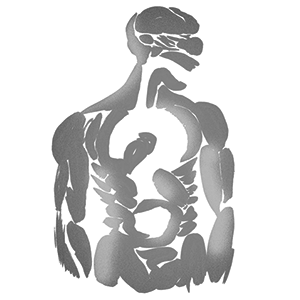
Idiopathic [id-ee-uh-path-ik] is an adjective used primarily in medicine meaning arising spontaneously or from an obscure or unknown cause. From Greek ‘idios’ (‘one’s own’) and ‘pathos’ (‘suffering’), it means approximately ‘a disease of its own kind.’ It is technically a term from nosology, the classification of disease.
For some medical conditions, one or more causes are somewhat understood, but in a certain percentage of people with the condition, the cause may not be readily apparent or characterized. In these cases, the origin of the condition is said to be idiopathic. Continue reading →
Posted in Health, Language |
Leave a Comment »
August 27, 2012

The term free love has been used to describe a social movement that rejects marriage, which is seen as a form of social bondage. The Free Love movement’s initial goal was to separate the state from sexual matters such as marriage, birth control, and adultery. It claimed that such issues were the concern of the people involved, and no one else. Much of the free-love tradition is an offshoot of anarchism, and reflects a libertarian philosophy that seeks freedom from state regulation and church interference in personal relationships.
According to this concept, the free unions of adults are legitimate relations which should be respected by all third parties whether they are emotional or sexual relations. In addition, some free-love writing has argued that both men and women have the right to sexual pleasure. In the Victorian era, this was a radical notion. Later, a new theme developed, linking free love with radical social change, and depicting it as a harbinger of a new anti-authoritarian, anti-repressive sensibility.
Continue reading →
Posted in Love, Philosophy, Politics |
Leave a Comment »
August 26, 2012
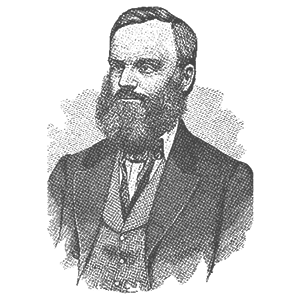
Stirpiculture [stur-pi-kuhl-cher] is a word coined by John Humphrey Noyes, founder of the Oneida Community (a religious commune founded in 1848 in Oneida, New York, which practiced group marriage), to refer to eugenics, or the breeding of humans to achieve desired perfections within the species. Noyes derived stirpiculture from the Latin word ‘stirps,’ which means ‘stock, stem, or root.’
Up until the late 1860s, John Humphrey Noyes believed in only having children with purpose and preparation. In his society, it was not simply about the preparedness of the parents, but rather the preparedness of the community to support a new generation. In the early years of the community, when poverty was an issue, the community did not feel adequately prepared to take on the raising and support of children. Therefore, procreation was discouraged in these early days before the financial successes of trap-building. An ‘accidental’ conception was thought to be a failure in male continence, the act that was meant to prevent unwanted pregnancies through the withholding of male ejaculation during intercourse. Continue reading →
Posted in Philosophy, Sex |
Leave a Comment »
August 26, 2012

Electro house is a subgenre of house music influenced by 1980s music. The term has been used to describe the music of many of the world’s top DJs, such as David Guetta, deadmau5, Skrillex, and Tiësto. Electro house, sometimes resembling tech house (a hybrid of techno with house), typically retains elements of house music and can incorporate electro-influenced synths and samples.
It often has a ‘dirty’ bass sound created from saw waves with compression and distortion. The exact origins of the genre are uncertain; it has sometimes been seen as a fusion of electro and house; or a term using ‘electro’ as an adjective (meaning ‘futuristic’ or ‘hard’). French house, by artists such as Justice and especially Daft Punk, has also been considered a strong influence.
Continue reading →
Posted in Art, Language, Technology |
Leave a Comment »




