The Thin Ideal is the concept of the idyllically slim female body. The common perception of this ideal is that of a slender, feminine physique with a small waist and little body fat. The size of the thin ideal is decreasing while the rate of female obesity is simultaneously increasing, making this iconic body difficult for women to maintain. This creates a gap between the actual appearance of an average woman’s body and its expected appearance which, depending on the extent to which the ideal is internalized, may have serious psychological effects.
The degree to which women are psychologically affected by the thin ideal depends to what extent the ideal is internalized. An article from the ‘Eating Disorders Journal’ states that ‘thin ideal internalization is the extent to which an individual ‘buys into’ socially defined ideals of attractiveness and engages in behaviors designed to approximate these ideals.’ Women generally relate the ideally thin body to positive life outcomes such as happiness, confidence, and romantic success, and consequently a majority of women value the thin ideal to some extent.
The Thin Ideal
Anti-fat Bias

Anti-fat bias refers to the prejudicial assumption of personality characteristics based on a visual assessment of a person as suffering from obesity based on physical characteristics. Anti-fat bias can be found in many facets of society, and the media’s portrayal of obese individuals has often been blamed for the pervasiveness of this phenomenon.
Anti-fat bias leads individuals to label obese members of society with negative personality traits such as ‘lazy,’ ‘greedy,’ ‘stupid,’ ‘smelly,’ ‘slow,’ or ‘unmotivated.’ This bias is not restricted only to clinically obese individuals, but also encompasses those whose body shape is in some way found unacceptable (although still within the normal or overweight BMI range). Continue reading
Glutamic Acid

Glutamic [glew-tam-ick] acid is a flavor-enhancing compound which provides an umami (savory) taste to food. Glutamic acid is a natural constituent of many fermented or aged foods, including soy sauce, fermented bean paste (a component of miso), and cheese, and is also a component of hydrolyzed protein such as yeast extract (e.g. Vegemite).
The sodium salt of glutamic acid, monosodium glutamate (MSG), is a widely used additive in the food industry. Although they occur naturally in many foods, the flavor contributions made by glutamic acid and other amino acids were only scientifically identified early in the twentieth century. Continue reading
Limbic Regulation

Limbic regulation is the effect of contact with other people upon the development and stability of personality and mood. The concept was advanced in the book ‘A General Theory of Love’ (2000), and is one of three interrelated concepts central to the book’s premise: that our brain chemistry and nervous systems are measurably affected by those closest to us (limbic resonance); that our systems synchronize with one another in a way that has profound implications for personality and lifelong emotional health (limbic regulation); and that these set patterns can be modified through therapeutic practice (limbic revision).
As the authors poetically frame it: ‘Human physiology finds a hub … in the harmonizing activity of nearby limbic brains. Our neural architecture places relationships at the crux of our lives, where, blazing and warm, they have the power to stabilize. When people are hurting and out of balance, they turn to regulating affiliations: groups, clubs, pets, marriages, friendships, masseuses, chiropractors, the Internet. All carry at least the potential for emotional connection.’
Limbic Resonance

Limbic resonance is the capacity for sharing deep emotional states arising from the limbic system of the brain. These states include the dopamine circuit promoted feelings of empathic harmony, and the norepinephrine circuit originated emotional states of fear, anxiety, and anger. The concept was first advanced in the book ‘A General Theory of Love’ (2000). It refers to the capacity for empathy and non-verbal connection that is present in animals, and that forms the basis of our social connections as well as the foundation for various modes of therapy and healing.
According to the authors (Thomas Lewis, M.D, Fari Amini, M.D., and Richard Lannon, M.D.), professors of psychiatry at UCSF, our nervous systems are not self-contained, but rather demonstrably attuned to those around us with whom we share a close connection. ‘Within the effulgence of their new brain, mammals developed a capacity we call ‘limbic resonance’ — a symphony of mutual exchange and internal adaptation whereby two mammals become attuned to each other’s inner states.’ Continue reading
A General Theory of Love
A General Theory of Love is a 2000 book about the science of human emotions and biological psychiatry written by Thomas Lewis, Fari Amini, and Richard Lannon, psychiatry professors at the University of California, San Francisco. It has since been reissued twice, with new editions appearing in 2001 and 2007. The book examines the phenomenon of love and human connection from a combined scientific and cultural perspective.
It attempts to reconcile the language and insights of humanistic inquiry and cultural wisdom (literature, song, poetry, painting, sculpture, dance, and philosophy) with the more recent findings of social science, neuroscience, and evolutionary biology. However, the book has been criticized for its ‘convoluted and opaque’ prose style, as well as its extensive reliance on the model of the triune brain (reptilian, pre-mammalian, and mammalian) as defined by Paul D. MacLean, a model that has been variously categorized as obsolete, imprecise, or unnecessary. Continue reading
Emotional Contagion

Emotional contagion is the tendency to catch and feel emotions that are similar to and associated with those of others. One view developed by Elaine Hatfield, John Cacioppo, and Richard Rapson of the underlying mechanism is that it represents a tendency to mimic and synchronize facial expressions, vocalizations, postures, and movements with those of another person automatically and, consequently, to converge emotionally.
A broader definition of the phenomenon was suggested by Schoenewolf—’a process in which a person or group influences the emotions or behavior of another person or group through the conscious or unconscious induction of emotion states and behavioral attitudes.’ Continue reading
Conversion Disorder
Conversion disorder is where patients suffer apparently neurological symptoms, such as numbness, blindness, paralysis, or fits, but without a neurological cause. It is thought that these problems arise in response to difficulties in the patient’s life, and conversion is considered a psychiatric disorder in the Diagnostic and Statistical Manual of Mental Disorders fourth edition (DSM-IV).
Formerly known as ‘hysteria’ (unmanageable emotional excesses), the disorder has arguably been known for millennia, though it came to greatest prominence at the end of the 19th century, when the neurologists Jean-Martin Charcot and Sigmund Freud and psychiatrist Pierre Janet focused their studies on the subject. Before Freud’s studies on hysteria, people who suffered from physical disabilities that were not caused by any physical impairments, known as hysterical patients, were believed to be malingering (faking illness), suffering from weak nerves, or just suffering from meaningless disturbances. The term ‘conversion’ has its origins in Freud’s doctrine that anxiety is ‘converted’ into physical symptoms. Continue reading
Mass Hysteria
Mass hysteria, or collective obsessional behavior, is the spontaneous manifestation of the same or similar hysterical physical symptoms by more than one person (hysteria is colloquially defined as unmanageable emotional excesses).
A common manifestation of mass hysteria occurs when a group of people believe they are suffering from a similar disease or ailment. Sometimes referred to as mass psychogenic illness or epidemic hysteria, there is a clear preponderance of female victims. Mass hysteria typically begins when an individual becomes ill or hysterical during a period of stress. After this initial individual shows symptoms, others begin to manifest similar symptoms, typically nausea, muscle weakness, fits or headache. Sightings of modern religious miracles are often attributed to mass hysteria.
Mass Psychogenic Illness
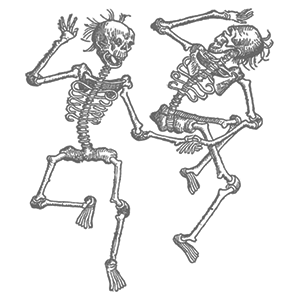
Mass psychogenic [sahy-kuh-jen-ik] illness (MPI) is ‘the rapid spread of illness signs and symptoms affecting members of a cohesive group, originating from a nervous system disturbance involving excitation, loss or alteration of function, whereby physical complaints that are exhibited unconsciously have no corresponding organic etiology [cause].’ MPI is distinct from other collective delusions, but included under the blanket term mass hysteria, because MPI causes symptoms of disease, though there is no organic cause.
There is a clear preponderance of female victims. The DSM-IV does not have specific diagnosis for this condition but the text describing conversion disorder (where patients suffer apparently neurological symptoms, such as numbness, blindness, paralysis, or fits, but without a neurological cause) states that ‘In ‘epidemic hysteria,’ shared symptoms develop in a circumscribed group of people following ‘exposure’ to a common precipitant.’ Continue reading
Dancing Mania
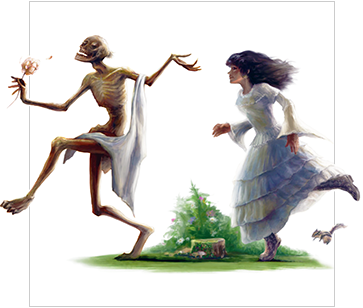
Dancing mania was a social phenomenon that occurred primarily in mainland Europe between the 14th and 17th centuries. It involved groups of people, sometimes thousands at a time, who danced uncontrollably and bizarrely. They would also scream, shout, and sing, and claim to have visions or hallucinations. The mania affected men, women, and children, who danced until they collapsed from exhaustion.
One of the first major outbreaks was in Aachen, Germany, in 1374, and it quickly spread throughout Europe; another particularly notable outbreak occurred in Strasbourg in 1518. Affecting thousands of people across several centuries, dancing mania was not a one-off event, and was well documented in contemporary reports. Continue reading
Bacchanalia

The bacchanalia [bak-uh-ney-lee-uh] were wild and mystic festivals of the Greco-Roman god Bacchus (or Dionysus), the wine god. The term has since come to describe any form of drunken revelry.
The bacchanalia were rites originally held in ancient Greece as the Dionysia. The most famous of the Greek Dionysia were in Attica and included a festal procession, a drinking feast, and dramatic performances in the theatre of Dionysus. The rites spread to Rome from the Greek colonies in Southern Italy where they were secret and only attended by women. The festivals occurred in the grove of Simila near the Aventine Hill on March 16 and March 17. Later, admission to the rites was extended to men, and celebrations took place five times a month. Continue reading