August 13, 2012

A growler [grou-ler] is a glass or ceramic jug with a capacity of 64 oz (1,900 ml) used to transport draught beer in Australia, the United States, and Canada. They are commonly sold at breweries and brewpubs as a means to sell take-out beer. The exploding growth of craft breweries and the growing popularity of home brewing has also led to an emerging market for the sale of collectible growlers.
Growlers are generally made of glass and have either a screw-on cap or a hinged porcelain gasket cap, which can provide freshness for a week or more. A properly sealed growler will hold carbonation indefinitely and will store beer like any other sanitized bottle. Some growler caps are equipped with valves to allow replacement of CO2 lost while racking. The modern glass growler was first introduced by Charlie and Ernie Otto of Otto Brother’s Brewing Company in 1989. Continue reading →
Posted in Drugs, Food, Money |
Leave a Comment »
August 10, 2012

A Swadesh [sway-desh] list is a compilation of concepts for which words are deemed to exist in the largest number of languages. Translations of a Swadesh list into a set of languages allows researchers to quantify the interrelatedness of those languages.
Swadesh lists are named after the U.S. linguist Morris Swadesh. They are used in lexicostatistics (the quantitative assessment of the relatedness of languages) and glottochronology (the dating of language divergence). Continue reading →
Posted in Language, Science, World |
Leave a Comment »
August 10, 2012

Yoyodyne is a fictitious defense contractor introduced in Thomas Pynchon’s ‘V.’ (1963) and featured prominently in his novel ‘The Crying of Lot 49’ (1966). Described in the latter book as ‘a giant of the aerospace industry,’ Yoyodyne was founded by World War II veteran Clayton ‘Bloody’ Chiclitz. The company has a large manufacturing plant in the fictional town of San Narciso, California.
The name is reminiscent of several real high-tech companies, including Teledyne, Teradyne, which was founded a few years before Pynchon wrote ‘The Crying of Lot 49,’ and Rocketdyne, an aerospace company that manufactured, among other things, propulsion systems. The ‘dyne’ is the standard unit of force in the centimeter-gram-second system of units (largely obsolete but still widely recognized), derived from the Greek word dynamis meaning ‘power’ or ‘force.’ Continue reading →
Posted in Humor, Money, War |
Leave a Comment »
August 10, 2012

Thomas Pynchon [pin-chuhn] (b. 1937) is an American novelist. A MacArthur Fellow, he is noted for his dense and complex novels. Both his fiction and non-fiction writings encompass a vast array of subject matter, styles, and themes, including (but not limited to) the fields of history, science, and mathematics. For his most praised novel, ‘Gravity’s Rainbow,’ Pynchon won the 1974 U.S. National Book Award for Fiction (which he declined).
After publishing several short stories in the late 1950s and early 1960s, he began composing the novels for which he is best known: ‘V.’ (1963), ‘The Crying of Lot 49’ (1966), ‘Gravity’s Rainbow’ (1973), and ‘Mason & Dixon’ (1997). Pynchon is also known for being very private; very few photographs of him have ever been published, and rumors about his location and identity have circulated since the 1960s. Continue reading →
Posted in Art, Humor, Language |
Leave a Comment »
August 10, 2012

Gravity’s Rainbow is a 1973 book written by Thomas Pynchon; it is his third and most celebrated novel. The narrative is set primarily in Europe at the end of World War II and centers on the design, production and dispatch of V-2 rockets by the German military, and, in particular, the quest undertaken by several characters to uncover the secret of a mysterious device named the ‘Schwarzgerät’ (‘black device’) that is to be installed in a rocket with the serial number ‘00000.’
Gravity’s Rainbow is transgressive, as it questions and inverts social standards of deviance and disgust and transgresses boundaries of Western culture and reason. Continue reading →
Posted in Humor, Language, War |
1 Comment »
August 9, 2012

Transgressive fiction is a genre of literature that focuses on characters who feel confined by the norms and expectations of society and who break free of those confines in unusual and/or illicit ways. Because they are rebelling against the basic norms of society, protagonists of transgressional fiction may seem mentally ill, anti-social, or nihilistic. The genre deals extensively with taboo subject matters such as drugs, sex, violence, incest, pedophilia, and crime.
The term ‘transgressive fiction’ was coined by Los Angeles Times literary critic Michael Silverblatt. Rene Chun, a journalist for ‘The New York Times,’ described is as, ‘A literary genre that graphically explores such topics as incest and other aberrant sexual practices, mutilation, the sprouting of sexual organs in various places on the human body, urban violence and violence against women, drug use, and highly dysfunctional family relationships, and that is based on the premise that knowledge is to be found at the edge of experience and that the body is the site for gaining knowledge.’ Continue reading →
Posted in Language, Politics, Sex |
1 Comment »
August 9, 2012

‘What’s the Matter with Kansas? How Conservatives Won the Heart of America’ (2004) is a book by American journalist and historian Thomas Frank, which explores the rise of populist anti-elitist Conservatism in the United States, centering on the experience of Kansas, Frank’s native state.
In the late 19th century, Kansas was known as a hotbed of the left-wing Populist movement, but in recent decades, it has become overwhelmingly conservative. The book was published in Britain and Australia as ‘What’s the Matter with America?’ According to the book, the political discourse of recent decades has dramatically shifted from the social and economic equality to one in which ‘explosive’ cultural issues, such as abortion and gay marriage, are used to redirect anger towards ‘liberal elites.’ Continue reading →
Posted in Language, Philosophy, Politics |
Leave a Comment »
August 9, 2012

‘Irrational exuberance‘ is a phrase used by the then-Federal Reserve Board Chairman, Alan Greenspan, in a speech given at the American Enterprise Institute during the Dot-com bubble of the 1990s. The phrase was interpreted as a warning that the market might be somewhat overvalued.
Greenspan’s comment was made in late 1996: ‘[…] Clearly, sustained low inflation implies less uncertainty about the future, and lower risk premiums imply higher prices of stocks and other earning assets. We can see that in the inverse relationship exhibited by price/earnings ratios and the rate of inflation in the past. But how do we know when irrational exuberance has unduly escalated asset values, which then become subject to unexpected and prolonged contractions as they have in Japan over the past decade?’ Continue reading →
Posted in Language, Money, Politics |
Leave a Comment »
August 9, 2012

‘The Ultimate Computer‘ is a season two episode of ‘Star Trek,’ first broadcast in 1968, written by D.C. Fontana, based on a story by Laurence N. Wolf and directed by John Meredyth Lucas. In the episode, a skeleton Enterprise crew are assigned to test a revolutionary computer system, the M-5, that is given total control of the ship. Designed by the brilliant Dr. Richard Daystrom (who’d also invented the currently used computer systems), the M-5 handles all ship functions without human assistance. While Captain Kirk and Chief Medical Officer Dr. McCoy are unhappy about the test, Science Officer Spock is impressed with M-5.
At first M-5 works well, performing ship functions more quickly and efficiently than a living crew. Later, M-5 exhibits quirks such as turning off power and life support to unoccupied parts of the ship. It draws increased power for unknown reasons. Daystrom maintains M-5 is working properly. In a drill, M-5 defends the Enterprise against mock attacks from starships Excalibur and Lexington. The Enterprise is declared the victor, prompting Commodore Wesley to call Kirk ‘Captain Dunsel.’ Spock explains the term is used by midshipmen at Starfleet Academy to describe a part serving no useful purpose. Kirk is visibly shaken by this.
Continue reading →
Posted in Art, Technology |
Leave a Comment »
August 9, 2012

‘The City on the Edge of Forever‘ is the penultimate episode of the first season of the television series ‘Star Trek,’ first broadcast in 1967. The teleplay is credited to Harlan Ellison, but was also largely rewritten by several authors before filming. The filming was directed by Joseph Pevney. Joan Collins guest starred as Edith Keeler. This episode involves the crew of the starship USS Enterprise discovering a portal through space and time, which leads to Dr. McCoy’s accidentally altering history.
The USS Enterprise investigates temporal disturbances centered on a nearby planet. Once on the planet, Spock finds that the source of the time distortions is an ancient ring of glowing, stone-like material. When a question is directed at the ring, it speaks identifying itself as the ‘Guardian of Forever,’ explains that it is a doorway to any time and place, and displays periods of Earth’s history in its portal opening. McCoy, driven mad by an accidental self overdose leaps through the portal. Suddenly the landing party loses contact with the Enterprise. The Guardian informs the landing party that history has just been altered and that, as a result, the Enterprise now no longer exists.
Continue reading →
Posted in Art, War |
Leave a Comment »
August 9, 2012
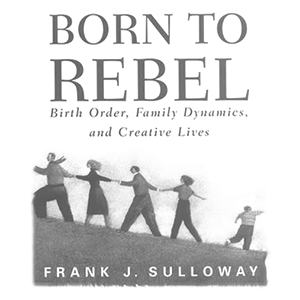
Birth order is defined as a person’s rank by age among his or her siblings. Birth order is often believed to have a profound and lasting effect on psychological development. This assertion has been repeatedly challenged by researchers, yet birth order continues to have a strong presence in pop psychology and popular culture. Alfred Adler, an Austrian psychiatrist, and a contemporary of Sigmund Freud and Carl Jung, was one of the first theorists to suggest that birth order influences personality.
He argued that birth order can leave an indelible impression on an individual’s style of life, which is one’s habitual way of dealing with the tasks of friendship, love, and work. According to Adler, firstborns are ‘dethroned’ when a second child comes along, and this may have a lasting influence on them. Younger and only children may be pampered and spoiled, which can also affect their later personalities. Additional birth order factors that should be considered are the spacing in years between siblings, the total number of children, and the changing circumstances of the parents over time. Continue reading →
Posted in Health |
Leave a Comment »
August 9, 2012

Purple Earth is an astrobiological hypothesis that life forms of early Earth were retinal-based rather than chlorophyll-based thus making Earth appear purple rather than green. According to Shil DasSarma, a microbial geneticist at the University of Maryland, chlorophyll appeared after retinal (another light-sensitive molecule) was already present on early Earth. Retinal, today found in the plum-colored membrane of a photosynthetic microbes called halobacteria, absorbs green light and reflects back red and violet light, the combination of which appears purple. Scientists believe that if future research validates the purple Earth hypothesis, it would have implications for scientists searching for life on distant worlds.
Eventually other microbes came along that used chlorophyll instead of retinal. And since all the high energy green wavelengths of sunlight were being absorbed by the retinal using microbes, in order to survive, chlorophyll made use of the available blue and red light that the retinal was reflecting. Some scientists believe that for a period of time in Earth’s history these two coexisted, but eventually the chlorophyll using microbes overcame. The retinal based microbes may have absorbed the highest energy green light waves, but the chlorophyll using microbes made better use of what energy they received and were victorious in the end.
Posted in Science |
1 Comment »


 The Daily Omnivore