August 9, 2012
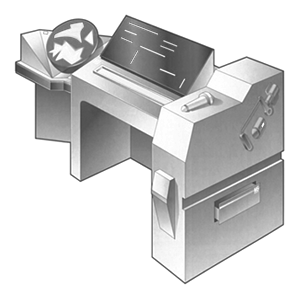
‘The Ultimate Computer‘ is a season two episode of ‘Star Trek,’ first broadcast in 1968, written by D.C. Fontana, based on a story by Laurence N. Wolf and directed by John Meredyth Lucas. In the episode, a skeleton Enterprise crew are assigned to test a revolutionary computer system, the M-5, that is given total control of the ship. Designed by the brilliant Dr. Richard Daystrom (who’d also invented the currently used computer systems), the M-5 handles all ship functions without human assistance. While Captain Kirk and Chief Medical Officer Dr. McCoy are unhappy about the test, Science Officer Spock is impressed with M-5.
At first M-5 works well, performing ship functions more quickly and efficiently than a living crew. Later, M-5 exhibits quirks such as turning off power and life support to unoccupied parts of the ship. It draws increased power for unknown reasons. Daystrom maintains M-5 is working properly. In a drill, M-5 defends the Enterprise against mock attacks from starships Excalibur and Lexington. The Enterprise is declared the victor, prompting Commodore Wesley to call Kirk ‘Captain Dunsel.’ Spock explains the term is used by midshipmen at Starfleet Academy to describe a part serving no useful purpose. Kirk is visibly shaken by this.
Continue reading →
Posted in Art, Technology |
Leave a Comment »
August 9, 2012

‘The City on the Edge of Forever‘ is the penultimate episode of the first season of the television series ‘Star Trek,’ first broadcast in 1967. The teleplay is credited to Harlan Ellison, but was also largely rewritten by several authors before filming. The filming was directed by Joseph Pevney. Joan Collins guest starred as Edith Keeler. This episode involves the crew of the starship USS Enterprise discovering a portal through space and time, which leads to Dr. McCoy’s accidentally altering history.
The USS Enterprise investigates temporal disturbances centered on a nearby planet. Once on the planet, Spock finds that the source of the time distortions is an ancient ring of glowing, stone-like material. When a question is directed at the ring, it speaks identifying itself as the ‘Guardian of Forever,’ explains that it is a doorway to any time and place, and displays periods of Earth’s history in its portal opening. McCoy, driven mad by an accidental self overdose leaps through the portal. Suddenly the landing party loses contact with the Enterprise. The Guardian informs the landing party that history has just been altered and that, as a result, the Enterprise now no longer exists.
Continue reading →
Posted in Art, War |
Leave a Comment »
August 9, 2012
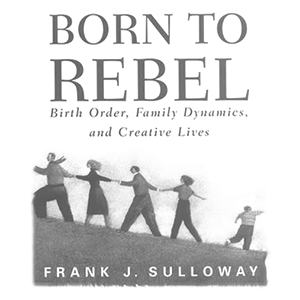
Birth order is defined as a person’s rank by age among his or her siblings. Birth order is often believed to have a profound and lasting effect on psychological development. This assertion has been repeatedly challenged by researchers, yet birth order continues to have a strong presence in pop psychology and popular culture. Alfred Adler, an Austrian psychiatrist, and a contemporary of Sigmund Freud and Carl Jung, was one of the first theorists to suggest that birth order influences personality.
He argued that birth order can leave an indelible impression on an individual’s style of life, which is one’s habitual way of dealing with the tasks of friendship, love, and work. According to Adler, firstborns are ‘dethroned’ when a second child comes along, and this may have a lasting influence on them. Younger and only children may be pampered and spoiled, which can also affect their later personalities. Additional birth order factors that should be considered are the spacing in years between siblings, the total number of children, and the changing circumstances of the parents over time. Continue reading →
Posted in Health |
Leave a Comment »
August 9, 2012

Purple Earth is an astrobiological hypothesis that life forms of early Earth were retinal-based rather than chlorophyll-based thus making Earth appear purple rather than green. According to Shil DasSarma, a microbial geneticist at the University of Maryland, chlorophyll appeared after retinal (another light-sensitive molecule) was already present on early Earth. Retinal, today found in the plum-colored membrane of a photosynthetic microbes called halobacteria, absorbs green light and reflects back red and violet light, the combination of which appears purple. Scientists believe that if future research validates the purple Earth hypothesis, it would have implications for scientists searching for life on distant worlds.
Eventually other microbes came along that used chlorophyll instead of retinal. And since all the high energy green wavelengths of sunlight were being absorbed by the retinal using microbes, in order to survive, chlorophyll made use of the available blue and red light that the retinal was reflecting. Some scientists believe that for a period of time in Earth’s history these two coexisted, but eventually the chlorophyll using microbes overcame. The retinal based microbes may have absorbed the highest energy green light waves, but the chlorophyll using microbes made better use of what energy they received and were victorious in the end.
Posted in Science |
1 Comment »
August 9, 2012

Banchan [ban-chuhn] refers to small dishes of food served along with cooked rice in Korean cuisine. This word is used both in the singular and plural. The basic table setting for a meal called ‘bansang’ (usually consists of bap (cooked rice), guk or tang (soup), gochujang or ganjang (fermented condiments), jjigae (tofu stew), and kimchi (fermented cabbage). Kimchi is the essential banchan of a standard Korean meal. Some Koreans do not consider a meal complete without kimchi.
According to the number of banchan that is added, the table setting is called as 3 cheop, 5 cheop, 7 cheop, 9 cheop, or 12 cheop bansang, with the 12 cheop used in Korean royal cuisine. Banchan are set in the middle of the table to be shared. At the center of the table is the secondary main course, such as galbi or bulgogi (grilled meats), and a shared pot of jjigae. Bowls of cooked rice and guk (soup) are set individually. Banchan are served in small portions, meant to be finished at each meal and are replenished during the meal if not enough. Usually, the more formal the meals are, the more banchan there will be. Jeolla province is particularly famous for serving many different varieties of banchan in a single meal.
Posted in Food, World |
1 Comment »
August 9, 2012
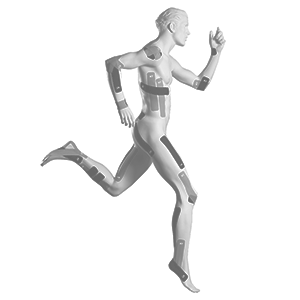
Elastic therapeutic tape, commonly referred to as ‘kinesiology tape,’ is an elastic cotton strip with an acrylic adhesive that is used with the intention of treating athletic injuries and a variety of physical disorders.
Numerous studies have failed to show that elastic therapeutic taping produces clinically significant benefits. A 2012 systematic review found that the efficacy of Kinesio Tape in pain relief was trivial.
Continue reading →
Posted in Games, Health, Money |
Leave a Comment »
August 9, 2012
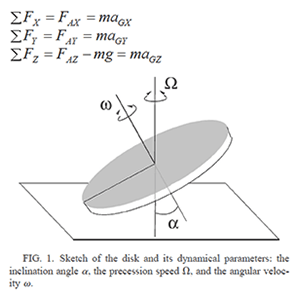
Euler’s [oi-lers] disc is a scientific educational toy, used to illustrate and study the dynamic system of a spinning disk on a flat surface (such as a spinning coin).
This phenomenon was first noted by Swiss physicist Leonhard Euler in the 18th century, hence the name. Continue reading →
Posted in Education, Games, Science |
1 Comment »
August 9, 2012

Feminazi is a term popularized by radio talk-show host Rush Limbaugh to describe ‘an extreme or militant feminist.’ In 2004, Limbaugh named feminist activists Gloria Steinem, Susan Sarandon, Christine Lahti, and Camryn Manheim as ‘famous feminazis.’
Feminazi is a portmanteau of the nouns feminist and Nazi. The term is used pejoratively by some U.S. conservatives to criticize feminists that they perceive as extreme.
Continue reading →
Posted in Language, Politics, Sex |
Leave a Comment »
August 9, 2012

The Manipulated Man (German: ‘Der Dressierte Mann’) is a 1971 book by author Argentinian-German writer Esther Vilar, which argues that, contrary to common feminist and women’s rights rhetoric, women in industrialized cultures are not oppressed, but rather exploit a well-established system of manipulating men.
A third edition of the book was released in 2009. Vilar writes, ‘Men have been trained and conditioned by women, not unlike the way Pavlov conditioned his dogs, into becoming their slaves. As compensation for their labors men are given periodic use of a woman’s vagina.’ The book contends that young boys are encouraged to associate their masculinity with their ability to be sexually intimate with a woman, and that a woman can control a man by socially empowering herself to be the gate-keeper to his sense of masculinity. Continue reading →
Posted in Language, Politics, Sex |
Leave a Comment »
August 6, 2012

Girls’ games and toys are a large yet difficult market for the children’s toy industry. Nancy Zwiers, an industry consultant and former head of worldwide marketing for Mattel’s Barbie doll line, has pointed out the male-centred bias that makes development of girls’ toys difficult: ‘When I tour different company showrooms and look at what they’re doing, many times it’s a bunch of guys making decisions about what girls would like, and they miss the mark.’
‘Age compression’ is a toy industry term that describes the modern trend of children moving through play stages faster than they did in the past. Children have a desire to progress to more complex toys at a faster pace, girls in particular. Barbie dolls, for example, were once marketed to girls around 8 years old, but have been found to be more popular in recent years with girls around 3 years old. The packaging for the dolls labels them appropriate for ages 3 and up.
Continue reading →
Posted in Games, Money, Sex |
Leave a Comment »
August 6, 2012

Robochrist Industries is a robotic performance art troupe most notably recognized for its performances in and around Los Angeles during the years 1997 – 2005. The performances feature large radio-controlled robots moving among and eventually destroying props and set-pieces intended to convey specific theatrical narratives. The troupe is a direct offshoot of Survival Research Laboratories (SRL), a pioneer in machine performance art.
Ristow worked on several SRL performances, contributing not only props but also, particularly in the years 1996 and 1997, robots that he had constructed. During this period Ristow also participated in several collaborative performances with another San Francisco based performance group, The Seemen, including the often cited ‘Hellco’ performance at the 1996 Burning Man festival. Continue reading →
Posted in Art, Technology |
1 Comment »
August 6, 2012

Survival Research Laboratories (SRL) is a machine performance art group credited for pioneering the genre of large-scale machine performance. After about 30 years in San Francisco, SRL spent most of 2008 moving 40 miles north to Petaluma. Since its inception in 1978 SRL has operated as an organization of creative technicians and technical creatives dedicated to redirecting the techniques, tools, and tenets of industry, science, and the military away from their typical manifestations in practicality, product or warfare.
Since 1979, SRL has staged over 45 mechanized presentations in the United States and Europe. Each performance consists of a unique set of ritualized interactions between machines, robots, and special-effects devices, employed in developing themes of socio-political satire. Humans are present only as audience or operators. Continue reading →
Posted in Art, Humor, Technology |
Leave a Comment »



