June 14, 2012
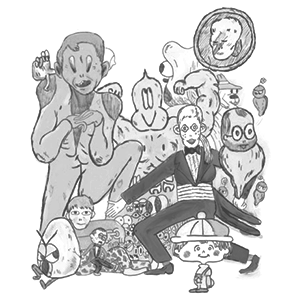
The Copycat Building is a Baltimore landmark containing artists’ live/work/paint spaces. The building was originally occupied in 1905 by the Crown Cork & Seal Company (originators of the modern bottle cap).
It is home to many young artists, musicians, filmmakers, and professionals looking for a large space to live, create, study, and live in the city. The cost of rent is 50 cents per square foot. The building is used for the set of the talk show, ‘It’s a Remarckable Time Who Cares.’ Continue reading →
Posted in Art, Money |
Leave a Comment »
June 14, 2012
Future Islands are a synthpop band based in Baltimore. The band is composed of Gerrit Welmers, William Cashion, and Samuel T. Herring.
The band met and formed in while studying art at East Carolina University in Greenville, North Carolina. Their first band was Art Lord & the Self-Portraits, which lasted from 2003 until 2005. In 2006, Cashion, Herring, and Welmers formed Future Islands with Erick Murillo, who played an electronic drum kit.
Posted in Art |
Leave a Comment »
June 13, 2012
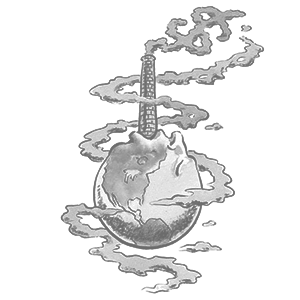
Carbon pricing is the generic term for placing a price on carbon through either subsidization, taxation, or emissions trading (‘cap-and-trade’). Release of carbon dioxide to the atmosphere causes climate change, according to the consensus theory of anthropogenic (produced by humans) global warming.
Greenhouse gas emissions result from fossil fuel-based electricity generation. As a means of avoiding dangerous climate change, associating an approximate cost to damage such as from increasing extreme weather, carbon pricing may incentivize a reduction of carbon emissions and the discovery or implementation of low-emission technologies.
Continue reading →
Posted in Money, Politics, World |
Leave a Comment »
June 13, 2012
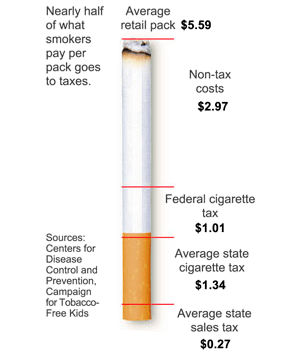
A Pigovian [pig-oh-vee-ahn] tax is a levy on a market activity that generates negative externalities (a cost not transmitted through prices that is incurred by a party who did not agree to the action causing it). For example, a tax on cigarettes might be intended to recoup public healthcare costs resulting from smoking. The tax is intended to correct the market outcome, which is not efficient and may lead to overconsumption of the product.
In the presence of positive externalities (public benefits from a market activity) those who receive the benefit do not pay for it and the market may under-supply the product. Similar logic suggests the creation of Pigovian subsidies to make the users pay for the extra benefit and spur more production. Pigovian taxes are named after British economist Arthur Pigou who also developed the concept of economic externalities. William Baumol was instrumental in framing Pigou’s work in modern economics. Continue reading →
Posted in Money, Politics |
Leave a Comment »
June 13, 2012

A fat tax is a surcharge placed upon fattening foods, beverages, or individuals. As an example of Pigovian taxation (a tax levied on a market activity that generates negative externalities), a fat tax aims to discourage unhealthy diets and offset the economic costs of obesity. A related idea is to tax foods that are linked to increased risk of coronary heart disease. Numerous studies suggest that as the price of a food decreases, individuals gets fatter. In fact, eating behavior may be more responsive to price increases than to nutritional education. Estimates suggest that a 1 cent per ounce tax on sugar-sweetened beverages may reduce the consumption of those beverages by 25%.
However, there is also evidence that obese individuals are less responsive to changes in the price of food than normal-weight individuals. To implement a fat tax, it is necessary to specify which food and beverage products will be targeted. This must be done with care, because a carelessly chosen food tax can have surprising and perverse effects. For instance, consumption patterns suggest that taxing saturated fat would induce consumers to increase their salt intake, thereby putting themselves at greater risk for cardiovascular related death. Taxation of sodium has been proposed as a way of reducing salt intake and the resulting health problems.
Continue reading →
Posted in Food, Health, Money, Politics |
Leave a Comment »
June 13, 2012
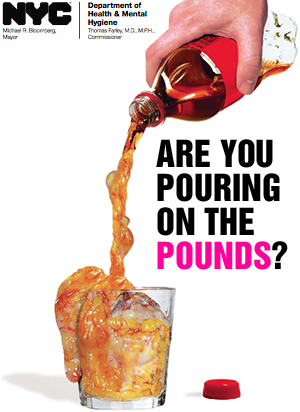
A soda tax is a surcharge on soft drinks. It may focus on sugar-sweetened beverages (soda sweetened with sugar, corn syrup, or other caloric sweeteners and other carbonated and uncarbonated drinks, and sports and energy drinks). As an example of Pigovian taxation (a tax levied on a market activity that generates negative externalities), it may aim to discourage unhealthy diets and offset the economic costs of obesity.
France is in the process of introducing a tax on sugary drinks for 2012; following introduction, soft drinks are estimated to be up to 3.5% more expensive. The city of Richmond, California has placed a soda tax on its 2012 ballot. Soda consumption has been noted as a contributing factor to the obesity epidemic and medical costs related to obesity. In 1994, an early soda tax was introduced by Kelly D. Brownell, Director of the Rudd Center for Food Policy and Obesity at Yale. In 2009, 33 US states had a sales tax on soft drinks. Support for a soda tax has been higher when pollsters say the money will go towards health care.
Continue reading →
Posted in Food, Health, Money, Politics |
Leave a Comment »
June 13, 2012
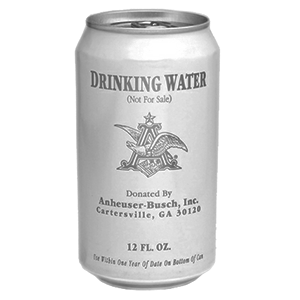
Canned water is drinking water packaged in tin cans or beverage cans, a less common alternative to bottled water. Canned water is used primarily where storage or distribution systems are set up for cans, or when canning systems are used to make emergency water supplies.
Anheuser-Busch has donated more than 68.5 million cans of water. Water was stored in steel cans, lined with plastic bags, under the United States Civil Defense program. Approximately twelve million 17.5-US-gallon (66 L) cans were deployed, and could hold water for more than ten years.
Posted in Food, Health |
Leave a Comment »
June 11, 2012
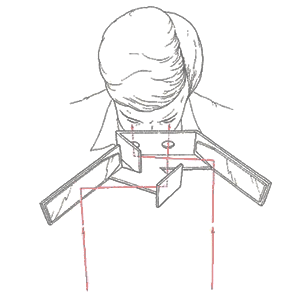
A pseudoscope [soo-duh-skohp] (‘false view’) is a binocular optical instrument that reverses depth perception. It is used to study human stereoscopic perception. Objects viewed through it appear inside out, for example: a box on a floor would appear as a box shaped hole in the floor. It typically uses sets of optical prisms, or periscopically arranged mirrors to swap the view of the left eye with that of the right eye.
In the 1800s Victorian scientist Charles Wheatstone coined the name and used the device to explore his theory of stereo vision. Switching the two pictures in a standard stereoscope changes all the elevated parts into depressions, and vice versa. Continue reading →
Posted in Health |
Leave a Comment »
June 11, 2012
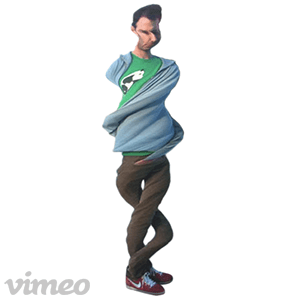
The slit-scan photography technique is a photographic and cinematographic process where a moveable slide, into which a slit has been cut, is inserted between the camera and the subject to be photographed. Originally used in static photography to achieve blurriness or deformity, the slit-scan technique was perfected for the creation of spectacular animations. It enables the cinematographer to create a psychedelic flow of colors.
Though this type of effect is now often created through computer animation, slit-scan is a mechanical technique. It was adapted for film by Douglas Trumbull during the production of Stanley Kubrick’s ‘2001: A Space Odyssey’ and used extensively in the ‘stargate’ sequence. It requires an imposing machine, capable of moving the camera and its support. Continue reading →
Posted in Art, Technology |
Leave a Comment »
June 10, 2012
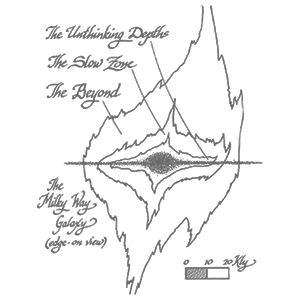
A Fire Upon the Deep is a 1992 science fiction novel by Vernor Vinge. It is a space opera involving superhuman intelligences, aliens, faster-than-light warfare, love, betrayal, genocide, and a galactic Usenet (an early Internet discussion system).
The story is set in Vinge’s ‘Zones of Thought’ in which the results of technological singularities (the achievement of greater-than-human intelligence) are spread out in a predicable pattern: In the ‘Unthinking Depths’ near the core of the galaxy, no intelligence is possible; in the ‘Slow Zone,’ where Earth is, general relativity applies (i.e. faster-than-light travel is impossible); the ‘Beyond’ allows faster-than-light travel and antigravity, and in the ‘Transcend,’ mysterious god-like entities roam the cosmos. Thus, as you head out of the Milky Way, you see the same progression of advancing technologies in other galaxies. Continue reading →
Posted in Art, Language, Technology |
Leave a Comment »
June 10, 2012

Josef Albers (1888 – 1976) was a German-born American artist and educator whose work formed the basis of some of the most influential and far-reaching art education programs of the 20th century. Accomplished as a designer, photographer, typographer, printmaker, and poet, Albers is best remembered for his work as an abstract painter and theorist. He favored a very disciplined approach to composition. Most famous of all are the hundreds of paintings and prints that make up the series ‘Homage to the Square.’ In this rigorous series, begun in 1949, Albers explored chromatic interactions with nested squares.
Painting usually on Masonite (an engineered wood product), he used a palette knife with oil colors and often recorded colors used on the back of his works. Albers’s work represents a transition between traditional European art and the new American art. It incorporated European influences from the constructivists and the Bauhaus movement, and its intensity and smallness of scale were typically European. But his influence fell heavily on American artists of the late 1950s and the 1960s. ‘Hard-edge’ abstract painters drew on his use of patterns and intense colors, while Op artists and conceptual artists further explored his interest in perception.
Continue reading →
Posted in Art, Education |
Leave a Comment »
June 10, 2012

Richard Anuszkiewicz [an-uhskey-vich] (b. 1930) is an American painter, printmaker, and sculptor. He trained at the Cleveland Institute of Art, and with German artist Josef Albers, at the Yale University School of Art and Architecture where he earned his Masters of Fine Arts. He was one of the founders and foremost exponents of Op Art, a movement during the late 1960s and early 1970s which explore optical illusions. Victor Vasarely in France and Bridget Riley in England were his primary international counterparts.
In 1964, ‘Life’ magazine called him ‘one of the new wizards of Op.’ More recently, while reflecting on a New York City gallery show of Anuszkiewicz’s from 2000, the ‘New York Times’ art critic Holland Cotter described Anuszkiewicz’s paintings by stating, ‘The drama — and that feels like the right word — is in the subtle chemistry of complementary colors, which makes the geometry glow as if light were leaking out from behind it.’
Posted in Art |
Leave a Comment »



