June 9, 2012
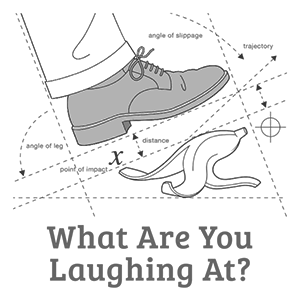
There are many theories of humor which attempt to explain what humor is, what social function it serves, and what would be considered humorous. It would be very difficult to explain humor to a hypothetical person who did not have a sense of humor already. In fact, to such a person humor would appear to be quite strange if not outright irrational behavior.
Among the prevailing types of theories that attempt to account for the existence of humor there are: psychological theories (the vast majority of which consider humor to be very healthy behavior); spiritual theories (which may consider humor to be a ‘gift from God’). There are also theories that consider humor to be an unexplainable mystery, very much like a mystical experience. Although various classical theories of humor and laughter may be found, in contemporary academic literature three theories of humor appear repeatedly: relief theory, superiority theory, and incongruity theory. Continue reading →
Posted in Health, Humor, Philosophy |
Leave a Comment »
June 9, 2012

Nervous laughter is laughter evoked from an audience’s expression of embarrassment, alarm, discomfort, or confusion, rather than amusement. Nervous laughter is usually less robust in expression than ‘a good belly laugh,’ and may be combined with confused glances or awkward silence on the part of others in the audience. Nervous laughter is considered analogous to a courtesy laugh, which may be rendered by more of a conscious effort in an attempt to move a situation along more quickly, especially when the comedian is pausing for laughter.
Nervous laughter is a physical reaction to stress, tension, confusion, or anxiety – just like sweaty palms or an elevated heart-rate. It’s not a conscious decision; it has nothing to do with one’s sense of humor and can occur at the unfunniest of times. Neuroscientist Vilayanur Ramachandran states ‘We have nervous laughter because we want to make ourselves think what horrible thing we encountered isn’t really as horrible as it appears, something we want to believe.’ Those are the most embarrassing times, too, naturally. Continue reading →
Posted in Health, Humor |
1 Comment »
June 8, 2012

Laughter is an audible expression or appearance of excitement, an inward feeling of joy. It may ensue from jokes, tickling, and other stimuli. It is associated with a number of positive emotional states, such as joy, mirth, happiness, and relief. However on some occasions it may express other emotions, such as embarrassment, contrition, or confusion.
A nervous laugh or courtesy laugh is rendered by a more conscious effort, in an attempt to move a situation along more quickly. Laughter is a part of human behavior regulated by the brain, helping humans clarify their intentions in social interaction and providing an emotional context to conversations. Continue reading →
Posted in Health, Humor |
Leave a Comment »
June 7, 2012
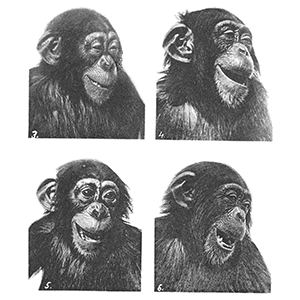
Laughter in animals other than humans describes animal behavior which resembles human laughter. Self awareness is conscious concomitant of the physiological processes involving laughter or smiling reflex (response) and its grades, degrees, or spectrum varies according to phylogenetic development, with no clear cut demarcation. The emotional ingredients (such as contempt, hatred, ridicule, sarcasm, love, amusement etc.) are variable and involve different neurophysiological and physiological processes.
Chimpanzees, gorillas, bonobos and orangutans show laughter-like vocalizations in response to physical contact, such as wrestling, play chasing, or tickling. This is documented in wild and captive chimpanzees. Chimpanzee laughter is not readily recognizable to humans as such, because it is generated by alternating inhalations and exhalations that sound more like panting or screeching. The differences between chimpanzee and human laughter may be the result of adaptations that have evolved to enable human speech. It is hard to tell, though, whether or not the chimpanzee is expressing joy. Continue reading →
Posted in Humor, Science |
1 Comment »
June 7, 2012

A smile is a facial expression formed by flexing the muscles near both ends of the mouth. The smile can also be found around the eyes (‘Duchenne Smiling’). Among humans, it is an expression denoting pleasure, joy, happiness, or amusement, but can also be an involuntary expression of anxiety, in which case it is known as a grimace. Smiling is something that is understood by everyone despite culture, race, or religion; it is internationally known.
Cross-cultural studies have shown that smiling is a means of communicating emotions throughout the world. But there are large differences between different cultures. A smile can also be spontaneous or artificial. Many biologists think the smile originated as a sign of fear. Primalogist Signe Preuschoft traces the smile back over 30 million years of evolution to a ‘fear grin’ stemming from monkeys and apes who often used barely clenched teeth to portray to predators that they were harmless. Biologists believe the smile has evolved differently among species and especially among humans. Continue reading →
Posted in Science, World |
Leave a Comment »
June 7, 2012

A cultural universal is an element, pattern, trait, or institution that is common to all human cultures worldwide. Taken together, the whole body of cultural universals is known as the human condition. Evolutionary psychologists hold that behaviors or traits that occur universally in all cultures are good candidates for evolutionary adaptations. Some anthropological and sociological theorists that take a cultural relativist perspective may deny the existence of cultural universals: the extent to which these universals are ‘cultural’ in the narrow sense, or in fact biologically inherited behavior is an issue of ‘nature versus nurture.’
Anthropological universals include: Language and Cognition (e.g. language employed to manipulate others, language employed to misinform or mislead, binary cognitive distinctions, color terms for black and white, figurative speech and metaphors, taboo utterances, and units of time); Society (e.g. personal names, families, laws, moral sentiments, promises, prestige inequalities, statuses and roles, leaders, property, gender roles, male dominated public/political realm, males more aggressive and more prone to violence and theft, marriage, incest avoidance, rape prohibitions, etiquette, inheritance rules, gift giving, redress of wrongs, sexual jealousy, shame, territoriality, visiting, and trade); Myth and Ritual (e.g. magical thinking, dream interpretation, proverbs, poetry, medicine, rites of passage, music, dance, play, toys, mourning, feasting, body adornment, and hairstyles); and Technology (e.g. shelter, control of fire, tools, weapons, containers, cooking, levers, tying and weaving).
Posted in Language, Science, World |
Leave a Comment »
June 7, 2012
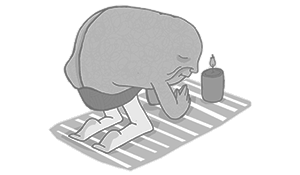

The evolutionary psychology of religion is the study of religious belief using evolutionary psychology principles. As with all other organs and organ functions, the brain and cognition’s functional structure have been argued to have a genetic basis, and are therefore subject to the effects of natural selection and evolution. Like other organs and tissues, this functional structure should be universally shared amongst humans and should solve important problems of survival and reproduction. Evolutionary psychologists seek to understand cognitive processes, religion in this case, by understanding the survival and reproductive functions they might serve.
There is general agreement among scientists that a propensity to engage in religious behavior evolved early in human history. However, there is disagreement on the exact mechanisms that drove the evolution of the religious mind. There are two schools of thought. One is that religion itself evolved due to natural selection and is an adaptation, in which case religion conferred some sort of evolutionary advantage. Alternatively, religious beliefs and behaviors may have emerged as by-products of other adaptive traits without initially being selected for because of their own benefits (called spandrels).
Continue reading →
Posted in Health, Philosophy, Science |
Leave a Comment »
June 7, 2012
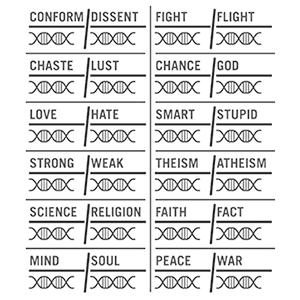
The evolutionary origin of religions theorizes about the emergence of religious behavior during the course of human evolution. Humanity’s closest living relatives are common chimpanzees and bonobos. These primates share a common ancestor with humans who lived between four and six million years ago. It is for this reason that chimpanzees and bonobos are viewed as the best available surrogate for this common ancestor.
Anthropologist Barbara King argues that while non-human primates are not religious, they do exhibit some traits that would have been necessary for the evolution of religion. These traits include high intelligence, a capacity for symbolic communication, a sense of social norms, realization of ‘self’ and a concept of continuity. There is inconclusive evidence that Homo neanderthalensis may have buried their dead. Elephants are the only other species known to have any recognizable ritual surrounding death. Ecologist Marc Bekoff, however, argues that many species grieve death and loss. Continue reading →
Posted in Philosophy, Science |
1 Comment »
June 6, 2012

The Neo Geo is an arcade system board and home video game console released in 1990 by Japanese game company SNK. The MVS (Multi Video System), as the Neo Geo was known to the coin-operated arcade game industry, offered arcade operators the ability to put up to six different arcade titles into a single cabinet, a key economic consideration for operators with limited floorspace.
With its games stored on self-contained cartridges, a game-cabinet could be exchanged for a different game-title by swapping the game’s ROM-cartridge and cabinet artwork. Several popular franchise-series, including ‘Fatal Fury,’ ‘The King of Fighters,’ ‘Metal Slug,’ and ‘Samurai Shodown,’ were released for the platform. The Neo Geo system was also marketed as a very costly home console, commonly referred to today as the AES (Advanced Entertainment System). Continue reading →
Posted in Games, Money, Technology |
Leave a Comment »
June 6, 2012

Sanwa Denshi (‘Three Harmonies Electronics Company’) is a general electronics manufacturer, but is best known internationally as a leading manufacturer of arcade parts; i.e. joysticks, buttons, coin feeds etc.
Its parts are commonly used in Japanese arcade machines and held in high regard by custom builders (especially in the fighting game community). Continue reading →
Posted in Games, Money, Technology |
Leave a Comment »
June 6, 2012

Vedanta [veh-dahn-ta] was originally used a synonym for the part of the Vedas (Hindu scripture) known as the Upanishads (the appendix to the Vedic hymns, which are passed down orally). ‘Vedanta’ is the end of the Vedas both literally and metaphorically: it bookends the Veda, but is also in some ways ‘the purpose or goal [end] of the Vedas.’ By the 8th century CE, the word also came to be used to describe a group of philosophical traditions concerned with the self-realization by which one understands the ultimate nature of reality (Brahman, the godhead, the divine source of being, through which all emanates).
Vedanta can also be used as a noun to describe one who has mastered all four of the original Vedas. The Vedanta is also called Uttara Mimamsa, or the ‘latter enquiry’ or ‘higher enquiry,’ and is often paired with Purva Mimamsa, the ‘former enquiry’ (usually simply called Mimamsa), which deals with explanations of the fire-sacrifices of the Vedic mantras and the Brahmanas (expositions of the Vedas). Continue reading →
Posted in Language, Philosophy, World |
Leave a Comment »
June 5, 2012

Matt Mullican (b. 1951) is a American artist and son of abstract painter Lee Mullican. He received his BFA from CalArts in 1974, and rose to prominence as a member of the ‘Pictures Generation,’ a group of artists know for their appropriation of images from the consumer and media saturated age in which they grew to maturity.
Mullican’s work is concerned with systems of knowledge, meaning, language, and signification. Mullican also works with the relationship between perception and reality, between the ability to see something and the ability to represent it. Mullican has taught and lectured at Columbia University, The Rijksakademie (Amsterdam), The London Institute, Chelsea College of Art and Design, and The School of Visual Arts (NY).
Posted in Art, Money |
Leave a Comment »