March 1, 2012

The Masturbate-a-thon is an event in which participants masturbate in order to raise money for charity and increase the public awareness and dispel the shame and taboos that exist about this form of sexual activity. The event awards several honors for those who raise the most money as well as for multiple orgasms and endurance. In 1999, the Masturbate-a-Thon was originated by the collective Open Enterprises, which operates Good Vibrations a sex shop in San Francisco. The slogan ‘Come for a Cause’ was coined by Rachel Venning, the founder of the sex toy shop Babeland, formerly Toy in Babeland, which has branches in Seattle, in Brooklyn, and Manhattan.
In that year, the first live event was held at San Francisco’s Campus Theater, by the Center for Sex and Culture (CSC)’s Carol Queen and her partner, Robert Lawrence. CSC is an education-based non-profit providing professional-level sex education. The annual events are used as a public-health-education device to increase awareness of self-pleasure as a strategy for safer and healthier sex and to de-stigmatize self-love. The winner of ‘Longest Time Spent Masturbating/Male’ is Mr. Masanobu Sato, who in 2009 masturbated for 9 hours and 58 minutes. The winner of ‘Most Orgasms/Male’ was set by Big Rob in 2010—at 83 climaxes, a world record. The women’s world record is 222 orgasms.
Posted in Humor, Money, Sex |
Leave a Comment »
March 1, 2012

A subtractive color model explains the mixing of paints, dyes, inks, and natural colorants to create a full range of colors, each caused by subtracting (that is, absorbing) some wavelengths of light and reflecting the others. The color that a surface displays depends on which colors of the electromagnetic spectrum are reflected by it and therefore made visible.
Subtractive color systems start with light, presumably white light. Next, colored inks, paints, or filters between the viewer and the light source subtract wavelengths from the light, giving it color. If the incident light is other than white, our visual mechanisms are able to compensate well, but not perfectly, often giving a flawed impression of the ‘true’ color of the surface. Conversely, additive color systems start without light (black). Light sources of various wavelengths combine to make a color. Often, three primary colors are combined to stimulate humans’ trichromatic color vision, sensed by the three types of cone cells in the eye, giving an apparently full range.
Posted in Science |
Leave a Comment »
March 1, 2012
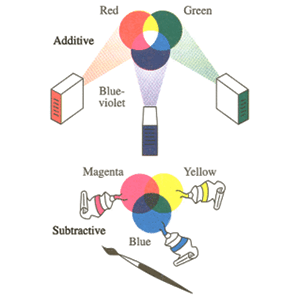
Additive color describes the situation where color is created by mixing the visible light emitted from differently colored light sources. This is in contrast to subtractive colors where light is removed from various part of the visible spectrum to create colors. Computer monitors and televisions are the most common form of additive light, while subtractive color is used in paints and pigments and color filters. The additive reproduction process usually uses red, green and blue light to produce the other colors. Combining one of these additive primary colors with another in equal amounts produces the additive secondary colors cyan, magenta, and yellow. The colored pixels in displays do not overlap on the screen, but when viewed from a sufficient distance, the light from the pixels diffuses to overlap on the retina.
Results obtained when mixing additive colors are often counterintuitive for people accustomed to the more everyday subtractive color system of pigments, dyes, inks and other substances which present color to the eye by reflection rather than emission. For example, in subtractive color systems green is a combination of yellow and blue; in additive color, red + green = yellow and no simple combination will yield green. Additive color is a result of the way the eye detects color, and is not a property of light. There is a vast difference between yellow light, with a wavelength of approximately 580 nm, and a mixture of red and green light. However, both stimulate our eyes in a similar manner, so we do not detect that difference.
Posted in Science |
Leave a Comment »
March 1, 2012

The Invisible Pink Unicorn (IPU) is the goddess of a parody religion used to satirize theistic beliefs, taking the form of a unicorn that is paradoxically both invisible and pink. She is a rhetorical illustration used by atheists and other religious skeptics as a contemporary version of Russell’s teapot, sometimes mentioned in conjunction with the Flying Spaghetti Monster.
The IPU is used to argue that supernatural beliefs are arbitrary by, for example, replacing the word God in any theistic statement with Invisible Pink Unicorn. The mutually exclusive attributes of pinkness and invisibility, coupled with the inability to disprove the IPU’s existence, satirize properties that some theists attribute to a theistic deity.
Continue reading →
Posted in Humor, Philosophy |
Leave a Comment »
March 1, 2012

In academic publishing, the least publishable unit (LPU), colloquially ‘publon’ – the smallest measurable quantum of publication, is the minimum amount of information that can generate a publication in a peer-reviewed journal. The term is often used as a joking, ironic, or sometimes derogatory reference to the strategy of pursuing the greatest quantity of publications at the expense of their quality. Publication of the results of research is an essential part of science. The number of publications is sometimes used to assess the work of a scientist and as a basis for distributing research funds. In order to achieve a high rank in such an assessment, there is a trend to split up research results into smaller parts that are published separately, thus increasing the number of publications.
‘Salami publication’ or ‘salami slicing’ is a variant of the smallest-publishable-unit strategy. In salami slicing, data gathered by one research project is separately reported (wholly or in part) in multiple end publications. Salami slicing, apparently named by analogy with the thin slices made from larger pieces of salami meat, is generally considered questionable when not explicitly labeled, as it may lead to the same data being counted multiple times as apparently independent results in aggregate studies.
Posted in Education, Humor, Language, Science |
Leave a Comment »
March 1, 2012

Structuring, also known as smurfing in banking industry jargon, is the practice of parceling what would otherwise be a large financial transaction into a series of smaller transactions to avoid scrutiny by regulators or law enforcement. Structuring often appears in federal indictments related to money laundering, fraud, and other financial crimes. The term ‘smurfing’ is derived from the image of the cartoon characters, the ‘Smurfs,’ having a large group of many small entities. Miami-based lawyer Gregory Baldwin is said to have coined the term in the 1980s.
Typically each of the smaller transactions is executed in an amount below some statutory limit that normally does not require a financial institution to file a report with a government agency. Criminal enterprises often employ several agents (smurfs) to make the transaction. The term is also applied to activity associated with controlled substances such as pseudoephedrine. In this context the agent will make purchases of small, legal amounts from several drug and grocery stores, with the intent to aggregate the lot for use in the illegal production of methamphetamine.
Posted in Money, Politics |
Leave a Comment »
March 1, 2012


Salami slicing is a series of many minor actions, often performed by clandestine means, that together results in a larger action that would be difficult or illegal to perform at once. The term is typically used pejoratively. An example of salami slicing, also known as penny shaving, is the fraudulent practice of stealing money repeatedly in extremely small quantities, usually by taking advantage of rounding to the nearest cent in financial transactions. It would be done by always rounding down, and putting the fractions of a cent into another account. The idea is to make the change small enough that any single transaction will go undetected.
In politics, the term salami tactics has been used since the 1940s to refer to a divide and conquer process of threats and alliances used to overcome opposition. In academia, salami slicing refers to the practice of creating several publications out of material that could have been published in a single journal or review. Historically, actual physical ‘penny shaving’ may be considered a form of salami slicing. The edges of coins made of precious metals have been clipped or shaved by individuals in order to procure small quantities of said metals with the intention that the coin would still retain its nominal value.
Posted in Money, Politics, Technology |
Leave a Comment »
March 1, 2012
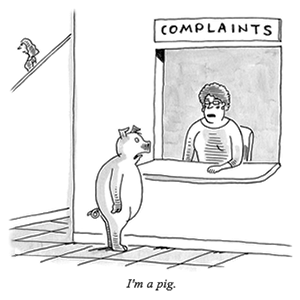
Cryptomnesia [krip-tam-nee-zha] occurs when a forgotten memory returns without it being recognized as such by the subject, who believes it is something new and original. It is a memory bias whereby a person may falsely recall generating a thought, not deliberately engaging in plagiarism but rather experiencing a memory as if it were a new inspiration.
The word was first used by the psychiatrist Théodore Flournoy, in reference to the case of a psychic medium, to suggest a high incidence of ‘latent memories on the part of the medium that come out, sometimes greatly disfigured by a subliminal work of imagination or reasoning, as so often happens in our ordinary dreams.’ Jung suggested the phenomenon in Nietzsche’s ‘Also Sprach Zarathustra.’
Continue reading →
Posted in Language, Philosophy, Politics |
Leave a Comment »
March 1, 2012

An isometric illusion (also called an ambiguous figure or inside/outside illusion) is a type of optical illusion, specifically one due to multistable perception.
In general, any shape built entirely of same-length (i.e., isometric) lines that does not clearly indicate relative direction between its components will evoke such a perceptual ‘flip-flopping.’ The Necker Cube is a famous example of an isometric illusion.
Posted in Science |
Leave a Comment »
February 29, 2012
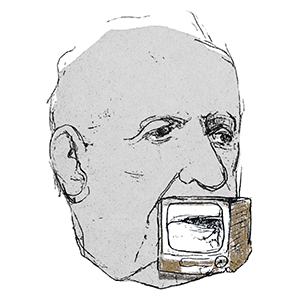
Edward Bernays (1891 – 1995) was a pioneer in the field of public relations and propaganda, referred to in his obituary as ‘the father of public relations.’
He combined the ideas of Gustave Le Bon and Wilfred Trotter on crowd psychology with the psychoanalytical ideas of his uncle, Sigmund Freud. He felt manipulation was necessary in society, which he regarded as irrational and dangerous as a result of the ‘herd instinct’ that Trotter had described.
Continue reading →
Posted in Language, Money, Politics |
Leave a Comment »
February 29, 2012
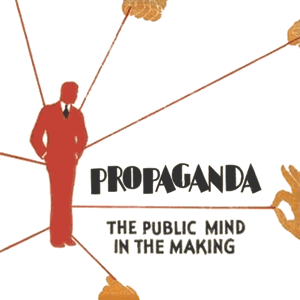
Propaganda is a 1928 book by public relations pioneer Edward Bernays. It argued that the scientific manipulation of public opinion was necessary to overcome chaos and conflict in society: ‘The conscious and intelligent manipulation of the organized habits and opinions of the masses is an important element in democratic society. Those who manipulate this unseen mechanism of society constitute an invisible government which is the true ruling power of our country. We are governed, our minds are molded, our tastes formed, our ideas suggested, largely by men we have never heard of.’
‘This is a logical result of the way in which our democratic society is organized. Vast numbers of human beings must cooperate in this manner if they are to live together as a smoothly functioning society. […] In almost every act of our daily lives, whether in the sphere of politics or business, in our social conduct or our ethical thinking, we are dominated by the relatively small number of persons […] who understand the mental processes and social patterns of the masses. It is they who pull the wires which control the public mind.’
Posted in Language, Money, Politics |
Leave a Comment »
February 29, 2012
The Century of the Self is a British television documentary film; it focuses on how Sigmund Freud, Anna Freud, and Edward Bernays influenced the way corporations and governments have analyzed, dealt with, and controlled people.
Director Adam Curtis said: ”This series is about how those in power have used Freud’s theories to try and control the dangerous crowd in an age of mass democracy.’
Continue reading →
Posted in Money, Politics |
Leave a Comment »



