February 21, 2012

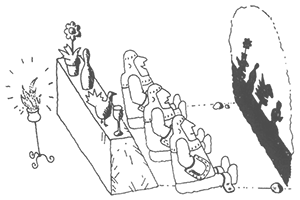
Simulated reality is the proposition that reality could be simulated—perhaps by computer simulation—to a degree indistinguishable from ‘true’ reality. It could contain conscious minds which may or may not be fully aware that they are living inside a simulation.
This is quite different from the current, technologically achievable concept of virtual reality. Virtual reality is easily distinguished from the experience of actuality; participants are never in doubt about the nature of what they experience. Simulated reality, by contrast, would be hard or impossible to separate from ‘true’ reality.
Continue reading →
Posted in Philosophy, Technology, World |
3 Comments »
February 21, 2012

‘Slaves to Armok: God of Blood, Chapter II: Dwarf Fortress,’ most commonly known simply as Dwarf Fortress, is a freeware video game by Bay 12 Games for Microsoft Windows, Linux, and Mac OS X set in a high fantasy universe that combines aspects of roguelike (a sub-genre of role-playing video games, characterized by randomization for replayability, permanent death, and turn-based movement) and city-building games.
It is primarily known for its unique level of complexity and difficulty. The title of the game is inspired by its primary focus on the construction, management, and exploration of dwarven fortresses within the game world. Development started in 2002; the game’s first public release was in 2006.
Continue reading →
Posted in Art, Games, Technology |
Leave a Comment »
February 21, 2012

Post-painterly abstraction is a term created by art critic Clement Greenberg as the title for an exhibit he curated for the Los Angeles County Museum of Art in 1964, which subsequently travelled to the Walker Art Center and the Art Gallery of Toronto. Greenberg had perceived that there was a new movement in painting that derived from the abstract expressionism of the 1940s and 1950s but ‘favored openness or clarity’ as opposed to the dense painterly surfaces of that painting style.
As painting continued to move in different directions, initially away from abstract expressionism, powered by the spirit of innovation of the time, the term, which had obtained some currency in the 1960s, was gradually supplanted by minimalism, hard-edge painting, lyrical abstraction, and color field painting.
Posted in Art |
Leave a Comment »
February 21, 2012

Hard-edge painting is painting in which abrupt transitions are found between color areas. The style is related to Geometric abstraction, Op Art, Post-painterly Abstraction, and Color Field painting. The term was coined by writer, curator and ‘LA Times’ art critic Jules Langsner, along with art historian Peter Selz, in 1959, to describe the work of painters from California, who, in their reaction to the more painterly or gestural forms of Abstract expressionism, adopted a knowingly impersonal paint application and delineated areas of color with particular sharpness and clarity.
This approach to abstract painting became widespread in the 1960s, though California was its creative center. Curated by Langsner, ‘Four Abstract Classicists’ opened at the Los Angeles County Museum of Art in 1959 featuring Karl Benjamin, Lorser Feitelson, Frederick Hammersley, and John McLaughlin. Other, earlier, movements, or styles have also contained the quality of hard-edgedness, for instance the Precisionists also displayed this quality to a great degree in their work.
Posted in Art |
Leave a Comment »
February 21, 2012


Electronica includes a wide range of contemporary electronic music designed for a wide range of uses, including listening, dancing, and background music for other activities. Unlike electronic dance music, which is sub-genre in the category, all examples of electronica are not necessarily made for dancing. Genres such as techno, drum and bass, downtempo, and ambient are among those encompassed by the umbrella term, entering the American mainstream from ‘alternative’ or ‘underground’ venues during the late 1990s.
With newly prominent music styles such as reggaeton, and subgenres such as electroclash, indie pop, and favela funk, electronic music styles in the current decade are seen to permeate nearly all genres of the mainstream and indie landscape such that a distinct ‘electronica’ genre of pop music is rarely noted. Continue reading →
Posted in Art, Language, Technology |
1 Comment »
February 21, 2012
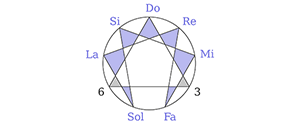
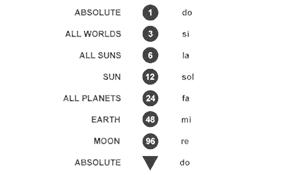
The Fourth Way refers to a concept used by Russian spiritualist G.I. Gurdjieff to describe an approach to self-development learned over years of travel in the East that combined what he saw as three established traditional ‘ways,’ or ‘schools’ into a fourth way. These three ways were of the body, mind, and emotions. The term ,The Fourth Way, was further developed by Russian esotericist P.D. Ouspensky in his lectures and writings. Posthumously, Ouspensky’s students published a book entitled ‘Fourth Way,’ based on his lectures. The ‘Fourth Way’ is sometimes referred to as ‘The Work,’ ‘Work on oneself,’ or ‘The System.’
According to this system, the chief difference between the three traditional schools, or ways, and the fourth way is that ‘they are permanent forms which have survived throughout history mostly unchanged, and are based on religion. Where schools of yogis, monks or fakirs exist, they are barely distinguishable from religious schools. The fourth way differs in that it is not a permanent way. It has no specific forms or institutions and comes and goes controlled by some particular laws of its own.’
Continue reading →
Posted in Language, Philosophy |
Leave a Comment »
February 21, 2012

A Guide for the Perplexed is a short book by E. F. Schumacher, published in 1977. The title is a reference to Maimonides’s ‘The Guide for the Perplexed.’ Schumacher himself considered ‘A Guide for the Perplexed’ to be his most important achievement, although he was better known for his 1974 environmental economics bestseller ‘Small Is Beautiful,’ which made him a leading figure within the ecology movement.
His daughter wrote that her father handed her the book on his deathbed, five days before he died and he told her ‘this is what my life has been leading to.’ The book is a statement of the philosophical underpinnings that inform ‘Small is Beautiful.’
Continue reading →
Posted in Language, Philosophy, Science |
1 Comment »
February 20, 2012
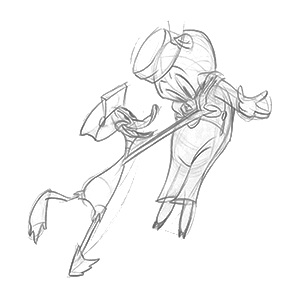
Baby Bottleneck is a 1945 Warner Brothers Looney Tunes theatrical cartoon short released in 1946 and directed by Bob Clampett and written by Warren Foster. In the short, there is a baby boom in the postwar US; an overworked stork (a clear Jimmy Durante reference) gets drunk in the ‘Stork Klub.’ A mix up results in babies getting sent to the wrong parents (such as a baby Hippopotamus to a Scottish Terrier).
To clear up the confusion, Porky Pig is brought in to manage the factory, with Daffy Duck as his assistant. The babies are seen going through a conveyor belt (to the tune of Raymond Scott’s famous ‘Powerhouse’) and getting sent by various animals, while Daffy mans the phones, making quick references to Bing Crosby, Eddie Cantor, and the Dionne Quintuplets. Continue reading →
Posted in Art, Humor |
Leave a Comment »
February 20, 2012


The Ren & Stimpy Show, often simply referred to as Ren & Stimpy, is an American animated television series, created by Canadian animator John Kricfalusi for Nickelodeon. The series focuses on the titular characters: Ren Höek, a psychotic chihuahua, and Stimpson J. Cat, a good-natured, dimwitted cat. The show premiered in 1991, on the same day as the debut of ‘Rugrats’ and ‘Doug,’ the three of which comprised the original Nicktoons. The show ran for five seasons on the network.
Throughout its run, the show was controversial for its off-color humor, black comedy, toilet humor, sexual innuendo, and violence, all of which contributed to the production staff’s altercations with Nickelodeon’s Standards and Practices department. The show developed a cult following during and after its run. It was pioneering for satirical animated shows like ‘Beavis and Butt-head’ and ‘South Park.’ Continue reading →
Posted in Art, Humor, Money |
1 Comment »
February 20, 2012
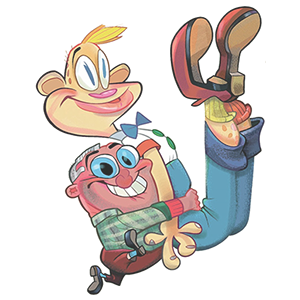
George Liquor (often taking his epithet as George Liquor, American), most famous for his appearances on ‘The Ren and Stimpy Show,’ is a cartoon character created by John Kricfalusi and is a mascot for Kricfalusi’s defunct animation studio, Spümcø. Kricfalusi portrayed George Liquor as a patriotic, outspoken, politically conservative blowhard. Kricfalusi described Liquor as his favorite character to animate.
Kricfalusi described George Liquor as ‘the greatest American’ who is so conservative ‘that he thinks the Republicans are Commies.’ George harbors a deep antipathy for the political left; in one issue of Spümcø’s ‘Comic Book,’ George Liquor becomes enraged after a fish calls him a Democrat. George is a middle-aged, crass, religious, ultra-patriotic American who favors his nephew, Jimmy The Idiot Boy, and tries to teach Jimmy how to be ‘a Real Man.’ Continue reading →
Posted in Art, Humor, Money |
Leave a Comment »
February 20, 2012


Michael John Kricfalusi [kris-fuh-loo-see] better known as John K., is a Canadian animator. He is creator of ‘The Ren & Stimpy Show,’ its adults-only spin-off ‘Ren & Stimpy ‘Adult Party Cartoon,” ‘The Ripping Friends’ animated series, and ‘Weekend Pussy Hunt,’ an interactive web-based cartoon, as well as the founder of animation studio Spümcø.
He spent his early childhood in Germany and Belgium, while his father served in the Canadian air force. At age seven he returned with his family to Canada. Having moved in the middle of a school season, he spent much of his time that year at home, watching Hanna-Barbera cartoons and drawing them. Kricfalusi’s interest in Golden Age animation crystallized during his stay at Sheridan College, where an acquaintance of his held weekly screenings of old films and cartoons, among them the cartoons of Bob Clampett and Tex Avery, which left a deep impression on him. Continue reading →
Posted in Art, Humor, Money |
Leave a Comment »
February 19, 2012

Tank Man, or the Unknown Rebel, is the nickname of an anonymous man who stood in front of a column of Chinese Type 59 tanks the morning after the Chinese military forcibly removed protestors from in and around Beijing’s Tiananmen Square in the summer of 1989. The man achieved widespread international recognition due to the videotape and photographs taken of the incident. Despite his anonymity, he is commonly (though not necessarily correctly) referred to in Chinese as Wang Weilin.
The man placed himself alone in the middle of the street as the tanks approached, directly in the path of the armored vehicles. He held two shopping bags, one in each hand. As the tanks came to a stop, the man gestured towards the tanks with his bags. In response, the lead tank attempted to drive around the man, but the man repeatedly stepped into the path of the tank in a show of nonviolent action. After repeatedly attempting to go around rather than crush the man, the lead tank stopped its engines, and the armored vehicles behind it seemed to follow suit. There was a short pause with the man and the tanks having reached a quiet, still impasse.
Continue reading →
Posted in Politics, War, World |
2 Comments »




