February 14, 2012

On the Internet, nobody knows you’re a dog‘ is an adage which began as the caption of a cartoon by Peter Steiner published by ‘The New Yorker’ in 1993. Steiner, a cartoonist and contributor to ‘The New Yorker’ since 1979, said the cartoon initially did not get a lot of attention, but later took on a life of its own, and that he felt similar to the person who created the ‘smiley face.’ In fact, Steiner was not that interested in the Internet when he drew the cartoon, and although he did have an online account, he recalled attaching no ‘profound’ meaning to the cartoon; it was just something he drew in the manner of a ‘make-up-a-caption’ cartoon.
In response to the comic’s popularity, he stated, ‘I can’t quite fathom that it’s that widely known and recognized.’ The cartoon marks a notable moment in Internet history. Once the exclusive domain of government engineers and academics, the Internet was now a subject of discussion in general interest magazines like ‘The New Yorker.’ Lotus 1-2-3 founder and early Internet activist Mitch Kapor commented in a ‘Time’ magazine article in 1993 that ‘the true sign that popular interest has reached critical mass came this summer when the ‘New Yorker printed a cartoon showing two computer-savvy canines.’
Continue reading →
Posted in Humor, Politics, Technology |
1 Comment »
February 14, 2012
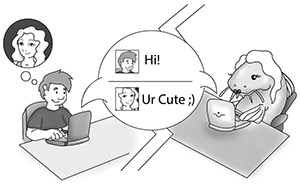

A sockpuppet is an online identity used for purposes of deception. The term—a reference to the manipulation of a simple hand puppet made from a sock—originally referred to a false identity assumed by a member of an internet community who spoke to, or about himself while pretending to be another person.
The term now includes other uses of misleading online identities, such as those created to praise, defend or support a third party or organization. A significant difference between the use of a pseudonym and the creation of a sockpuppet is that the sockpuppet poses as an independent third-party unaffiliated with the puppeteer. Continue reading →
Posted in Language, Money, Technology |
2 Comments »
February 14, 2012

A shill, plant or stooge helps someone without disclosing that he or she has a close relationship with that person or organization. Shill typically refers to someone who purposely gives onlookers the impression that he or she is an enthusiastic independent customer of a seller that he or she is secretly working for. The person or group that hires the shill is using crowd psychology, to encourage other onlookers or audience members to make a purchase.
Shills are often employed by confidence artists. Plant and stooge more commonly refer to any person who is secretly in league with another person or organization while pretending to be neutral or actually a part of the organization he or she is planted in, such as a magician’s audience, a political party, or an intelligence organization (double agent). Continue reading →
Posted in Language, Money, Politics |
Leave a Comment »
February 13, 2012
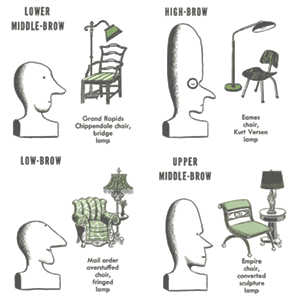
The term middlebrow describes both a certain type of easily accessible art, often literature, as well as the population that uses art to acquire culture and class that is usually unattainable. First used by the British satire magazine ‘Punch’ in 1925, middlebrow is derived as the intermediary between highbrow and lowbrow, terms derived from phrenology.
Middlebrow has famously gained notoriety from derisive attacks by Dwight Macdonald, Virginia Woolf, and to a certain extent, Russell Lynes. It has been classified as a forced and ineffective attempt at cultural and intellectual achievement, as well as characterizing literature that emphasizes emotional and sentimental connections rather than literary quality and innovation.
Continue reading →
Posted in Art, Language |
Leave a Comment »
February 13, 2012
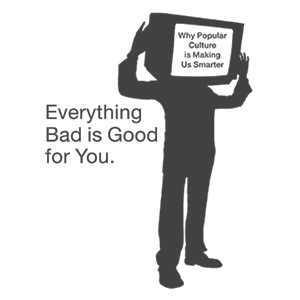
Popular culture studies is the academic discipline studying popular culture from a critical theory perspective. It is generally considered as a combination of communication studies and cultural studies. Following the work of the Frankfurt School, popular culture has come to be taken more seriously as a terrain of academic inquiry and has also helped to change the outlooks of more established disciplines.
Conceptual barriers between so-called high and low culture have broken down, accompanying an explosion in scholarly interest in popular culture, which encompasses such diverse media as comic books, television, and the Internet. Reevaluation of mass culture in the 1970s and 1980s has revealed significant problems with the traditional view of mass culture as degraded and elite culture as uplifting. Divisions between high and low culture have been increasingly seen as political distinctions rather than defensible aesthetic or intellectual ones.
Continue reading →
Posted in Education, Money, Politics |
Leave a Comment »
February 13, 2012
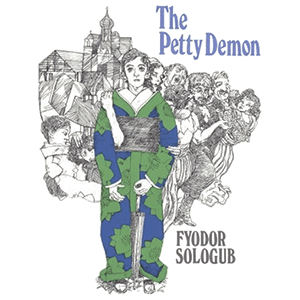
Poshlost is a Russian word that has been defined as ‘petty evil or self-satisfied vulgarity,’ however there is no single English translation.
At more length, ‘Poshlost’ is the Russian version of banality, with a characteristic national flavoring of metaphysics and high morality, and a peculiar conjunction of the sexual and the spiritual. This one word encompasses triviality, vulgarity, sexual promiscuity, and a lack of spirituality. The war against poshlost’ was a cultural obsession of the Russian and Soviet intelligentsia from the 1860s to 1960s.’
Continue reading →
Posted in Language, Sex, World |
Leave a Comment »
February 13, 2012


Culture industry is a term coined by critical theorists Theodor Adorno (1903–1969) and Max Horkheimer (1895–1973), who argued in the chapter of their book ‘Dialectic of Enlightenment, ‘The Culture Industry: Enlightenment as Mass Deception,’ that popular culture is akin to a factory producing standardized cultural goods – through film, radio and magazines – to manipulate the masses into passivity; the easy pleasures available through consumption of popular culture make people docile and content, no matter how difficult their economic circumstances.
Adorno and Horkheimer saw this mass-produced culture as a danger to the more difficult high arts. Culture industries may cultivate false needs; that is, needs created and satisfied by capitalism. True needs, in contrast, are freedom, creativity, or genuine happiness. This was reference to an earlier demarcation in needs by Herbert Marcuse.
Continue reading →
Posted in Art, Money, Politics |
Leave a Comment »
February 13, 2012

Bathos [bey-thos] (Greek: ‘depth’) is an abrupt transition in style from the exalted to the commonplace, producing a ludicrous effect. While often unintended, bathos may be used deliberately to produce a humorous effect. If bathos is overt, it may be described as Burlesque or mock-heroic.
As used in English bathos originally referred to a particular type of bad poetry, but it is now used more broadly to cover any seemingly ridiculous artwork or bad performance. It should not be confused with pathos, a mode of persuasion within the discipline of rhetoric, intended to arouse emotions of sympathy and pity. Continue reading →
Posted in Art, Humor, Language |
Leave a Comment »
February 13, 2012

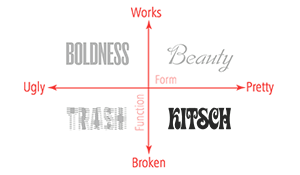
Camp is an aesthetic sensibility that regards something as appealing or humorous because of its deliberate ridiculousness. The concept is closely related to kitsch, and things with camp appeal may also be described as being ‘cheesy.’
When the usage appeared, in 1909, it denoted: ostentatious, exaggerated, affected, theatrical, and effeminate behaviour, and, by the middle of the 1970s, the definition comprised: banality, artifice, mediocrity, and ostentation so extreme as to have perversely sophisticated appeal. American writer Susan Sontag’s essay ‘Notes on ‘Camp” (1964) emphasised its key elements as: artifice, frivolity, naïve middle-class pretentiousness, and ‘shocking’ excess. Camp as an aesthetic has been popular from the 1960s to the present.
Continue reading →
Posted in Art, Humor, Language |
Leave a Comment »
February 13, 2012


Kitsch [kich] (loanword from German) is a form of art that is considered an inferior, tasteless copy of an extant style of art or a worthless imitation of art of recognized value. The concept is associated with the deliberate use of elements that may be thought of as cultural icons while making cheap mass-produced objects that are unoriginal.
Kitsch also refers to the types of art that are aesthetically deficient (whether or not being sentimental, glamorous, theatrical, or creative) and that make creative gestures which merely imitate the superficial appearances of art through repeated conventions and formulae. Excessive sentimentality often is associated with the term.
Continue reading →
Posted in Art, Language, Philosophy |
1 Comment »
February 13, 2012

Paul Sturgess is an English-born basketball player for the Harlem Globetrotters. At 7 ft 7.82 in (2.3322 m) and 320 lb (150 kg), Sturgess was the tallest ever college basketball player in the US, is the tallest professional basketball player in the world, and is taller than any basketballer ever to play for the NBA. He joined the team in 2011 with fellow rookie, Jonte ‘Too Tall’ Hall, who at 5 ft 2 in (1.57 m) is the shortest ever player and is 2.5 ft (77 cm) shorter than Sturgess.
Sturgess wears a size 21 shoe. Examinations as a teenager revealed that his growth is healthy and not the result of disorder, rather he possesses familial tall stature, that is to say his height is genetic. His biological father is 6 ft 9 in (2.06 m) and there are other tall members in his family although his mother is 5 ft 5 in (1.65 m) and his younger sister is 5 ft 6 in (1.68 m). Sturgess was always tall but a growth spurt between the ages of 16-17 resulted in a foot (30 cm) of height added within a single year. Sturgess enjoys playing many other sports and before concentrating on basketball also played golf and soccer.
Posted in Games, Humor |
Leave a Comment »
February 12, 2012
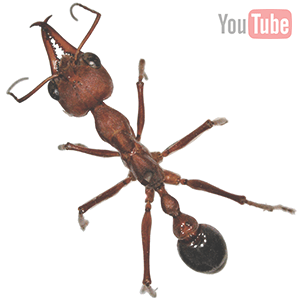
Myrmecia, often called bull ants, is a genus of ants found almost exclusively in Australia. These ants are well-known for their aggressive behavior and powerful stings. The venom of these ants has the potential to induce anaphylactic shock in allergic sting victims. As with most severe allergic reactions, if left untreated the reaction may be lethal. Bull ants eat small insects, honeydew (a sweet, sticky liquid found on leaves, deposited from various insects), seeds, fruit, fungi, gums, and nectar. They have larger eyes, and hence better vision, than most ants.
The bull ant famously appears in the philosopher Arthur Schopenhauer’s major work, ‘The World as Will and Representation,’ as a paradigmatic example of strife and constant destruction endemic to the ‘will to live.’ ‘But the bulldog-ant of Australia affords us the most extraordinary example of this kind; for if it is cut in two, a battle begins between the head and the tail. The head seizes the tail in its teeth, and the tail defends itself bravely by stinging the head: the battle may last for half an hour, until they die or are dragged away by other ants. This contest takes place every time the experiment is tried.’
Posted in Death, Philosophy, Science |
Leave a Comment »


 The Daily Omnivore