December 30, 2011

Tipitina’s is a music venue located at the corner of Napoleon Avenue and Tchoupitoulas Street in Uptown New Orleans, which opened in 1977. The name was inspired by a well-known song by Professor Longhair who also performed there until his death in 1980. It was known as The 501 Club, in reference to its street address (501 Napoleon Avenue). Tipitina’s stands as one of the best-known clubs in New Orleans. The building itself was constructed in 1912, and originally served as a gambling house, gymnasium, and brothel.
In the early years, it had a juice bar and restaurant as well as a bar. The only remnant of the juice bar is the banana in Tipitina’s logo. In the early 1980s, the studios of radio station WWOZ (anon-profit, community-supported radio station) were located in one of the apartments upstairs from the club. In 1998, Tipitina’s opened a second location on North Peters Street in the French Quarter, which for a time was also a regular live music venue but is currently used for private events and parties. Apart from running these venues, Tipitina’s has established Tipitina’s Foundation, a non-profit organization to support local music and musicians. The foundation has been especially active in supporting the musicians affected by Hurricane Katrina.
Posted in Art |
Leave a Comment »
December 30, 2011
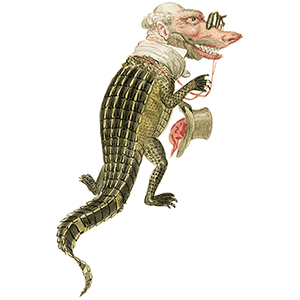
A krewe [kroo] is an organization that puts on a parade and or a ball for the Carnival season. The term is best known for its association with New Orleans Mardi Gras, but is also used in other Carnival celebrations around the Gulf of Mexico, such as the Gasparilla Pirate Festival in Tampa, Florida, and Springtime Tallahassee as well as in La Crosse, Wisconsin and at the Saint Paul Winter Carnival in Minnesota. The word is thought to have been coined in the early 19th century by an organization calling themselves Ye Mistick Krewe of Comus, as an archaic affectation; with time it became the most common term for a New Orleans Carnival organization. The Mystick Krewe of Comus itself was inspired by a Mobile mystic society (a Carnival social organization), with annual parades in Mobile, Alabama, called the Cowbellion de Rakin Society that dated from 1830.
Krewe members are assessed fees in order to pay for the parade and/or ball. Fees can range from thousands of dollars a year per person for the most elaborate parades to as little as $20 a year for smaller marching clubs. Criteria for krewe membership varies similarly, ranging from exclusive organizations largely limited to relatives of previous members to other organizations open to anyone able to pay the membership fee. Krewes with low membership fees may also require members to work to help build and decorate the parade floats and make their own costumes; higher priced krewes hire professionals to do this work. Parading krewe members are usually responsible for buying their own throws, the trinkets thrown to parade spectators according to Mobile and New Orleans tradition.
Posted in Games, Humor |
Leave a Comment »
December 30, 2011
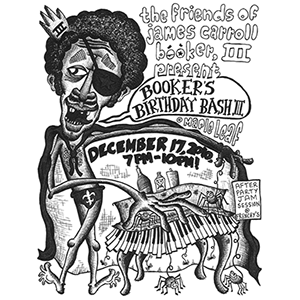
The Maple Leaf Bar is a music performance venue in New Orleans that opened in 1974, and is one of the longest continuing operations of New Orleans’ music clubs with live performances seven nights a week.
On that first night Andrew Hall’s Society Jazz Band played and were there every Saturday for seven years. Many of the old time musicians were featured including numerous members of the Preservation Hall Jazz Band. Musical styles represented include blues, funk, R&B, rock, zydeco, jazz, jam bands and any combination thereof, hosting both local performers and touring national acts. Continue reading →
Posted in Art |
Leave a Comment »
December 30, 2011

Papa Grows Funk is a funk band from New Orleans.
The band was started by frontman John ‘Papa’ Gros in early 2000, developing from a series of Monday night jam sessions helmed by Gros at New Orleans’ Maple Leaf Bar. Gros would invite some friends down to play, and the impromptu jams became a common bond for a handful of musicians, including guitarist June Yamagishi, sax player Jason Mingledorf, bassist Marc Pero and drummer Jeffery ‘Jellybean’ Alexander.
Posted in Art |
Leave a Comment »
December 30, 2011

Ivan Neville (b. 1959) is a multi-instrumentalist musician, singer, and songwriter. He is the son of Aaron Neville and nephew to members of The Neville Brothers. While it was never a huge charting song, Neville’s ‘Why Cant I Fall In Love’ become a sleeper fan-favorite, gaining fame from the 1990 Soundtrack to the Christian Slater film, ‘Pump Up the Volume.’ Neville has played with and appeared on several Neville Brother records, as well as his father’s solo records.
He performed in Bonnie Raitt’s band from 1985 to 1987. He also contributed keyboards to two Rolling Stones albums, 1986’s ‘Dirty Work’ and 1994’s ‘Voodoo Lounge’ as well as being a member of Keith Richards’ solo band the X-Pensive Winos. In 1988, he toured with Richards. In 2003, he formed his own band Dumpstaphunk. When the levees failed in New Orleans in 2005, Neville joined The New Orleans Social Club and recorded the benefit album ‘Sing Me Back Home’ with producers Leo Sacks and Ray Bardani at Wire Studios in Austin, Texas.
Posted in Art |
Leave a Comment »
December 30, 2011
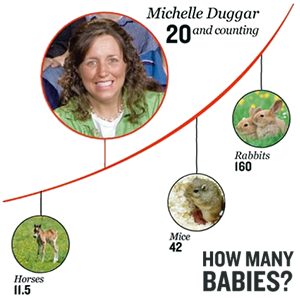
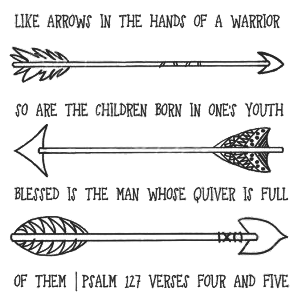
Quiverfull is a movement among some conservative evangelical Christian couples chiefly in the United States, but with some adherents in Canada, Australia, New Zealand, Britain and elsewhere. It promotes procreation, and sees children as a blessing from God, eschewing all forms of birth control, including natural family planning and sterilization. The movement derives its name from Psalm 127:3-5, where many children are metaphorically referred to as the arrows in a full quiver.
Some refer to the Quiverfull position as Providentialism (the belief that God’s will is evident in all occurrences), while other sources have referred to it as a manifestation of natalism (the promotion of child-bearing). Some of the beliefs held among Quiverfull adherents have been held among various Christians during prior eras of history. As birth control methods advanced during the late 19th and early 20th centuries, many conservative Christian movements issued official statements against their use. Continue reading →
Posted in Philosophy, Sex |
Leave a Comment »
December 30, 2011
Natalism [neyt-l-iz-uhm] is a belief that promotes human reproduction. The term is taken from the Latin adjective form for ‘birth,’ ‘natalis.’ Natalism promotes child-bearing and glorifies parenthood. It typically advocates policies such as limiting access to abortion and contraception, as well as creating financial and social incentives for the population to reproduce.
The degree of natalism is individual; the extreme end is ‘Natalism’ as a life stance (with the first letter capitalized), which holds natalism as of ultimate importance and everything else is only good to the extent it serves this purpose. The more moderate stance holds that there ought to be a higher rate of population growth than what is currently mainstream in industrialized countries. Philosophic motivations for natalism may include that of considering value in bringing potential future persons into existence. Continue reading →
Posted in Philosophy, Politics, Sex |
Leave a Comment »
December 30, 2011

‘Breeder‘ is a denigrating term for heterosexuals used in LGBT slang. It is often used pejoratively. The use in homosexual groups is drawn from the fact that their sexual activity cannot lead to reproduction, where as heterosexual sexual intercourse can, with implicit mocking by connotation of animal husbandry, the original usage of the word. Along these lines a particularly fecund woman may be referred to as a ‘brood sow,’ implying low ethical standards and an absence of due diligence in the reproductive process.
‘Breeder’ may also be used as a derogatory term by childfree people of any sexual orientation, to refer to parents who focus on their children and abandon their previous friends and lifestyle. The phrases ‘breeder, not parent’ (BNP) or ‘parent, not breeder’ (PNB) are used by some childfree communities to differentiate between what they regard as positive and negative parenting.
Posted in Politics, Sex |
1 Comment »
December 30, 2011

The Voluntary Human Extinction Movement, or VHEMT (pronounced ‘vehement’), is a movement which calls for the voluntary gradual self-extinction of the human species through abstaining from reproduction. VHEMT’s motto is ‘May we live long and die out.’ Proponents of VHEMT concepts are characterized either as supporters, or as volunteers (extinctionists).
Les U. Knight of Portland, Oregon is generally cited as founding VHEMT in 1991, although he does not take credit for it. Knight is the owner of vhemt.org and acts as a spokesman for the movement. In his mid-twenties, he underwent a vasectomy in support of his conviction that, ‘It’s obvious that the intentional creation of another [human being] by anyone anywhere can’t be justified today.’ During the 1970s, he joined the organization Zero Population Growth. Continue reading →
Posted in Death, Politics |
1 Comment »
December 30, 2011

Last Tango in Paris (Italian: ‘Ultimo Tango a Parigi’) is a 1972 Italian romantic drama film directed by Bernardo Bertolucci which portrays a recent American widower who takes up an anonymous sexual relationship with a young, soon-to-be-married Parisian woman. It stars Marlon Brando, Maria Schneider, and Jean-Pierre Léaud. The film’s raw portrayal of sexual violence and emotional turmoil led to international controversy and drew various levels of government censorship. The MPAA gave the film an X rating upon release in the United States. After revisions were made to the MPAA ratings code, it was classified as an NC-17 in 1997.
The idea grew from Bernardo Bertolucci’s sexual fantasies, stating ‘he once dreamed of seeing a beautiful nameless woman on the street and having sex with her without ever knowing who she was.’
Continue reading →
Posted in Art, Politics, Sex |
Leave a Comment »
December 29, 2011
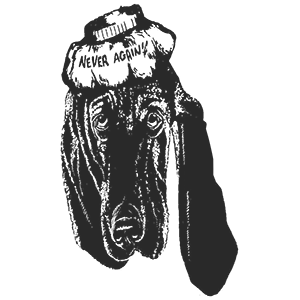
Hair of the dog is a colloquial expression in the English language predominantly used to refer to alcohol that is consumed with the aim of lessening the effects of a hangover. The expression originally referred to a method of treatment of a rabid dog bite by placing hair from the dog in the wound. The use of the phrase as a metaphor for a hangover treatment dates back at least to the time of Shakespeare. It is possible that the phrase was used to justify an existing practice, ‘similia similibus curantur’ (Latin: ‘like cures like’), which dates back to ancient Greece.
Similarly, in the 1930’s cocktails known as Corpse Revivers were served by hotel staff to guests ailing from too much drink. Continue reading →
Posted in Drugs, Health, Language |
Leave a Comment »
December 28, 2011

Wife Acceptance Factor (WAF) refers to design elements that increase the likelihood a wife will approve the purchase of expensive consumer electronics products such as home theater systems and personal computers. Stylish, compact, unobtrusive forms and appealing colors are commonly considered WAF. The term is a tongue-in-cheek play on electronics jargon such as ‘form factor’ and ‘power factor’ and derives from the gender stereotype that men are predisposed to appreciate gadgetry and performance criteria whereas women must be wooed by visual and aesthetic factors.
Larry Greenhill first used the term in 1983, writing for ‘Stereophile’ magazine, but Greenhill credited fellow reviewer and music professor Lewis Lipnick with the coining of the term. Lipnick himself traces the origin to the 1950s when hi-fi loudspeakers were so large that they overwhelmed most living rooms. Lipnick’s wife, actress Lynn-Jane Foreman, arrived at a different term: Marriage Interference Factor (MIF). Foreman suggested that audiophile husbands should balance their large and ugly electronic acquisitions with gifts to the wife made on the basis of similar expense, with opera tickets, jewelry and vacations abroad among the suggestions.
Posted in Humor, Money, Technology |
1 Comment »



