December 15, 2011
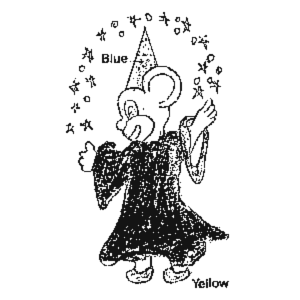
The blue star tattoo legend frequently surfaces in American elementary and middle schools in the form of a flyer that has been photocopied through many generations, which is distributed to parents by concerned school officials. It has also become popular on Internet mailing lists and websites. This legend states that a temporary lick-and-stick tattoo soaked in LSD and made in the form of a blue star (the logo of the Dallas Cowboys is often mentioned), or of popular children’s cartoon characters, such as Mickey Mouse and Bart Simpson, is being distributed to children in the area in order to get them ‘addicted to LSD.’
The legend is present also in Brazil as well as Portugal, at least since the 1970s. Flyers detailing the hoax circulated in the UK during the 1980s and 1990s.
Posted in Drugs, Education |
Leave a Comment »
December 15, 2011
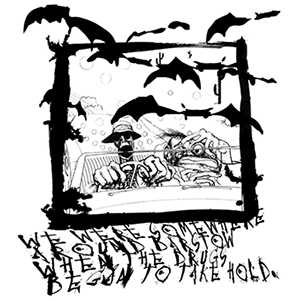
Bad trip (or psychedelic crisis) is a disturbing experience sometimes associated with use of a psychedelic drug such as LSD, Salvia, DXM, mescaline, psilocybin, DMT and sometimes even other drugs including cannabis, alcohol and MDMA. The manifestations can range from feelings of vague anxiety and alienation to profoundly disturbing states of unrelieved terror, ultimate entrapment, or cosmic annihilation.
Psychedelic specialists in the therapeutic community do not necessarily consider unpleasant experiences as threatening or negative, focusing instead on their potential to be highly beneficial to the user when properly resolved. They can be exacerbated by the inexperience or irresponsibility of the user or the lack of proper preparation and environment for the trip, and are reflective of unresolved psychological tensions triggered during the course of the experience. Continue reading →
Posted in Drugs, Health |
Leave a Comment »
December 15, 2011

Cheese is a heroin-based recreational drug that came to the attention of the media after a string of deaths among adolescents in Dallas beginning in 2005. It is made by combining heroin with crushed tablets of over-the-counter cold medication containing acetaminophen, the active ingredient in Tylenol, and the antihistamine diphenhydramine, the active ingredient in Benadryl.
Cheese samples obtained in north Dallas contained between 2% and 8% heroin, in contrast to the 30% commonly found in black tar heroin. Users commonly take the powder by insufflation (‘snorting’) rather than by intravenous injection. This mixture is also known as ‘Tylenol With Smack,’ by analogy to the Tylenol With Codeine series. When it appeared in several public middle schools police dubbed the mixture ‘starter heroin.’
Posted in Drugs, Politics |
1 Comment »
December 15, 2011
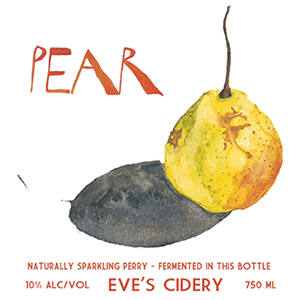
Perry is an alcoholic beverage made from fermented pears. Perry has been common for centuries in Britain, and in parts of south Wales; and France, especially Normandy and Anjou. In more recent years, commercial perry has also been referred to as ‘pear cider.’ Perry pears often have higher levels of sugar than cider apples, including unfermentable sugars such as sorbitol, which can give the finished drink a residual sweetness. They also have a very different tannin content to cider apples, with a predominance of astringent over bitter flavors. The presence of sorbitol can give perry a mild laxative effect, seen in the names of some perry pear varieties such as the ‘Lightning Pear’; reputed to go straight through ‘like lightning.’
As with apples specifically grown to make cider, special pear cultivars are used: in the UK the most commonly used variety of perry pear is the Blakeney Red. They produce fruit that is not of eating quality, but that produces superior perry. Like commercial pale lager and commercial cider, commercial perry is highly standardized, and today often contains large quantities of cereal adjuncts such as corn syrup or invert sugar. It is also generally of lower strength, and sweeter, than traditional perry, and is artificially carbonated to give a sparkling finish. However, unlike traditional perry it is a consistent product: the nature of perry pears means that it is very difficult to produce traditional perry in commercial quantities. Traditional perry was overwhelmingly a drink made on farms for home consumption, or to sell in small quantities either at the farm gate or to local inns.
Posted in Drugs, Food, Money |
Leave a Comment »
December 15, 2011
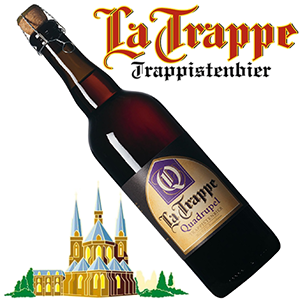
Quadrupel [kwo-droo-puhl] is the brand name of a strong seasonal beer La Trappe Quadrupel brewed by De Koningshoeven Brewery in the Netherlands, the only Trappist brewing abbey not in Belgium. In other countries, particularly the United States, ‘quadrupel’ or ‘quad’ may refer to an especially strong style of dark ale, with a characteristic spicy, ripe fruit flavor.
A quadrupel is intended to be stronger than a Tripel, so the ABV strength will be 10% or more. Beyond that, there is little agreement on the status of Quadrupel as a style. Beer writer Tim Webb notes that similar beers are also called ‘Grand Cru’ (French: ‘Great Growth’) in Belgium and Holland, a term borrowed from winemaking.
Posted in Drugs, Food, World |
Leave a Comment »
December 15, 2011


A Trappist [trap-ist] beer is a beer brewed by or under control of Trappist monks. There are a total of 174 Trappist monasteries worldwide; only seven (six in Belgium, one in the Netherlands) produce Trappist beer and are authorized to label their beers with the Authentic Trappist Product logo that indicates a compliance to the various rules of the International Trappist Association.
The Trappist order originated in the Cistercian monastery of La Trappe, France. Various Cistercian congregations existed for many years, and by 1664 the Abbot of La Trappe felt that the Cistercians were becoming too liberal. He introduced strict new rules in the abbey and the Strict Observance was born. Since this time, many of the rules have been relaxed. However, a fundamental tenet, that monasteries should be self-supporting, is still maintained by these groups. Continue reading →
Posted in Food, Philosophy, World |
Leave a Comment »
December 15, 2011
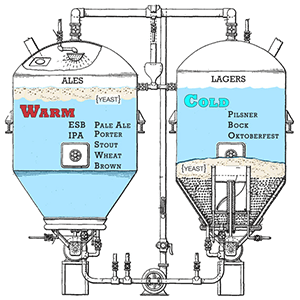
Beer style is a term used to differentiate and categorize beers by various factors such as colour, flavour, strength, ingredients, production method, recipe, history, or origin. The modern concept of beer style is largely based on the work of writer Michael Jackson in his 1977 book ‘The World Guide To Beer’ in which he categorized a variety of beers from around the world into local style groups according to local customs and names. In 1989, Fred Eckhardt furthered Jackson’s work publishing ‘The Essentials of Beer Style.’ Although the systematic study of beer styles is a modern phenomenon, the practice of distinguishing between different varieties of beer is ancient, dating to at least 2000 BCE.
The study of what constitutes a beer’s style may involve provenance, local tradition, ingredients, and/or empirical impression, which is conventionally broken down into several elements; typically – aroma, appearance, flavor and mouthfeel. The flavor may include the degree of bitterness of a beer due to bittering agents such as hops, roasted barley, or herbs; and the sweetness from the sugar present in the beer.
Continue reading →
Posted in Food |
Leave a Comment »
December 15, 2011
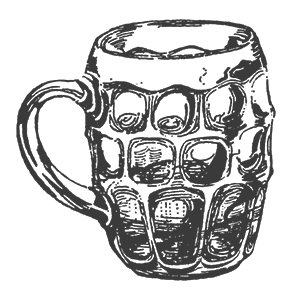
Beer glassware comprises the drinking vessels made of glass designed or commonly used for drinking beer. Different styles of glassware exist for a number of reasons: national traditions; legislation regarding serving measures; practicalities of stacking, washing and avoiding breakage; promotion of commercial breweries; or they may be folk art, novelty items or used in drinking games.
They also may complement different styles of beer for a variety of reasons, including enhancing aromatic volatiles, showcasing the appearance, and/or having an effect on the beer head. Several kinds of beer glassware have a stem which serves to prevent the body heat of the drinker’s hand from warming the beer. Beer glasses include German steins, old English tankards, and Belgian novelty glassware. Continue reading →
Posted in Art, Food, Money |
Leave a Comment »
December 15, 2011

Michael Jackson (1942 – 2007) was an English writer and journalist. He was the author of several influential books about beer and whiskey. He became famous in beer circles in 1977 when his book ‘The World Guide To Beer’ was published; it is still considered to be one of the most fundamental books on the subject.
The modern theory of beer style is largely based the book, in which Jackson categorized a variety of beers from around the world in local style groups suggested by local customs and names. His work had a special influence on the popularization of the brewing culture in North America, and he would later host a popular show entitled ‘The Beer Hunter,’ which was shown on Channel 4 and the Discovery Channel. During his 30 year career as a critic, he wrote columns for a large number of newspapers and magazines. Jackson considered beer as a component of culture and described beers in their cultural context. Although he traveled around the world and discovered different beer cultures, he was especially fond of the Belgian beers.
Posted in Art, Food, Language |
1 Comment »
December 14, 2011
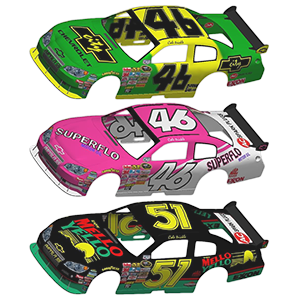
Mello Yello is a caffeinated, citrus-flavored soft drink produced and distributed by The Coca-Cola Company. It was introduced in 1979 to compete with PepsiCo’s Mountain Dew. There have been three flavored variants: Mello Yello Cherry was released in response to Mountain Dew Code Red, and the other two variants were Mello Yello Afterglow (peach-flavored) and Mello Yello Melon.
Mello Yello was featured in the 1990 NASCAR-based movie ‘Days Of Thunder,’ in which Tom Cruise’s character, Cole Trickle, drove a Mello Yello-sponsored car to victory in the Daytona 500, although the product name itself is never verbally mentioned in the movie. That livery went on to become a real NASCAR paint scheme the following year, when driver Kyle Petty drove with Mello Yello sponsorship in the Winston Cup Series.
Posted in Food, Money |
Leave a Comment »
December 14, 2011
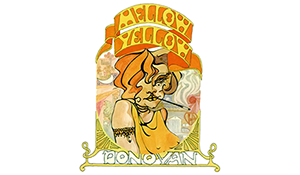
Bananadine is a fictional psychoactive substance which is supposedly extracted from banana peels. A hoax recipe for its ‘extraction’ from banana peel was originally published in 1967 in the ‘Berkeley Barb,’ an underground newspaper. It became more widely known when William Powell, believing it to be true, reproduced the method in ‘The Anarchist Cookbook’ in 1970 under the name ‘Musa sapientum Bananadine’ (referring to the banana’s old binomial nomenclature). The original hoax was designed to raise questions about the ethics of making psychoactive drugs illegal and prosecuting those who took them: ‘what if the common banana contained psychoactive properties, how would the government react?’
Researchers at New York University have found that banana peel contains no intoxicating chemicals, and that smoking it produces only a placebo effect. Over the years, there has been considerable speculation regarding the psychoactive properties of banana skins. Donovan’s hit single ‘Mellow Yellow’ was released a few months prior to the ‘Berkeley Barb’ article, and in the popular culture of the era, the song was assumed to be about smoking banana peels.
Posted in Drugs, Food, Humor |
Leave a Comment »
December 14, 2011
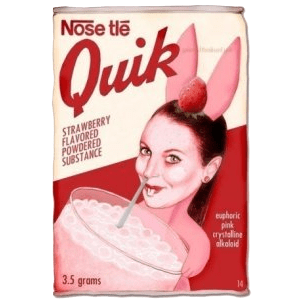
Strawberry Quik meth is a drug scare from 2007. Drug dealers were allegedly using coloring and flavoring to disguise methamphetamines as Strawberry Quik, thus making them more appealing to children. The story was widely reported in the media, but no cases of children using flavored meth have been verified.
Sometimes meth labs will try to brand their crystal meth product by coloring it in order to make it seem unique and to give it more market appeal. Police and drug enforcement officials have conjectured that the idea for ‘strawberry meth’ may have come from such a process.
Posted in Drugs |
Leave a Comment »



