November 30, 2011

A display hack is a computer program with similar purpose to a kaleidoscope: to make pretty pictures (symmetrical or otherwise). Famous display hacks include ‘munching squares’ and ‘smoking clover.’ Some display hacks can be also implemented by creating text files which contain numerous escape sequences for a text terminal to interpret. A famous example on the VT100 terminal displayed a Christmas tree, with twinkling lights and a toy train circling its base. The XScreenSaver software contains a large collection of X Window System and OpenGL display hacks.
Display hacks have a history of several decades. Arguably the first display hack was a program called Bouncing Ball on the Whirlwind computer in the early 1950s. The famous munching squares hack, on the other hand, originates in the PDP-1 computer in ca. 1962. Crack intros, display hacks programmed by software crackers for the home computers of the 1980s, evolved into what was to be known as demos and demo effects. The creation of demos later became a subculture of its own, now known as the demoscene.
Posted in Games, Technology |
Leave a Comment »
November 30, 2011

Generative art refers to art that has been generated, composed, or constructed in an algorithmic manner through the use of systems defined by computer software algorithms, or similar mathematical or mechanical or randomized autonomous processes.
Generative art is a system oriented art practice where the common denominator is the use of systems as a production method. To meet the definition of generative art, an artwork must be self-contained and operate with some degree of autonomy. The workings of systems in generative art might resemble, or rely on, various scientific theories such as Complexity science and Information theory. Continue reading →
Posted in Art, Technology |
Leave a Comment »
November 30, 2011

Steven Heller (b. 1950) is an American author, and editor who specializes on topics related to graphic design. He is author and co-author of many works on the history of illustration, typography, and many subjects related to graphic design. He has published more than eighty titles.
For thirty-three years Heller was a senior art director of ‘U&lc’ magazine, a publication devoted to typography. As of 2007, he is co-chair with Lita Talarico of the MFA Designer as Author program at the School of Visual Arts in New York City. He has collaborated on books with graphic designer, Louise Fili, who is his wife, as well as with others including the Design Dialogue series.
Posted in Art, Language, Money |
1 Comment »
November 30, 2011
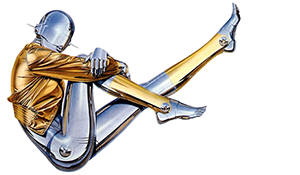

A gynoid refers to female robots. Android is a gender neutral term for humanoid robots, but which has male connotations. The term ‘gynoid’ was used by Gwyneth Jones in her 1985 novel ‘Divine Endurance’ to describe a robot slave in a futuristic China, that is judged by her beauty.
The tongue-in-cheek portmanteau ‘fembot’ (female robot) was used in the ‘Austin Powers films,’ a cultural play on the fembots originating in the TV series ‘The Bionic Woman.’ Robotess is the oldest gender-specific term, originating in 1921 from the same source as robot, a 1920 Czech play: ‘R.U.R. (Rossum’s Universal Robots).’
Continue reading →
Posted in Politics, Sex, Technology |
Leave a Comment »
November 30, 2011
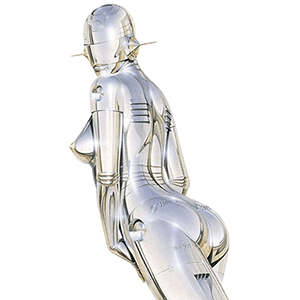
Hajime Sorayama (b.1947) is a Japanese illustrator, known for his precisely detailed, erotic airbrush portrayals of women and feminine robots. Sorayama’s work ‘Sexy Robot,’ published by Genko-sha in 1983, made his organic robotic forms famous around the world.
For the work, he used ideas from pin-up art, which in the book then appear as chrome-plated gynoids in suggestive poses. His next book, ‘Pin-up’ (1984), continues in the same line. A number of his other works similarly revolve around figures in suggestive poses, including highly realistic depictions in latex and leather. His pinups appeared frequently in the pages of ‘Penthouse’ magazine.
Posted in Art, Language, Technology |
1 Comment »
November 30, 2011
Nobukazu Takemura (b. 1968) is a Japanese musician whose style has run from jazz to house to drum and bass to chamber music to electronic glitch within less than a decade. Born in Osaka he became interested in punk and New Wave music when young. At high school, after a record store job that exposed him to Jazz and Hip hop, he had regular gigs as a battle DJ. In 1990, Takemura founded Audio Sports with Yamatsuka Eye (of The Boredoms) and Aki Onda. Their first album, ‘Era of Glittering Gas,’ was released in 1992 (after which Onda subsequently took control of the project), the same year as Takemura’s first solo album, under the name DJ Takemura. He has also released material with Spiritual Vibes (since 1993) and as Child’s View (since 1994). He is currently paired with Childisc vocalist/composer Aki Tsuyuko under the touring name of Assembler.
He founded the Lollop and Childisc labels; his voluminous releases, remixes, and collaborations make a comprehensive discography difficult, and his music often defies any easy categorization. He emerged in the US after the release of ‘Scope’ on the Thrill Jockey label in 1999, an album that features delicate melodies blossoming from oceans of white noise and staccato electronics. His unique and complex approach to melody and instrumentation has generated a catalog of collaborations with critically acclaimed artists including Issey Miyake, Zu, Steve Reich, DJ Spooky, Yo La Tengo, and Tortoise. Takemura was responsible for the sound design of Sony’s robotic dog AIBO.
Posted in Art, Technology, World |
Leave a Comment »
November 30, 2011

Roblog is a neologism for a blog written by a robot with no human intervention. Roblogs were made possible with a new generation of robots which are capable of uploading images and texts automatically to the Web. The first roblogs to appear, late 2005, were written by AIBO robots, the dog-like robotic pets once manufactured by Sony.
AIBO diaries are roblogs produced by AIBO model ERS-7, running a bundled software called Mind in either version 2 or 3. Depending on the language of the Mind software, the AIBO blogs in either English or Japanese. To be able to blog on its own, an ERS-7M2 or ERS-7M3 must be linked to the Internet through its Wi-Fi connection capability, and its e-mail sending capability must be correctly configured, for which an SMTP server not requiring authentication nor alternate ports is needed. Posts, consisting of pictures taken with the AIBO’s color camera built into its nose, are then sent by e-mail to the blog.
Posted in Humor, Technology |
Leave a Comment »
November 30, 2011

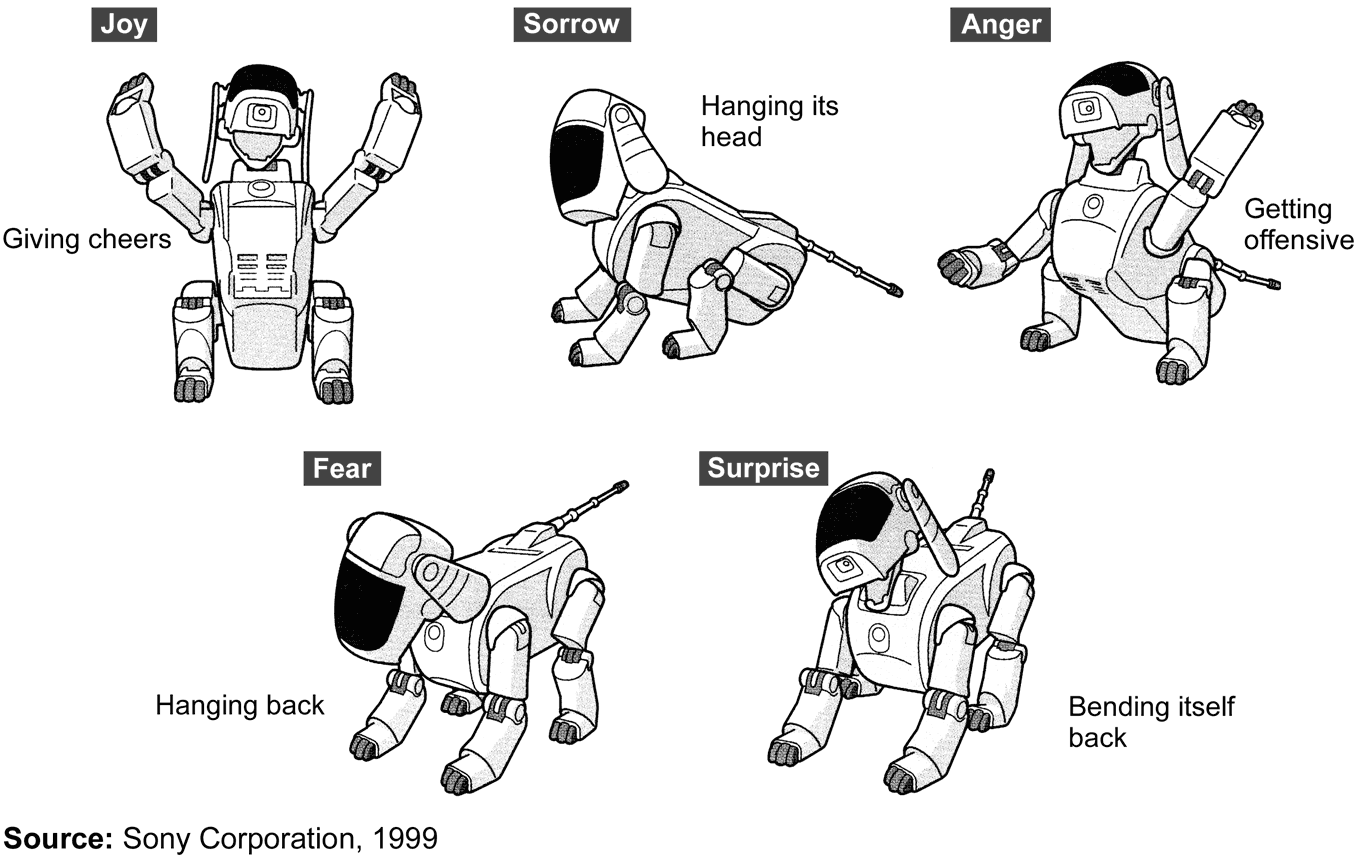
AIBO was one of several types of robotic pets designed and manufactured by Sony from 1999 to 2006. AIBO is able to walk, ‘see’ its environment via camera and recognize spoken commands in Spanish and English. AIBO are autonomous robots since they are able to learn and mature based on external stimuli from their owner, their environment, and from other AIBOs. Artist Hajime Sorayama created the initial designs for the AIBO. AIBO’s sounds were programmed by Japanese DJ/avant-garde composer Nobukazu Takemura. The International AIBO Convention takes place every year at Sony Robotics Tower in the Shinjuku prefecture.
AIBO runs AIBOware on a pink Memory Stick, which allows the robot to be raised from pup to fully grown adult while going through various stages of development as its owner interacts with it. AIBOware allows the owner to interact with a fully mature robot able to understand (though not necessarily willing to obey) 100 voice commands. Without the AIBOware, the AIBO will run in what is called ‘clinic mode’ and can only perform basic actions. Many AIBO owners enjoy teaching their pets new behaviors by reprogramming them in Sony’s special ‘R-CODE’ language. AIBO’s complete vision system uses the SIFT algorithm, to recognize its charging station. The newest versions are equipped with a Wi-Fi connection, allowing them to send the pictures they take via email which led to the Roblog.
Posted in Games, Money, Technology |
Leave a Comment »
November 30, 2011


In telecommunications, 4G is the fourth generation of cellular wireless standards. It is a successor to the 3G and 2G families of standards. Speed requirements for 4G service is 100 Mbit/s for high mobility communication (such as from trains and cars) and 1 Gbit/s for low mobility communication (such as pedestrians and stationary users). By comparison, 3G’s speed requirement is 200 kbit/s (0.2 Mbit/s). The International Telecommunication Union (ITU), an agency within the UN sets requirements for what is marketed as 4G. ITU recognized that current versions of LTE, WiMax and other evolved 3G technologies that do not fulfill the requirements could nevertheless be considered ‘4G,’ provided they represent ‘a substantial level of improvement in performance and capabilities with respect to the initial third generation systems now deployed.’
The nomenclature of the generations generally refers to a change in the fundamental nature of the service, non-backwards compatible transmission technology, higher spectral bandwidth and new frequency bands. New generations have appeared about every ten years since the first move from 1981 analog (1G) to digital (2G) transmission in 1992. This was followed, in 2001, by 3G multi-media support, spread spectrum transmission and at least 200 kbit/s, in 2011 expected to be followed by 4G, which refers to all-IP packet-switched networks, gigabit speed, and multi-carrier transmission.
Posted in Money, Technology, World |
Leave a Comment »
November 30, 2011

Neville Brody (b. 1957) is an English graphic designer and typographer. He is an alumnus of the London College of Printing and Hornsey College of Art, and is known for his work on ‘The Face’ magazine (1981–1986) and ‘Arena’ magazine (1987–1990), as well as for designing record covers for artists such as Cabaret Voltaire and Depeche Mode. He created the company Research Studios in 1994 and is a founding member of Fontworks. In 2011 he headed the Communication Art & Design department at the Royal College of Art.
As an undergraduate, his tutors often condemned his work as ‘Uncommercial,’ often putting a heavy emphasis on safe and tested economic strategies, as opposed to experimentation. By 1977 punk rock was beginning to have a major effect upon London life and Brody’s work and motivation, which was not well received by his tutors. At one point he was almost thrown out of the college for putting the Queen’s head sideways on a postage stamp design. He did, however, get the chance to design posters for student concerts at the college, most notably for Pere Ubu, supported by The Human League. His first-year thesis had been based around a comparison between Dadaism and pop art.
Posted in Art, Money |
1 Comment »
November 30, 2011

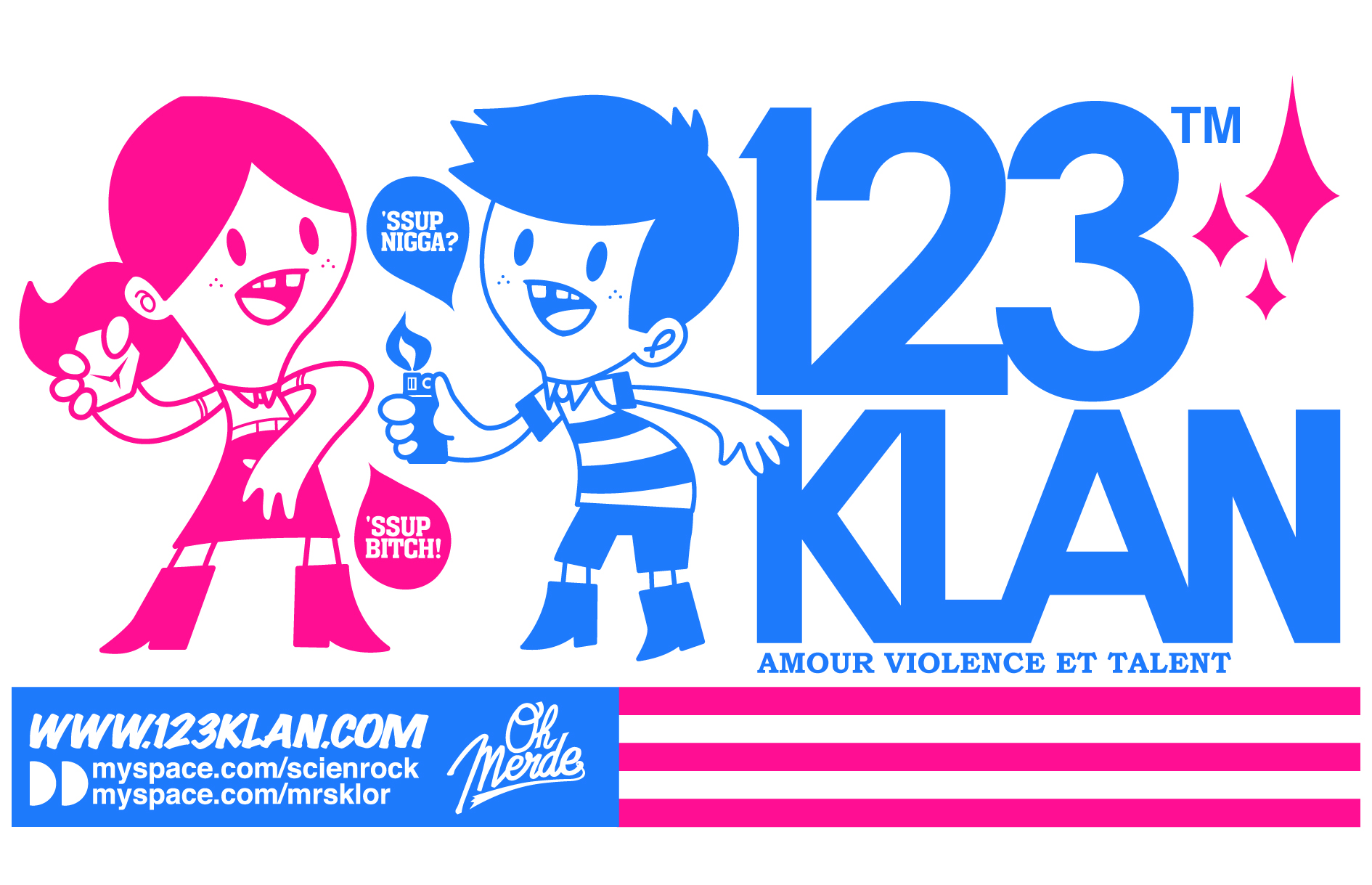
123Klan is a French graffiti crew, founded in 1992 by husband and wife Scien and Klor. Since 1994 the crew have also worked in graphic design, inspired by the work of English graphic designer Neville Brody, and started to apply it to their graffiti (and vice versa). They describe their art as ‘when street knowledge meets technology and graffiti melds with graphic design.’
Scien has said, ‘The great thing about graffiti is its impact on the streets. But most of people don’t like graffiti, simply because they don’t understand it. In a city you have probably less graffiti than advertising, and most of it is certainly uglier than certain graffiti pieces – so to come up with something that gets an impact on people in this visual jungle, it is a real challenge.’
Posted in Art, Money, Politics |
Leave a Comment »
November 30, 2011
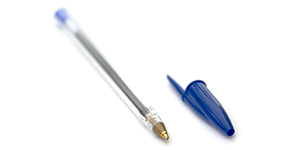

Société Bic (pronounced ‘Bick’ in English) is a company based in Clichy, France, founded in 1945, by Baron Marcel Bich known for making disposable products including lighters, ballpoint pens, and shaving razors; they also manufacture magnets and watersports products including surfboards, kayaks, and dinghies.
The Bic pen, more correctly the Bic Cristal, was the company’s first product and 50 years later is still synonymous with the name Bic. The company’s US subsidiary accounts for more than half of the worldwide company’s sales.
Posted in Games, Money |
Leave a Comment »