September 7, 2011

Mountainboarding is a well established, if little-known extreme sport, derived from snowboarding. A mountainboard is made up of components including a deck, bindings to secure the rider to the deck, four wheels with pneumatic tires, and two steering mechanisms known as trucks.
Mountainboarders ride specifically designed boardercross tracks, slopestyle parks, grass hills, woodlands, gravel tracks, streets, skateparks, ski resorts, BMX courses and mountain bike trails. It is this ability to ride such a variety of terrain that separates mountainboarding from other board sports.
Continue reading →
Posted in Games, Technology |
Leave a Comment »
September 7, 2011
Bubblegum is a type of elastic chewing gum, designed to be blown out of the mouth as a bubble. A 23-inch bubble blown by Susan Montgomery Williams of California in 1996 holds the Guinness World Record for largest bubble blown. Bubble gum was invented by Walter Diemer in 1928. Diemer was working as an accountant for the Fleer Chewing Gum Company in Philadelphia. In his spare time, he experimented with a new gum recipes. The gum he invented was less sticky than regular chewing gum, and stretched more easily. He sold his gum under the name Dubble Bubble in 1928. Original bubble gum was pink because that was the only dye Diemer had on hand at the time.
Bubblegum is available in many different colors and flavors. ‘Bubblegum flavor’ is the taste of the plain gum, an d it is made from synthetic chemicals, such as ethyl methylphenylglycidate, isoamyl acetate and others, and fruit extracts, the true ingredients being kept a mystery to customers. When blended, the chemicals and extracts fuse together to make a sweet, palatable flavor. Other flavors also include strawberry, apple, cherry, watermelon, cinnamon, banana, and grape. Strawberry and banana can be achieved with isoamyl acetate limonene and ethyl methylphenylglycidate, respectively. Malic acid can be used for apple flavor, allyl hexanoate for pineapple, ethyl propionate for fruit punch, cinnamic aldehyde for cinnamon, and acetophenone for cherry.
Posted in Food, Money |
Leave a Comment »
September 7, 2011

The cherimoya [cher-uh-moi-uh] is a species of Annona (also known as a sugar-apple) native to the Andean-highland valleys of Peru, Ecuador, Colombia, Chile, Bolivia, and Argentina. The fruit is oval, often slightly oblate, with a smooth or slightly tuberculated skin. The fruit flesh is white and creamy, and has numerous dark brown seeds embedded in it. Mark Twain called the cherimoya ‘the most delicious fruit known to men.’
The Moche culture of Peru had a fascination with agriculture and represented fruits and vegetables in their art. Cherimoyas were often depicted in their ceramics. The name originates from the Quechua word chirimuya, which means ‘cold seeds,’ because the plant grows at high altitudes. The tree thrives throughout the tropics at altitudes of 1,300 to 2,600 m (4,300 to 8,500 ft). Though sensitive to frost, it must have periods of cool temperatures or the tree will gradually go dormant. The indigenous inhabitants of the Andes say that although the cherimoya cannot stand snow, it does like to see it in the distance.
Continue reading →
Posted in Food, World |
1 Comment »
September 6, 2011
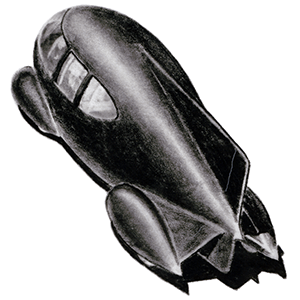
Norman Bel Geddes [bel-ged-eez] (1893 – 1958) was an American theatrical and industrial designer who focused on aerodynamics. His book ‘Horizons’ (1932) had a significant impact: ‘By popularizing streamlining when only a few engineers were considering its functional use, he made possible the design style of the thirties.’
He designed the General Motors Pavilion, known as Futurama, for the 1939 New York World’s Fair. For that famous and enormously influential installation, Bel Geddes exploited his earlier work in the same vein: he had designed a “Metropolis City of 1960′ in 1936. Continue reading →
Posted in Art, Technology |
Leave a Comment »
September 6, 2011

Tanning addiction is a rare syndrome where an individual appears to have a physical and/or psychological addiction to sunbathing or the use of tanning beds.In 2005, a group of dermatologists published a study showing that frequent tanners experience a loss of control over their tanning schedule, displaying a pattern of addiction similar to smokers and alcoholics. Biochemical evidence indicates that tanning addicts are addicted to an opioid release experienced during tanning. When frequent tanners took an endorphin blocker in a 2006 study, they experienced severe withdrawal symptoms, while infrequent tanners experienced no withdrawal symptoms under the same conditions.
Although the syndrome has not been officially described by the medical community, it may include the following reported symptoms: intense anxiety if a session of tanning is missed, competition among peers to see which can get the darkest tan, and chronic frustration about the color of one’s skin, with the affected person being convinced his or her complexion is constantly lighter than it actually is. Continue reading →
Posted in Health, Language |
1 Comment »
September 6, 2011

Slip-Slop-Slap is the name of a health campaign in Australia exhorting people to ‘slip on a shirt, slop on sunscreen, and slap on a hat’ when they go out into the sun, in order to protect themselves against an increased risk of skin cancer. ‘Seek shade’ and ‘Slide on some sunglasses’ was added a year later. It is probably Australia’s most recognizable health message. The campaign started in 1981; its mascot is a seagull called Sid. It is also used in New Zealand, where the mascot is a lobster, and some Canadian cities have also started their own Slip-Slop-Slap campaigns.
Since the campaign was introduced along with advertisements and a jingle, the incidence of the two most common forms of skin cancer (basal and squamous cell carcinoma) in Australia has decreased. However, the incidence of melanoma – the most lethal form of skin cancer – has increased. An epidimological study published in 2002 concluded that skin cancer increases could not be associated with the use of sun creams, and recommended continued use of the current campaigns as a means to reduce melanoma risk. Vitamin D deficiency has also greatly increased (which can lead to cancers, since sunblock also prevents vitamin D production in the skin. Doctors recommend spending small amounts of time in the sun without sun protection to ensure adequate production of vitamin D.
Posted in Health, Politics, World |
Leave a Comment »
September 6, 2011

Unlike sunscreen but like tanning oil, indoor tanning lotions accelerate the tanning process, by promoting the production of melanin or by increasing blood flow to the skin, thereby increasing the amount of melanin that is brought to the top layers of the skin.
Indoor tanning lotions contain no sunscreen and offer no protection from the sun.
Continue reading →
Posted in Health, Money |
Leave a Comment »
September 6, 2011


Sunscreen (also known as sunblock) is a lotion, spray or other topical product that helps protect the skin from the sun’s ultraviolet (UV) radiation, and which reduces sunburn and other skin damage, with the goal of lowering the risk of skin cancer. However in the United States, the term suntan lotion usually means the opposite of sunscreen, and instead refers to lotion designed to moisturize and maximize UV exposure and tanning rather than block it. These are commonly called indoor tanning lotions when designed for use with tanning beds or just suntan lotion if designed for outdoor use and may or may not have SPF protection in them.
The most effective sunscreens protect against both UVB, which can cause sunburn, and UVA, which damages the skin with more long-term effects, such as premature skin aging. Most sunscreens work by containing either an organic chemical compound that absorbs ultraviolet light (such as oxybenzone) or an opaque material that reflects light (such as titanium dioxide, zinc oxide), or a combination of both. Typically, absorptive materials are referred to as chemical blocks, whereas opaque materials are mineral or physical blocks. The sun protection factor (SPF) of a sunscreen is a laboratory measure of the effectiveness of sunscreen — the higher the SPF, the more protection a sunscreen offers against UVB.
Continue reading →
Posted in Health, Politics, Technology |
Leave a Comment »
August 30, 2011

The term anal retentive, commonly abbreviated to anal, is used conversationally to describe a person who pays such attention to detail that the obsession becomes an annoyance to others, and can be carried out to the detriment of the anal-retentive person. The term derives from Freudian psychoanalysis. People who are said to be anal retentive usually suffer from obsessive–compulsive personality disorder. In the psychology of Freud, the anal stage is said to follow the oral stage of infant or early-childhood development. This is a time when an infant’s attention moves from oral stimulation to anal stimulation (usually the bowels but occasionally the bladder), usually synchronous with learning to control his or her excretory functions, a time of toilet training.
Freud theorized that children who experience conflicts during this period of time may develop ‘anal’ personality traits, namely those associated with a child’s efforts at excretory control: orderliness, stubbornness, a compulsion for control. If these qualities continue into later life, the person is said to be ‘anal retentive.’ Conversely, those who reject anal characteristics are said to have ‘anal expulsive’ personality types. Although Freud’s theories on early childhood have been influential on the psychological community, research suggests that the overall pattern of parental attitudes has a much more concrete effect on how an infant will grow up. There is no conclusive research linking anal stage conflicts with ‘anal’ personality types.
Posted in Health, Language |
Leave a Comment »
August 26, 2011

The Venus Project is an organization that advocates American futurist Jacque Fresco’s visions of the future with the aim of improving society by moving towards a global sustainable social design that they call a ‘resource-based economy.’ Such a system incorporates sustainable cities and values, energy efficiency, collective farms, natural resource management and advanced automation, focusing on the benefits they claim it will bring to humanity.
The name of the organization originates from Venus, Florida, where its research center is located, near Lake Okeechobee. Within the center are ten buildings, designed by Fresco, which showcase the architecture of the project.
Continue reading →
Posted in Money, Politics, Technology |
Leave a Comment »
August 26, 2011

The matching hypothesis is a popular psychology and social psychology theory, proposed by Elaine Hatfield and her colleagues in 1966, which suggests why people become attracted to their partner. It claims that people are more likely to form long standing relationships with someone who is as equally physically attractive as they are. This is influenced by realistic choices, desire of the match and good probability of obtaining the date.
In successful couples in which the partners differ greatly in physical attractiveness, it is likely that the less attractive partner has compensating qualities to offer. For instance, some men with wealth and status desire younger, more attractive women, and some women are more likely to overlook physical attractiveness for men who possess wealth and status.
Continue reading →
Posted in Science, Sex |
1 Comment »
August 26, 2011
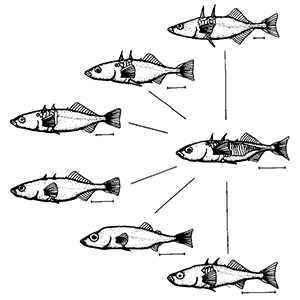
Assortative mating is the phenomenon where a sexually reproducing organism chooses to mate with individuals that are similar (positive assortative mating) or dissimilar (negative assortative mating) to itself in some specific manner. In evolution, these two types of assortative mating have the effect, respectively, of increasing or reducing the range of variation (trait variance), when the assorting is cued on heritable traits. Positive assortative mating, therefore, results in disruptive natural selection, and negative assortative mating results in stabilized natural selection.
Assortative mating has been invoked to explain sympatric speciation (the process through which new species evolve from a single ancestral species while inhabiting the same geographic region). For some populations there are two different resources for which different phenotypes (genetic traits) are optimum. Intermediates between these two phenotypes are less favorable. It is then favorable if the organisms can recognize mates that are optimized for the same resources as they are themselves. If mutations that make such recognition possible appear, these will be selected for.
Continue reading →
Posted in Health, Science, Sex |
Leave a Comment »