July 1, 2018
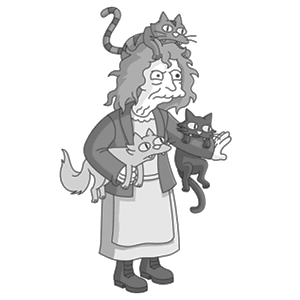
A cat lady is a cultural archetype or a stock character, often depicted as a woman, a middle-aged or elderly spinster, who owns many pet cats. The term can be considered pejorative, though it is sometimes embraced.
A cat lady may also be an animal hoarder who keeps large numbers of cats without having the ability to properly house or care for them. They may be ignorant about their situation, or generally unaware of their situation. People who are aware of it are not normally considered cat ladies. Continue reading →
Posted in Health, Humor |
Leave a Comment »
June 27, 2018
Boom bap is a style of production in hip-hop music. The term is an onomatopoeia for the drum sounds prominent in the 90’s East Coast hip hop. The style is famous for its hard bass drum and snare drum.
In a typical ‘boom bap’ beat, the snare drum comes in on beats two and four of a four-beat measure, while the bass drum appears on the first and third beat. Prominent hip-hop artists that incorporated ‘boom bap’ in their music include Nas, Eminem, the Wu-Tang Clan, and 2Pac.
Posted in Art |
Leave a Comment »
June 7, 2018
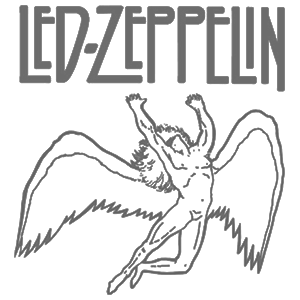
The swan song is a metaphorical phrase for a final gesture, effort, or performance given just before death or retirement. The phrase refers to an ancient belief that swans sing a beautiful song just before their death, having been silent (or alternatively, not so musical) during most of their lifetime. This belief, whose basis in actuality is long-debated, had become proverbial in ancient Greece by the 3rd century BCE, and was reiterated many times in later Western poetry and art.
In Greek mythology, the swan was a bird consecrated to Apollo and was therefore considered a symbol of harmony and beauty. Continue reading →
Posted in Art, Death, Language |
Leave a Comment »
May 29, 2018

Trust, but verify is a Russian proverb that became well known in English when used by President Ronald Reagan on multiple occasions in the context of nuclear disarmament.
Suzanne Massie, an American author living in Russia, met with President Ronald Reagan many times between 1984 and 1987. She taught him the proverb, advising him that ‘The Russians like to talk in proverbs. It would be nice of you to know a few. You are an actor – you can learn them very quickly.’ The proverb was adopted as a signature phrase by Reagan, who subsequently used it frequently when discussing U.S. relations with the Soviet Union. Using proverbs that the Russians could relate to may have helped relations between the two leaders. Continue reading →
Posted in Language, War, World |
1 Comment »
May 22, 2018

Mezcal (lit. ‘oven-cooked agave’) is a distilled alcoholic beverage made from any type of agave plant native to Mexico. Agave, which is often misidentified as a variety of cactus, grows in many parts of Mexico, though most mezcal is made in Oaxaca, a southern state. A Oaxacan expression regarding the drink is: ‘Para todo mal, mezcal, y para todo bien, también.’ (‘For everything bad, mezcal, and for everything good as well.’)
It is unclear whether distilled drinks were produced in Mexico before the Spanish Conquest. The Spaniards were introduced to native fermented drinks such as pulque, a milky-looking, alcoholic beverage made from the fermented sap of the maguey plant (also known as agave americana). Soon, the conquistadors began experimenting with the agave plant to find a way to make a distillable fermented mash. The result was mezcal. Continue reading →
Posted in Food, World |
Leave a Comment »
May 15, 2018

Wearing socks and sandals together is a controversial fashion combination and social phenomenon that is discussed in various countries and cultures. In some places it is considered a fashion faux pas.
The earliest evidence of wearing socks and sandals is documented at an archaeological site in England. The discovery suggests that old Romans wore socks with sandals at least 2,000 years ago. The earliest known surviving pair of socks were designed for use with sandals. Dating from 300–500, they were excavated from Oxyrhynchus on the Nile in Egypt. Continue reading →
Posted in Art |
Leave a Comment »
May 8, 2018
Flower power was a slogan used during the late 1960s and early 1970s as a symbol of passive resistance and non-violence ideology. It is rooted in the opposition movement to the Vietnam War. The expression was coined by the American beat poet Allen Ginsberg in 1965 as a means to transform war protests into peaceful affirmative spectacles.
Hippies embraced the symbolism by dressing in clothing with embroidered flowers and vibrant colors, wearing flowers in their hair, and distributing flowers to the public, becoming known as ‘flower children.’ The term later became generalized as a modern reference to the hippie movement and the so-called counterculture of drugs, psychedelic music, psychedelic art, and social permissiveness. Continue reading →
Posted in Philosophy, Politics, War |
1 Comment »
April 30, 2018
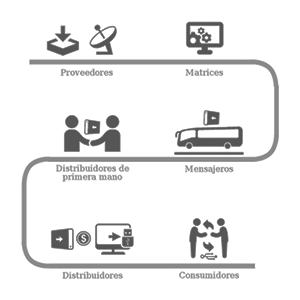
Sneakernet is an informal term for the transfer of electronic information by physically moving media such as magnetic tape, floppy disks, compact discs, USB flash drives or external hard drives from one computer to another; rather than transmitting the information over a computer network. The term, a tongue-in-cheek play on net(work) as in Internet or Ethernet, refers to walking in sneakers as the transport mechanism for the data.
Also known as trainnets or pigeonets, these types of physically mediated networks are in use throughout the world. Sneakernets are used when data transfer is impractical due to bandwidth limitations or other reasons such as data security. This form of data transfer is also used for peer-to-peer (or friend-to-friend) file sharing and has grown in popularity in metropolitan areas and college communities. The ease of this system has been facilitated by the availability of USB external hard drives, USB flash drives and portable music players. Continue reading →
Posted in Technology, World |
Leave a Comment »
April 21, 2018
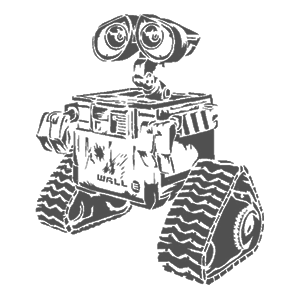
Ben Burtt (b. 1948) is an American sound designer, film editor, director, screenwriter, and voice actor. As a sound designer, his credits include the ‘Star Wars’ and ‘Indiana Jones’ film series, ‘Invasion of the Body Snatchers’ (1978), ‘E.T. the Extra-Terrestrial’ (1982), ‘WALL-E’ (2008), and ‘Star Trek’ (2009).
Burtt is notable for popularizing the ‘Wilhelm scream’ in-joke and creating many of the iconic sound effects heard in the ‘Star Wars’ film franchise, including the ‘voice’ of R2-D2, the lightsaber hum, the sound of the blaster guns, and the heavy-breathing sound of Darth Vader. Burtt was also the sound editor for ‘WALL-E’ and performed the vocalizations of the titular character as well as other robots in the film. Continue reading →
Posted in Art, Technology |
Leave a Comment »
April 19, 2018
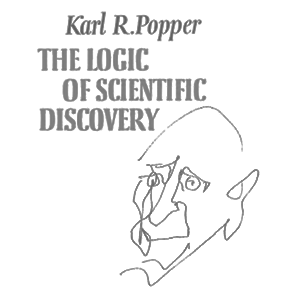
A statement, hypothesis, or theory has falsifiability or refutability if there is the possibility of showing it to be false. It is falsifiable if it is possible to conceive an empirical observation which could refute it. For example, the universal generalization that All swans are white is falsifiable since it is logically possible to falsify it by observing a single swan that is not white.
The concern with falsifiability gained attention by way of philosopher of science Karl Popper’s scientific epistemology referred to as ‘falsificationism.’ Popper stresses the problem of ‘demarcation’—distinguishing the scientific from the unscientific—and makes falsifiability the demarcation criterion, such that what is unfalsifiable is classified as unscientific, and the practice of declaring an unfalsifiable theory to be scientifically true is pseudoscience. Continue reading →
Posted in Philosophy, Science |
Leave a Comment »
April 14, 2018
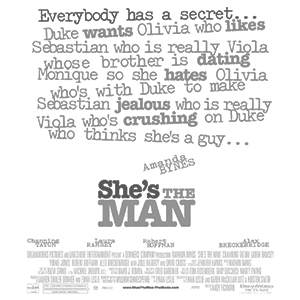
‘Twelfth Night, or ‘What You Will” is a comedy by William Shakespeare, believed to have been written around 1601–02 for a festival marking the close of the Christmas season, on the twelfth night after Christmas Day, called the Eve of the Feast of Epiphany. The play centers on the twins Viola and Sebastian, who are separated in a shipwreck. Viola (who disguises herself as Cesario) falls in love with Duke Orsino, who in turn is in love with the Countess Olivia. Upon meeting Viola, Countess Olivia falls in love with her thinking she is a man.
The play expanded on the musical interludes and riotous disorder expected of the occasion, with plot elements drawn from the short story ‘Of Apollonius and Silla’ by English author Barnabe Rich, based on a story by Italian writer Matteo Bandello. Continue reading →
Posted in Art |
Leave a Comment »
April 6, 2018
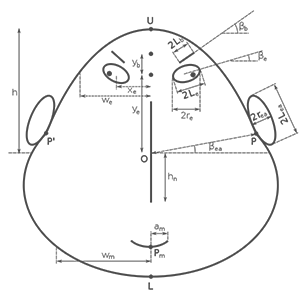
Chernoff faces, invented by American statistician Herman Chernoff in 1973, display multivariate data in the shape of a human face. The individual parts, such as eyes, ears, mouth and nose represent values of the variables by their shape, size, placement and orientation.
The idea behind using faces is that humans easily recognize faces and notice small changes without difficulty. Chernoff faces handle each variable differently. Because the features of the faces vary in perceived importance, the way in which variables are mapped to the features should be carefully chosen (e.g. eye size and eyebrow-slant have been found to carry significant weight). Continue reading →
Posted in Humor, Science |
Leave a Comment »


 The Daily Omnivore