
Gregory Crewdson (b. 1962) is an American photographer who is best known for elaborately staged, surreal scenes of American homes and neighborhoods.
Everything is Interesting
Gregory Crewdson (b. 1962) is an American photographer who is best known for elaborately staged, surreal scenes of American homes and neighborhoods.

Eve teasing is a euphemism used in India for public sexual harassment, street harassment or molestation of women by men, with Eve being a reference to the biblical Eve. It is a form of sexual aggression that ranges in severity from sexually suggestive remarks, brushing in public places, catcalls, to outright groping.
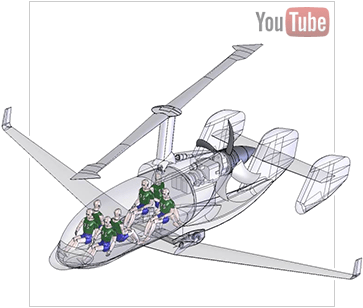
The CarterCopter is an experimental compound autogyro developed by Carter Aviation Technologies to demonstrate slowed rotor technology. In 2005, the CarterCopter became the first rotorcraft to achieve μ-1, an equal ratio of airspeed to rotor tip speed. The prototype has a top speed of about 173 mph. A helicopter requires twice as much power to maintain that velocity.

Balkanization [bawl-kuhn-uh-zey-shuhn] is a geopolitical term originally used to describe the process of fragmentation or division of a region or state into smaller regions or states that are often hostile or non-cooperative with each other. The term arose from conflicts in the 20th century Balkans. While what is now termed Balkanization has occurred throughout history, the term originally described the creation of smaller, ethnically diverse states following the breakup of the Ottoman Empire after World War I.
The term is also used to describe other forms of disintegration, including, for instance, the subdivision of the Internet into separate enclaves, the division of subfields and the creation of new fields from sociology, and the breakdown of cooperative arrangements due to the rise of independent competitive entities.

A sun dog (scientific name parhelion; also called a mock sun) is an atmospheric phenomenon that creates bright spots of light in the sky, often on a luminous ring or halo on either side of the sun. Sun dogs may appear as a colored patch of light to the left or right of the sun, 22° distant and at the same distance above the horizon as the sun, and in ice halos. They can be seen anywhere in the world during any season, but they are not always obvious or bright.

The technological singularity is the theoretical emergence of greater-than-human superintelligence through technological means. Since the capabilities of such intelligence would be difficult for an unaided human mind to comprehend, the occurrence of a technological singularity is seen as an intellectual event horizon, beyond which events cannot be predicted or understood.
Proponents of the singularity typically state that an ‘intelligence explosion,’ where superintelligences design successive generations of increasingly powerful minds, might occur very quickly and might not stop until the agent’s cognitive abilities greatly surpass that of any human. The term was popularized by astrophysicist and science fiction writer Vernor Vinge, who argues that artificial intelligence, human biological enhancement, or brain-computer interfaces could be possible causes of the singularity. Continue reading

In publishing and graphic design, lorem ipsum is the name given to commonly used placeholder text (filler text) to demonstrate the graphic elements of a document or visual presentation, such as font, typography, and layout. The lorem ipsum text, which is typically a nonsensical list of semi-Latin words, is an edited version of a Latin text by Cicero, with words/letters omitted and others inserted, but not proper Latin
Even though using ‘lorem ipsum’ often arouses curiosity because of its resemblance to classical Latin, it is not intended to have meaning. Where text is visible in a document, people tend to focus on the textual content rather than upon overall presentation, so publishers use lorem ipsum when displaying a typeface or design elements and page layout in order to direct the focus to the publication style and not the meaning of the text.

Sir Joseph Wilson Swan was a British physicist and chemist, most famous for the invention of the incandescent light bulb. Swan received a patent for his device in 1878, about a year before Thomas Edison. His house was the first in the world to be lit by a light bulb.

Baader-Meinhof is the phenomenon where one happens upon some obscure piece of information– often an unfamiliar word or name– and soon afterwards encounters the same subject again, often repeatedly. The phenomenon bears some similarity to synchronicity, which is the experience of having a highly meaningful coincidence… such as having someone telephone you while you are thinking about them. How the phenomenon came to be known as ‘Baader-Meinhof’ is uncertain. It seems likely that some individual learned of the existence of the historic German urban guerrilla group which went by that name, and then heard the name again soon afterwards.

Kaya is a coconut jam made from coconut milk, eggs flavored by pandan leaf, and sugar. The spread originated in Southeast Asia, most likely Indonesia or Malaysia. Kaya is sweet and creamy, available as a golden brown or green colored spread depending on the amount of pandan and extent of caramelization of the sugar. As with other jams, kaya is typically spread on toast to make kaya toast and eaten in the morning but is enjoyed throughout the day.

An impossible object (also known as an impossible figure or an undecidable figure) is a type of optical illusion consisting of a two-dimensional figure which is instantly and unconsciously interpreted by the visual system as representing a projection of a three-dimensional object although it is not actually possible for such an object to exist.

An effect whereby the perception of positive qualities in one thing or part gives rise to the perception of similar qualities in related things or in the whole. An example of the halo effect would be judging a good-looking person as more intelligent. The term is commonly used in human resources recruitment. It refers to the risk that an interviewer will notice a positive trait in an interviewee and, as a result, will overlook their negative traits.


 The Daily Omnivore