July 11, 2010

PF Flyers are a brand of athletic shoes first produced by BF Goodrich in 1937.
New Balance bought the rights to the brand in 2001 (which had been dormant) and resurrected it in 2003. They are very similar to Chuck Taylor All-Stars, which were first manufactured by Converse in 1917.
Posted in Games, Money |
1 Comment »
July 11, 2010

Specified risk material is tissues of ruminant animals that cannot be inspected and passed for human food because they contain high concentrations of prions (proteinaceous infectious particle, an infectious agent composed primarily of protein), which cause mad cow and other diseases. These tissues include brains, eyes, spinal cord, and other organs, but the exact definition varies by jurisdiction.
Posted in Food, Health, Science |
Leave a Comment »
July 11, 2010


Mechanically separated meat also known as mechanically recovered/reclaimed meat, is a paste-like meat product produced by forcing beef, pork, turkey or chicken bones, with attached edible meat, under high pressure through a sieve or similar device to separate the bone from the edible meat tissue.
Mechanically separated meat has been used in certain meat and meat products since the late 1960s, particularly in hot dogs. This product can be contrasted with meat extracted by advanced meat recovery systems, a newer method that shaves the last traces of meat from bone.
Posted in Food, Health, Technology |
Leave a Comment »
July 11, 2010

Baijiu is a Chinese liquor made from distilled sorghum, a tropical grass, or other grains. The name baijiu literally means ‘white liquor’ or ‘white spirit,’ and it is generally about 80 to 120 proof, or 40-60% alcohol by volume (ABV). Because of its clarity, baijiu can appear similar to several other liquors, but generally has a significantly higher ABV than, for example, vodka (35-50%), Japanese shōchū (25%), or Korean soju (20-45%), and its flavour is distinctive and unique. In 2008 baijiu was the world’s most consumed spirit, with annual sales of 520 million 9-liter cases compared to vodka with 497 million 9-liter cases.
Wuliangye is the most popular brand, followed by Maotai.
Posted in Drugs, Food, World |
Leave a Comment »
July 9, 2010

Anosognosia [ah-no-sohg-no-see-ah] is a condition in which a disabled person seems unaware of or denies the existence of his or her disability. This may include unawareness of quite dramatic impairments, such as blindness or paralysis. It was first named by neurologist Joseph Babinski in 1914, although relatively little has been discovered about the cause of the condition since its initial identification. The word comes from the Greek words “nosos” disease and “gnosis” knowledge.
Posted in Health |
Leave a Comment »
July 9, 2010

Blek le Rat was born Xavier Prou in Paris in 1952.
He is considered by many the godfather of stencil graffiti art. He began his artwork in 1981, painting stencils of rats on the street walls of Paris, describing the rat as ‘the only free animal in the city,’ and one which ‘spreads the plague everywhere, just like street art.’ His name originates from a childhood cartoon ‘Blek le Roc,’ using ‘rat’ as an anagram for ‘art.’
Continue reading →
Posted in Art, World |
Leave a Comment »
July 9, 2010

Banksy is the pseudonym of a prolific British grafiti artist whose identity is still unknown. His artworks are often satirical pieces on topics such as politics, culture, and ethics. His street art, which combines graffiti writing and stenciling has been compared to Parisian graffiti artist Blek le Rat and members of the punk band Crass who maintained a graffiti stencil campaign on the London subway system in the late 1970s and early 1980s.
Banksy’s art has appeared in cities around the world. Art auctioneers have been known to attempt to sell his street art on location and leave the problem of its removal in the hands of the winning bidder. Banksy’s first film, Exit Through the Gift Shop, made its debut at the 2010 Sundance Film Festival.
Posted in Art, Humor, Politics |
Leave a Comment »
June 30, 2010
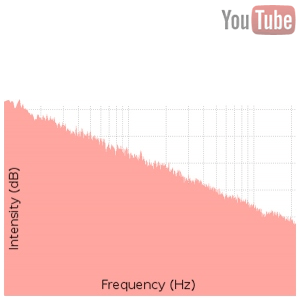
White noise is an audio signal that contains all the frequencies audible to the human ear. It is analogous to white light, which contains all the light frequencies visible to the human eye. Pink noise is a signal that is louder at low frequencies and decreases at a constant rate. It is sometimes referred to as flicker noise particularly, when it describes background noise emitted by an electronic device.
Pink noise is used to make music, sound effects, or merely as a pleasant background sound and is reported to sound more like the ocean than white noise (which is often compared to the sound of rainfall or TV static) because of its bias towards lower frequencies. Other colors of noise include: brown, blue, violet, and grey.
Posted in Science, Technology |
Leave a Comment »
June 30, 2010

The burpee is a full body exercise used in strength and aerobic training. It is performed in four steps: 1) Begin in a standing position; 2) Drop into a squat position with your hands on the ground; 3) Kick your feet back, while keeping your arms extended; and 4) Immediately return your feet to the squat position. The athlete then stands up from squat position and repeats the procedure. There are many variants of the burpee such as the ‘Burpee push up’ (the athlete performs one push-ups after assuming the plank position); ‘Jump up Burpee’ (the athlete jumps up as high as they can in at the end of the movement and before beginning the next Burpee); and the ‘Long-jump burpee’ (the athlete jumps forward, not upward). For the ‘Burpee Mile,’ the athlete performs the Burpee exercise, then performs a Standing long jump. This sequence is repeated until the athlete has traveled one mile.
According to Oxford Dictionaries Online, the exercise was named in the 1930s for American physiologist Royal H. Burpee, who developed the Burpee test. He earned a PhD in Applied Physiology from Columbia University in 1940 and created the exercise as part of his PhD thesis as a quick and simple way to assess fitness. The exercise was popularized when the United States Armed Services adopted it as a way to assess the fitness level of recruits in WWII. Consisting of a series of the exercises performed in rapid succession, the test was meant to be a quick measure of agility, coordination and strength.
Posted in Games, Health |
Leave a Comment »
June 30, 2010

The Q Score is a measurement of the familiarity and appeal of a brand, company, celebrity, or television show, used in the United States. The higher the Q Score, the more highly-regarded the item or person is among the group that is familiar with them. Q Scores and other variants are primarily used by the media, marketing, advertising and public relations industries. The Q score metric was developed by Marketing Evaluations, Inc., which uses an annual survey of mail panelists making up a representative sample of the United States to determine a ‘quotient’ (‘Q’) factor or score.
Perenial high scores are associated with Will Smith, Tom Hanks, Denzel Washington, Julia Roberts, and Johnny Depp, while low to negative scores are common for Don Imus, Paris Hilton, Snoop Dogg, Nicole Richie, and Howard Stern.
Posted in Money |
Leave a Comment »
June 30, 2010

A shibboleth [shib-uh-lith] is any distinguishing practice that is indicative of one’s social or regional origin. It usually refers to features of language, and particularly to a word whose pronunciation identifies its speaker as being a member or not a member of a particular group. But, shibboleths can also be customs or practices, such as male circumcision.
Shibboleths have been used by different subcultures throughout the world at different times. For example, during the Battle of the Bulge, American soldiers used knowledge of baseball to determine if others were fellow Americans or if they were German infiltrators in American uniform. Some US soldiers in the Pacific theater used the word ‘lollapalooza’ as a shibboleth to verbally test people who were hiding and unidentified, on the premise that Japanese people often pronounce the letter L as R.
Posted in Language, World |
Leave a Comment »
June 30, 2010

Simple English Wikipedia is an English edition of the online encyclopedia Wikipedia, primarily written in Basic English (an 850-word auxiliary language created by Charles Kay Ogden in the 1920s for learning English as a second language) and Special English (avoids idioms; created in 1959 and still presented daily by the Voice of America broadcast). Launched in 2003, the site has the stated aim of providing an encyclopedia for ‘people with different needs, such as students, children, adults with learning difficulties and people who are trying to learn English.’
Articles on the Simple English Wikipedia are usually shorter than their English Wikipedia counterparts, typically presenting only basic information: Tim Dowling of ‘the Guardian’ newspaper explained that ‘the Simple English version tends to stick to commonly accepted facts.’ The interface is also more simply labeled; for instance, the ‘Random article’ link on the English Wikipedia is replaced with a ‘Show Any Page’ link; users are invited to ‘change’ rather than ‘edit’ pages; clicking on a red link shows a ‘not yet started’ message rather than the usual ‘page does not exist.’
Posted in Education, Language, Technology |
Leave a Comment »





