December 29, 2011
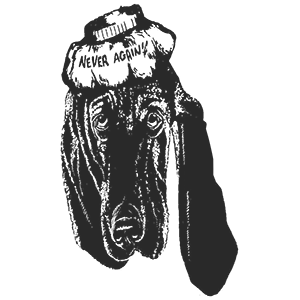
Hair of the dog is a colloquial expression in the English language predominantly used to refer to alcohol that is consumed with the aim of lessening the effects of a hangover. The expression originally referred to a method of treatment of a rabid dog bite by placing hair from the dog in the wound. The use of the phrase as a metaphor for a hangover treatment dates back at least to the time of Shakespeare. It is possible that the phrase was used to justify an existing practice, ‘similia similibus curantur’ (Latin: ‘like cures like’), which dates back to ancient Greece.
Similarly, in the 1930’s cocktails known as Corpse Revivers were served by hotel staff to guests ailing from too much drink.
read more »
Posted in Drugs, Health, Language |
Leave a Comment »
December 15, 2011
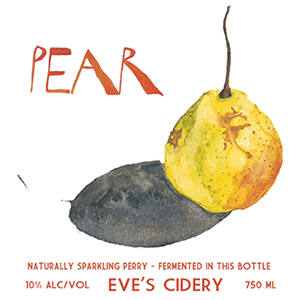
Perry is an alcoholic beverage made from fermented pears. Perry has been common for centuries in Britain, and in parts of south Wales; and France, especially Normandy and Anjou. In more recent years, commercial perry has also been referred to as ‘pear cider.’ Perry pears often have higher levels of sugar than cider apples, including unfermentable sugars such as sorbitol, which can give the finished drink a residual sweetness. They also have a very different tannin content to cider apples, with a predominance of astringent over bitter flavors. The presence of sorbitol can give perry a mild laxative effect, seen in the names of some perry pear varieties such as the ‘Lightning Pear’; reputed to go straight through ‘like lightning.’
As with apples specifically grown to make cider, special pear cultivars are used: in the UK the most commonly used variety of perry pear is the Blakeney Red. They produce fruit that is not of eating quality, but that produces superior perry. Like commercial pale lager and commercial cider, commercial perry is highly standardized, and today often contains large quantities of cereal adjuncts such as corn syrup or invert sugar. It is also generally of lower strength, and sweeter, than traditional perry, and is artificially carbonated to give a sparkling finish. However, unlike traditional perry it is a consistent product: the nature of perry pears means that it is very difficult to produce traditional perry in commercial quantities. Traditional perry was overwhelmingly a drink made on farms for home consumption, or to sell in small quantities either at the farm gate or to local inns.
Posted in Drugs, Food, Money |
Leave a Comment »
December 15, 2011
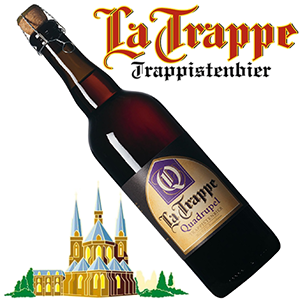
Quadrupel [kwo-droo-puhl] is the brand name of a strong seasonal beer La Trappe Quadrupel brewed by De Koningshoeven Brewery in the Netherlands, the only Trappist brewing abbey not in Belgium. In other countries, particularly the United States, ‘quadrupel’ or ‘quad’ may refer to an especially strong style of dark ale, with a characteristic spicy, ripe fruit flavor.
A quadrupel is intended to be stronger than a Tripel, so the ABV strength will be 10% or more. Beyond that, there is little agreement on the status of Quadrupel as a style. Beer writer Tim Webb notes that similar beers are also called ‘Grand Cru’ (French: ‘Great Growth’) in Belgium and Holland, a term borrowed from winemaking.
Posted in Drugs, Food, World |
Leave a Comment »
December 15, 2011


A Trappist [trap-ist] beer is a beer brewed by or under control of Trappist monks. There are a total of 174 Trappist monasteries worldwide; only seven (six in Belgium, one in the Netherlands) produce Trappist beer and are authorized to label their beers with the Authentic Trappist Product logo that indicates a compliance to the various rules of the International Trappist Association.
The Trappist order originated in the Cistercian monastery of La Trappe, France. Various Cistercian congregations existed for many years, and by 1664 the Abbot of La Trappe felt that the Cistercians were becoming too liberal. He introduced strict new rules in the abbey and the Strict Observance was born. Since this time, many of the rules have been relaxed. However, a fundamental tenet, that monasteries should be self-supporting, is still maintained by these groups.
read more »
Posted in Food, Philosophy, World |
Leave a Comment »
December 14, 2011
Mello Yello is a caffeinated, citrus-flavored soft drink produced and distributed by The Coca-Cola Company. It was introduced in 1979 to compete with PepsiCo’s Mountain Dew. There have been three flavored variants: Mello Yello Cherry was released in response to Mountain Dew Code Red, and the other two variants were Mello Yello Afterglow (peach-flavored) and Mello Yello Melon.
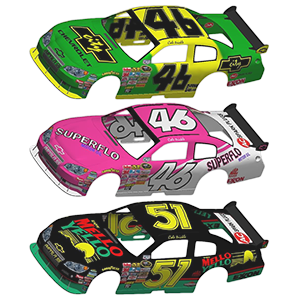
Mello Yello was featured in the 1990 NASCAR-based movie ‘Days Of Thunder,’ in which Tom Cruise’s character, Cole Trickle, drove a Mello Yello-sponsored car to victory in the Daytona 500, although the product name itself is never verbally mentioned in the movie. That livery went on to become a real NASCAR paint scheme the following year, when driver Kyle Petty drove with Mello Yello sponsorship in the Winston Cup Series.
Posted in Food, Money |
Leave a Comment »
November 9, 2011
The term ‘Super Tuscan‘ describes any Tuscan red wine that does not adhere to traditional blending laws for the region. For example, Chianti Classico wines are made from a blend of grapes with Sangiovese as the dominant variety in the blend. Super Tuscans often use other grapes, especially cabernet sauvignon, making them ineligible for classification under the traditional rules.
In 1968 Azienda Agricola San Felice produced the first ever ‘Super Tuscan’ called Vigorello, and in the 1970s Piero Antinori, whose family had been making wine for more than 600 years, also decided to make a richer wine by eliminating the white grapes from the Chianti blend, and instead adding Bordeaux varietals (namely, Cabernet Sauvignon and Merlot).
read more »
Posted in Food, Money, World |
Leave a Comment »
September 22, 2011

Michelada [mee-cha-lah-dah] is a cerveza preparada, a Mexican term for beer mixed with tomato juice, hot sauce, or salsa. In English-speaking countries, it would be considered a variety of shandy (a beer mixed with soda, carbonated lemonade, or cider. The Michelada is made with beer, tomato juice (or Clamato), lime juice, and assorted sauces, spices, and peppers. It is served in a chilled, salt-rimmed glass.
In Mexico, Micheladas are considered a good remedy for hangovers.There are different types of variations of Micheladas; for example in Mexico City, the most common form of a Michelada is prepared with beer, lime, salt, and hot sauce/or chili. Some add slices of orange.
read more »
Posted in Food, World |
2 Comments »
August 15, 2011
Kopi luwak, or civet coffee, is one of the world’s most expensive and low-production varieties of coffee. It is made from the beans of coffee berries which have been eaten by the Asian Palm Civet, then passed through its digestive tract. A civet eats the berries for their fleshy pulp. In its stomach, enzymes seep into the beans, making shorter peptides and more free amino acids. Passing through a civet’s intestines the beans are then defecated, keeping their shape. After gathering, thorough washing, sun drying, light roasting and brewing, these beans yield an aromatic coffee with much less bitterness, widely noted as the most expensive coffee in the world.
Since the flavor of coffee owes much to its proteins, there is a hypothesis that this shift in the numbers and kinds of proteins in beans after being swallowed by civets brings forth their unique flavor. The proteins are also involved in non-enzymatic Maillard browning reactions brought about later by roasting. Moreover, while inside a civet the beans begin to germinate by malting which also lowers their bitterness. Kopi luwak is produced mainly on the islands of Sumatra, Java, Bali and Sulawesi in the Indonesian Archipelago, and also in the Philippines, and also in East Timor. Weasel coffee is a loose English translation of its name cà phê Chồn in Vietnam, where popular, chemically simulated versions are also produced.
read more »
Posted in Food, Humor, Money |
Leave a Comment »
August 4, 2011
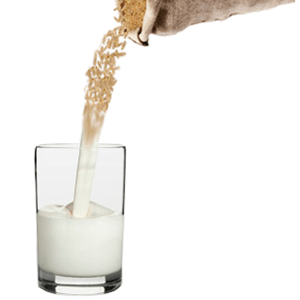
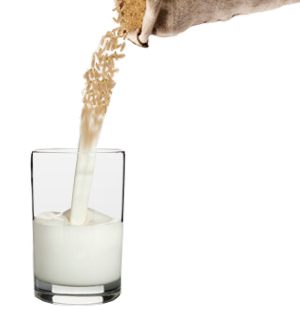
Grain milk is a milk substitute made from fermented grain or from flour. Grain milk can be made from oats, spelt, rice, rye, einkorn wheat or quinoa, and looks very similar to cow’s milk. It has a lower protein content and a higher carbohydrate content than cow’s milk. Just as cow’s milk is often fortified, grain milks may have calcium and some vitamins (especially B12) added to them.
Grain milk is low in saturated fat and contains no lactose, which is beneficial for those who are lactose intolerant. Grain milk also lacks milk protein, making it suitable for vegans and people with milk allergies. Flavored grain milk can come in plain, vanilla, chocolate or a variety of other flavors. There are also grain milk cream and desserts available.
Posted in Food, Health |
Leave a Comment »
August 4, 2011
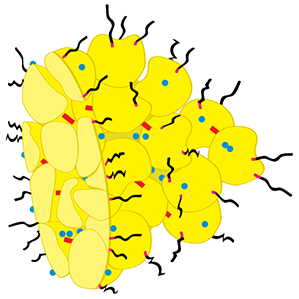
Milk is a white liquid produced by the mammary glands of mammals. It is the primary source of nutrition for infants before they are able to digest other types of food. Early-lactation milk contains colostrum, which carries the mother’s antibodies to the baby and can reduce the risk of many diseases in the baby. The precise components of raw milk vary by species and by a number of other factors, but it contains significant amounts of saturated fat, protein and calcium as well as vitamin C.
In almost all mammals, milk is fed to infants through breastfeeding, either directly or by expressing the milk to be stored and consumed later. Some cultures, historically or currently, continue to use breast milk to feed their children until they are seven years old. Human infants sometimes are fed fresh goat milk, but there are known risks in this practice, such as developing a host of allergic reactions.
read more »
Posted in Food, Health, Science |
Leave a Comment »
July 14, 2011
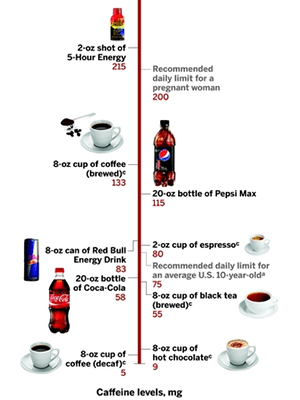
Energy shots are a specialized kind of energy drink. Sold in 59ml (2 fluid oz.) bottles, energy shots normally contain the same amount of caffeine, vitamins or other functional ingredients as their larger siblings, and therefore they may be considered concentrated forms of energy drinks. Also similar to energy drinks, energy shots contain caffeine, vitamins, and herbs such as guarana, ginseng or ginkgo biloba, taurine, maltodextrin, inositol, carnitine, creatine or glucuronolactone. Most energy shots contain sugar; however, many brands also offer artificially-sweetened ‘diet’ versions. The central ingredient in most energy shots is caffeine, the same stimulant found in coffee or tea. The average 50ml energy shot has about 80 mg of caffeine. This is approximately equivalent to a cup of coffee.
The idea of energy shots started decades ago in the Far East, notably in Japan, where small ‘tonics’ became very popular among consumers; they were highly concentrated and without carbonation. In 2004 the first suppliers, like 5-Hour Energy, Nitro2Go, and ZipFizz, took up the idea and launched these energy shots in the US, opening up a sub-segment in the energy drink market. Although originally marketed in the US, energy shots are becoming more popular in other parts of the world, like Europe, Asia and Australia.
Posted in Drugs, Health, Money |
Leave a Comment »
June 22, 2011

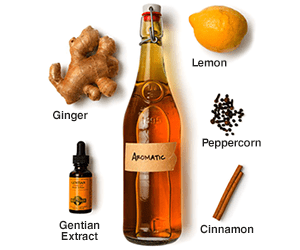
A bitters is an alcoholic beverage that is flavored with herbal essences and has a bitter or bittersweet flavor. There are numerous brands of bitters that were formerly marketed as patent medicines (tonics and elixirs) but are now considered to be digestifs (an after dinner drink intended to aid in digestion), rather than medicines. Bitters are 45% alcohol by volume.
Common ingredients in bitters include cascarilla, cassia, gentian, orange peel, and quinine from Cinchona bark (grown in Peru and Indonesia). The flavor of Angostura bitters, Suze and Peychaud’s Bitters derives primarily from gentian, a bitter herb. Bitters are prepared by infusion or distillation, using aromatic herbs, bark, roots, and/or fruit for their flavor and medicinal properties.
read more »
Posted in Drugs, Food, Health |
Leave a Comment »


 The Daily Omnivore