August 23, 2012

Hebrew National is a brand of kosher hot dogs and sausages made by ConAgra Foods, Inc. The Hebrew National Kosher Sausage Factory, Inc. was founded on East Broadway, on the Lower East Side of Manhattan in 1905. The company was founded by Theodore Krainin, who emigrated from Russia in the 1880s. In a 1921 article, Alfred W. McCann writing in ‘The Globe and Commercial Advertiser’ citied Hebrew National as having ‘higher standards than the law requires.’
McCann wrote the article during a crusade for commercial food decency standards, in which ‘The Globe’ was prominent. He wrote ‘More power to Krainin and the decency he represents! Such evidence of the kind of citizenship which America should covet is not to be passed by lightly.’ Hebrew National ‘served the Jewish neighborhoods of immigrants from Eastern Europe and Germany and soon developed a favorable reputation among the other Jewish residents of New York City.’
read more »
Posted in Food, Money, Philosophy |
Leave a Comment »
August 10, 2012

Yoyodyne is a fictitious defense contractor introduced in Thomas Pynchon’s ‘V.’ (1963) and featured prominently in his novel ‘The Crying of Lot 49’ (1966). Described in the latter book as ‘a giant of the aerospace industry,’ Yoyodyne was founded by World War II veteran Clayton ‘Bloody’ Chiclitz. The company has a large manufacturing plant in the fictional town of San Narciso, California.
The name is reminiscent of several real high-tech companies, including Teledyne, Teradyne, which was founded a few years before Pynchon wrote ‘The Crying of Lot 49,’ and Rocketdyne, an aerospace company that manufactured, among other things, propulsion systems. The ‘dyne’ is the standard unit of force in the centimeter-gram-second system of units (largely obsolete but still widely recognized), derived from the Greek word dynamis meaning ‘power’ or ‘force.’
read more »
Posted in Humor, Money, War |
Leave a Comment »
July 30, 2012

Tough Mudder is an adventure sports company that hosts 10-12 mile endurance event obstacle courses designed by British Special Forces to test all around strength, stamina, mental grit, and camaraderie that are billed as ‘probably the toughest event on the planet’ and regularly attract 15-20,000 participants over a two day weekend.
Tough Mudder events are a new type of team endurance challenge. According to ‘The New York Times,’ the events are ‘more convivial than marathons and triathlons, but more grueling than shorter runs or novelty events (for example, ‘Warrior Dash’ courses are 3-4 miles). Contestants are not timed and organizers encourage ‘mudders’ to demonstrate teamwork by helping fellow participants over difficult obstacles to complete the course. The prize for completing a Tough Mudder challenge is an official orange sweatband and a free beer. It is estimated that 15-20% of participants do not finish. Each event is designed to be unique and incorporates challenges and obstacles that utilize the local terrain.
read more »
Posted in Games, Money, War |
Leave a Comment »
July 16, 2012
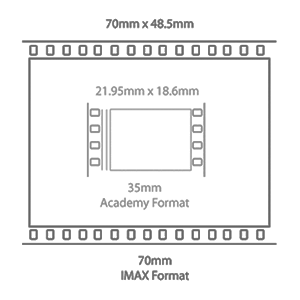
IMAX is a motion picture film format and a set of proprietary cinema projection standards created by a Canadian company of the same name. IMAX increases the resolution of the image by using a much larger film frame. To achieve this, 65 mm film stock passes horizontally through the cameras. Traditional cameras pass film vertically. In order to match standard film speed of 24 frames per second, three times the length of film moves through the camera.
There are 583 IMAX theaters in 48 countries (China is the second largest market after the US with roughly 25 theaters). The desire to increase the visual impact of film has a long history. In 1929, Fox introduced Fox Grandeur, the first 70 mm film format, but it ultimately lost out to 35mm film, which remains the industry standard. In the 1950s CinemaScope and VistaVision widened the image from 35 mm film, following multi-projector systems such as Cinerama. While impressive, Cinerama was difficult to install, and the seams between adjacent projected images were difficult to hide.
read more »
Posted in Art, Money, Technology |
Leave a Comment »
June 26, 2012

Kappa is an Italian manufacturer of sports clothes and accessories, that started as a sock and underwear manufacturer in 1916 in Turin. Its logo, known as ‘Omini,’ is a silhouette of a man (left) and woman (right) sitting back to back in the nude. It was created in 1969 by mere accident.
After a photo shoot for a bathing suit advertisement, a man and a woman were sitting back-to-back, naked, with the outlines of their bodies traced by the back lighting. The photographers knew they had something, and the idea grew into what is now the logo, which symbolizes the mutual support between man and woman, and their completion.
Posted in Games, Money, World |
Leave a Comment »
June 26, 2012
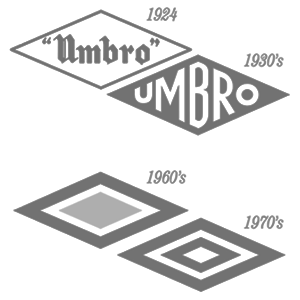
Umbro is an English sportswear and football equipment supplier, and a subsidiary of Nike since 2008. Umbro designs, sources, and markets sport-related apparel, footwear, and equipment. Its products are sold in over 90 countries. The company was founded in 1924 by Harold Humphreys, along with his brother Wallace in a small workshop, inspired by the growing interest in football witnessed nationwide.
The word ‘Umbro’ is an acronym derived from Humphreys Brothers Clothing. Umbro’s major debut was in the 1934 FA Cup final, when both teams Manchester City and Portsmouth wore uniforms designed and manufactured by the company. Other teams supplied by Umbro during the 1930s and 1940s were Sheffield United and Preston North End, Manchester United, and Blackpool. In 1952, the British team at the Summer Olympics wore Umbro, tailored for the needs of their individual sports. Umbro would be a major supplier to the British Olympics team for the next 20 years.
read more »
Posted in Games, Money, World |
Leave a Comment »
June 26, 2012

Brine, Corp. is a US sporting goods manufacturer (lacrosse, soccer, volleyball, and field hockey equipment). It markets its products under its own brand as well as ‘In The Crease’ for goals and goal accessories. The company was founded by W.H. Brine in 1922 as the W.H. Brine Company. It was privately owned by the Brine family and named Brine, Inc. before it was acquired by New Balance in 2006.
It started as a small sports equipment and uniform company. They sold to private schools and regional camps, quickly growing to a major manufacturer of lacrosse and soccer equipment.
read more »
Posted in Games, Money, Technology |
1 Comment »
June 6, 2012

Sanwa Denshi (‘Three Harmonies Electronics Company’) is a general electronics manufacturer, but is best known internationally as a leading manufacturer of arcade parts; i.e. joysticks, buttons, coin feeds etc.
Its parts are commonly used in Japanese arcade machines and held in high regard by custom builders (especially in the fighting game community).
read more »
Posted in Games, Money, Technology |
Leave a Comment »
May 27, 2012

PAL-V Europe is a Dutch company who are developing a flying car, the PAL-V One, an autogyro or gyrocopter, with a pusher propeller at the rear of the fuselage providing forward thrust and a free-spinning rotor providing lift. Directional stability is provided by twin boom-mounted tailfins.
It has a tricycle undercarriage with relatively large wheels. On the ground, the propeller and rotor are stopped and power is diverted to the wheels, allowing it to travel as a three-wheeled car. Unusually, it leans into turns like a motorcycle, a solution pioneered by the Carver vehicle, also produced by a Dutch company.
Posted in Money, Technology |
Leave a Comment »
May 17, 2012

The Glock is a series of semi-automatic pistols designed and produced in Austria. The company’s founder, engineer Gaston Glock, had no experience with firearm design or manufacture at the time their first pistol, the Glock 17, was being prototyped in 1982.
Glock did, however, have extensive experience in advanced synthetic polymers, knowledge of which was instrumental in the company’s design of the first successful line of pistols with a polymer frame. Glock introduced ferritic nitrocarburizing, a form of case hardening, into the firearms industry as an anti-corrosion surface treatment for metal gun parts.
read more »
Posted in Money, Technology, War |
Leave a Comment »
April 27, 2012


Planetary Resources, Inc., formerly known as Arkyd Astronautics, is a company formed in 2010, and reorganized and renamed with considerable fanfare in 2012. Their stated goal is to ‘expand Earth’s natural resource base’ by developing and deploying the technologies for asteroid mining. Although the long-term goal of the company is to mine asteroids, its initial plans call for developing a market for small (30–50 kg) cost-reduced space telescopes for both Earth observation and astronomy.
These spacecraft would employ a laser-optical system for ground communications, reducing payload bulk and mass compared to conventional RF antennae. The deployment of such orbital telescopes is envisioned as the first step forward in the company’s asteroid mining ambitions. The same telescope satellite capabilities that Planetary Resources hopes to sell to customers can be used to survey and intensively examine near-earth asteroids.
Posted in Money, Technology |
Leave a Comment »
April 27, 2012
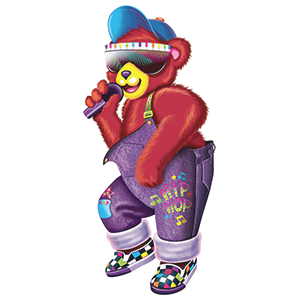
Lisa Frank is an American commercial artist and founder of Lisa Frank Incorporated, headquartered in Tucson, Arizona. The artist’s work appears on various commercial elementary and middle-school products, mostly school supplies. Also common among Lisa Frank-related items are stickers and a variety of other merchandise such as clothing and toys marketed towards young girls. Frank founded the company in 1979 at the age of 24, and her success resulted from her sticker line.
The company’s headquarters is easily visible because of the bright hearts, stars, and music notes decorating the side of the building. There is currently a quarterly magazine also named ‘Lisa Frank.’ Her corporation’s artwork features extremely bright and vibrant colors, and round, smooth, reflective surfaces. A number of characters recur on ‘Lisa Frank’ branded items, such as a Hollywood Bear, and Markie the unicorn. Rainbows and especially the color purple are abundant in Lisa Frank’s art.
Posted in Art, Humor, Money |
2 Comments »



 The Daily Omnivore