February 25, 2012

The hedonic treadmill is the supposed tendency of humans to quickly return to a relatively stable level of happiness despite major positive or negative events or life changes. According to this theory, as a person makes more money, expectations and desires rise in tandem, which results in no permanent gain in happiness. Brickman and Campbell coined the term in their essay ‘Hedonic Relativism and Planning the Good Society’ (1971). During the late ’90s, the concept was modified by Michael Eysenck, a British psychology researcher, to become the current ‘hedonic treadmill theory’ which compares the pursuit of happiness to a person on a treadmill, who has to keep working just to stay in the same place. The general idea of the ‘Hedonic (or Happiness) Set Point’ has gained interest throughout the field of positive psychology.
Research supports a three-factor model, where our level of happiness is 50% determined by genetics, 10% determined by outside circumstances, and 40% determined by intentional activities. That last factor, of intentional activities, is the focus of positive psychology, especially because not all activities are equally effective at helping one to reach the higher end of their happiness range. One study concluded that life goals along with personality characteristics are important determinants of one’s subjective well-being. Life goals that enrich one’s relationships and social resources, such as altruistic and family oriented goals, increase their level of subjective well-being. On the other hand, materialistic life goals, such as monetary achievement, have a negative effect on people’s overall subjective well-being.
Posted in Health, Science |
1 Comment »
February 25, 2012

Moneybomb is a neologism coined in 2007 to describe a grassroots fundraising effort over a brief fixed time period, usually to support a candidate for election by dramatically increasing, concentrating, and publicizing fundraising activity during a specific hour or day. The term was first applied to a supporter-led fundraiser on behalf of presidential candidate Ron Paul.
The effort combines traditional and Internet-based fundraising appeals focusing especially on viral advertising through online vehicles such as YouTube, Facebook, and online forums. In the case of lesser-known candidates it is also intended to generate significant free mass media coverage the candidate would otherwise not receive. The term has also been used as a verb and apparently arose from analogy with the neologism ‘googlebomb,’ a method of search engine optimization.
Posted in Money, Politics, Technology |
Leave a Comment »
February 15, 2012

An exocortex is a theoretical artificial external information processing system that would augment a brain’s biological high-level cognitive processes. An individual’s exocortex would be composed of external memory modules, processors, IO devices and software systems that would interact with, and augment, a person’s biological brain. Typically this interaction is described as being conducted through a direct brain-computer interface, making these extensions functionally part of the individual’s mind. Individuals with significant exocortices could be classified as cyborgs or transhumans.
Cortex (Latin: bark) is used in neuroscience for the outer bark-like layer of the brain that is the site of most sophisticated cognitive information processing. It was coined in allusion to the neocortex (literally ‘new bark’), the newest part of the mammalian brain (in evolutionary history), believed to be responsible for the highest human cognitive abilities including conscious thought, spatial reasoning, and sensory perception. Thus the terminology suggests a progression from reptilian thought (the older parts of the brain) through human (neocortex) to high-level human or even supra-human cognitive processing capabilities (exocortex).
Posted in Health, Technology |
Leave a Comment »
February 10, 2012

Reality distortion field (RDF) is a term coined by Bud Tribble (who still works at Apple) at Apple Computer in 1981, to describe company co-founder Steve Jobs’ charisma and its effects on the developers working on the Mac project. Tribble claimed that the term came from ‘Star Trek.’ Later the term has also been used to refer to perceptions of his keynote speeches (or ‘Stevenotes’) by observers and devoted users of Apple computers and products.
The RDF was said by Andy Hertzfeld (member of the original Apple team) to be Steve Jobs’ ability to convince himself and others to believe almost anything with a mix of charm, charisma, bravado, hyperbole, marketing, appeasement, and persistence. RDF was said to distort an audience’s sense of proportion and scales of difficulties and made them believe that the task at hand was possible. While RDF has been criticized as anti-reality, those close to Jobs have also illustrated numerous instances in which creating the sense that the seemingly impossible was possible led to the impossible being accomplished. Similarly, the optimism which Jobs sowed in those around him contributed to the loyalty of his colleagues and fans.
Posted in Humor, Money, Technology |
1 Comment »
January 25, 2012

Culturomics is a form of computational lexicology that studies human behavior and cultural trends through the analysis of digitized texts. Researchers data mine large digital archives to investigate cultural phenomena reflected in language and word usage. The term is an American neologism first described in a 2010 ‘Science’ article called ‘Quantitative Analysis of Culture Using Millions of Digitized Books,’ co-authored by Harvard researchers Jean-Baptiste Michel and Erez Lieberman Aiden. Michel and Aiden helped create the Google Labs project Google Ngram Viewer which uses n-gram’s to analyze the Google Book digital library for cultural patterns in language use over time.
In another study called ‘Culturnomics 2.0,’ Kalev H. Leetaru examined news archives including print and broadcast media (television and radio transcripts) for words that imparted tone or ‘mood’ as well as geographic data. The research was able to retroactively predict the 2011 Arab Spring and successfully estimate the final location of Osama Bin Laden to within 124 miles.
Posted in Language, Science, Technology |
Leave a Comment »
January 19, 2012

Carbon chauvinism is a neologism meant to disparage the assumption that the chemical processes of hypothetical extraterrestrial life must be constructed primarily from carbon (organic compounds), as carbon’s chemical and thermodynamic properties render it far superior to all other elements.
The term was used as early as 1973, when scientist Carl Sagan described it and other human chauvinisms that limit imagination of possible extraterrestrial life. It suggests that human beings, as carbon-based life forms who have never encountered any life that has evolved outside the Earth’s environment, may find it difficult to envision radically different biochemistries.
read more »
Posted in Science |
Leave a Comment »
January 12, 2012

Generation Y, also known as Millennials, describes the demographic cohort following Generation X. While there is no universally agreed upon time frame, the term generally includes people born in the late 1980s, early to middle 1990s, or as late as the early 2000s. One segment of this age-group is often called the ‘eighties babies’ generation. Members of this generation are called Echo Boomers because many of them are children of baby boomers. The 20th century trend toward smaller families in developed countries continued, so the relative impact of the ‘baby boom echo’ was generally less pronounced than the original boom.
Characteristics of the generation vary by region, depending on social and economic conditions. However, it is generally marked by an increased use and familiarity with communications, media, and digital technologies. In most parts of the world its upbringing was marked by an increase in a neoliberal approach to politics and economics; the effects of this environment are disputed. Today, there are approximately 80 million Echo Boomers.
read more »
Posted in Politics, World |
Leave a Comment »
January 12, 2012
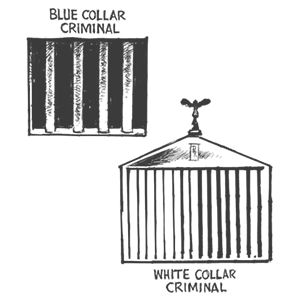
Gold collar worker is a neologism which has been used to describe either young, low-wage workers who invest in conspicuous luxury, or highly-skilled knowledge workers, traditionally classified as white collar, but who have recently become essential enough to business operations as to warrant a new classification.
The term was coined by management consultant Robert Earl Kelley in 1985.
read more »
Posted in Money, Politics |
1 Comment »
January 12, 2012

The term ‘winders‘ was originally coined in 2008 by the sociologist John W. Leigh, in his article ‘Moving towards new forms of social success.’
The term (a contraction of the expression ‘windy winners’) goes back to the original way of experiencing social success by individuals uninhibited with regards to their own success, not looking as much to reconcile rival existential expectations (such as the bobos – bohemian bourgeois, for example) but rather to juxtapose them in a way which is not seeking to constitute a system.
Posted in Language, Money, Politics |
Leave a Comment »
January 11, 2012

Limousine liberal is a pejorative American political term used to illustrate perceived hypocrisy by a political liberal of upper class or upper middle class status; including calls for the use of mass transit while frequently using limousines or private jets, claiming environmental consciousness but driving low MPG sports cars or SUVs, or ostensibly supporting public education while actually sending their children to private schools.
Democratic New York City mayoral hopeful Mario Procaccino coined the term to describe incumbent Republican Mayor John Lindsay and his wealthy Manhattan backers during a heated 1969 campaign.
read more »
Posted in Language, Money, Politics |
Leave a Comment »
January 11, 2012
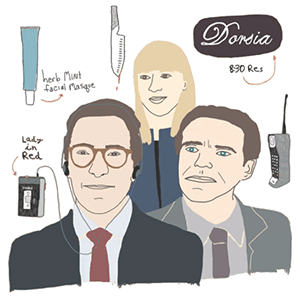
Yuppie [yuhp-ee] (short for ‘young urban professional’ or ‘young upwardly mobile professional’) is a term that refers to a member of the upper middle class or upper class in their 20s or 30s. It first came into use in the early-1980s and largely faded from American popular culture in the late-1980s, due to the 1987 stock market crash and the early 1990s recession. However it has seen a small revival in the 2000s and 2010s.
Yuppies are derided for their conspicuous personal consumption and hunger for attention social status among their peers. Cornell University economist Robert H. Frank, author of ‘Luxury Fever,’ has remarked, ‘When people were denouncing yuppies, they had considerably lower incomes than yuppies, so the things yuppies spent their money on seemed frivolous and unnecessary from their vantage point.’ Pro-skateboarder and businessman Tony Hawk has said that yuppies give ‘us visions of bright V-neck sweaters with collars underneath, and all that was vile in the eighties,’ and he has remarked as well as that a ‘bitchin’ tattoo cannot hide your inner desire to be Donald Trump.’
read more »
Posted in Humor, Language, Money |
1 Comment »
December 21, 2011

A digital native is a person who was born during or after the general introduction of digital technology, and through interacting with digital technology from an early age, has a greater understanding of its concepts.
Alternatively, this term can describe people born in the latter 1960s or later, as the Digital Age began at that time; but in most cases the term focuses on people who grew up with the technology that became prevalent in the latter part of the 20th century, and continues to evolve today.
read more »
Posted in Language, Technology |
2 Comments »


 The Daily Omnivore