July 11, 2011

A MiniDisc (MD) is a magneto-optical disc-based data storage device initially intended for storage of up to 74 minutes and, later, 80 minutes, of digitized audio. In the form of Hi-MD, it has also developed into a general-purpose storage medium. MiniDisc was released in 1992, first in Japan, and then in Europe and the U.S. The music format was originally based exclusively on ATRAC audio data compression, but the option of linear PCM recording was later introduced to attain audio quality comparable to that of a compact disc.
Sony’s MiniDisc was one of two rival digital systems introduced in 1992, that were both targeted as a replacement for the Philips analog cassette audio tape system: the other was Digital Compact Cassette (DCC), created by Philips and Matsushita. Sony had originally intended for Digital Audio Tape (DAT) to be the dominant home digital audio recording format, replacing the analog cassette. Unfortunately, due to technical delays, DAT was not launched until 1989, and by then, the U.S. dollar had fallen so far in relation to the yen, the introductory DAT machine Sony had intended to market for about $400 in the late 1980s now had to retail for $800 or even $1000 to break even, putting it out of reach for most users. Relegating DAT for pro use, Sony immediately set to work to come up with a simpler, more economical digital home format.
read more »
Posted in Money, Technology, World |
Leave a Comment »
June 28, 2011

The iBOT is a very stable and mobile powered wheelchair developed by Dean Kamen in a partnership between DEKA and Johnson and Johnson’s Independence Technology division. It is a medical technology, made to help people with severe mobility problems.
As of 2006 the iBOT retailed for approximately $26,100 and required a prescription in the U.S. As of 2009, it is no longer available for sale from Independence Technology, but support for existing units will be available until the end of 2013.
read more »
Posted in Health, Technology |
1 Comment »
June 6, 2011

Chiclets is a brand of candy coated chewing gum made by Cadbury Adams. The colors of chiclets are: yellow, green, orange, red, white, and pink. The product’s name is derived from Nahuatl word tziktli, in English chicle, the substance from which chewing gum was traditionally made. The original flavor was peppermint but many flavors have been added and discontinued over the decades since the introduction in 1906.
In some countries the term ‘Chiclet’, ‘Chic’ or ‘Chicla’ is often used to refer to any brand and/or type of chewing gum. In Spain, Peru, and many other Spanish or Portuguese speaking countries, as a result of the brand’s popularity the term ‘Chicle’ is used in every-day language to refer to chewing gum, this ias particular in Mexico as the Nahuatl term derives from there. Furthermore, in Iran any type of chewing gum is referred to as ‘Adams’. The gum is the biggest gum brand in the Middle East, especially in Egypt where it has a huge market share. In South America, and Thailand, Chiclets is also produced, but the brand has been extended to include various formats like bubble gum and stick gum.
Posted in Food, Money, World |
Leave a Comment »
April 18, 2011

A 3D printer is a machine that prints solid copies of objects from computer drawings. Some use powder. Some use liquid plastic. They all make the object by building it up layer by layer in an additive process.
In some industries these printers are called rapid prototyping machines. Car makers use 3D printers to try out new shapes for things like door handles; designers use try new shapes for consumer electronics; artists create sculptures; and jewelry designers can try out new ideas and make molds for rings.
read more »
Posted in Art, Money, Technology |
Leave a Comment »
April 7, 2011
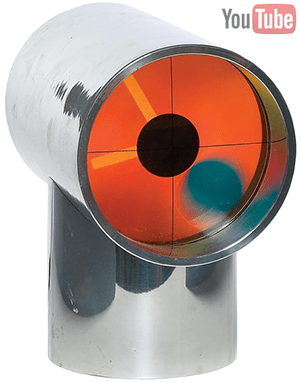
The Aurora Clock has been in production for over 40 years. There are continuously changing colors and surprising color ‘shifts’ when the secondhand disk overlaps the minute & hour hands, and the colors change depending on your viewing angle. The color changes have to do with polarized light and a phenomenon called bi-refractance. Vectors of light are being rotated as they pass through each material which is very different from color filtering.
The first Aurora clocks were made by Rathcon and called the Spectrum. Then they were manufactured by Kirsch-Hamilton. Next, in the late 80’s, Hampton Haddon had a version made in Japan, but abandoned the clock around 1991. In 1993 we at ChronoArt started manufacturing Luminas (a different polarized light clock) and then a year later started also manufacturing new Auroras.
Posted in Art, Technology |
Leave a Comment »
March 29, 2011

Minuteman Salsa was a brand of salsa made in the United States. The brand was founded by Ryan Lambert, along with four associates during the summer of 2006 in reference to the illegal immigration debate. According to the company’s Web site, it is America’s only 100% United States-made salsa. Minuteman Salsa donates a portion of its profits to the Minuteman Project, a group of American citizens whose goal is to deter illegal crossings of the United States–Mexico border. The salsa’s slogan was ‘Deport Bad Taste.’
Posted in Food, Money, Politics |
Leave a Comment »
March 23, 2011

Dragon Skin a bulletproof vest made by Pinnacle Armor of California. Its characteristic two-inch-wide circular discs overlap like scale armor, creating a flexible vest that allows a good range of motion and can allegedly absorb a high number of hits compared with other military body armor.
The discs are composed of silicon carbide ceramic matrices and laminates, much like the larger ceramic plates in other types of bullet resistant vests. This armor has been known to withstand grenade blasts, and up to 40 rounds of ammo.
Posted in Money, Technology, War |
Leave a Comment »
February 12, 2011

A neti pot is a device used for irrigating the nasal passages. Typically it has a spout attached near the bottom, sometimes with a handle on the opposite side. Neti pots flush out the nasal cavities by using gravity to draw the flow of saline. Some modern variants available from pharmacies are made of flexible plastic and can be compressed to exert additional pressure. In recent years alternative strategies have been developed, including bulb syringes in which the flow is created by squeezing a bulb and more advanced ‘pulsatile devices’ which mechanically pump the saline.
The use of a neti pot requires mixing up a saline solution that will be poured through the nasal passages. A typical saline solution is a mixture of around 500 ml of water with 5 g of salt. Sodium bicarbonate is sometimes added. The neti pot used with a saline solution has been shown to be an effective treatment for hay fever, sinusitis, and other nasal conditions. The origins of nasal irrigation are understood to be in the ancient Hindu practice of Ayurveda whose roots are traced to the Vedas.
Posted in Health, Technology |
Leave a Comment »
February 11, 2011

Chemex Coffeemaker, a famous coffee-making device, was introduced by the Chemex Corporation of Pittsfield, Mass. in the 1940s. It consists of a single hourglass-shaped vessel and is used to make coffee. It was invented by industrial chemist, Peter Schlumbohm; the New York Times in its obituary of Schlumbohm called the device ‘one of 100 best modern devices.’
Posted in Food, Money, Technology |
Leave a Comment »
February 11, 2011

The AeroPress is a device for brewing coffee. It was invented in 2005 by Alan Adler. Coffee is steeped for about 10 seconds and then forced through a paper microfilter. The maker describes the result as an espresso strength concentration of coffee. The device consists of two copolyester cylinders. One cylinder has a rubber plunger and fits inside the larger cylinder to create an airtight seal, similar to a syringe.
The AeroPress, though sharing some similarities with a French press, is quite different. It uses a disposable paper filter which removes most of the coffee solids, resulting in a sediment-free brew, and air pressure is used to extract more coffee oils.
Posted in Food, Money, Technology |
Leave a Comment »
February 11, 2011
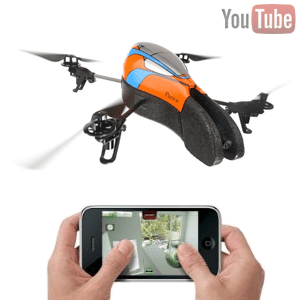
The Parrot AR.Drone is a RC quadricopter with cameras attached to it built by French wireless products manufacturer Parrot. It is designed to be controllable with an iPhone, iPad, or an iPod Touch. Parrot demos the device with 2 games, a virtual combat called ‘DRONE WAR’ with solo and multiplayer mode and a ‘ROBOT’ solo game demo against a virtual Robot. Parrot has launched ARdrone.org Open API game development platform, to gather game studios and developers. It sells for around $300 on Amazon.com.
Posted in Games, Money, Technology |
Leave a Comment »
February 10, 2011


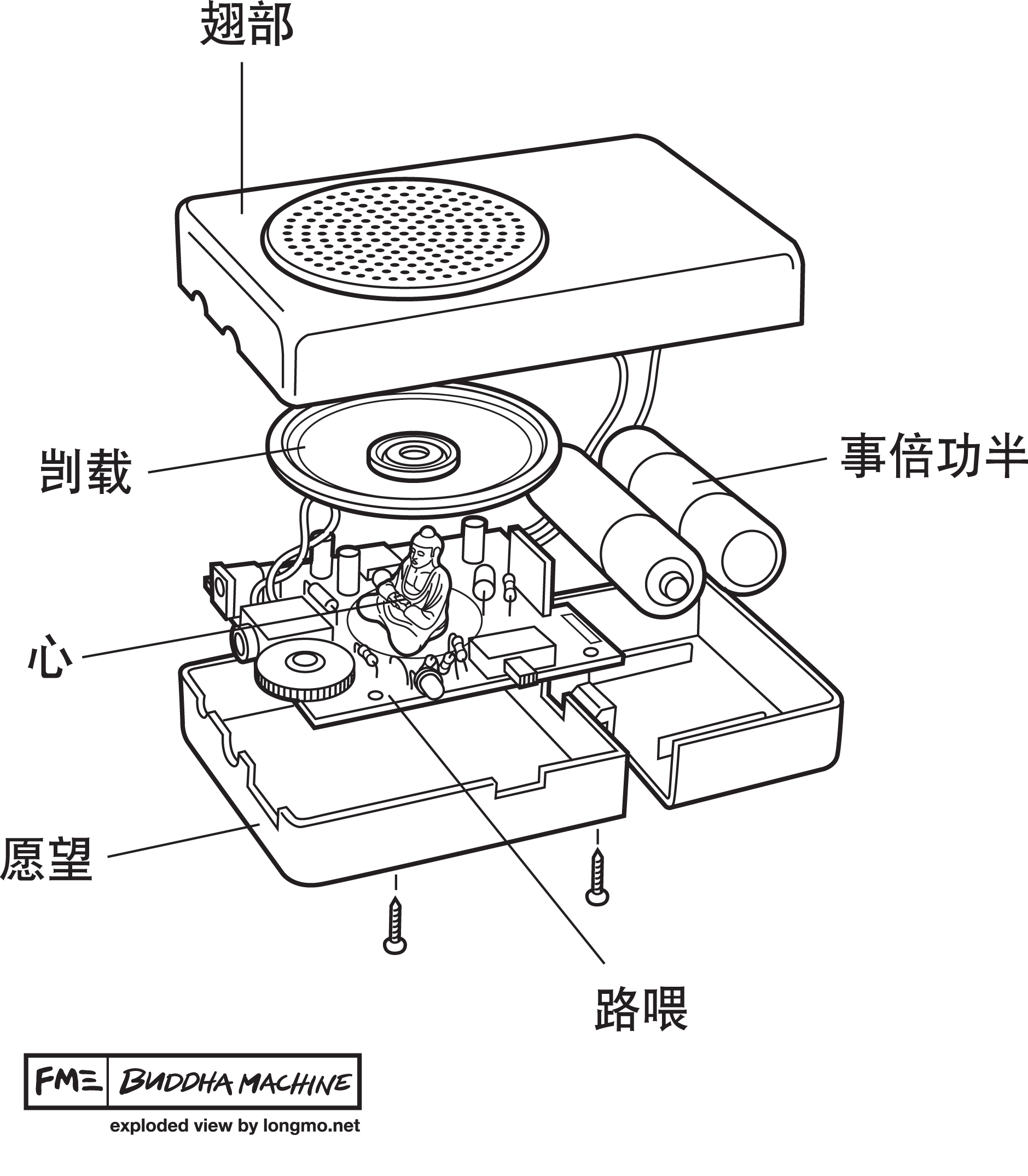
The Buddha Machine is a small musical loop player released by FM3, a China-based music duo. The name and idea derived from a popular Chinese music player that intones repeating loops of Buddhist chanting. The Buddha Machine continuously plays one of 9 ambient sound loops (drones) that range in length from 5 to 40 seconds. Resembling a small transistor radio, the device has a volume control that doubles as an on/off switch; a headphone jack; a 4.5V AC adapter jack; and a switch that, when moved, selects the next of 9 ambient loops. In 2008, the second edition (version 2.0) was released commercially; it replaces the original nine loops with nine new ones (totaling approximately 300 seconds of sound), and includes a new control that allows the user to alter the pitch of the sound.
In 2009, FM3 Productions Ltd released an iPhone app that has similar functionality to the real device. It has the option to select from version 1.0 or version 2.0 of the device and a single button that selects the loop to play. Also that year, Throbbing Gristle & Industrial Records released their version of the Buddha Machine, ‘Gristleism,’ with more loops and almost twice the frequency range of the Buddha Machine. In 2010, FM3 released the third generation Buddha Machine, titled Chan Fang. The music is divided into four loops which were composed and performed on the Gu Qin, an ancient Chinese classical instrument.
Posted in Art, Philosophy, Technology |
Leave a Comment »


 The Daily Omnivore