August 23, 2012

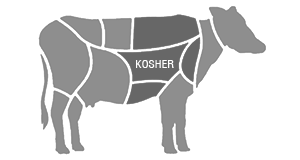
Hebrew National is a brand of kosher hot dogs and sausages made by ConAgra Foods, Inc. The Hebrew National Kosher Sausage Factory, Inc. was founded on East Broadway, on the Lower East Side of Manhattan in 1905. The company was founded by Theodore Krainin, who emigrated from Russia in the 1880s. In a 1921 article, Alfred W. McCann writing in ‘The Globe and Commercial Advertiser’ citied Hebrew National as having ‘higher standards than the law requires.’
McCann wrote the article during a crusade for commercial food decency standards, in which ‘The Globe’ was prominent. He wrote ‘More power to Krainin and the decency he represents! Such evidence of the kind of citizenship which America should covet is not to be passed by lightly.’ Hebrew National ‘served the Jewish neighborhoods of immigrants from Eastern Europe and Germany and soon developed a favorable reputation among the other Jewish residents of New York City.’
read more »
Posted in Food, Money, Philosophy |
Leave a Comment »
August 23, 2012

A hot dog is a sausage served in a sliced bun. It is very often garnished with mustard, ketchup, onions, mayonnaise, relish, cheese, chili, and/or sauerkraut. Claims about hot dog invention are difficult to assess, as stories assert the creation of the sausage, the placing of the sausage (or another kind of sausage) on bread or a bun as finger food, the popularization of the existing dish, or the application of the name ‘hot dog’ to a sausage and bun combination most commonly used with ketchup or mustard and sometimes relish.
The word frankfurter comes from Frankfurt, Germany, where pork sausages served in a bun similar to hot dogs originated. These sausages, Frankfurter Würstchen (‘little sausage’), were known since the 13th century and given to the people on the event of imperial coronations, starting with the coronation of Maximilian II, Holy Roman Emperor as King. Wiener refers to Vienna, Austria, whose German name is ‘Wien,’ home to a sausage made of a mixture of pork and beef (the word ‘hamburger’ also derives from a German-speaking city, Hamburg).
read more »
Posted in Food, Language, World |
Leave a Comment »
August 23, 2012
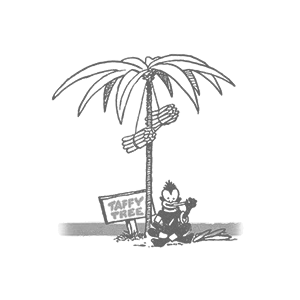
Abba-Zaba are taffy candy bars with peanut butter centers, made by Annabelle Candy Company in Hayward, California. The first Abba Zaba bars were manufactured beginning in 1922 by Colby and McDermott. Before Annabelle Candy Co. started manufacturing Abba-Zaba, the packaging featured imagery which some now consider to be racially biased.
A favorite snack of a young Don Van ‘Captain Beefheart’ Vliet, it lent its name to a song that appears on his 1967 ‘Safe as Milk’ album. In fact, the album itself was originally to be entitled ‘Abba Zaba,’ changed only when the company would not allow the usage of their trademark.
Posted in Food |
Leave a Comment »
August 22, 2012

The Sinclair C5 is a battery electric vehicle invented by British entrepreneur Sir Clive Sinclair in the United Kingdom in 1985. The vehicle is a battery-assisted tricycle steered by a handlebar beneath the driver’s knees. Powered operation is possible making it unnecessary for the driver to pedal.
Its top speed of 15 miles per hour (24 km/h), is the fastest allowed in the UK without a driving licence. It is powered by a 200w or 250W motor. It sold for £399 plus £29 for delivery. It became an object of media and popular ridicule during 1980s Britain and was a commercial disaster, selling only around 17,000 units, although according to Sinclair, it was ‘the best selling electric vehicle’ until 2011 when the Nissan Leaf had sold over 20,000 units.
read more »
Posted in Money, Technology, World |
Leave a Comment »
August 22, 2012
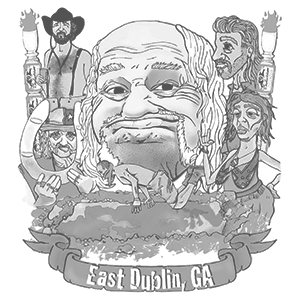
The Redneck Games are held in East Dublin, Georgia annually. The games were started by the general manager of WQZY, Mac Davis, in response to a comment made by the media; that when the 1996 Olympic Games went to Atlanta, it would be held by a group of rednecks. Taking offense to this, Davis and some locals set up the annual Redneck Games to reinforce the stereotype the media held. In 2001, Drew Scott of Wild Country 96.5 ‘borrowed’ the games to set up a fundraising event for the Franklin County NY Make-A-Wish Foundation.
Some events that are held during the Redneck Games include: The cigarette flip; Bobbing for pig’s trotters; Seed spitting; Toilet seat throwing; Mud pit belly flop; Big-hair contest; Wet T-shirt contest; Armpit serenade; Bug zapping by spitball; Dumpster diving; and Hubcap hurling. For each of the events, a trophy is awarded: a half crushed, empty mounted beer can. The Minto Canadian Redneck Games in Minto, Ontario started in 2006. Events include: Mud Pit Slip & Slide; Bobbin’ for Pig’s Feet; Mud Pit Tug-of-War; Mud Pit Belly Flop Contest; Redneck Horseshoes; Hubcap Hurl; and Mud Pit Volleyball.
Posted in Games, Humor, Money |
Leave a Comment »
August 22, 2012

Here Comes Honey Boo Boo is an American reality series that debuted on TLC in 2012. It is a spinoff of ‘Toddlers & Tiaras,’ based around T&T contestant Alana ‘Honey Boo Boo’ Thompson and her family, who reside in rural McIntyre, Georgia. The series follows the Thompsons, focusing on the daily interactions between the family members and mother June’s attempts to enter Alana into beauty pageants. Other focal points in the series are the teen pregnancy of eldest daughter Anna, Jessica’s attempts to lose weight, as well as visits to the Redneck Games and auctions.
The ‘A.V. Club’ called the first episodes a ‘horror story posing as a reality television program,’ with others worrying about potential child exploitation. A reviewer for ‘Forbes’ criticized TLC as trying to ‘portray Alana’s family as a horde of lice-picking, lard-eating, nose-thumbing hooligans south of the Mason-Dixon line,’ stating that ‘it falls flat, because there’s no true dysfunction here, save for the beauty pageant stuff.’ ‘The Guardian’ also criticized the attempt to portray the Thompsons as something to ‘point and snicker at,’ saying, ‘none of the women or girls who participate in the show seems to hate themselves for their poverty, their weight, their less-than-urbane lifestyle, or the ways in which they diverge from the socially-acceptable beauty standard.’
Posted in Games, Humor, Money |
Leave a Comment »
August 22, 2012

The Mindset List is an annual compilation of the values that shape the worldview (or ‘mindset’) of students about 18 years old and entering college and, to a lesser extent, adulthood. It is co-authored by Ron Nief, ‘Public Affairs’ Director Emeritus, and Tom McBride, Professor of English and Keefer Professor of Humanities, both at Beloit College in Wisconsin.
It originated in 1997 as an e-mail forward, without author credits, passed on by then College Statistician Richard Miller to Ron Nief, who passed it on to peers at other schools. The first Beloit-created Mindset List appeared in the fall of 1998 after requests from peers who mistook the forward as having originated with Nief. It now appears every August as American first-year students enter college.
Posted in Education, Humor, Language |
Leave a Comment »
August 22, 2012

Self-handicapping is the process by which people avoid effort in the hopes of keeping potential failure from hurting self-esteem. It was first theorized by Edward E. Jones and Steven Berglas, according to whom self-handicaps are obstacles created, or claimed, by the individual in anticipation of failing performance. Self-handicapping can be seen as a method of preserving self-esteem but it can also be used for self-enhancement and to manage the impressions of others.
This conservation or augmentation of self-esteem is due to changes in causal attributions or the attributions for success and failure that self-handicapping affords. There are two methods that people use to self-handicap: behavioral and claimed self-handicaps. People withdraw effort or create obstacles to successes so they can maintain public and private self-images of competence.
read more »
Posted in Education, Health, Money |
Leave a Comment »
August 21, 2012

Positive illusions are unrealistically favorable attitudes that people have towards themselves. Positive illusions are a form of self-deception or self-enhancement that feel good, maintain self-esteem or stave off discomfort at least in the short term.
There are three broad kinds: inflated assessment of one’s own abilities (illusory superiority), unrealistic optimism about the future (optimism bias), and an illusion of control. The term ‘positive illusions’ originates in a 1988 paper. There are controversies about the extent to which people reliably demonstrate positive illusions, and also about whether these illusions are beneficial to the people who have them.
read more »
Posted in Health, Science |
Leave a Comment »
August 17, 2012

Self-deception is a process of denying or rationalizing away the relevance, significance, or importance of opposing evidence and logical argument. Self-deception involves convincing oneself of a truth (or lack of truth) so that one does not reveal any self-knowledge of the deception. Simple instances of self-deception include common occurrences such as: the alcoholic who is self-deceived in believing that his drinking is under control, the husband who is self-deceived in believing that his wife is not having an affair, the jealous colleague who is self deceived in believing that her colleague’s greater professional success is due to ruthless ambition.
A consensus on the identification of self-deception remains elusive to contemporary philosophers, the result of the term’s paradoxical elements and ambiguous paradigmatic cases. Self-deception also incorporates numerous dimensions, such as epistemology, psychological and intellectual processes, social contexts, and morality. As a result, the term is highly debated and occasionally argued to be an impossible phenomenon.
read more »
Posted in Health, Philosophy, Science |
Leave a Comment »
August 17, 2012

The term ‘motivated tacticians‘ is used in social psychology to describe a human shifting from quick and dirty cognitively economical tactics to more thoughtful, thorough strategies when processing information depending on their type and degree of motivation. This idea has been used to explain why people use stereotyping, biases, and categorization in some situations and more analytical thinking in others. Because of the empirical evidence and robust nature, the concept is now a preferred theory of human social perception.
After much research on categorization, and other cognitive shortcuts, psychologists began to describe human beings as cognitive misers (i.e. they use a lot of mental shortcuts); which explains that a need to conserve mental resources causes people to use shortcuts to thinking about stimuli, instead of motivations and urges influencing the way humans think about their world.
read more »
Posted in Health, Science |
Leave a Comment »
August 17, 2012

Cognitive miser is a term which refers to the idea that only a small amount of information is actively perceived by individuals when making decisions, and many cognitive shortcuts (such as drawing on prior information and knowledge) are used instead to attend to relevant information and arrive at a decision. The term was coined in 1984 by Susan T. Fiske and Shelley E. Taylor in an early book on social cognition (thinking related to interpersonal relationships). In the area of psychology, perception is one of the base fields. It is defined as how one views the world, but is not necessarily an accurate interpretation of it.
A cognitive miser, therefore, refers to how people cannot possibly assimilate all the information they are bombarded with by the world. The mind will either take in relevant information into the conscious mind, or information that may be relevant to the subconscious mind. The information taken into the subconscious will later undergo an internal screening. Anything useful will be reinforced with ties to other areas where it is of use, anything not of use will typically be forgotten.
read more »
Posted in Health, Science |
Leave a Comment »


 The Daily Omnivore