February 7, 2013
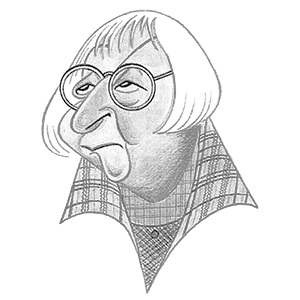
‘Dark Age Ahead‘ is a 2004 book by Jane Jacobs describing what she sees as the decay of five key ‘pillars’ in North America: community and family, higher education, science and technology, taxes and government responsive to citizen’s needs, and self-policing by the learned professions. She argues that this decay threatens to create a dark age unless the trends are reversed. Jacobs characterizes a dark age as a ‘mass amnesia’ where even the memory of what was lost is lost.
People are increasingly choosing consumerism over family welfare, that is: consumption over fertility; debt over family budget discipline; fiscal advantage to oneself at the expense of community welfare. Universities are more interested in credentials than providing high quality education. Economics has become as the main ‘science’ to consider in making major political decisions. Governments are more interested in deep-pocket interest groups than the welfare of the population. She describes, a culture that prevents people from understanding/realizing the deterioration of fundamental physical resources which the entire community depends on.
read more »
Posted in Language, Politics |
1 Comment »
February 7, 2013
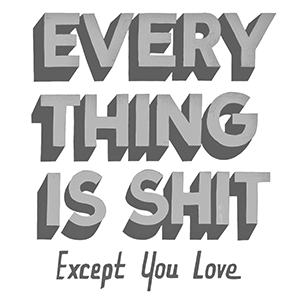
Sturgeon’s revelation, commonly referred to as Sturgeon’s law, is an adage commonly cited as ‘ninety percent of everything is crap.’ It is derived from quotations by Theodore Sturgeon, an American science fiction author.
The phrase was derived from Sturgeon’s observation that while science fiction was often derided for its low quality by critics, it could be noted that the majority of examples of works in other fields could equally be seen to be of low quality and that science fiction was thus no different in that regard to other art.
read more »
Posted in Humor, Language |
Leave a Comment »
February 7, 2013

In the summer of 2008 conceptual artist Steve Powers presented a work that came to be known as the Coney Island waterboarding thrill ride. As originally conceived Powers saw the public watching volunteers undergoing actual waterboarding.
‘The Washington Post’ reported that Powers brought in Mike Ritz, a former US official experienced in administering waterboarding, for a one time demonstration of waterboarding on volunteers. This demonstration was not open to the general public, but rather for an invited audience. Powers himself was one of the volunteers.
read more »
Posted in Art, Games, Politics |
Leave a Comment »
February 7, 2013

Steve Powers (b. 1968) is a New York City artist who at one time wrote graffiti in Philadelphia and New York under the name ESPO (‘Exterior Surface Painting Outreach’). Powers is from Philadelphia’s Overbrook neighborhood; he graduated from Robert E. Lamberton High School in 1987 and took classes at The Art Institute of Philadelphia and the University of the Arts. In 1994, he moved to New York with fellow writer and designer Ari Forman, in order to expand the reach of his magazine, ‘On the Go.’
ESPO’s work often blurred the lines of legality. For example, pieces like ‘Greetings from ESPOLand’ utilized the style of the Asbury Park Billboards and appeared to be a legitimate billboard. In 1997 ESPO began his most ambitious non-commissioned art. He painted on storefront grates in Fort Greene, Bedford-Stuyvesant, TriBeCa, and the South Bronx, covering the entire grate with white or silver paint and then using black to make each grate into a letter in his name.
read more »
Posted in Art, Politics |
Leave a Comment »
February 7, 2013
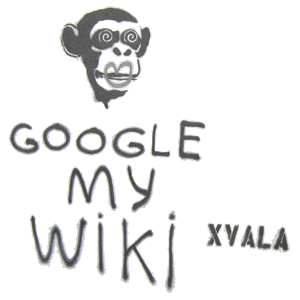
XVALA is an art project created by Jeff Hamilton (b. 1970). XVALA typically focuses on pieces that address celebrity and popular culture and he refers to this as ‘Tabloid Art.’ XVALA collaborated with sculptor Daniel Edwards on ‘The Brangelina,’ a house located in Oklahoma. In 2010, Jeff Hamilton walked away from his art and the name XVALA. Hamilton passed the name on to unnamed, upcoming artist.
‘Fear Google’ is the first street art sticker designed for the Post-PC era and was launched in 2010, the same year as Apple’s iPad and other Post-PC devices. The stickers fear message shows society’s growing inability to disconnect from the internet. First distributed by friends of the artist and some Apple Store employees the first stickers appeared on the California city streets.
read more »
Posted in Art, Money, Politics |
Leave a Comment »
February 7, 2013

Transphobia (or less commonly cissexism, transprejudice, trans-misogyny, referring to transphobia directed toward trans women and trans-misandry, referring to transphobia directed toward trans men) is a range of negative attitudes and feelings towards transsexualism and transsexual or transgender people, based on the expression of their internal gender identity.
Attacking someone on the basis of a perception of their gender identity rather the perception of their sexual orientation is known as ‘trans bashing,’ as opposed to ‘gay bashing.’ Transphobia need not be a phobia as defined in clinical psychology (i.e., an anxiety disorder). Its meaning and use typically parallel those of xenophobia (fear of foreigners).
read more »
Posted in Politics, Sex |
Leave a Comment »
February 7, 2013

Transsexualism describes the condition in which an individual identifies with a gender inconsistent or not culturally associated with their assigned sex, i.e. in which a person’s assigned sex at birth conflicts with their psychological gender. A medical diagnosis can be made if a person experiences discomfort as a result of a desire to be a member of the opposite sex, or if a person experiences impaired functioning or distress as a result of that gender identification.
Transsexualism is stigmatized in many parts of the world but has become more widely known in Western culture in the mid to late 20th century, concurrently with the sexual revolution and the development of sex reassignment surgery (SRS). Discrimination or negative attitudes towards transsexualism often accompany certain religious beliefs or cultural values. However, some cultures have less difficulty integrating people who change gender roles, often holding them with high regard, such as the traditional role for ‘two-spirit’ people found among certain native American tribes.
read more »
Posted in Health, Politics, Sex |
Leave a Comment »
February 6, 2013

Marc Quinn (b. 1964) is a British artist and one of a loose group known as the Young British Artists. He is known for ‘Alison Lapper Pregnant’ (a sculpture of Alison Lapper, an English artist who was born without arms) and ‘Self’ (a sculpture of his head made with his own frozen blood). Quinn has used blood, ice, and faeces to make sculptures; his work sometimes refers to scientific developments.
Quinn’s oeuvre displays a preoccupation with the mutability of the body and the dualisms that define human life: spiritual and physical, surface and depth, cerebral and sexual. Quinn’s sculpture, paintings and drawings often deal with the distanced relationship we have with our bodies, highlighting how the conflict between the ‘natural’ and ‘cultural’ has a grip on the contemporary psyche. In 1999, Quinn began a series of marble sculptures of amputees as a way of re-reading the aspirations of Greek and Roman statuary and their depictions of an idealized whole.
read more »
Posted in Art, Money, Philosophy |
Leave a Comment »
February 6, 2013

Daniel Edwards (born 1965) is a contemporary artist whose pieces address celebrity and popular culture in ways that have often stirred controversy. His work is generally accompanied by press releases. He includes the idea of promotion and associative fame in his own marketing of his art. His work includes a sculpture of the disembodied head of Ted Williams, a life-sized statue of Britney Spears giving birth while nude on her hands and knees on a bearskin rug (Edwards titled the piece ‘Monument to Pro-Life: The Birth of Sean Preston,’ explaining that it symbolized Spears’ decision to put childbirth ahead of her career; Britney Spears actually had a caesarean section), a bust of Senator Hillary Clinton, and a 25-foot (7.6 m) bust of Fidel Castro.
In an Associated Press interview, Edwards asserted that he incorporates celebrity stories because: ‘You’re bombarded with these stories. And there’s a thread that winds back to the art. That’s not a bad thing. People are interested in sex, and it works for art as well.’
Posted in Art, Money, Sex |
Leave a Comment »
February 6, 2013

Dan Hibiki is a video game character from Capcom’s ‘Street Fighter’ series of fighting games. Introduced in 1995 as a secret character in ‘Street Fighter Alpha,’ Dan is consistently portrayed as an arrogant, overconfident, yet utterly feeble character. Shortly after the release of ‘Street Fighter II’ in 1991, rival company SNK released their own fighting game, ‘Art of Fighting.’
The principal character of this series, Ryo Sakazaki, bore a resemblance in appearance and name to ‘Street Fighter’ mascots Ryu, as well as other aesthetic similarities to Ken, wearing an orange gi and sporting blonde hair. In humorous retaliation, ‘Street Fighter II’ co-designer Akiman drew an artwork of Sagat holding a defeated opponent by the head during the release of ‘Street Fighter II: Champion Edition.’ The defeated opponent wore an attire similar to Ryo’s: an orange karate gi with a torn black shirt underneath and geta sandals; but had long dark hair tied to a ponytail like Robert Garcia, another character from the ‘Art of Fighting’ series. This character design would become the basis of Dan.
read more »
Posted in Games, Humor |
Leave a Comment »
February 6, 2013

Gold sinks are economic processes by which a video game’s ingame currency (‘gold’), or any item that can be valued against it, is removed. Excess currency leads to inflation of player driven prices. Game designers must balance between scarcity of currency and ease of acquiring currency. This process is comparable to financial repression (measures that governments employ to channel funds to themselves, that, in a deregulated market, would go elsewhere). Most commonly the genres are role-playing game or massively multiplayer online game.
The term is comparable to timesink (an activity that consumes significant time), but usually used in reference to game design and balance, commonly to reduce inflation when commodities and wealth are continually fed to players through sources such as quests, looting monsters, or minigames. Gold sinks are commonly called drains or gold drains. They can also be associated with item drains. The intent of a sink is to remove added value from the overall economy. For example, in ‘Ultima Online,’ items that were placed on the ground would be gathered by the server. This form is referred to as decay or garbage collection.
read more »
Posted in Games, Money, Technology |
Leave a Comment »
February 6, 2013
The God gene hypothesis proposes that a specific gene (VMAT2) predisposes humans towards spiritual or mystic experiences. The idea has been postulated by geneticist Dean Hamer, the director of the Gene Structure and Regulation Unit at the U.S. National Cancer Institute, and author of the 2005 book ‘The God Gene: How Faith is Hardwired into our Genes.’ The God gene hypothesis is based on a combination of behavioral genetic, neurobiological, and psychological studies.
The major arguments of the theory are: (1) spirituality can be quantified by psychometric measurements; (2) the underlying tendency to spirituality is partially heritable; (3) part of this heritability can be attributed to the gene VMAT2; (4) this gene acts by altering monoamine levels; and (5) spiritual individuals are favored by natural selection because they are provided with an innate sense of optimism, the latter producing positive effects at either a physical and psychological level.
read more »
Posted in Health, Philosophy, Science |
1 Comment »


 The Daily Omnivore