September 7, 2011

Bubblegum is a type of elastic chewing gum, designed to be blown out of the mouth as a bubble. A 23-inch bubble blown by Susan Montgomery Williams of California in 1996 holds the Guinness World Record for largest bubble blown. Bubble gum was invented by Walter Diemer in 1928. Diemer was working as an accountant for the Fleer Chewing Gum Company in Philadelphia. In his spare time, he experimented with a new gum recipes. The gum he invented was less sticky than regular chewing gum, and stretched more easily. He sold his gum under the name Dubble Bubble in 1928. Original bubble gum was pink because that was the only dye Diemer had on hand at the time.
Bubblegum is available in many different colors and flavors. ‘Bubblegum flavor’ is the taste of the plain gum, an d it is made from synthetic chemicals, such as ethyl methylphenylglycidate, isoamyl acetate and others, and fruit extracts, the true ingredients being kept a mystery to customers. When blended, the chemicals and extracts fuse together to make a sweet, palatable flavor. Other flavors also include strawberry, apple, cherry, watermelon, cinnamon, banana, and grape. Strawberry and banana can be achieved with isoamyl acetate limonene and ethyl methylphenylglycidate, respectively. Malic acid can be used for apple flavor, allyl hexanoate for pineapple, ethyl propionate for fruit punch, cinnamic aldehyde for cinnamon, and acetophenone for cherry.
Posted in Food, Money |
Leave a Comment »
September 7, 2011

The cherimoya [cher-uh-moi-uh] is a species of Annona (also known as a sugar-apple) native to the Andean-highland valleys of Peru, Ecuador, Colombia, Chile, Bolivia, and Argentina. The fruit is oval, often slightly oblate, with a smooth or slightly tuberculated skin. The fruit flesh is white and creamy, and has numerous dark brown seeds embedded in it. Mark Twain called the cherimoya ‘the most delicious fruit known to men.’
The Moche culture of Peru had a fascination with agriculture and represented fruits and vegetables in their art. Cherimoyas were often depicted in their ceramics. The name originates from the Quechua word chirimuya, which means ‘cold seeds,’ because the plant grows at high altitudes. The tree thrives throughout the tropics at altitudes of 1,300 to 2,600 m (4,300 to 8,500 ft). Though sensitive to frost, it must have periods of cool temperatures or the tree will gradually go dormant. The indigenous inhabitants of the Andes say that although the cherimoya cannot stand snow, it does like to see it in the distance.
read more »
Posted in Food, World |
1 Comment »
August 25, 2011

Persistence hunting is a hunting technique in which hunters use a combination of running and tracking to pursue prey to the point of exhaustion. While humans can sweat to reduce body heat their quadruped prey would need to slow from a gallop to pant. Today, it is very rare and seen only in a few groups such as Kalahari bushmen and the Tarahumara or Raramuri people of Northern Mexico. Persistence hunting requires endurance running – running many miles for extended periods of time. Among primates, endurance running is only seen in humans, and persistence hunting is thought to have been one of the earliest forms of human hunting, having evolved 2 million years ago.
The persistence hunt may well have been the first form of hunting practiced by hominids. It is likely that this method of hunting evolved before humans invented projectile weapons, such as darts, spears, or slings. Since they could not kill their prey from a distance and were not fast enough to catch the animal, one reliable way to kill it would have been to run it down over a long distance.
read more »
Posted in Food, Games, Science |
1 Comment »
August 15, 2011
Kopi luwak, or civet coffee, is one of the world’s most expensive and low-production varieties of coffee. It is made from the beans of coffee berries which have been eaten by the Asian Palm Civet, then passed through its digestive tract. A civet eats the berries for their fleshy pulp. In its stomach, enzymes seep into the beans, making shorter peptides and more free amino acids. Passing through a civet’s intestines the beans are then defecated, keeping their shape. After gathering, thorough washing, sun drying, light roasting and brewing, these beans yield an aromatic coffee with much less bitterness, widely noted as the most expensive coffee in the world.
Since the flavor of coffee owes much to its proteins, there is a hypothesis that this shift in the numbers and kinds of proteins in beans after being swallowed by civets brings forth their unique flavor. The proteins are also involved in non-enzymatic Maillard browning reactions brought about later by roasting. Moreover, while inside a civet the beans begin to germinate by malting which also lowers their bitterness. Kopi luwak is produced mainly on the islands of Sumatra, Java, Bali and Sulawesi in the Indonesian Archipelago, and also in the Philippines, and also in East Timor. Weasel coffee is a loose English translation of its name cà phê Chồn in Vietnam, where popular, chemically simulated versions are also produced.
read more »
Posted in Food, Humor, Money |
Leave a Comment »
August 14, 2011
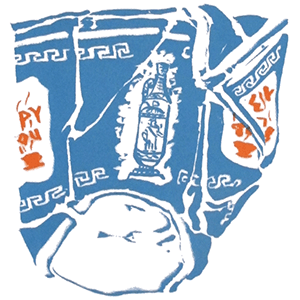
The Anthora is a paper coffee cup design that has become iconic of New York City daily life — its name is a play on the word amphora (ceramic container with two handles and a long neck narrower than the body). The cup was originally designed by Leslie Buck of the Sherri Cup Co. in 1963, to appeal to Greek-owned coffee shops in New York City — and was later copied heavily by other companies. The genuine Anthora depicts an image of an Ancient Greek amphora, a meander design on the top and bottom rim, and the words ‘WE ARE HAPPY TO SERVE YOU’ in a font that resembles ancient Greek writing. The blue and white colors were inspired by the flag of Greece.
Buck never made royalties from his design, but as a salesman he was remunerated handsomely from the success of the product. When he retired from Sherri Cup Co. in 1992, he was presented with 10,000 Anthoras printed with a testimonial inscription. On the occasion of Buck’s death in 2010, a New York Times writer described the motto on the cup as having ‘welcome intimations of tenderness, succor and humility.’ The trademark is currently held by the Solo Cup Company, which licenses sales of the cup.
Posted in Food, Money |
1 Comment »
August 12, 2011

A Mouli grater is a hand-operated cooking tool designed for grating or pureeing small quantities of food. The device consists of a small metal drum with holes that grate the food and a handle for turning the drum. Mouli is a French brand name that later changed into Moulinex. A grating cylinder similar to the one used in this design later turned up in food processors from that company.
The hand-held unit consists of two sections with hinged handles. The end of one handle contains a food hopper with a grating cylinder and a crank for rotating the cylinder. The other section has a rounded surface that acts as a clamp, pressing the food to be grated into the grating cylinder. The hinged handles are held in one hand and squeezed so that the food presses against the grating cylinder. Meanwhile, the other hand turns the crank, causing the cylinder to rotate and the food to be grated.
Posted in Food, Technology |
Leave a Comment »
August 5, 2011
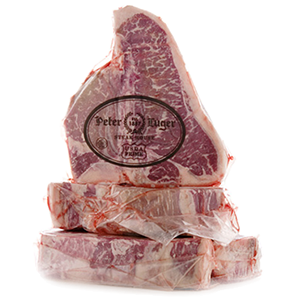
Beef aging is the process of preparing beef for consumption, mainly by breaking down the connective tissue. Dry-aged beef has been hung to dry for several weeks. After the animal is slaughtered and cleaned, either an entire half will be hung, or prime cuts will be placed in a cooler, also known as a ‘hot box.’ This process involves considerable expense, as the beef must be stored near freezing temperatures. Also, only the higher grades of meat can be dry aged, as the process requires evenly distributed fat. For these reasons one seldom sees dry-aged beef outside of steak restaurants and upscale butcher shops. The process changes beef by two means. First, moisture is evaporated from the muscle, concentrating flavor. Second, the beef’s natural enzymes break down the connective tissue in the muscle, which leads to more tender beef.
Dry-aging can promote the growth of certain mold species on the external surface of the meat. This doesn’t cause spoilage, but actually forms an external ‘crust,’ which is trimmed off when the meat is prepared for cooking. These fungal species complement the natural enzymes in the beef by helping to tenderize and increase the flavor of the meat. The genus Thamnidia, in particular, is known to produce collagenolytic enzymes which greatly contribute to the tenderness and flavor of dry-aged meat. Wet-aged beef is beef that has typically been aged in a vacuum-sealed bag to retain its moisture. This is the dominant mode of aging beef in the United States today. Wet-aging is popular because it takes less time (typically only a few days) and none of the weight is lost in the process. In contrast, dry-aging can take 15–28 days, and will see up to a third or more of the weight lost as moisture.
Posted in Food, Money |
Leave a Comment »
August 4, 2011

Whole grains are cereal grains that contain cereal germ, endosperm, and bran, in contrast to refined grains, which retain only the endosperm. Whole Grains can generally be sprouted while refined grains generally will not sprout. Wholemeal products are made by grinding whole grains in order to make whole grain flour. Whole grains are a natural source of protein as well as a source of carbohydrates and are made into many different kinds of foods.
There are multiple grains such as cereal grains (e.g. wheat, brown rice, oats, barley, corn, and rye) as well as pseudocereals (e.g. quinoa and buckwheat) that may be labeled whole grains. Common whole grain products include: whole wheat bread, whole wheat pasta, rolled oats, and popcorn. By contrast, common refined-grain products include: white rice, white bread, hominy, and pasta.
read more »
Posted in Food, Health |
Leave a Comment »
August 4, 2011
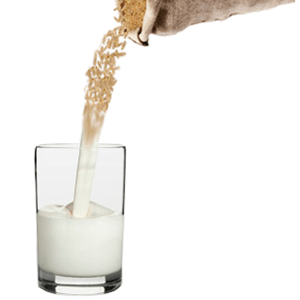
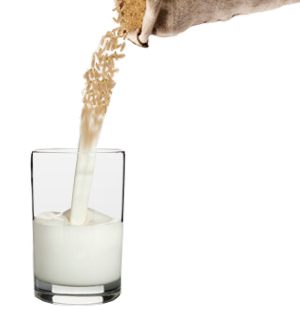
Grain milk is a milk substitute made from fermented grain or from flour. Grain milk can be made from oats, spelt, rice, rye, einkorn wheat or quinoa, and looks very similar to cow’s milk. It has a lower protein content and a higher carbohydrate content than cow’s milk. Just as cow’s milk is often fortified, grain milks may have calcium and some vitamins (especially B12) added to them.
Grain milk is low in saturated fat and contains no lactose, which is beneficial for those who are lactose intolerant. Grain milk also lacks milk protein, making it suitable for vegans and people with milk allergies. Flavored grain milk can come in plain, vanilla, chocolate or a variety of other flavors. There are also grain milk cream and desserts available.
Posted in Food, Health |
Leave a Comment »
August 4, 2011
Milk is a white liquid produced by the mammary glands of mammals. It is the primary source of nutrition for infants before they are able to digest other types of food. Early-lactation milk contains colostrum, which carries the mother’s antibodies to the baby and can reduce the risk of many diseases in the baby. The precise components of raw milk vary by species and by a number of other factors, but it contains significant amounts of saturated fat, protein and calcium as well as vitamin C.
In almost all mammals, milk is fed to infants through breastfeeding, either directly or by expressing the milk to be stored and consumed later. Some cultures, historically or currently, continue to use breast milk to feed their children until they are seven years old. Human infants sometimes are fed fresh goat milk, but there are known risks in this practice, such as developing a host of allergic reactions.
read more »
Posted in Food, Health, Science |
Leave a Comment »
July 20, 2011

Dippin’ Dots is an ice cream snack, invented by Curt Jones in 1987. The confection is created by flash freezing ice cream mix in liquid nitrogen; consequently, Dippin’ Dots contain less air than conventional ice cream. The resulting small spheres of ice cream are stored at temperatures ranging from -70 to -20 °F (from -57 °C to -29 °C). The marketing slogan is ‘Ice Cream of the Future.’ The company, headquartered in Paducah, Kentucky, United recently began selling its product in supermarkets in the United States. Dippin’ Dots are sold in individual servings at franchised outlets, many in theme parks, stadiums, shopping malls, and in vending machines.
Several competing beaded ice-cream lines have been introduced in recent years. Some of these competing brands are similar to Dippin’ Dots in shape or size, yet differ in that they use dairy stabilizers and artificial sweeteners, in an effort to keep the beads from adhering to one another. Dippin’ Dots, made from conventional ice cream ingredients, are held at sub-zero temperatures to keep the beads separate and free-flowing.
Posted in Food, Money, Technology |
1 Comment »
July 20, 2011

El Bulli is a molecular gastronomy restaurant near the town of Roses, Spain (near the French border), run by chef Ferran Adrià. In early 2011, management announced that the restaurant would close that summer to reopen as a creativity center in 2014. Its main objective is to be a think-tank for creative cuisine and gastronomy and will managed by a private foundation. The former restaurant accommodated only 8,000 diners a season, but received more than two million requests. The average cost of a meal was €250. The restaurant itself operated at a loss since 2000, with operating profit coming from El Bulli-related books and lectures by Adrià. The location was selected in 1961 by Dr Hans Schilling, a German, and his Czech wife Marketta, who wanted a restaurant for a piece of land he had purchased. The name ‘El Bulli’ came from the French bulldogs the Schillings owned.
The first restaurant was opened in 1964. Ferran Adrià joined the staff in 1984, and was put in sole charge of the kitchen in 1987. In 1990 the restaurant gained its second Michelin star, and in 1997 its third. Menu items have included melon with ham, pine nut marshmallows, steamed brioche with rose-scented mozzarella, rock mussels with seaweed and fresh herbs, and passion fruit trees. Texturas is a range of products by Adrià and his brother Albert. Texturas include products such as Xanthan and Algin. Xanthan gum allows the user to use a very small amount to thicken soups, sauces and creams without changing the flavor. Algin is a key component of the ‘Spherification Kit’ and is essential for every spherical preparation: caviar, raviolis, balloons, gnocchi, pellets, and mini-spheres.
Posted in Food, Money, Technology |
Leave a Comment »




 The Daily Omnivore