July 3, 2011
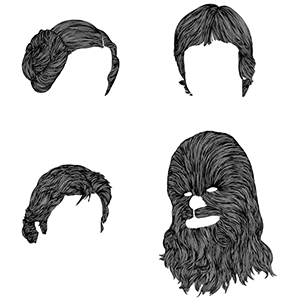
Mr Bingo (b. 1979) is an illustrator living and working in London. He describes himself as having a ‘slightly smaller than average’ head and ‘girl’s arms,’ plus ‘the same haircut as his mum.’ He includes amongst his influences ‘[the] local ASDA supermarket, thick humans, fat humans, dogs who wear clothes, the British abroad, overheard conversations and juvenile graffiti.’
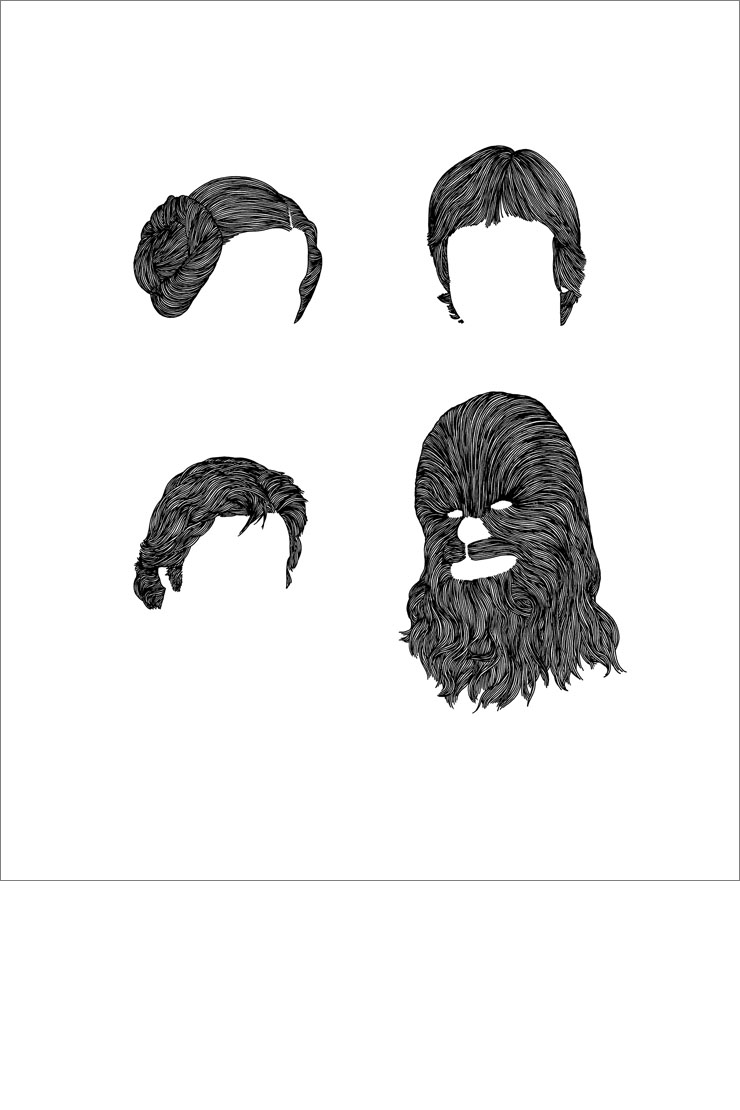
A selection of his work can be found on his website, and he has created a number of limited edition silkscreen prints which can be viewed online, and (so far) consist of ‘Hair portraits’ – famous ‘faces,’ illustrated only by their hair.
Posted in Art, Humor |
Leave a Comment »
July 3, 2011

The Subservient Chicken is a 2004 advertising campaign created to promote international fast food restaurant chain Burger King’s TenderCrisp chicken sandwich and their ‘Have it Your Way’ campaign. On its website, a man in a chicken costume performs a wide range of actions based on a user’s input, showing pre-recorded footage and appearing like an interactive webcam. The site takes literally the advertising slogan ‘Get chicken just the way you like it.’
There are more than three hundred commands that the Subservient Chicken will respond to, including: Moonwalk, Riverdance, and pick your nose. When told to perform sex acts, take off his mask, or do anything the Subservient Chicken considers offensive, the chicken walks up to the camera and shakes a scolding chicken finger in disappointment.
Posted in Food, Humor, Money |
Leave a Comment »
July 3, 2011

Almost 30 years after its release, the plot for the movie ‘Trading Places’ was part of the inspiration for new regulations on the financial markets. In March of 2010 Commodity Futures Trading Commission chief Gary Gensler stated, in testimony he gave to the 111th Congress, ‘We have recommended banning using misappropriated government information to trade in the commodity markets. In the movie, starring Eddie Murphy, the Duke brothers intended to profit from trades in frozen concentrated orange juice futures contracts using an illicitly obtained and not yet public Department of Agriculture orange crop report.
The ‘Eddie Murphy Rule,’ as it came to be known, later came into effect as part of the Wall Street Transparency and Accountability Act of the Dodd-Frank Wall Street Reform and Consumer Protection Act, which dealt with insider trading.
Posted in Humor, Money, Politics |
Leave a Comment »
June 29, 2011
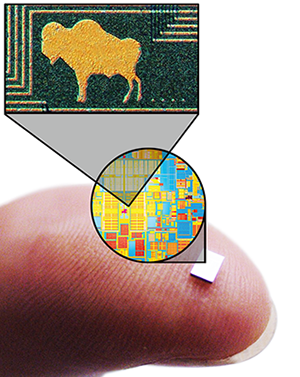
Chip art, also known as silicon art, chip graffiti or silicon doodling, refers to microscopic artwork built into integrated circuits, also called chips or ICs. Since ICs are printed by photolithography, not constructed a component at a time, there is no additional cost to include features in otherwise unused space on the chip.
Designers have used this freedom to put all sorts of artwork on the chips themselves, from designers’ simple initials to rather complex drawings. Given the small size of chips, these figures cannot be seen without a microscope. Chip graffiti is sometimes called the hardware version of software easter eggs (an intentional hidden message or feature).
read more »
Posted in Art, Humor, Technology |
Leave a Comment »
June 29, 2011
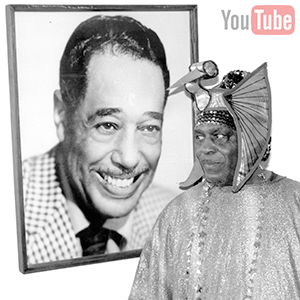
Sun Ra (1914 – 1993), born Herman Poole Blount, was a prolific jazz artist and philosopher known for his ‘cosmic’ music and philosophies. His eclectic music and unorthodox lifestyle made him controversial. Claiming that he was of the ‘Angel Race’ and not from Earth, but from Saturn, Sun Ra developed a complex persona using ‘cosmic’ philosophies and lyrical poetry that made him a pioneer of afrofuturism. He preached awareness and peace above all.
He abandoned his birth name and took on the name and persona of Sun Ra (Ra being the Egyptian God of the Sun), and used several other names throughout his career, including Le Sonra and Sonny Lee. Sun Ra denied any connection with his birth name, saying ‘That’s an imaginary person, never existed … Any name that I use other than Ra is a pseudonym.’
read more »
Posted in Art, Humor, Philosophy |
Leave a Comment »
June 28, 2011

‘Paul is dead‘ is an urban legend suggesting that Paul McCartney of the English rock band The Beatles died in 1966 and was secretly replaced by a look-alike. In September 1969, American college students published articles claiming that clues to McCartney’s death could be found among the lyrics and artwork of The Beatles’ recordings.
Clue hunting proved infectious and within a few weeks had become an international phenomenon. Rumors declined after a contemporary interview with McCartney was published in Life magazine in November 1969. Popular culture continues to make occasional reference to the legend.
read more »
Posted in Art, Death, Humor |
Leave a Comment »
June 28, 2011

Voiced by Dave Willis, Carl Brutananadilewski is the only main character on ‘Aqua Teen Hunger Force’ who is a human. Carl wears blue sweatpants, a white tank top, flip flops, and a golden chain. Carl has a mustache and is overweight, balding, and has hair all over his body, even on the bottom of his feet.
Carl Brutananadilewski lives next door to Frylock, Meatwad, and Master Shake in a suburban neighborhood in New Jersey. Carl is quick tempered and sarcastic. He has a strong passion for sports, classic rock, and pornography which helps him with his favorite activity, masturbation. He generally dislikes Master Shake, Frylock, and Meatwad, and considers them freaks. Carl sometimes tolerates and welcomes them (rarely with a favorable outcome) possibly because of loneliness. He has a pool which they often use uninvited. His car and house are often destroyed, and he is often tortured and killed, usually as a result of something the Aqua Teens have done but occasionally by his own or others’ doing. Carl has a car he named ‘2Wycked,’ a Ford Probe which is based on Matt Maiellaro’s real life car, the creator of ATHF.
read more »
Posted in Art, Humor |
Leave a Comment »
June 28, 2011

Stitch ‘n Bitch is a phrase that has been used to refer to social knitting groups. ‘Stitch ‘n Bitch’ is a name used by knitting groups that meet on a weekly or monthly basis at locations throughout the world. This use of the term originates as early as the Second World War.
Today’s Stitch ‘n Bitch clubs are generally casual groups of knitters who meet in public spaces such as bars or cafes for socializing and sharing knitting advice. These groups are free or small fee required memberships and open to the public, and are listed in a directory of worldwide knitting groups.
Posted in Art, Games, Humor |
Leave a Comment »
June 24, 2011
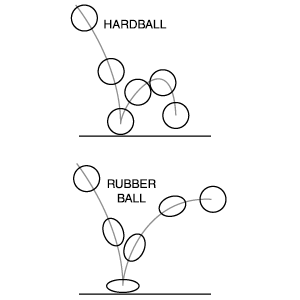
Squash and stretch is a common animation technique applied to characters or objects in motion. The technique makes their actions more fluid, and it is generally exaggerated for a cartoonish effect. When utilized with more subtlety, it works just as well for realistic movements. Squash and stretch was used to great effect in early 1920s American cartoons such as ‘Felix the Cat’ and ‘Betty Boop.’ It can also be used in comics or still cartoon art.
When done in accordance with the principles of animation, squash and stretch keeps the volume of the character constant. When squash and stretch is applied, it creates the illusion that a drawing has dimension and volume. Squash and stretch does not always have to be cartoonlike – when we crouch down in anticipation for a large leap, we squash. When we spring into the air, we stretch. A half-filled flour sack is an example of a more cartoonlike squash and stretch – when dropped the sack squashes a lot; when picked up it stretches a lot – but throughout the entire action, the volume never changes.
Posted in Art, Humor |
Leave a Comment »
June 24, 2011

The candy desk is a tradition of the United States Senate established in 1968. The desk, located on the Republican side of the Senate chamber, was first stocked with candy and treats by Senator George Murphy. Those entrusted with the candy desk have included John McCain, Slade Gorton, Bob Bennett, and Rick Santorum. Most senators take advantage of the desk, even though eating is not allowed on the Senate floor. The desk is currently occupied by Senator Mark Kirk of Illinois.
The tenant of the candy desk is charged with stocking it with candy from his or her home state, but funding has been an issue. Originally senators would ask for a specific candy and leave a few dollars to keep the desk stocked with their favorites, but as time continued, and the candy desk became a more solid tradition of the Senate, lobby groups and organizations, specifically the National Confectioners Association, and the Chocolate Manufacturers Association, organized donations.
read more »
Posted in Food, Humor, Politics |
Leave a Comment »
June 24, 2011

In the culture of American adolescents, the game of baseball is often used as a euphemistic metaphor for the degree of sexual intimacy achieved in intimate encounters or relationships. In the metaphor, prevalent in the post-World War II period, sexual activities are described as if they are actions in a game of baseball.
Although details vary, a broadly accepted description of what each base represents, first base is commonly understood to be any form of mouth to mouth kissing, especially open mouth (‘French’) kissing involving the tongue. Thus, if a person complains that s/he ‘can’t get to first base,’ it means that the partner spurned advances or is not interested, although this is not necessarily a specific reference to a spurned attempt to engage in kissing. Second base is manual stimulation of the genitalia. Third base is oral stimulation of the genitalia. Finally, a home run (Fourth base) is the act of penetrative intercourse.
read more »
Posted in Games, Humor, Sex |
Leave a Comment »
June 21, 2011

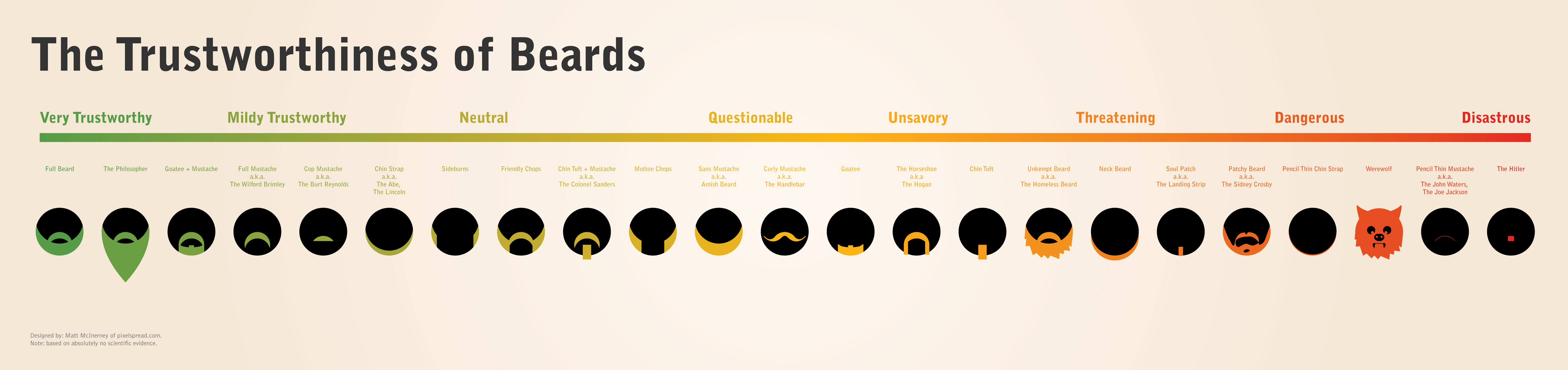
‘Barba non facit philosophum‘ is a Latin phrase meaning ‘A beard does not constitute a philosopher.’ According to the Latin author Aulus Gellius, who relates he was present at the episode, a man in a cloak, ‘with long hair and a beard that reached almost to his waist’ once came to the Athenian aristocrat, Herodes Atticus, who was renown for his ‘charm and his Grecian eloquence,’ and asked that money be given him for bread. When Herodes asked him who he was, the man, seemingly taking offense, replied that he was a philosopher, adding that he wondered why Herodes thought it necessary to ask what was obvious
‘I see,’ said Herodes, ‘a beard and a cloak; the philosopher I do not yet see.’ Some of Herodes’ companions informed him that the fellow was a actually a beggar ‘of worthless character,’ whose behavior was often abusive. Hearing which, Herodes said: ‘Let us give him some money, then, whatever his character may be, not because he is a man, but because we are men,’ and ordered that enough money be given to the man so that he could ‘buy bread for thirty days.’ The Athenian’s phrase, shortened to ‘A beard does not constitute a philosopher,’ has taken on a meaning similar to the proverb: ‘Clothes do not make the man,’ encountered in many cultures.
Posted in Humor, Language, Philosophy |
1 Comment »



 The Daily Omnivore