March 5, 2013

Mat is a term for strong obscene profanity in Russian and some other Slavic language communities. Mat is censored in the media and the use of mat in public constitutes a form of disorderly conduct, or mild hooliganism (although, such laws are only enforced episodically, in particular due to the vagueness of the legal definition).
However, despite the public ban, mat is used by Russians of all ages and nearly all social groups, with particular fervor in male-dominated military and the structurally similar social strata.
read more »
Posted in Language, World |
Leave a Comment »
March 5, 2013
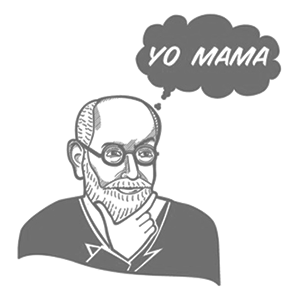
Sigmund Freud noticed that humor, like dreams, can be related to unconscious content. In the 1905 book ‘The Joke and Its Relation to The Unconscious,’ as well as in the 1928 journal article ‘Humor,’ Freud distinguished contentious jokes from non-contentious or silly humor. In fact, he sorted humor into three categories that could be translated as: joke, comic, and mimetic (imitation).
In Freud’s view, jokes (the verbal and interpersonal form of humor) happened when the conscious allowed the expression of thoughts that society usually suppressed or forbade. The superego (conscience) allowed the ego (self) to generate humor. A benevolent superego allowed a light and comforting type of humor, while a harsh superego created a biting and sarcastic type of humor. A very harsh superego suppressed humor altogether.
read more »
Posted in Health, Humor, Language |
Leave a Comment »
March 5, 2013
A quotation is the repetition of one expression as part of another one, particularly when the quoted expression is well-known or explicitly attributed by citation to its original source, and it is indicated by (punctuated with) quotation marks. A quotation can also refer to the repeated use of units of any other form of expression, especially parts of artistic works: elements of a painting, scenes from a movie or sections from a musical composition.
Quotations are used for a variety of reasons: to illuminate the meaning or to support the arguments of the work in which it is being quoted, to provide direct information about the work being quoted(whether in order to discuss it, positively or negatively), to pay homage to the original work or author, to make the user of the quotation seem well-read, and/or to comply with copyright law. Quotations are also commonly printed as a means of inspiration and to invoke philosophical thoughts from the reader.
read more »
Posted in Language |
Leave a Comment »
March 5, 2013
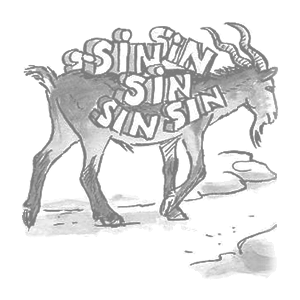
‘Shooting the messenger‘ is a metaphoric phrase used to describe the act of lashing out at the (blameless) bearer of bad news. In earlier times, messages were usually delivered in person by a human envoy. Sometimes, as in war, for example, the messenger was sent from the enemy camp.
An easily provoked combatant receiving such an overture could more easily vent anger (or otherwise retaliate) on the deliverer of the unpopular message than on its author. ‘Attacking the messenger’ is a subdivision of the ad hominem logical fallacy (making an argument personally against an opponent instead of against their argument).
read more »
Posted in Death, Language |
Leave a Comment »
March 4, 2013
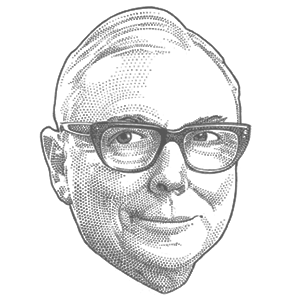
Charlie Munger (b. 1924) is an American business magnate, lawyer, investor, and philanthropist. He is Vice-Chairman of Berkshire Hathaway Corporation, the diversified investment corporation chaired by Warren Buffett; in that capacity, Buffett describes Munger as ‘my partner.’
Munger served as chairman of Wesco Financial Corporation from 1984 through 2011 (Wesco was approximately 80%-owned by Berkshire-Hathaway during that time). He is also the chairman of the Daily Journal Corporation, based in Los Angeles, and a director of Costco Wholesale Corporation.
read more »
Posted in Language, Money |
1 Comment »
March 2, 2013

‘Fresh Off the Boat: A Memoir‘ is a 2013 autobiography by American food personality Eddie Huang. The book relates Huang’s early life and rise in the food celebrity scene in New York, and his relationship with his Asian background.
Huang, educated as a lawyer, became prominent in New York’s restaurant scene after the success of his BaoHaus, a purveyor of Chinese Cha siu bao, or pork buns. He developed a reputation as a food personality after hosting food-themed programs on the Food Network and Vice TV.
read more »
Posted in Food, Humor, Language |
1 Comment »
February 26, 2013
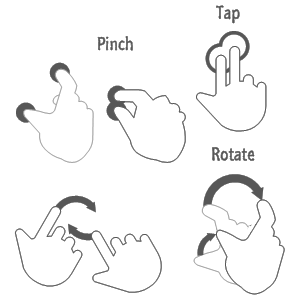
Gesture recognition is a topic in computer science and language technology with the goal of interpreting human gestures via mathematical algorithms. Gestures can originate from any bodily motion or state but commonly originate from the face or hand. Current focuses in the field include emotion recognition from the face and hand gesture recognition. Many approaches have been made using cameras and computer vision algorithms to interpret sign language.
However, the identification and recognition of posture, gait, proxemics (culture-specific, personal boundaries), and human behaviors is also the subject of gesture recognition techniques. Gesture recognition can be seen as a way for computers to begin to understand human body language, offering richer interaction between machines and humans than that afforded by a mouse and keyboard.
read more »
Posted in Language, Technology |
Leave a Comment »
February 25, 2013
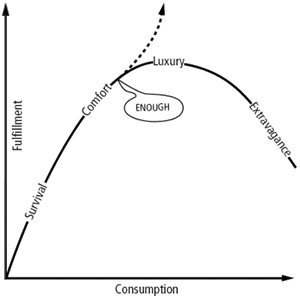
Growth Fetish is a 2003 book about economics and politics by the Australian liberal political theorist Clive Hamilton. The book argues that the policies of unfettered capitalism pursued by the west for the last 50 years has largely failed, since the underlying purpose of the creation of wealth is happiness, and Hamilton contends that people in general are no happier now than 50 years ago, despite the huge increase in personal wealth. In fact, he suggests that the reverse is true. He states that the pursuit of growth has become a fetish, in that it is seen as a universal magic cure for all of society’s ills.
Hamilton also proposes that the pursuit of growth has been at a tremendous cost in terms of the environment, erosion of democracy, and the values of society as a whole. One result is that we, as a society, have become obsessed with materialism and consumerism. Hamilton’s catchphrase ‘People buy things they don’t need, with money they don’t have, to impress people they don’t like’ neatly sums up his philosophy on consumerism.
read more »
Posted in Language, Money |
Leave a Comment »
February 25, 2013

‘Animal spirits‘ is the term economist John Maynard Keynes used in his 1936 book ‘The General Theory of Employment, Interest and Money’ to describe emotions which influence human behavior and can be measured in terms of consumer confidence. It has since been argued that trust is also included or produced by ‘animal spirits.’ Several articles and at least two books with a focus on “animal spirits” were published in 2008 and 2009 as a part of the Keynesian resurgence.
According to Keynes: ‘Even apart from the instability due to speculation, there is the instability due to the characteristic of human nature that a large proportion of our positive activities depend on spontaneous optimism rather than mathematical expectations, whether moral or hedonistic or economic. Most, probably, of our decisions to do something positive, the full consequences of which will be drawn out over many days to come, can only be taken as the result of animal spirits – a spontaneous urge to action rather than inaction, and not as the outcome of a weighted average of quantitative benefits multiplied by quantitative probabilities.’
read more »
Posted in Language, Money |
Leave a Comment »
February 19, 2013

Jejemon is a pop culture phenomenon in the Philippines. According to ‘Urban Dictionary,’ a Jejemon is a person ‘who has managed to subvert the English language to the point of incomprehensibility.’ ‘The Philippine Daily Inquirer’ describes Jejemons as a ‘new breed of hipster who have developed not only their own language and written text but also their own subculture and fashion.’ Short-hand typing was first popularized by text messaging (limited to 160 characters per text). As a result, an ‘SMS language’ developed in which words were shortened in order to fit the 160-character limit.
The Jejemons are said to be the new jologs, a term used for Filipinos of the lower income class. The sociolect of the Jejemons, called Jejenese, is derived from English, Filipino and their code-switched variant, Taglish. It has its own, albeit unofficial, orthography, known as Jejebet, which uses the Filipino variant of the Roman alphabet, Arabic numerals and other special characters. Words are created by rearranging letters in a word, alternating capitalization, with an over-usage of the letters H, X or Z, and silent letters. It has similarities with Leetspeak, primarily the alphanumeric nature of its writing.
Posted in Humor, Language, World |
Leave a Comment »
February 19, 2013

2600: The Hacker Quarterly is an American publication that specializes in publishing technical information on a variety of subjects including telephone switching systems, Internet protocols and services, as well as general news concerning the computer ‘underground’ and left wing, and sometimes (but not recently), anarchist issues.
The magazine’s name comes from the phreaker discovery in the 1960s that the transmission of a 2600 hertz tone (which could be produced perfectly with a plastic toy whistle given away free with Cap’n Crunch cereal—discovered by friends of John Draper) over a long-distance trunk connection gained access to ‘operator mode’ and allowed the user to explore aspects of the telephone system that were not otherwise accessible.
read more »
Posted in Language, Politics, Technology |
Leave a Comment »
February 18, 2013

‘Private Guns, Public Health‘ is a 2004 non-fiction book by David Hemenway, an economist who has served as Professor of Health Policy at the Harvard School of Public Health as well as the Director of Harvard’s Injury Control Research Center. He argues that the widespread ownership of firearms in private hands in the U.S. promotes the spread of the ‘disease’ of gun violence, and he takes a collective interpretation of the Second Amendment while stating that increased regulations are absolutely necessary in the purposes of public safety. Hemenway makes the central case that ‘more guns in a community lead to more homicide.’
Hemenway interprets the issues of gun violence and gun politics in the U.S. through a public health lens, which he believes ’emphasizes prevention rather than fault-finding, blame, or revenge.’ He writes that he is not ‘anti-gun’ or ‘anti-gun owner’ any more than people who advocate for consumer safety measures in cars are ‘anti-cars.’ He sums the goal of the book up as ‘injury prevention.’
read more »
Posted in Health, Language, Politics |
Leave a Comment »


 The Daily Omnivore