February 29, 2012

Ecofont is a TrueType font developed by SPRANQ in the Netherlands. The font uses tiny circles placed in the characters to cut down on ink costs. It claims to cut down the amount of ink usage by approximately 15 percent.
In a 2010 test, Ecofont Vera Sans saved 20% more ink when compared to Bitstream Vera Sans. However, both sans-serif fonts used more ink than most typical serif fonts. Therefore Ecofont developed software to save ink when using any typeface, including serif fonts.
Posted in Money, Technology |
Leave a Comment »
February 28, 2012

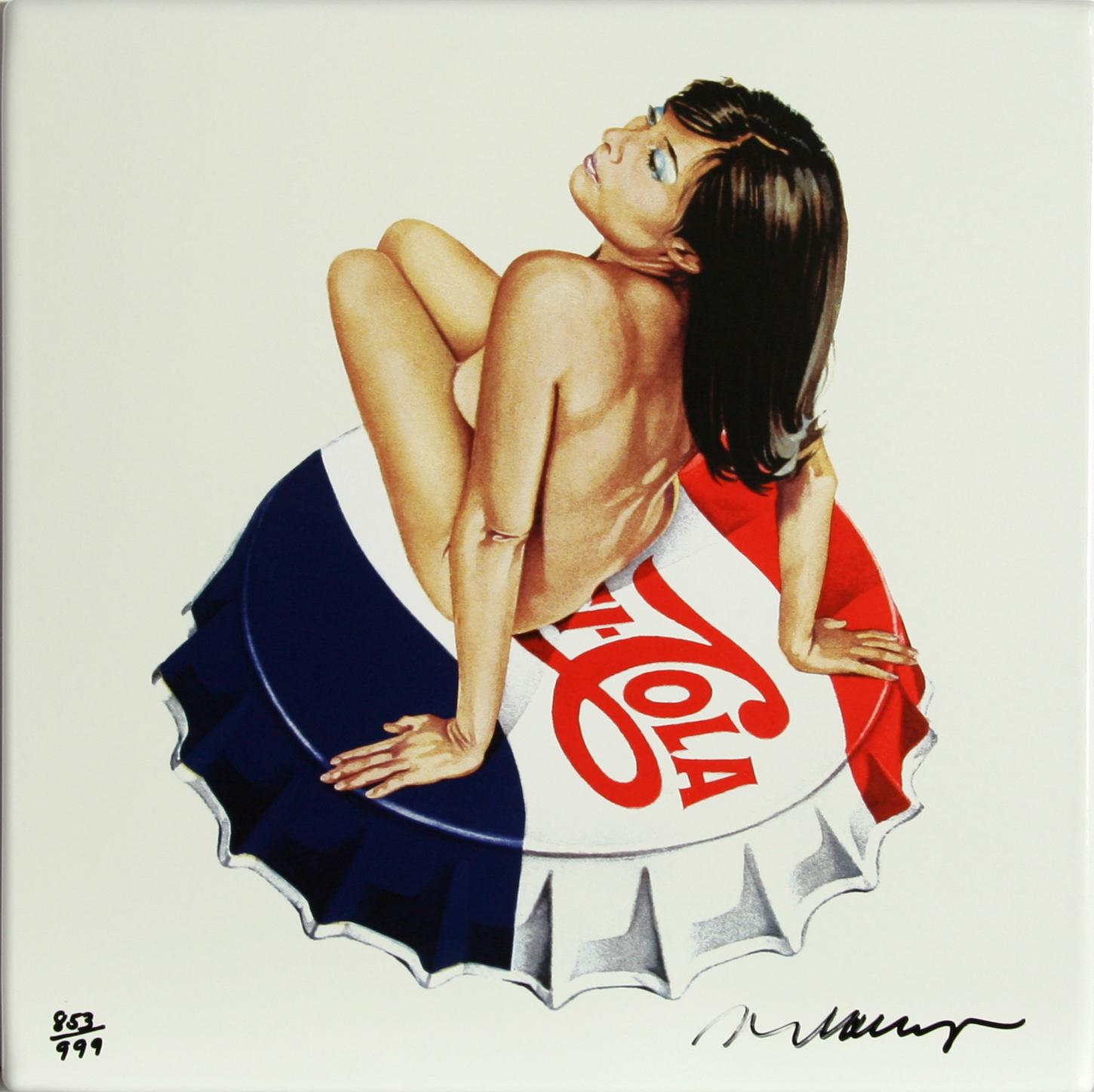
Mel Ramos (b. 1935) is a U.S. figurative painter, whose work incorporates elements of realist and abstract art. Born in Sacramento, California, he gained his greatest popularity in association with the Pop Art movement of the 1960s. The classification of Ramos within any particular school of art is disputed.
Some critical observers of the ‘art scene’ classify him as a pop artist. However, others believe identification of Ramos’ work within the Pop movement of the 1960s implies a satirical or parodic bent which does not reflect the broader context of his paintings, and instead defend his ‘parodies’ as respectful, affectionate tributes, a celebration of images with personal meaning.
Posted in Art, Money, Sex |
Leave a Comment »
February 28, 2012
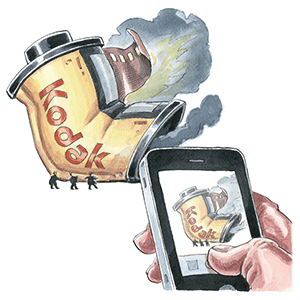
Cognitive inertia refers the tendency for beliefs or sets of beliefs to endure once formed. In particular, it describes the human inclination to rely on familiar assumptions and exhibit a reluctance and/or inability to revise them, even when supporting evidence no longer exists. The term is employed in the managerial and organizational sciences to describe the commonly observed phenomenon whereby managers fail to update and revise their understanding of a situation when that situation changes, a phenomenon that acts as a psychological barrier to organizational change.
However, not all instances of cognitive inertia result in negative outcomes. It is a key component of love, trust, and friendship. For instance, if evidence showed that a friend was dishonest, the cognitive inertia of the friendship would demand much more evidence to form an opinion than that required to form an opinion of a stranger.
Posted in Money, Science |
1 Comment »
February 26, 2012
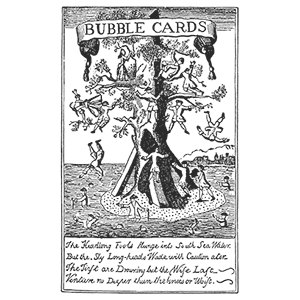
Extraordinary Popular Delusions and the Madness of Crowds is a history of popular folly by Scottish journalist Charles Mackay, first published in 1841. The book chronicles its subjects in three parts: National Delusions, Peculiar Follies, and Philosophical Delusions.
Despite its journalistic and rather sensational style, the book has gathered a body of academic support as a work of considerable importance in the history of social psychology and psychopathology. The subjects of Mackay’s debunking include economic bubbles, alchemy, crusades, witch-hunts, prophecies, fortune-telling, haunted houses, popular follies of great cities, and popular admiration of great thieves.
read more »
Posted in Language, Money, Philosophy |
Leave a Comment »
February 26, 2012


The Wisdom of Crowds is a 2004 book written by American journalist James Surowiecki about the aggregation of information in groups, resulting in decisions that, he argues, are often better than could have been made by any single member of the group. The book presents numerous case studies and anecdotes to illustrate its argument, and touches on several fields, primarily economics and psychology.
The opening anecdote relates Francis Galton’s surprise that the crowd at a county fair accurately guessed the weight of an ox when their individual guesses were averaged (the average was closer to the ox’s true butchered weight than the estimates of most crowd members, and also closer than any of the separate estimates made by cattle experts). The book relates to diverse collections of independently-deciding individuals, rather than crowd psychology as traditionally understood, however its title is an allusion to Charles Mackay’s ‘Extraordinary Popular Delusions and the Madness of Crowds,’ published in 1841 (which chronicled economic bubbles, witch-hunts, crusades, and similar phenomena).
read more »
Posted in Money, Science, War |
Leave a Comment »
February 25, 2012
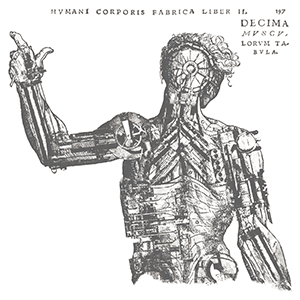
‘One-Dimensional Man: Studies in the Ideology of Advanced Industrial Society’ is a 1964 book by philosopher Herbert Marcuse. The work offers a wide-ranging critique of both contemporary capitalism and the society in the Soviet Union, documenting the parallel rise of new forms of social repression in both these societies, as well as the decline of revolutionary potential in the West.
Marcuse argues that ‘advanced industrial society’ created false needs, which integrated individuals into the existing system of production and consumption via mass media, advertising, industrial management, and contemporary modes of thought.
read more »
Posted in Language, Money, Politics |
Leave a Comment »
February 25, 2012

The Clock of the Long Now is a proposed mechanical clock designed to keep time for 10,000 years. The project to build it is part of the Long Now Foundation, a private organization that seeks to become the seed of a very long-term cultural institution. The project was conceived by American inventor Danny Hillis in 1986: ‘I want to build a clock that ticks once a year. The century hand advances once every one hundred years, and the cuckoo comes out on the millennium.I want the cuckoo to come out every millennium for the next 10,000 years.’
The first prototype of the clock began working on December 31, 1999, just in time to display the transition to the year 2000. At midnight on New Year’s Eve, the date indicator changed from 01999 to 02000, and the chime struck twice. That prototype, approximately two meters tall, is currently on display at the Science Museum in London. The first full-scale clock’s manufacture and site construction is being funded by Jeff Bezos, who has donated $42 million, and is located on his Texas land.
read more »
Posted in Money, Technology |
Leave a Comment »
February 25, 2012

Heroin chic was a look popularized in mid-1990s fashion and characterized by pale skin, dark circles underneath the eyes, and angular bone structure. This waifish, drug-addicted look was the basis of the 1993 advertising campaign of Calvin Klein featuring Kate Moss photographed by Vincent Gallo.
Emaciated features and androgyny were a reaction to ‘healthy’ and vibrant look of models such as Cindy Crawford, Claudia Schiffer, and Heidi Klum. A 1996 article in ‘The Los Angeles Times’ charged that the fashion industry had ‘a nihilistic vision of beauty’ that was reflective of drug addiction.
read more »
Posted in Art, Drugs, Money |
Leave a Comment »
February 25, 2012

Radical chic is a term coined by journalist Tom Wolfe in his 1970 essay ‘Radical Chic: That Party at Lenny’s,’ to describe the adoption and promotion of radical political causes by celebrities, socialites, and high society. The concept has been described as ‘an exercise in double-tracking one’s public image: on the one hand, defining oneself through committed allegiance to a radical cause, but on the other, vitally, demonstrating this allegiance because it is the fashionable, au courant way to be seen in moneyed, name-conscious Society.’
Unlike dedicated activists, revolutionaries, or dissenters, those who engage in radical chic remain frivolous political agitators. They are ideologically invested in their cause of choice only so far as it advances their social standing. ‘Terrorist chic’ is a modern expression with similar connotations. This derivative, however, de-emphasizes the class satire of Wolfe’s original term, instead accentuating concerns over the semiotics of radicalism (such as the aestheticization of violence).
read more »
Posted in Money, Politics |
Leave a Comment »
February 25, 2012

Moneybomb is a neologism coined in 2007 to describe a grassroots fundraising effort over a brief fixed time period, usually to support a candidate for election by dramatically increasing, concentrating, and publicizing fundraising activity during a specific hour or day. The term was first applied to a supporter-led fundraiser on behalf of presidential candidate Ron Paul.
The effort combines traditional and Internet-based fundraising appeals focusing especially on viral advertising through online vehicles such as YouTube, Facebook, and online forums. In the case of lesser-known candidates it is also intended to generate significant free mass media coverage the candidate would otherwise not receive. The term has also been used as a verb and apparently arose from analogy with the neologism ‘googlebomb,’ a method of search engine optimization.
Posted in Money, Politics, Technology |
Leave a Comment »
February 24, 2012
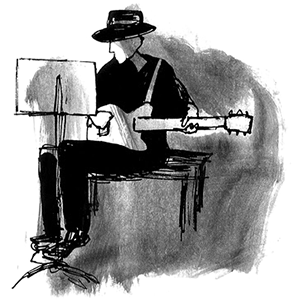
Outsider music, a term coined by music historian Irwin Chusid in the mid-1990s, are songs and compositions by musicians who are not part of the commercial music industry who write songs that ignore standard musical or lyrical conventions, either because they have no formal training or because they disagree with formal rules. This type of music, which often lacks typical structure and is emotionally stark, has few outlets; performers or recordings are often promoted by word of mouth or through fan chat sites, usually among communities of music collectors and music connoisseurs.
Outsider musicians usually have much ‘greater individual control over the final creative’ product either because of a low budget or because of their ‘inability or unwillingness to cooperate’ with modifications by a record label or producer. While a small number of outsider musicians became notable, such as Florence Foster Jenkins, an American soprano, the majority of outsider artists do not attain mainstream popularity.
read more »
Posted in Art, Language, Money |
1 Comment »
February 22, 2012
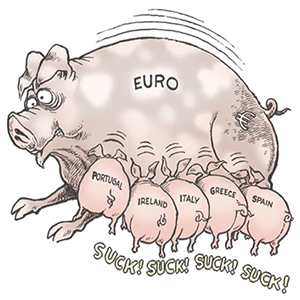
PIGS is a pejorative acronym used to refer to the economies of Portugal, Italy, Greece and Spain which are facing a financial crisis.
Since 2008, the term has included Ireland, either in place of Italy or with an additional I. Some news organizations have limited or banned use of the term because of criticism regarding perceived offensive connotations. The term has been used since at least the mid-1990s as an epithet.
Posted in Money, Politics, World |
1 Comment »


 The Daily Omnivore