December 1, 2011

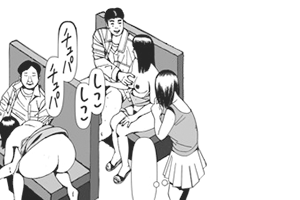
A pink salon, or pinsaro for short, is a type of brothel in Japan which specializes in oral sex. A pink salon is unusual in that the service is offered in small booths within a large open-plan room. The client is served soft drinks or alcoholic beverages by the ‘companion’ who performs fellatio on him. There may also be additional activities such as fingering the ‘companion’ and sumata (a Japanese term for a non-penetrative sex act where the sex worker rubs the client’s penis with her hands, thighs (intercrural sex), and labia majora).
Unlike the west, Japan does not have the same stigmas attached to sex work. Many young Japanese women work in pink salons throughout late high school and college as work is plentiful and pay is much better than in customer service positions. However, the work is demanding and an employee may be required to fellate over a dozen men in a single four hour shift.
Posted in Money, Sex, World |
Leave a Comment »
December 1, 2011

An image club, is a type of brothel in Japan similar to ‘fashion health’ parlors (a form of massage parlor which circumvents Japanese anti-prostitution laws by offering a range of services that stop short of sexual intercourse).
They differ in that image clubs are themed along popular sexual fantasies such as a business office, a doctor’s office, a classroom, or a subway car. The prostitutes themselves, whose activities are usually limited to oral sex, wear exaggerated costumes appropriate to the setting and the desire of the customer.
Posted in Money, Sex, World |
Leave a Comment »
December 1, 2011
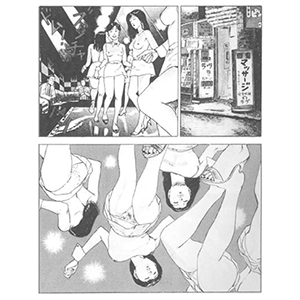
No-pan kissa (literally ‘no-panties cafe’) is a Japanese term for cafes where the waitresses wear short skirts with no underwear. The floors, or sections of the floor, are often mirrored. Customers order drinks and snacks and may look at, but not generally touch, the staff. The shops otherwise look like normal coffee shops, rather than sex establishments, although they charge around four times as much for coffee.
A later development in certain no-pan kissa was the creation of small private rooms where the staff provided sexual services like oral sex or masturbation. Eventually such coffee shops gave way to ‘fashion health’ clubs (a form of massage parlor which circumvents Japanese anti-prostitution laws by offering a range of services that stop short of sexual intercourse), and few, if any, remain. In addition to no-pan kissa, there have also been no-pan shabu-shabu, and no-pan yakiniku restaurants; and no-pan karaoke.
Posted in Money, Sex, World |
Leave a Comment »
December 1, 2011
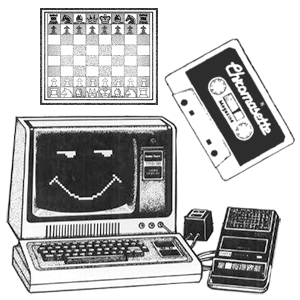
‘Chromasette‘ was the first ever, cassette-based TRS-80 Color Computer magazine produced by David Lagerquist and was an offshoot of ‘CLOAD’ magazine. It was published monthly from 1981 – 1984. It was advertised in ‘Creative Computing’ magazine in 1983 as $45 a year for 12 issues, or $5 each.
The first issue contained 5 Basic programs, and the ‘cover’ of the electronic magazine (which had to be loaded onto a TRS-80 Color Computer and then run) was dynamic. Included with each cassette was a 5-6 page newsletter explaining the programs included on the cassette, including their PMODE and PCLEAR values (if needed), their locations on tape, and several paragraphs of documentation about each (sometimes suggesting program alterations that change or improve the results).
Posted in Language, Money, Technology |
Leave a Comment »
December 1, 2011

Netnography is the branch of ethnography (the study and recording of human cultures) that analyzes the free behavior of individuals on the Internet that uses online marketing research techniques to provide useful insights.
The term was coined by market research expert Robert Kozinets. It provides information on the symbolism, meanings, and consumption patterns of online consumer groups.
read more »
Posted in Money, Technology, World |
Leave a Comment »
November 30, 2011
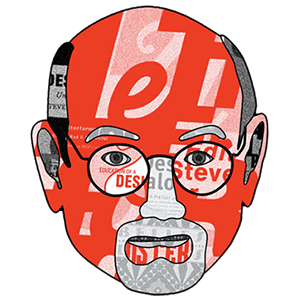
Steven Heller (b. 1950) is an American author, and editor who specializes on topics related to graphic design. He is author and co-author of many works on the history of illustration, typography, and many subjects related to graphic design. He has published more than eighty titles.
For thirty-three years Heller was a senior art director of ‘U&lc’ magazine, a publication devoted to typography. As of 2007, he is co-chair with Lita Talarico of the MFA Designer as Author program at the School of Visual Arts in New York City. He has collaborated on books with graphic designer, Louise Fili, who is his wife, as well as with others including the Design Dialogue series.
Posted in Art, Language, Money |
1 Comment »
November 30, 2011

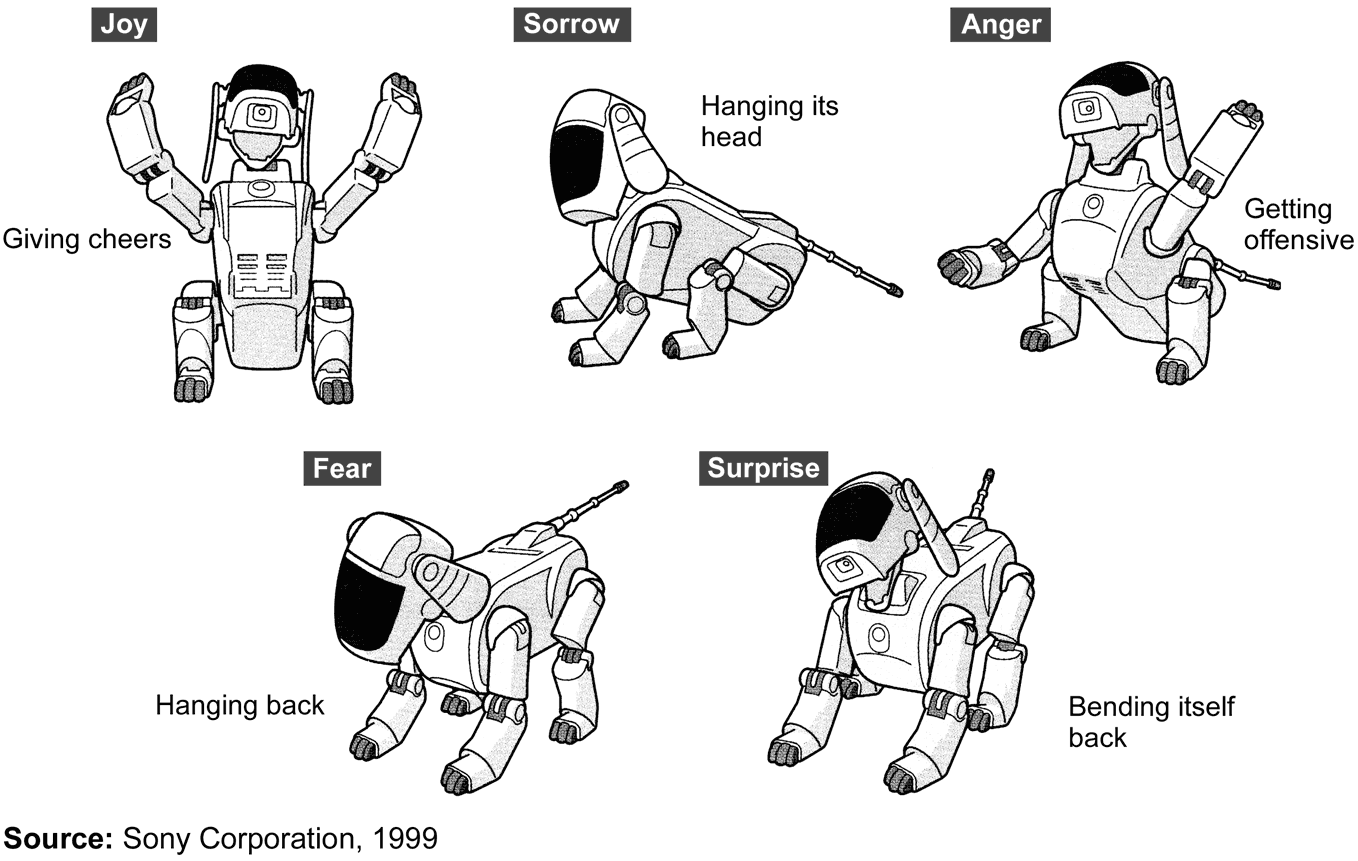
AIBO was one of several types of robotic pets designed and manufactured by Sony from 1999 to 2006. AIBO is able to walk, ‘see’ its environment via camera and recognize spoken commands in Spanish and English. AIBO are autonomous robots since they are able to learn and mature based on external stimuli from their owner, their environment, and from other AIBOs. Artist Hajime Sorayama created the initial designs for the AIBO. AIBO’s sounds were programmed by Japanese DJ/avant-garde composer Nobukazu Takemura. The International AIBO Convention takes place every year at Sony Robotics Tower in the Shinjuku prefecture.
AIBO runs AIBOware on a pink Memory Stick, which allows the robot to be raised from pup to fully grown adult while going through various stages of development as its owner interacts with it. AIBOware allows the owner to interact with a fully mature robot able to understand (though not necessarily willing to obey) 100 voice commands. Without the AIBOware, the AIBO will run in what is called ‘clinic mode’ and can only perform basic actions. Many AIBO owners enjoy teaching their pets new behaviors by reprogramming them in Sony’s special ‘R-CODE’ language. AIBO’s complete vision system uses the SIFT algorithm, to recognize its charging station. The newest versions are equipped with a Wi-Fi connection, allowing them to send the pictures they take via email which led to the Roblog.
Posted in Games, Money, Technology |
Leave a Comment »
November 30, 2011


In telecommunications, 4G is the fourth generation of cellular wireless standards. It is a successor to the 3G and 2G families of standards. Speed requirements for 4G service is 100 Mbit/s for high mobility communication (such as from trains and cars) and 1 Gbit/s for low mobility communication (such as pedestrians and stationary users). By comparison, 3G’s speed requirement is 200 kbit/s (0.2 Mbit/s). The International Telecommunication Union (ITU), an agency within the UN sets requirements for what is marketed as 4G. ITU recognized that current versions of LTE, WiMax and other evolved 3G technologies that do not fulfill the requirements could nevertheless be considered ‘4G,’ provided they represent ‘a substantial level of improvement in performance and capabilities with respect to the initial third generation systems now deployed.’
The nomenclature of the generations generally refers to a change in the fundamental nature of the service, non-backwards compatible transmission technology, higher spectral bandwidth and new frequency bands. New generations have appeared about every ten years since the first move from 1981 analog (1G) to digital (2G) transmission in 1992. This was followed, in 2001, by 3G multi-media support, spread spectrum transmission and at least 200 kbit/s, in 2011 expected to be followed by 4G, which refers to all-IP packet-switched networks, gigabit speed, and multi-carrier transmission.
Posted in Money, Technology, World |
Leave a Comment »
November 30, 2011

Neville Brody (b. 1957) is an English graphic designer and typographer. He is an alumnus of the London College of Printing and Hornsey College of Art, and is known for his work on ‘The Face’ magazine (1981–1986) and ‘Arena’ magazine (1987–1990), as well as for designing record covers for artists such as Cabaret Voltaire and Depeche Mode. He created the company Research Studios in 1994 and is a founding member of Fontworks. In 2011 he headed the Communication Art & Design department at the Royal College of Art.
As an undergraduate, his tutors often condemned his work as ‘Uncommercial,’ often putting a heavy emphasis on safe and tested economic strategies, as opposed to experimentation. By 1977 punk rock was beginning to have a major effect upon London life and Brody’s work and motivation, which was not well received by his tutors. At one point he was almost thrown out of the college for putting the Queen’s head sideways on a postage stamp design. He did, however, get the chance to design posters for student concerts at the college, most notably for Pere Ubu, supported by The Human League. His first-year thesis had been based around a comparison between Dadaism and pop art.
Posted in Art, Money |
1 Comment »
November 30, 2011

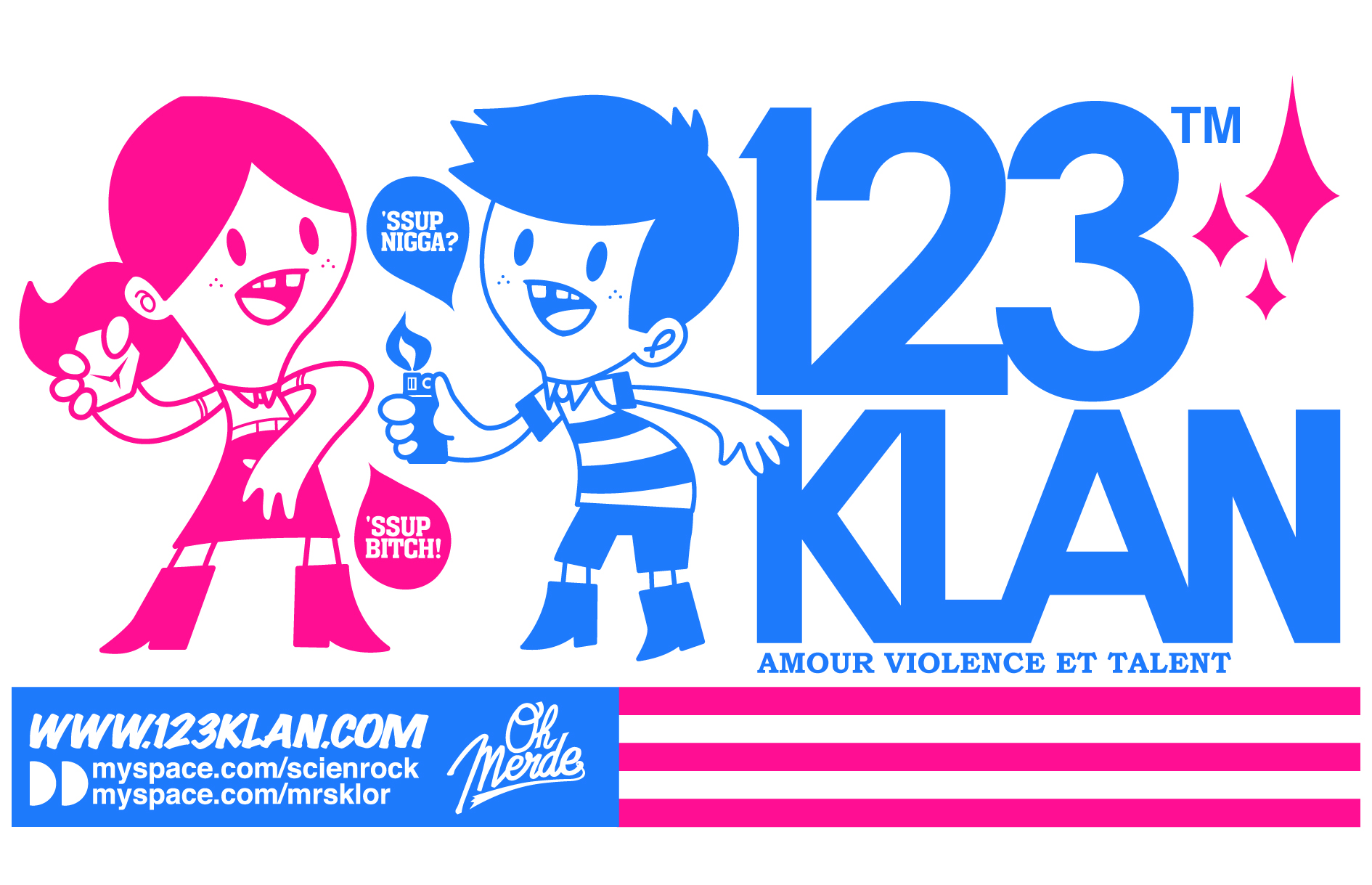
123Klan is a French graffiti crew, founded in 1992 by husband and wife Scien and Klor. Since 1994 the crew have also worked in graphic design, inspired by the work of English graphic designer Neville Brody, and started to apply it to their graffiti (and vice versa). They describe their art as ‘when street knowledge meets technology and graffiti melds with graphic design.’
Scien has said, ‘The great thing about graffiti is its impact on the streets. But most of people don’t like graffiti, simply because they don’t understand it. In a city you have probably less graffiti than advertising, and most of it is certainly uglier than certain graffiti pieces – so to come up with something that gets an impact on people in this visual jungle, it is a real challenge.’
Posted in Art, Money, Politics |
Leave a Comment »
November 30, 2011
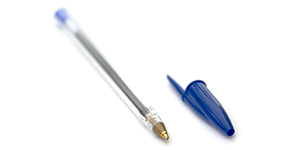

Société Bic (pronounced ‘Bick’ in English) is a company based in Clichy, France, founded in 1945, by Baron Marcel Bich known for making disposable products including lighters, ballpoint pens, and shaving razors; they also manufacture magnets and watersports products including surfboards, kayaks, and dinghies.
The Bic pen, more correctly the Bic Cristal, was the company’s first product and 50 years later is still synonymous with the name Bic. The company’s US subsidiary accounts for more than half of the worldwide company’s sales.
Posted in Games, Money |
Leave a Comment »
November 30, 2011


In finance, leverage (sometimes referred to as ‘gearing’ in the UK) is a general term for any technique to multiply gains and losses; common ways to attain leverage are borrowing money, buying fixed assets (non liquid assets such as real estate) and using derivatives (contracts to buy or sell something, such as call and put options respectively).
The most obvious risk of leverage is that it multiplies losses. A corporation that borrows too much money might face bankruptcy during a business downturn, while a less-levered corporation might survive. An investor who buys a stock on 50% margin will lose 40% of his money if the stock declines 20%.
read more »
Posted in Language, Money |
Leave a Comment »


 The Daily Omnivore