February 12, 2013
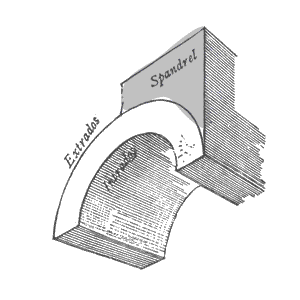
In evolutionary biology, a spandrel [span-druhl] is a a characteristic that did not originate by the direct action of natural selection, that was later co-opted for a current use. The term was coined by the Harvard paleontologist Stephen Jay Gould and population geneticist Richard Lewontin in their influential paper ‘The Spandrels of San Marco and the Panglossian Paradigm: A Critique of the Adaptationist Program’ (1979).
In their paper Gould and Lewontin employed the analogy of spandrels in Renaissance architecture: curved areas of masonry between arches supporting a dome that arise as a consequence of decisions about the shape of the arches and the base of the dome, rather than being designed for the artistic purposes for which they were often employed. The authors singled out properties like the necessary number of four and their specific three-dimensional shape.
read more »
Posted in Language, Science |
1 Comment »
February 12, 2013

Segmented sleep, also known as divided sleep, bimodal sleep pattern, or interrupted sleep, is a polyphasic or biphasic sleep pattern where two or more periods of sleep are punctuated by a period of wakefulness. Along with a nap (siesta) in the day, it has been argued that this is the natural pattern of human sleep. A case has been made that maintaining such a sleep pattern may be important in regulating stress.
Historian A. Roger Ekirch argues that before the Industrial Revolution, segmented sleep was the dominant form of human slumber in Western civilization. He draws evidence from documents from the ancient, medieval, and modern world, which he discovered over the course of fifteen years of research. Other historians, such as Craig Koslofsky, have endorsed Ekirch’s discovery and analysis.
read more »
Posted in Health, Science |
Leave a Comment »
February 9, 2013
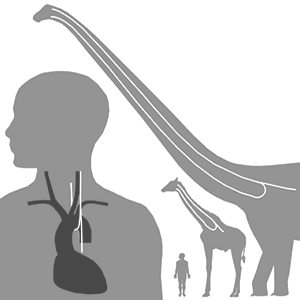
The recurrent [ri-kur-uhnt] laryngeal [luh-rin-jee-uhl] nerve is a branch of the vagus nerve (tenth cranial nerve) that supplies motor function and sensation to the larynx (voice box). It is referred to as ‘recurrent’ because the branches of the nerve innervate the laryngeal muscles in the neck through a rather circuitous route: it descends into the thorax before rising up between the trachea and esophagus to reach the neck.
The extreme detour of this nerve (about 15 feet in the case of giraffes) is cited as evidence of evolution as opposed to intelligent design. The nerve’s route would have been direct in the fish-like ancestors of modern tetrapods, traveling from the brain, past the heart, to the gills (as it does in modern fish). Over the course of evolution, as the neck extended and the heart became lower in the body, the laryngeal nerve was caught on the wrong side of the heart. Natural selection gradually lengthened the nerve by tiny increments to accommodate, resulting in the circuitous route now observed.
Posted in Science |
Leave a Comment »
February 6, 2013

The God gene hypothesis proposes that a specific gene (VMAT2) predisposes humans towards spiritual or mystic experiences. The idea has been postulated by geneticist Dean Hamer, the director of the Gene Structure and Regulation Unit at the U.S. National Cancer Institute, and author of the 2005 book ‘The God Gene: How Faith is Hardwired into our Genes.’ The God gene hypothesis is based on a combination of behavioral genetic, neurobiological, and psychological studies.
The major arguments of the theory are: (1) spirituality can be quantified by psychometric measurements; (2) the underlying tendency to spirituality is partially heritable; (3) part of this heritability can be attributed to the gene VMAT2; (4) this gene acts by altering monoamine levels; and (5) spiritual individuals are favored by natural selection because they are provided with an innate sense of optimism, the latter producing positive effects at either a physical and psychological level.
read more »
Posted in Health, Philosophy, Science |
1 Comment »
February 5, 2013
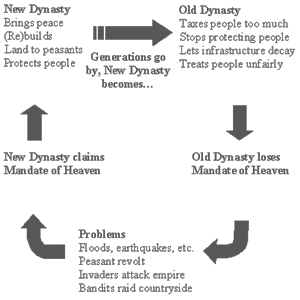
Social cycle theories are among the earliest social theories in sociology. Unlike the theory of social evolutionism, which views the evolution of society and human history as progressing in some new, unique direction(s), sociological cycle theory argues that events and stages of society and history are generally repeating themselves in cycles. Such a theory does not necessarily imply that there cannot be any social progress. In the early theory of ancient Chinese historian Sima Qian and the more recent theories of long-term (‘secular’) political-demographic cycles as well as in the Varnic theory of 20th century Indian philosopher P.R. Sarkar an explicit accounting is made of social progress.
The interpretation of history as repeating cycles of Dark and Golden Ages was a common belief among ancient cultures. The more limited cyclical view of history defined as repeating cycles of events was put forward in the academic world in the 19th century in historiosophy (a branch of historiography) and is a concept that falls under the category of sociology. However, Polybius, Ibn Khaldun, and Giambattista Vico can be seen as precursors of this analysis. The Saeculum (a length of time roughly equal to the potential lifetime of a person or the equivalent of the complete renewal of a human population) was identified in Roman times.
read more »
Posted in Politics, Science, World |
Leave a Comment »
February 3, 2013

Devolution [dev-uh-loo-shuh] is the notion that a species can change into a more ‘primitive’ form over time. Devolution presumes that there is a preferred hierarchy of structure and function, and that evolution must mean ‘progress’ to ‘more advanced’ organisms. This may include the idea that some modern species that have lost functions or complexity accordingly must be degenerate forms of their ancestors.
However, according to the definition of evolution, and particularly of the modern evolutionary synthesis in which natural selection leads to evolutionary adaptation, phenomena represented as instances of devolution are in every sense evolutionary. The idea of devolution is based at least partly on the presumption that ‘evolution’ requires some sort of purposeful direction towards ‘increasing complexity.’ Modern evolutionary theory poses no such presumption and the concept of evolutionary change is independent of either any increase in complexity of organisms sharing a gene pool, or any decrease, such as in vestigiality or in loss of genes.
read more »
Posted in Science |
Leave a Comment »
February 3, 2013

In the context of human evolution, human vestigiality [ve-stij-ee-al-i-tee] involves those characters (such as organs or behaviors) occurring in the human species that are considered vestigial—in other words having lost all or most of their original function through evolution. Although structures usually called ‘vestigial’ often appear functionless, a vestigial structure may retain lesser functions or develop minor new ones.
In some cases, structures once identified as vestigial simply had an unrecognized function. The examples of human vestigiality are numerous, including the anatomical (such as the human appendix, tailbone, wisdom teeth, and inside corner of the eye), the behavioral (goose bumps and infant grasp reflex), sensory (decreased olfaction), and molecular (junk DNA). Many human characteristics are also vestigial in other primates and related animals.
read more »
Posted in Health, Science |
Leave a Comment »
February 1, 2013

James Randi (b. 1928) is a Canadian-American stage magician and scientific skeptic best known as a challenger of paranormal claims and pseudoscience. Randi is the founder of the James Randi Educational Foundation (JREF). Randi began his career as a magician, as The Amazing Randi, but after retiring at age 60, he began investigating paranormal, occult, and supernatural claims, which he collectively calls ‘woo-woo.’ He has written about the paranormal, skepticism, and the history of magic.
JREF sponsors The One Million Dollar Paranormal Challenge offering a prize of US$1,000,000 to anyone who can demonstrate evidence of any paranormal, supernatural or occult power or event under test conditions agreed to by both parties. Although often referred to as a ‘debunker,’ Randi dislikes the term’s connotations and prefers to describe himself as an ‘investigator.’ He has written about the paranormal, skepticism, and the history of magic. He was a frequent guest on ‘The Tonight Show Starring Johnny Carson’ and was occasionally featured on the television program ‘Penn & Teller: Bullshit!’
read more »
Posted in Money, Science |
Leave a Comment »
January 31, 2013
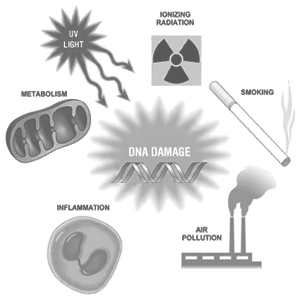
The free radical theory of aging states that organisms age because cells accumulate free radical damage over time. A free radical is a molecule with an unpaired electron. The molecule is reactive and seeks another electron to pair. This initiates an uncontrolled chain reaction that can damage the natural function of the living cell, causing various diseases. While a few free radicals such as melanin are not chemically reactive, most biologically-relevant free radicals are highly reactive.
For most biological structures, free radical damage is closely associated with oxidative damage. Antioxidants are reducing agents, they limit oxidative damage to biological structures by donating an electron to free radicals. Biogerontologist Denham Harman first proposed the free radical theory of aging in the 1950s, and in the 1970s extended the idea to implicate mitochondrial production of reactive oxygen species.
read more »
Posted in Death, Health, Science |
Leave a Comment »
January 31, 2013
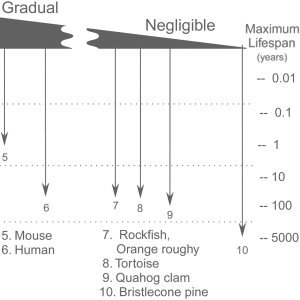
Negligible [neg-li-juh-buhl] senescence [si-nes-sens] refers to the lack of symptoms of aging in a few select animals. More specifically, negligibly senescent animals do not have measurable reductions in their reproductive capability with age, or measurable functional decline with age.
Death rates in negligibly senescent animals do not increase with age as they do in senescent organisms. Some fish, such as some varieties of sturgeon and rockfish, and some tortoises and turtles are thought to be negligibly senescent.
read more »
Posted in Death, Health, Science |
Leave a Comment »
January 31, 2013
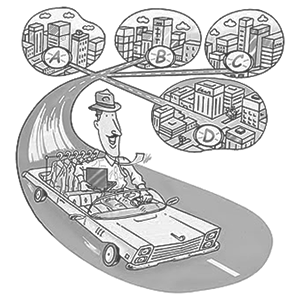
P versus NP is the name of a question that many mathematicians, scientists, and computer programmers want to answer. P and NP are two groups of mathematical problems. P problems are considered ‘easy’ for computers to solve. NP problems are easy only for a computer to check.
For example, if you have an NP problem, and someone says ‘The answer to your problem is 12345,’ a computer can quickly figure out if the answer is right or wrong, but it may take a very long time for the computer to come up with ‘12345’ on its own. All P problems are NP problems, because it is easy to check that a solution is correct by solving the problem and comparing the two solutions. However, people want to know about the opposite: Are there any NP problems that are not P problems, or are all NP problems just P problems?
read more »
Posted in Science, Technology |
Leave a Comment »
January 29, 2013
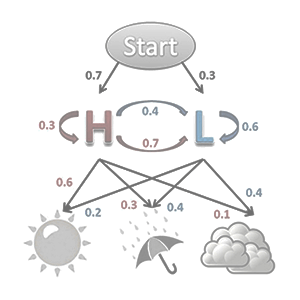
In mathematics, a Markov [mahr-kahv] chain, named after Russian mathematician Andrey Markov (1856 – 1922), is a discrete (finite or countable) random process with the Markov property (the memoryless property of a stochastic [random] process). A discrete random process means a system which can be in various states. The system also changes randomly in discrete steps. It can be helpful to think of the system as evolving through discrete steps in time, although strictly speaking the ‘step’ may have nothing to do with time.
A stochastic process has the Markov property if the conditional probability distribution of future states of the process depends only upon the present state, not on the sequence of events that preceded it. (Given two jointly distributed random variables X and Y, the conditional probability distribution of Y given X is the probability distribution of Y when X is known to be a particular value.) The term ‘Markov assumption’ is used to describe a model where the Markov property is assumed to hold, such as a hidden Markov model (in which the system being modeled is assumed to be a Markov process with unobserved [hidden] states).
read more »
Posted in Science |
Leave a Comment »



