February 9, 2011

The Nuclear Football (also called ‘The Button’) is a black briefcase, the contents of which are to be used by the President of the United States of America to authorize a nuclear attack while away from fixed command centers, such as the White House Situation Room. It functions as a mobile hub in the strategic defense system. Russia and the United Kingdom have similar briefcases. Reputedly, there are four things in the Football: the ‘Black Book’ containing the retaliatory options, a book listing classified site locations, a manila folder with eight or ten pages stapled together giving a description of procedures for the Emergency Broadcast System, and a three-by-five inch card with authentication codes.
The ‘Black Book’ is 9 by 12 inches and has 75 loose-leaf pages printed in black and red. On the ‘vital’ page listing possible responses to a nuclear attack, retaliatory options appear in red and were labeled: ‘Rare, Medium or Well Done.’ The book with classified site locations was about the same size as the Black Book, and was black. It contained information on sites around the country where the president could be taken in an emergency.
Posted in Politics, Technology, War |
Leave a Comment »
February 9, 2011

A bat phone, in business jargon, is a private telephone number that is handled at a higher priority than a public line. The name derives from Commissioner Gordon’s secure line to the ‘Batphone’ in the Batman television show of 1966–68. Bat phones are common in many industries. The phone numbers are typically given to key customers so that they may reach important individuals in case of emergencies or critical situations. Bat phones can also provide direct access to politicians or notable people.
Another example of their use is for Internet service providers offering a selection of Internet services that range from dial-up access to secure web server hosting. Customers using the secure web hosting facility would be given access to a 24-hour bat phone for prompt resolution of technical issues, while dialup customers seeking technical support would be required to wait on hold and/or call only during business hours.
Posted in Art, Language, Technology |
Leave a Comment »
February 8, 2011

A secure telephone is a telephone that provides voice security in the form of end-to-end encryption for the telephone call, and in some cases also the mutual authentication of the call parties, protecting them against a man-in-the-middle attack. Concerns about massive growth of telephone tapping incidents lead to growing demand for secure telephones. Additionally, as the popularity of VoIP grows, secure telephony is becoming more of commonplace and less the lonely domain of spies and civil libertarians.
Posted in Politics, Technology, War |
Leave a Comment »
February 8, 2011
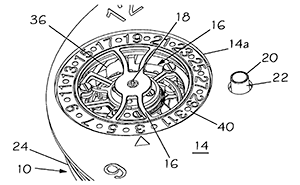

A tourbillon [tor-bee-yon] (French for ‘whirlwind’) is an addition to the mechanics of a watch escapement (the device which converts continuous rotational motion into an oscillating or back and forth motion; the source of the ‘ticking’ sound produced by watches and clocks).
Developed around 1795 by the French – Swiss watchmaker Abraham-Louis Breguet from an earlier idea by the English chronometer maker John Arnold a tourbillon counters the effects of gravity by mounting the escapement and balance wheel in a rotating cage. Originally an attempt to improve accuracy, tourbillons are still included in some expensive modern watches as a novelty and demonstration of watchmaking virtuosity. The mechanism is usually exposed for display on the watch’s face.
Posted in Art, Money, Technology |
Leave a Comment »
February 8, 2011
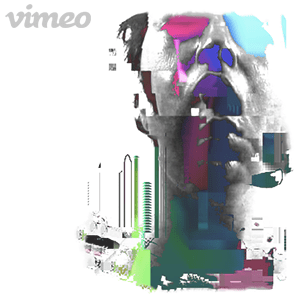
Compression artifacts may intentionally be used as a visual style, sometimes known as glitch art. In still images, an example is Jpegs, by German photographer Thomas Ruff, which intentionally uses JPEG artifacts.
In video art, one technique is datamoshing – mixing two videos sources, or exploiting the way different video codecs process motion and color information. The technique was pioneered by artists Sven König, Takeshi Murata and Paul B. Davis in collaboration with an American art collective called Paperrad.
Posted in Art, Language, Technology |
Leave a Comment »
February 7, 2011

Andreas Gursky (b. 1955) is a German visual artist known for his enormous architecture and landscape color photographs, some ten feet or more wide, and most employing a high point of view. As of early 2007, Gursky holds the record for highest price paid at auction for a single photographic image. His print 99 Cent II, Diptych, sold for GBP 1.7 million (USD $3.3 million) at Sotheby’s, London. Before the 1990s, Gursky did not digitally manipulate his images.
In the years since, Gursky has been frank about his reliance on computers to edit and enhance his pictures, creating an art of spaces larger than the subjects photographed. Visually, Gursky is drawn to large, anonymous, man-made spaces—high-rise facades at night, office lobbies, stock exchanges, the interiors of big box retailers (See his print 99 Cent II Diptychon). His style is described by art critics as enigmatic and deadpan. There is little to no explanation or manipulation on the works. His photography is straightforward.
Posted in Art, Money, Technology |
Leave a Comment »
February 7, 2011
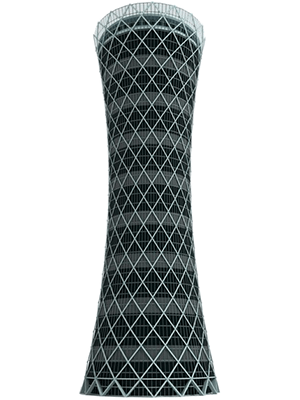
Doha [doh-hah] (Arabic for ‘the big tree’ or ‘the sticky tree’) is the capital city of the state of Qatar. Located on the Persian Gulf, it has a population of around one million. Doha is Qatar’s largest city, with over 80% of the nation’s population residing in the city or its surrounding suburbs, and is also the economic center of the country.
Much of Qatar’s oil and natural gas wealth is visible in Doha, which is home to the headquarters of the country’s largest oil and gas companies. Doha’s economy is built on the revenue the country has made from its oil and natural gas industries, and the Qatari government is rapidly trying to diversify the Qatari economy in order to move away from this dependence on oil. As a result, Doha is currently experiencing a very large boom, with the city developing very rapidly.
Posted in Money, Technology, World |
Leave a Comment »
February 7, 2011

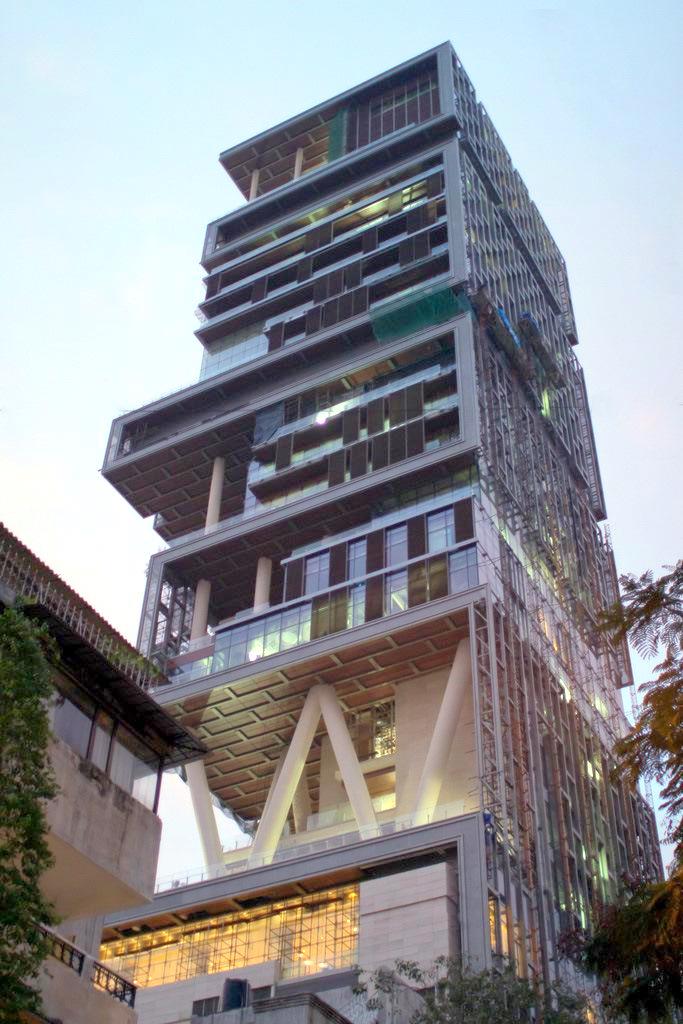
Antilia is the name of a twenty-seven floor personal home in South Mumbai belonging to India’s richest man, Mukesh Ambani, the billionaire Chairman of Reliance Industries (India’s largest private sector conglomerate). The home is staffed by 600 full time employees and houses Ambani, his wife Nita, their three children, and Ambani’s mother. Indian media frequently reported that Antilia is the world’s most expensive home costing US$1 billion. It is named after a mythical island in the Atlantic Ocean. The building is situated on a 4,532 m2 (48,780 sq ft) plot at Altamont Road on the famed Cumballa Hill South Mumbai, where land prices are upward of US$10,000 per square meter.
The structure was designed by U.S. architects using principles of Vaastu, Indian traditional geomancy akin to Chinese feng shui, to maximize ‘positive energy.’ No two floor plans are alike, and the materials used in each level vary widely. The home includes: 400,000 square feet (37,000 m2) of living space; parking space for 168 cars; a one-floor vehicle maintenance facility; 9 elevators in the lobby; 3 helipads and an air traffic control facility; a health spa; a theater with a seating for 50; multiple swimming pools, three floors of hanging gardens, and a ballroom.
Posted in Money, Technology, World |
Leave a Comment »
February 7, 2011
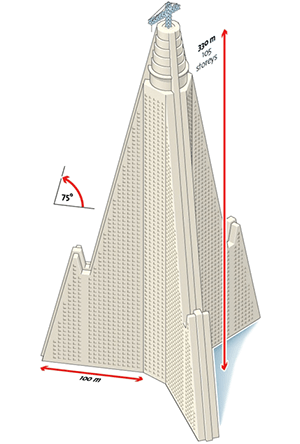
The Ryugyong Hotel is a 105-floor skyscraper under construction in Pyongyang, North Korea. Construction began in 1987, but was halted in 1992 due to the economic disruptions that afflicted the country following the fall of the Soviet Union.
The hotel stood topped out but without windows or interior fittings for the next sixteen years. Construction resumed in April 2008, under the supervision of the Orascom Group of Egypt, which has invested heavily in the North Korean mobile telephony and construction industries.
Posted in Money, Technology, World |
Leave a Comment »
February 7, 2011

Full-spectrum light is light that covers the electromagnetic spectrum from infrared through near-ultraviolet, or all wavelengths that are useful to plant or animal life; in particular, sunlight is considered full spectrum, even though the solar spectral distribution reaching Earth changes with time of day, latitude, and atmospheric conditions. ‘Full-spectrum’ is not a technical term when applied to an electrical light bulb but rather a marketing term implying that the product emulates natural light.
Some products marketed as ‘full-spectrum’ may produce light throughout the entire spectrum, but not with an even spectral distribution, and may not even differ substantially from lights not marketed as ‘full-spectrum.’
read more »
Posted in Art, Health, Technology |
Leave a Comment »
February 7, 2011

The Stanford torus is a proposed design for a space habitat capable of housing 10,000 to 140,000 permanent residents. It was proposed during the 1975 NASA Summer Study, conducted at Stanford University, with the purpose of speculating on designs for future space colonies. The concept of a ring-shaped rotating space station was previously proposed by Wernher von Braun and Herman Potočnik.
It consists of a torus, or donut-shaped ring, that is 1.8 km in diameter and rotates once per minute to provide between 0.9g and 1.0g of artificial gravity on the inside of the outer ring via centrifugal force. Sunlight is provided to the interior of the torus by a system of mirrors. The ring is connected to a hub via a number of spokes, which serve as conduits for people and materials travelling to and from the hub. Since the hub is at the rotational axis of the station, it experiences the least artificial gravity and is the easiest location for spacecraft to dock.
Posted in Technology |
Leave a Comment »
February 3, 2011
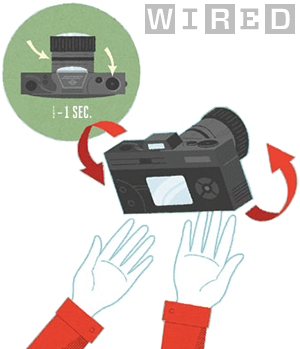
Kinetic photography is an experimental technique such as holding and shaking the wrist strap of the camera, dropping the camera, throwing or spinning the camera up in the air, or rigorously moving the camera while taking a picture. As the photographer has surrendered control over the camera to physical forces, this technique tends to produce abstract, random or blurred-motion photographs.
Perhaps the most risky field of kinetic photography is that of camera tossing, in which the photographer literally throws their equipment into the air in hopes of producing an artistic looking image. Many camera tosses take place at night, when the camera is able to capture light with a long exposure, resulting in streaks of hypnotizing light patterns. The pioneer of camera tossing, Ryan Gallagher, hosts a blog on the subject.
Posted in Art, Technology |
Leave a Comment »