December 4, 2012

For German philosopher Martin Heidegger broadly, the question of being formed the essence of his philosophical inquiry.
In ‘The Question Concerning Technology‘ (‘Die Frage nach der Technik’), Heidegger sustains this inquiry, but turns to the particular phenomenon of technology, seeking to derive the essence of technology and humanity’s role of being with it. Heidegger originally published the text in 1954, in ‘Vorträge und Aufsätze’ (‘Letters and Essays’).
read more »
Posted in Language, Philosophy, Technology |
2 Comments »
December 4, 2012

Gestell [gesh-tell] is a German word used by philosopher Martin Heidegger to describe what lies behind or beneath modern technology. This concept was applied to Heidegger’s exposition of the essence of technology.
The conclusion regarding the essence of technology was that technology is fundamentally enframing. As such, the essence of technology is Gestell. Indeed, ‘Gestell, literally ‘framing,’ is an all-encompassing view of technology, not as a means to an end, but rather a mode of human existence.’
read more »
Posted in Language, Philosophy, Technology |
Leave a Comment »
December 2, 2012
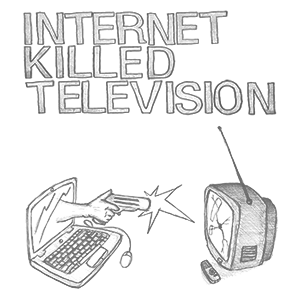
Internet Killed Television is a web series which documents the lives of Charles Trippy, his wife Alli and their dogs Zoey and Marley. The show consists of episodes averaging around one to twenty minutes that are filmed, edited, and then aired every day onto YouTube by mid-afternoon Eastern Standard Time. The series was originally planned to last for only one year; however, after the success of the first season, the couple have decided to continue.
The YouTube series has now reached its fourth year and every year, so far, they have reached out to their audience, the CTFxC(ers) to create a montage featuring the main events that had occurred that year.
read more »
Posted in Art, Humor, Technology |
1 Comment »
November 30, 2012

The moka pot, also known as a stove top espresso machine, is a coffee maker which produces coffee by passing hot water pressurized by steam through ground coffee. It was first patented by inventor Luigi De Ponti for Alfonso Bialetti in 1933. Bialetti Industrie continues to produce the same model under the name ‘Moka Express.’
The moka pot is most commonly used in Europe and in Latin America. It has become an iconic design, displayed in modern industrial art and design museums.
read more »
Posted in Food, Technology |
Leave a Comment »
November 30, 2012

Heisenbug is a whimsical computer programming jargon term for a software bug (glitch) that seems to disappear or alter its behavior when one attempts to study it.
The term is a pun on the name of Werner Heisenberg, the physicist who first asserted the observer effect of quantum mechanics, which states that the act of observing a system inevitably alters its state.
read more »
Posted in Humor, Technology |
1 Comment »
November 30, 2012
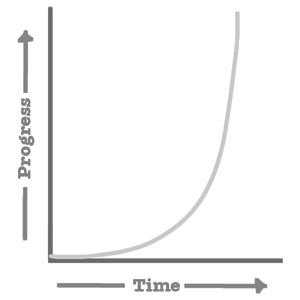
‘Rapture of the Nerds’ is a derisive term for the technological singularity (a theorized future period of superhuman intelligence). Some critics assert that no computer or machine will ever achieve human intelligence, while others hold that the definition of intelligence is irrelevant if the net result is the same.
Cognitive scientist Steven Pinker stated in 2008, ‘There is not the slightest reason to believe in a coming singularity. The fact that you can visualize a future in your imagination is not evidence that it is likely or even possible. Look at domed cities, jet-pack commuting, underwater cities, mile-high buildings, and nuclear-powered automobiles—all staples of futuristic fantasies when I was a child that have never arrived. Sheer processing power is not a pixie dust that magically solves all your problems.’
read more »
Posted in Humor, Technology |
Leave a Comment »
November 29, 2012

The tragedy of the anticommons is a type of coordination breakdown, in which a single resource has numerous rightsholders who prevent others from using it, frustrating what would be a socially desirable outcome. It is a mirror-image of the older concept of tragedy of the commons, in which numerous rightsholders’ combined use exceeds the capacity of a resource and depletes or destroys it.
The concept covers a range of coordination failures including patent thickets, submarine patents, and nail houses. Overcoming these breakdowns can be difficult, but there are assorted means, including eminent domain, laches, patent pools, or other licensing organizations.
read more »
Posted in Money, Politics, Technology |
Leave a Comment »
November 29, 2012
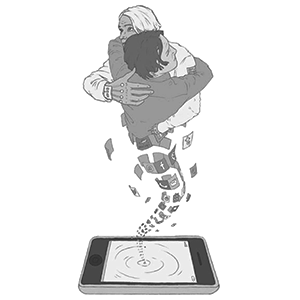
Cyborg anthropology is the discipline that studies the interaction between humanity and technology from an anthropological perspective. The topic originated as a sub-focus group within the American Anthropological Association’s annual meeting in 1993. The sub-group was very closely related to two other academic disciplines, STS (Science, technology and society) and the Society for the Social Studies of Science.
Historian and feminist Donna Haraway’s 1985 ‘Cyborg Manifesto’ could be considered the founding document of cyborg anthropology by first exploring the philosophical and sociological ramifications of the term. More recently, Amber Case has been responsible for setting up the Cyborg Anthropology Wiki.
read more »
Posted in Philosophy, Technology, World |
1 Comment »
November 29, 2012

‘The Singularity Is Near: When Humans Transcend Biology’ is a 2005 update of Raymond Kurzweil’s 1999 book ‘The Age of Spiritual Machines’ and his 1990 book ‘The Age of Intelligent Machines.’ In it, as in the two previous versions, Kurzweil attempts to give a glimpse of what awaits us in the near future.
He proposes a coming technological singularity (a period of rapid change), and how we would thus be able to augment our bodies and minds with technology. He describes the singularity as resulting from a combination of three important technologies of the 21st century: genetics, nanotechnology, and robotics (including artificial intelligence).
read more »
Posted in Language, Technology |
Leave a Comment »
November 28, 2012
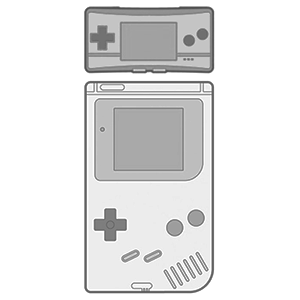
Game Boy Micro is a handheld game console developed and manufactured by Nintendo. It was first released in 2005. The system is the last console of the Game Boy line. The Game Boy Micro is the size of a typical Nintendo Entertainment System controller and a typical Famicom controller. The console retains some of the functionality of the Game Boy Advance SP, but with an updated form factor. It is unable to play original Game Boy and Game Boy Color games due to design changes. Even though it still has the required Z80 processor and graphics hardware necessary to run the old games, it is missing other circuitry necessary to be compatible with the old Game Boy cartridges.
It is officially incompatible with the Nintendo e-Reader and some other peripherals due to design issues. Additionally, it features a backlit screen with the ability to adjust the brightness so as to adapt to lighting. The Game Boy Micro features a removable face plate that allows consumers to purchase alternative designs. This device can play MP3 and digital video files from SD cards. The system retailed for US$99, compared to US$79 for the Game Boy Advance SP. Generally, the Game Boy Micro did not sell well, and failed to reach the company’s aim of units sold.
Posted in Games, Money, Technology |
Leave a Comment »
November 28, 2012

Plex is a partially open-source freeware media player software with a 10-foot user interface (optimized for use with a TV), with a matching closed source media server (Plex Media Server) software, which is available for Windows, Mac, and Linux. Its media player source code was initially forked from XBMC, a free media player, in 2008. Plex’s front end media player, Plex Media Center, allows the user to manage and playback video, photos, music, and podcasts from a local or remote computer running Plex Media Server.
In addition, the integrated Plex Online service provides the user with a growing list of community-driven plugins for online content including Hulu, Netflix, and CNN video. Plex began as a freeware hobby project but since 2010 has evolved into a commercial software business that is owned and developed by a single for-profit startup company, (Plex, Inc.).
read more »
Posted in Money, Technology |
Leave a Comment »
November 28, 2012

SIGGRAPH (short for Special Interest Group on GRAPHics and Interactive Techniques) is the name of the annual conference on computer graphics started in 1974. The conference is attended by tens of thousands of computer professionals. Some highlights of the conference are its Animation Theater and Electronic Theater presentations, where recently created CG films are played. There is a large exhibition floor, where several hundred companies set up elaborate booths and compete for attention and recruits. Most of the companies are in the engineering, graphics, motion picture, or video game industries.
There are also many booths for schools which specialize in computer graphics or interactivity. Dozens of research papers are presented each year, and SIGGRAPH is widely considered the most prestigious forum for the publication of computer graphics research. In 1984, under LucasFilm Computer Group, John Lasseter’s first computer animated short, ‘The Adventures of André & Wally B.,’ premiered at SIGGRAPH. Pixar’s first computer animated short, ‘Luxo, Jr.’ debuted in 1986, and Pixar has debuted numerous shorts at the conference since. Since 2008, a second yearly SIGGRAPH conference has been held in Asia. The first SIGGRAPH Asia conference was held in Singapore; the second one in Yokohama, Japan in the period in 2009; and the third in Seoul, Korea in 2010.
Posted in Art, Money, Technology |
Leave a Comment »


 The Daily Omnivore